

Your eyes open, and the mental math begins immediately. Did the permission slip get signed? Is there enough milk for cereal? Do I have a clean blouse for the 9:00 AM presentation?
This frantic internal monologue is the standard operating procedure for millions of women balancing careers and families. It isn’t just about the physical tasks; it’s about the mental load—that constant, invisible weight of anticipating needs and managing logistics. Research from institutions like the University of Bath highlights that women still carry the heaviest burden of this cognitive household labor, often leading to exhaustion before the workday even starts.
We need to flip the script. Your morning shouldn’t be a source of pressure to be perfect. Instead, view your morning routine checklist for working moms as a launchpad.
Think of a rocket launch. The success of the liftoff isn’t determined in the final ten seconds; it’s determined by the ground crew and the systems set in place hours before. You are the mission commander. By moving from reactive scrambling to proactive systems, you can preserve your energy for the things that matter—your family and your career.
Table of Contents

Morning routine checklist for working moms: The Foundation: Why Your Morning Actually Starts the Night Before
You can’t win the morning if you start it behind schedule. The secret to a stress free morning routine for school aged kids and toddlers alike lies in the evening preparation. This is where you reduce the friction of the next day.
The Evening Shutdown Ritual
The goal here is to eliminate decision fatigue. By the end of the day, your capacity to make smart choices is depleted. If you leave choices about outfits, lunches, or backpacks for the morning, you’re setting yourself up for a chaotic scramble.
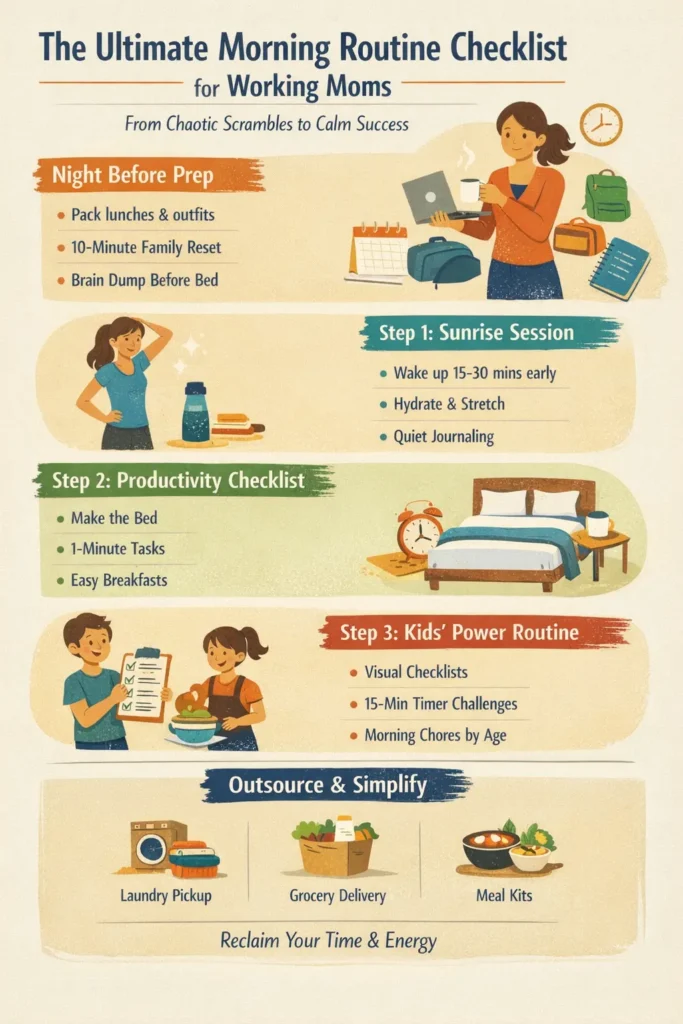
- Prep the Logistics: Lunches packed, coffee machine set, and backpacks by the door.
- The Clothing Strategy: Lay out your clothes and the kids’ clothes. Check the weather forecast to avoid the panic of hunting for rain boots five minutes before the bus comes.
- The 10-Minute Family Reset: Set a timer. Everyone participates in tidying the main living areas. This ensures you don’t wake up to a cluttered environment, which creates immediate visual stress.
- Brain Dump: Spend five minutes writing down everything on your mind. This night before prep for a smoother morning clears your head, allowing for deeper, restorative sleep.
The Sunday Family Huddle
Successful project management requires weekly meetings. Your home is no different. The family huddle is a 20-minute weekly planning session that saves hours of negotiation during the week.
- Sync Calendars: Who has soccer practice? Who has a late meeting? Use shared digital tools for family organization like Google Calendar or Cozi so nothing catches you off guard.
- The “Big Three” Dinners: Decide on three easy meals for your busiest nights so you aren’t staring into the fridge at 6 PM.
- Ownership vs. Tasks: Move away from delegating single chores and toward delegating ownership. Instead of asking a partner to “buy milk,” designate them the “CEO of Groceries.” They own the inventory, the list, and the purchasing. This shifts the cognitive household labor off your plate entirely.
You may also like this: 20 Best Time-Saving Hacks for Working Moms in 2026
Step 1: The “Sunrise Session” (Personal Self-Care)
If you wake up to a screaming toddler or an urgent email, you start your day in defense mode. You need to play offense.
Waking Up Before the Household
Many mothers ask how to wake up before your kids without being tired. The answer is gradual adjustment and respecting your sleep cycles.
- The 15-Minute Buffer: Start by waking up just 15 minutes earlier than you do now. Don’t aim for an hour immediately.
- Hydrate Immediately: Drink 16 oz of water right away. It jumpstarts your brain and metabolism faster than caffeine.
- Movement: You don’t need a full gym session. Five minutes of stretching or yoga signals to your body that the day has begun.
Mental Clarity and Connection
This time is for energy management, not productivity. Resist the urge to check your email.
- Journaling or Reading: Spend 10–15 minutes centering your thoughts.
- Reflection: Whether you use prayer, meditation, or quiet sitting, this spiritual or reflective time builds a mental buffer against the stress of the day. It allows you to cultivate self-care habits that prevent burnout.
Step 2: The Working Mom’s Productivity Checklist
Once you’re centered, it’s time to execute the logistics. This part of the morning routine checklist for working moms focuses on efficiency and momentum.
High-Impact “Micro-Tasks”
- Make the Bed: It’s a small win that signals order in the room.
- The 1-Minute Rule: If a task takes less than one minute (hanging up a towel, wiping the counter), do it immediately.
- The Laundry Escalator: A simple daily cleaning schedule for working moms often fails because it’s too ambitious. Instead, do one load a day. Wash in the morning, dry in the evening, fold immediately. Keep the escalator moving to prevent weekend pile-ups.
Fueling Your Day
- “Plan C” Breakfasts: We all want to cook fresh meals, but sometimes time runs out. Have healthy make ahead breakfast ideas for busy moms ready, like overnight oats or frozen egg bites.
- Batch Cooking: Prep ingredients on Sunday so assembly is fast on Tuesday.
- Nutrition Focus: Aim for protein and fiber to sustain your energy through morning meetings.
Step 3: Getting the Kids on Board (Without the Battlefield)
A routine only works if the whole team is involved. How can I make my morning routine easier with kids? By transferring responsibility.
Visual and Interactive Checklists
Children, especially those with developing executive functioning skills, struggle with abstract commands like “get ready.”
- Photo-Based Routines: For toddlers, take photos of them doing the task (brushing teeth, putting on shoes) and arrange them in order.
- Gamification: Use digital timers. Can they beat the clock?
The 15-Minute Power Routine
When time is tight, activate the 15 minute morning power routine for families.
- Staggered Starts: If you have one bathroom, schedule specific slots for each family member.
- The Launch Zone: Create a specific area where shoes, coats, and bags live. Nothing leaves the zone until it is on a body or in a hand.
Age-Appropriate Responsibility
To reduce your mental load, kids must contribute.
- Toddlers (2-4): Put toys in a bin, put dirty clothes in the hamper.
- School-Age (5-9): Make their bed, dress themselves, pack their water bottle.
- Teens (10+): Make their own breakfast and lunch, manage their own wake-up alarm.
Assigning age appropriate morning chores for children isn’t mean; it builds competence and independence.
Step 4: The Professional Transition (Office vs. Remote)
Whether you commute or walk down the hall, the transition from “Mom” to “Professional” requires a ritual.
Transition Rituals for the WFH Mom
Time management strategies for work from home moms often fail because the boundaries are blurred.
- The “Commute”: If you work from home, walk around the block or sit on the porch for five minutes before sitting at your desk.
- Dress the Part: Changing out of loungewear signals to your brain that it is time to focus.
- Physical Boundaries: Close the door. Use a “stoplight” sign to let kids know when you are in deep work and cannot be disturbed.
Scheduling for Success
- Block Scheduling: Avoid the fragmentation of constant multitasking. Use block scheduling tips for working from home to group similar tasks (e.g., email responses, creative work, calls).
- Deep Work Sprints: Utilize the quietest windows of your day for your most cognitively demanding work.

Reclaiming Your Time Through Strategic Outsourcing
You cannot do it all. How do working moms get everything done? They don’t, they get help.
The Cost-Benefit Analysis of Your Time
Calculate your hourly wage. If you spend three hours on a Saturday scrubbing floors, what did that cost you in potential earnings or restorative time with your family? Remove the guilt. Outsourcing is not a luxury; it is an investment in your mental health.
High-Value Outsourcing Options
- Laundry Services: Consider the benefits of laundry delivery services for busy parents. Regaining 4–6 hours a week can change your life.
- Grocery Delivery: Stop wandering aisles. Use an app to reorder staples in minutes.
- Meal Kits: Reduce the decision fatigue of “what’s for dinner.”
Troubleshooting Common Morning Obstacles
Even the best morning routine checklist for working moms faces hurdles. Here is how to handle them:
- “My kid won’t get out of bed”: Stop being the alarm clock. Let natural consequences (being late, missing a privilege) do the teaching.
- “We are always running late”: Build buffer zones. If you need to leave at 7:30, plan to leave at 7:15.
- Managing Mom Guilt: Quality trumps quantity. A calm 10-minute breakfast is better than a chaotic hour.
- Burnout: Overcoming morning burnout as a professional mother requires ruthlessly cutting non-essentials. If the routine isn’t serving you, change it.
Conclusion: “Good Enough”
The goal of this morning routine checklist for working moms is not to make you a superwoman. It is to make you a functional, happy human being.
Perfection is the enemy of consistency. Some days, the breakfast will be cereal, and the socks won’t match. That is okay. By implementing time blocking, utilizing morning launchpad zones, and sharing the mental load, you are teaching your children valuable life skills and preserving your own well-being.
Give yourself grace. Reframe success from “doing everything perfectly” to “starting the day with intention.”
Frequently Asked Questions
1. What is a realistic timeframe for a working mom’s morning routine?
Most productivity experts suggest allocating 60 to 90 minutes from wake-up to departure. However, the “ideal” time depends on your family size and commute. Instead of aiming for a long, leisurely morning, focus on a 15-minute “Sunrise Session” for yourself before the household wakes up. Quality often trumps quantity; a focused 45-minute routine is more effective than a chaotic two-hour scramble.
2. At what age should children start doing morning chores?
According to child development experts, children can begin simple tasks as early as age 2 or 3.
- Toddlers (2–3): Can put pajamas in a hamper or choose between two outfits.
- Preschoolers (4–5): Can dress themselves (with easy clothing) and brush teeth with supervision.
- School-Age (6–9): Can make their bed, pack snacks, and get their own water.
- Tweens/Teens (10+): Should be fully responsible for their hygiene, breakfast, and waking up on time.
3. Do I really need to wake up at 5:00 AM to be successful?
No. While the “5 AM Club” is popular, sleep medicine research indicates that disregarding your natural chronotype (your body’s internal clock) can lead to sleep deprivation and lower productivity. The goal is to wake up before your children to secure a moment of calm, whether that is at 5:00 AM or 7:00 AM. Consistency matters more than the specific hour.
4. How many hours of sleep does a working mother actually need?
The National Sleep Foundation recommends 7 to 9 hours of sleep per night for adults (18–64 years). Consistently getting fewer than 7 hours can lead to “sleep debt,” impacting cognitive function, mood regulation, and long-term health. Prioritizing an evening shutdown ritual is crucial to ensuring you get this restorative rest.
5. How can I get my partner more involved in the morning routine?
Move away from “asking for help” and toward “sharing ownership.” Using the “Fair Play” method (popularized by Eve Rodsky), assign complete tasks to your partner. For example, they don’t just “drive the kids”; they own the “School Drop-Off” card, which includes ensuring kids are in the car, buckled, and dropped off on time. This reduces your mental load of managing their tasks.
6. Should I allow screen time during the morning routine?
Most parenting educators advise against morning screen time because it can make transitions difficult. Screens provide a high-dopamine hit, and stopping them to go to school often leads to resistance or tantrums. If you must use screens, apply “Grandma’s Rule” (or the Premack Principle): High-preference behaviors (TV/tablet) can only happen after low-preference behaviors (getting dressed, eating breakfast) are complete.
7. What are the best high-energy breakfasts for busy moms?
To avoid a mid-morning energy crash, nutritionists recommend breakfasts rich in protein, healthy fats, and fiber rather than just simple carbohydrates. Good “grab-and-go” options include:
- Greek yogurt with berries and seeds.
- Hard-boiled eggs (prepped on Sunday).
- Overnight oats with chia seeds.
- Whole-grain toast with nut butter.
8. How do I stop feeling overwhelmed and yelling in the morning?
Morning yelling is often a symptom of anxiety and lack of preparation. To curb this:
- Prep the night before to remove decision fatigue.
- Use visual timers so the “clock” is the bad guy, not you.
- Practice a “safety pause”: If you feel your temper rising, take a 10-second pause to breathe before correcting a child. This engages your prefrontal cortex (logic) rather than your amygdala (reaction).
9. How do I get back on track if our routine falls apart?
Psychological research on habit formation shows that missing one day does not ruin a habit; giving up does. If a morning goes off the rails, label it as a “reset day” and move on. Do not try to “make up” for it the next day by waking up two hours earlier. Simply return to your baseline routine the following morning.
10. How do I know if my morning stress is actually burnout?
According to the World Health Organization, burnout is characterized by feelings of energy depletion, increased mental distance or cynicism regarding one’s job/role, and reduced professional efficacy. If your morning dread is accompanied by physical symptoms (headaches, stomach issues) or a sense of hopelessness that persists despite taking breaks or sleeping, it may be time to consult a mental health professional.
Related Reading
- 5 Day Workout Routine for Working Moms Who Have No Extra Time
- 15 Time-Saving Weekend Routine for Working Moms That Actually Works Now!
- 10 to 20 Minute Power Nap : The Right Way to Recharge Midday
A checklist works until the morning moves. How to Build a Daily Routine anchors to events rather than clock times for exactly that reason.