

You begin with confidence, energy, and a clear plan, certain this routine will finally last. Then, around day fourteen, effort feels heavier and consistency slips. This pattern feels personal, yet it is deeply biological. Understanding why routines break early reveals a predictable brain response, not a lack of discipline or commitment.
Table of Contents
Why do most routines fail after 2 weeks?
Why most routines fail after 2 weeks is driven by brain energy conservation, dopamine regulation, and unrealistic habit expectations. Early motivation fades as novelty drops, neural resistance rises, and results lag behind effort. Without identity alignment and supportive systems, routines stall at a biological behavioral wall rather than from weak willpower.
Why Most Routines Fail After 2 Weeks: The Behavioral Wall Explained

Neural pathways and energy conservation
Why most routines fail after 2 weeks starts with how the brain saves energy. Long-standing habits run on efficient neural pathways that require little effort. New routines demand more glucose, attention, and control. Once novelty wears off, the brain resists continued effort, even when motivation logically still feels strong.
As days pass, repeated conscious control strains mental resources. Automatic behaviors feel easier, not because they are healthier, but because they cost less energy. Unless routines become simpler and more automatic, the brain naturally pulls behavior back toward familiar patterns.
Prefrontal cortex versus automatic systems
Why most routines fail after 2 weeks reflects tension between planning and habit systems. The prefrontal cortex manages goals and self-control, but it tires quickly. Older brain regions prioritize comfort, speed, and emotional relief, often overriding long-term intentions.
During stress or fatigue, automatic behaviors dominate. Routines that depend only on discipline collapse when energy drops. Shifting behaviors into automatic systems through repetition and cues protects habits from stress-based derailment.
Dopamine Burnout and Motivation Collapse
Post-dopamine crash explained
Why most routines fail after 2 weeks often involves dopamine decline. Novel routines trigger dopamine through anticipation and excitement. Once progress slows, dopamine output drops, leaving boredom and irritability behind.
High-stimulation habits make this worse. Frequent exposure to sugar, short videos, and gaming trains the brain to expect fast rewards. Slow routines struggle to compete. Motivation fades not because the routine is ineffective, but because dopamine signaling has become unstable.
Since chronic stress weakens the prefrontal cortex and accelerates habit burnout, these Effective Stress Relief Tips for Working Moms Under Pressure 2026 can help stabilize motivation and protect routines during high-pressure days.
Redefining reward and pleasure
Why most routines fail after 2 weeks can be prevented by changing how reward works. Sustainable habits rely on calm satisfaction, not spikes of stimulation. Progress tracking, completion cues, and meaning-based rewards build steadier motivation.
When routines feel emotionally safe and competence-building, the brain stops resisting them. Pleasure becomes quieter but more reliable. This shift protects consistency when excitement naturally fades.
The 21-Day Myth Versus Habit Reality
Where the 21-day rule originated
Why most routines fail after 2 weeks is reinforced by the 21-day habit myth. This idea came from Dr. Maxwell Maltz’s observations of surgery patients adjusting to body changes, not behavioral science.
The number spread widely through self-help culture. When habits do not feel automatic by week three, discouragement sets in. Expectations fail long before habits do.
Actual habit formation timelines
Why most routines fail after 2 weeks becomes clearer through research. A University College London study found habits take about sixty-six days to automate, with timelines ranging widely depending on complexity.
This reframes consistency as a long process, not a short challenge. Understanding realistic timelines reduces self-criticism and supports steady effort through slow progress phases.
Cognitive Load and Decision Fatigue
Working memory limitations
Why most routines fail after 2 weeks often comes down to mental overload. Working memory holds only a few pieces of information at once. Complex routines overwhelm this capacity, creating friction and avoidance.
Cognitive Load Theory shows routines fail when they add unnecessary steps. Simplifying structure lowers mental strain and increases follow-through without reducing effectiveness.
If your routine keeps collapsing due to lack of time, these 20 Best Time-Saving Hacks for Working Moms in 2026 show how small structural changes can reduce decision fatigue and make daily habits easier to maintain.
Decision fatigue and routine collapse
Why most routines fail after 2 weeks also involves choice overload. Every decision consumes mental energy. Routines requiring constant choices break under daily stress.
Research shows reducing decisions improves habit adherence. Micro-habits succeed because they minimize thinking. When routines remove choice, consistency becomes easier during low-energy days.
Outcomes Versus Identity-Based Habits
The three layers of behavior change
Why most routines fail after 2 weeks often traces back to outcome focus. Behavior change works on outcomes, processes, and identity. Outcome-based goals fade when progress slows.
Identity-based habits last because they reshape self-belief. Each action reinforces who you see yourself as, making routines feel personal rather than imposed.
Becoming the type of person
Why most routines fail after 2 weeks improves when habits support identity. Change begins by deciding who you want to be, then proving it with small actions.
Each completed habit becomes evidence. Missed days lose power. Over time, self-belief shifts and routines feel natural instead of forced.
How to Make Routines Stick Long Term
Systems over goals
Why most routines fail after 2 weeks highlights the role of systems. Goals set direction, but systems control behavior. Consistency rises when systems reduce effort.
The CCRR framework, cue, craving, response, reward, structures habits efficiently. Clear cues and immediate rewards lower resistance and protect routines during stress.
Habit stacking and environmental design
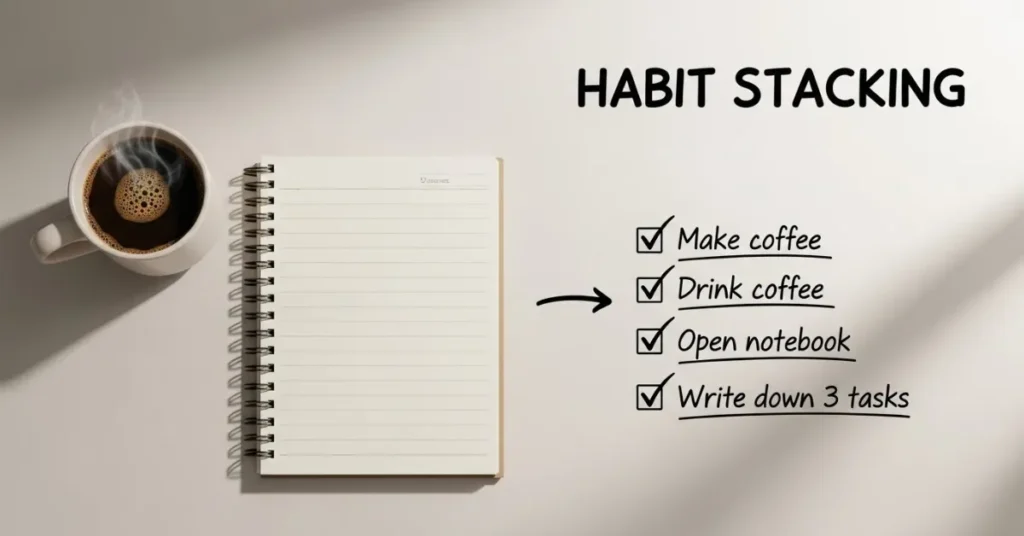
Why most routines fail after 2 weeks improves with habit stacking. Attaching new behaviors to existing ones uses established neural pathways.
Environmental design removes friction. Visible cues and fewer obstacles make habits easier to follow. When the environment does the work, discipline matters less.
Resilience: Lapse Versus Relapse
Abstinence Violation Effect
Why most routines fail after 2 weeks often escalates after a single slip. The Abstinence Violation Effect turns small lapses into full abandonment through guilt.
Separating lapses from relapses preserves momentum. One missed day is not failure. Viewing slips as normal prevents emotional overreaction.
Flexibility and recovery planning
Why most routines fail after 2 weeks decreases with flexibility. Rigid schedules break under pressure. Time blocks allow adjustment without quitting.
Planning recovery strategies prepares routines for real life. Flexibility keeps habits intact during disruptions rather than ending them completely.
Closing Paragraph
Why most routines fail after 2 weeks reflects biology, not weakness. The two-week drop is a neurological checkpoint, not a verdict. Progress compounds through small gains, not resets. A new year does not require a new brain. It requires realistic systems, patience, and respect for how behavior actually changes.
Frequently Asked Questions
Why do I always give up on my routine after two weeks?
Why most routines fail after 2 weeks happens because motivation drops while neural resistance increases. The brain prefers efficient habits and resists sustained effort. Without automation and reduced decision load, routines rely on willpower alone. Simplifying habits and anchoring them to identity improves long-term consistency.
Is it true that it takes twenty-one days to form a habit?
The twenty-one-day habit rule is a myth based on surgery adjustment observations, not behavioral science. Research shows habits average sixty-six days to automate, with wide variation. Expecting automatic behavior too soon leads to frustration. Viewing habit formation as a long process supports persistence.
How can I stay consistent with my morning routine?
Consistency improves by reducing complexity and linking habits to existing behaviors. Habit stacking, visible cues, and flexible time blocks lower mental effort. Start with one small action rather than a full routine. Ease, not intensity, drives long-term follow-through.
What is the valley of disappointment in habits?
The valley of disappointment describes the gap between effort and visible results early in habit formation. Neurological progress happens before outcomes appear. This delay feels discouraging. Recognizing the phase as temporary prevents premature quitting and supports steady consistency.
Why do I lose motivation after starting a new habit?
Motivation fades when dopamine drops and effort remains high. Overstimulation worsens this effect. Creating steady rewards, tracking progress, and lowering effort demands stabilize motivation beyond the early excitement stage.
How do I stop starting and stopping routines?
Breaking the cycle requires shifting from goals to systems. Design habits that work even when motivation is low. Plan for disruption rather than avoiding it. Identity-based habits reduce emotional dependence on short-term outcomes.
What are identity-based habits?
Identity-based habits focus on who you become rather than what you achieve. Each action reinforces self-belief. This approach reduces pressure, normalizes imperfection, and strengthens long-term consistency.
How does dopamine affect daily routines?
Dopamine fuels motivation and anticipation. Excess stimulation reduces baseline dopamine sensitivity, making effortful habits feel unrewarding. Stabilizing dopamine through meaningful rewards and reduced stimulation improves routine adherence.
What is habit stacking and does it work?
Habit stacking links new behaviors to existing routines, using established neural pathways. Research supports this method for reducing resistance. When habits attach to automatic behaviors, consistency improves without added willpower.
How do I get back on track after breaking my routine?
Recovery starts by treating slips as lapses, not failures. Resume with the smallest version of the habit. Avoid overcompensation. Calm re-entry preserves identity alignment and prevents abandonment.
Medical Disclaimer
This content is for informational purposes only and does not constitute medical advice. Consult a qualified healthcare provider before starting any new health routine or behavior change program, especially if you have medical conditions, mental health concerns, or are taking prescribed medications.
Related Reading
- Why Time management fails most working moms Today? Best Effective Solutions in 2026
- How to Find Time for Yourself and Restore Calm Focus
- 10 Simple Ways to Reduce Screen Time Daily
The design fix is three anchors rather than a chain, each with a thirty-second version for the bad days. How to Build a Daily Routine sets it out.