

Meta description (158 chars): 5 day workout routine for working moms that boosts energy in 30 minutes. Balance career, family, and fitness with proven strategies. Start today.
Most working moms don’t skip workouts because they lack motivation. They skip them because the day fills up before they get a chance. A 5 day workout routine for working moms only works when it fits real schedules, energy dips, and family demands. This approach focuses on consistency, not perfection, using short sessions that support daily life instead of competing with it.
What is a 5 day workout routine for working moms?
A 5 day workout routine for working moms is a flexible plan built around short, 30-minute sessions spread across the workweek. It combines strength, light cardio, and recovery to support energy, stress control, and consistency. The focus is realistic progress that fits work schedules, family responsibilities, and changing daily energy levels.

5 Day Workout Routine for Working Moms: The 30-Minute Framework
30 minute workouts and time efficiency
Thirty-minute workouts respect the real limits of working motherhood while still delivering results. Exercise science shows shorter, focused sessions can improve strength and heart health when effort is intentional. Removing long warmups and distractions helps you train with purpose and finish before interruptions take over.
Shorter sessions also reduce mental resistance. Knowing a workout ends quickly lowers the barrier to starting. That psychological ease matters because consistency builds progress. A brief workout completed often does far more than longer sessions skipped due to exhaustion or scheduling conflicts.
150 minute rule and health benefits
Public health guidelines recommend 150 minutes of moderate activity each week. Five days of 30-minute workouts meet this target without consuming weekends. This amount of movement is linked to lower risk of heart disease, type 2 diabetes, and chronic fatigue common among working mothers.
Benefits extend beyond physical markers. Regular activity improves sleep quality, mood stability, and stress tolerance. Spreading workouts across the week also reduces soreness and improves recovery, making the routine easier to maintain during busy seasons.
Quality over quantity mindset
Long workouts are often mistaken for better workouts. In reality, focused strength training and interval-based sessions create stronger adaptations in less time. Research from Harvard Health shows resistance training and intervals improve insulin sensitivity and muscular endurance efficiently.
This shift removes pressure. Instead of chasing perfection, you prioritize showing up. When workouts feel doable, motivation improves. Over time, that steady commitment builds confidence and trust in your ability to care for your body consistently.
You may also like: 20 Best Time-Saving Hacks for Working Moms in 2026
Simple Weekly Workout Schedule for Busy Mothers
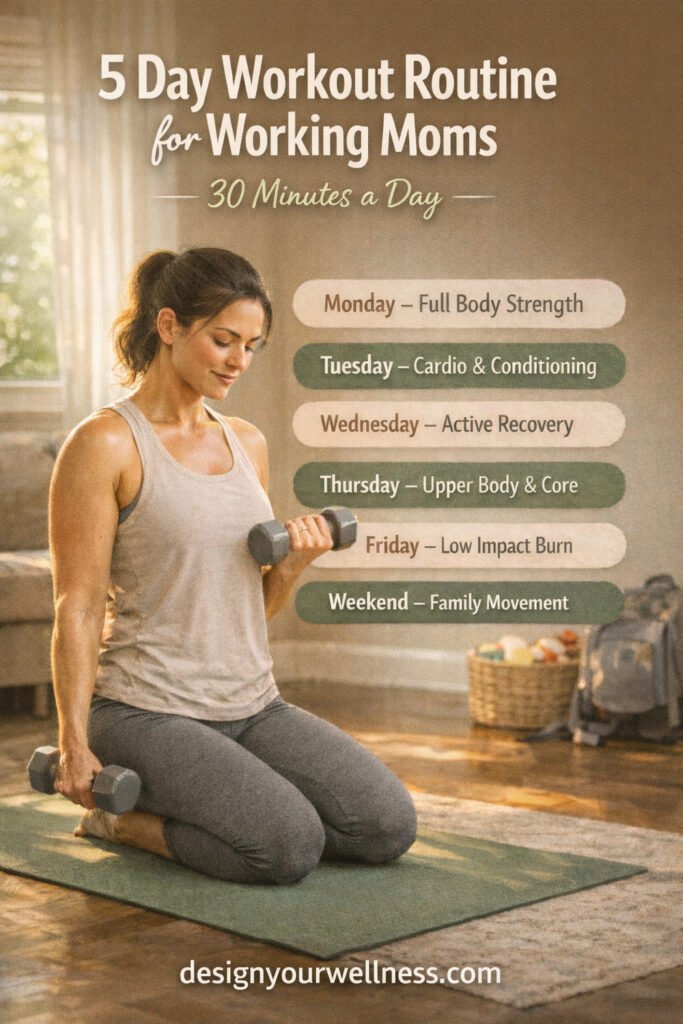
Full body strength training Monday
Monday centers on full body strength using compound movements like squats, lunges, rows, and presses. These exercises train multiple muscle groups at once, improving efficiency and posture. Strength training supports joint health and bone density, especially important for moms balancing desk work and childcare.
Use moderate weights and controlled form. Two to three sets across several movements are enough. Finish feeling challenged but stable. This approach builds strength without draining energy needed for the rest of the week.
Metabolic conditioning Tuesday
Metabolic conditioning raises heart rate while engaging muscles. Short circuits using bodyweight, kettlebells, or resistance bands build cardiovascular fitness and endurance together. Interval-based training has been shown to improve aerobic capacity without long workout durations.
Choose movements you can perform safely when breathing hard. Keep rest periods short but manageable. The goal is controlled intensity that leaves you alert and energized rather than depleted.
Active recovery Wednesday
Active recovery supports the nervous system and protects consistency. Light walking or gentle yoga reduces muscle tension and stress hormone levels. Research from Stanford suggests active recovery improves adherence and reduces burnout among busy adults.
Keep this session intentionally easy. Ten to twenty minutes is enough. Focus on breathing and mobility, not effort. Recovery days are part of training, not skipped workouts.
Upper body and core focus Thursday
Thursday shifts attention to posture and core stability, areas often strained by desk work and caregiving. Push-ups, rows, overhead presses, and planks strengthen the upper body while supporting spinal alignment. This focus reduces neck and shoulder tension that builds during long workdays.
Choose controlled movements and moderate resistance. Keep rest periods short but steady. Finishing with core work improves stability and prepares the body for more dynamic movement later in the week.
Low impact conditioning Friday
Friday sessions emphasize low impact conditioning that boosts heart rate without joint stress. Options include kettlebell circuits, cycling, or brisk incline walking. This approach improves cardiovascular health while allowing recovery before the weekend.
Keep intensity moderate and time efficient. You should finish feeling refreshed, not depleted. This sets a positive tone for weekend activity rather than fatigue-driven inactivity.
Weekend family movement (Saturday or Sunday)
Weekends are best used for relaxed movement that includes family. Walks, bike rides, playground games, or casual sports increase activity without feeling like workouts. Research shows family-based movement supports consistency and long-term habits.
There is no structure requirement here. The goal is enjoyment and connection while staying active in a way that feels natural.
Finding Time Without Burning Out
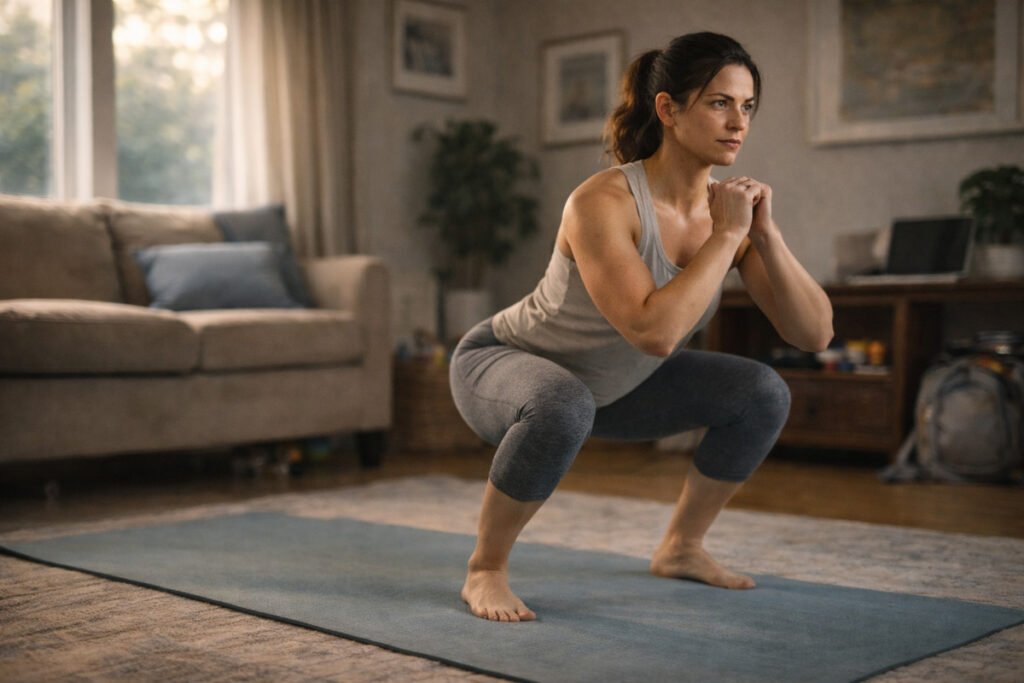
Early morning workouts for working moms
Early mornings work because interruptions are limited. Before work emails and family needs begin, the time is yours. Many working moms find morning workouts easier to maintain once the habit forms, even if sessions are brief.
Preparation is key. Set out clothes and plan the workout the night before. Reducing decisions protects energy. If mornings are not realistic, consistency still matters more than timing.
Workplace fitness strategies
Movement during the workday protects posture and circulation. Walking breaks, stair climbing, and standing meetings add activity without requiring extra time. Occupational health research links frequent movement to reduced neck and back discomfort.
Set reminders to stand or stretch every 30 minutes. Small movements accumulate and reduce stiffness that can interfere with evening workouts or family time.
Involving kids in workouts
Including children removes childcare barriers and models healthy behavior. Playground workouts, family walks, or short dance sessions all count. Research on family-based activity shows children are more likely to stay active when parents participate.
Keep expectations flexible. Kids may join briefly or creatively. That is enough. Shared movement supports bonding while protecting your own consistency.
Postpartum Exercise Considerations for Working Moms
Healing before training
Postpartum bodies need time and patience. Medical clearance is essential before structured exercise. Early weeks should focus on breathing, mobility, and gentle strength. Physical therapy research shows rushing intensity increases injury risk and slows recovery.
Pay attention to fatigue and sleep needs. Healing is not a setback. It creates the base for safe, confident training later.
Pelvic floor and core stability
Rebuilding pelvic floor connection supports continence, posture, and core strength. Exercises that coordinate breathing with gentle core and glute engagement restore stability before impact training. Specialists recommend mastering these basics before running or high-impact workouts.
Simple movements like bridges and supported squats work well. Quality matters more than volume. Persistent symptoms should be assessed by a pelvic health professional.
Progressive loading approach
Progressive loading means gradually increasing resistance as strength returns. Begin with bodyweight, then add bands or light weights. Rehabilitation research shows gradual progression reduces setbacks and supports long-term success.
Track effort, not perfection. Some weeks feel harder than others. Adjust without guilt. Progress remains steady when training respects energy fluctuations.
NEAT and Daily Movement Outside Workouts
Understanding NEAT for working mothers
NEAT, or non-exercise activity thermogenesis, includes movement outside workouts such as walking, standing, and daily tasks. Research shows NEAT can significantly affect metabolic health even when formal workouts stay the same.
For working moms, NEAT fits naturally into life. It does not require extra time, only awareness.
Increasing daily steps realistically
Ten thousand steps is a guideline, not a rule. Parking farther away, walking during calls, and short evening walks add up. Studies show even moderate step increases improve heart health and mood.
Use steps as information, not pressure. Weekly consistency matters more than daily totals.
Reducing prolonged sitting
Long periods of sitting are linked to stiffness and reduced circulation. Breaking sitting time every 30 minutes improves metabolic health. Simple habits like standing during emails or stretching while cooking help offset sedentary workdays.
These changes protect joints and support workout recovery.
Overcoming Mom Guilt and Mental Barriers
Reframing self care for mothers
Self care is often labeled optional, yet caregiver research shows regular self care reduces stress and improves emotional availability. Taking care of your health supports your family rather than competing with it.
Reframing workouts as responsibility rather than indulgence helps release guilt and build consistency.
Using SMART goals effectively
SMART goals provide structure without overwhelm. Clear targets like three workouts per week improve follow-through, especially under stress. Behavioral research consistently shows goal clarity improves adherence.
Review goals monthly and adjust. Life shifts. Flexible goals maintain momentum.
Practicing grace and consistency
Perfectionism disrupts progress. Some weeks will not go as planned. Habit research shows consistency, not intensity, predicts long-term adherence.
Return without judgment after missed days. Progress resumes the moment you restart.
Please Read: Why Most Routines Fail After 2 Weeks: Break the Pattern in 2026
Conclusion
A 5 day workout routine for working moms does not demand perfection. It asks for small, repeatable actions. Thirty-minute sessions, recovery, and daily movement build strength, energy, and resilience over time. Each choice to move reinforces your capacity to care for yourself and everyone who depends on you.
Medical Disclaimer
This content is for informational purposes only and does not constitute medical advice. Consult a qualified healthcare provider before starting any new exercise or wellness program, especially if you are pregnant, postpartum, injured, or managing a medical condition.
Frequently Asked Questions
How can a busy working mom find time to exercise?
Busy working moms find time by using short, scheduled workouts and adding movement to daily routines. Thirty-minute sessions before work or during lunch are effective. Walking meetings and family movement also help. Consistency matters more than perfect timing.
What is the best time of day for a working mom to workout?
The best time is the one you can maintain. Many moms prefer early mornings for fewer interruptions, while others choose evenings for stress relief. Research shows performance differences are small. Convenience and consistency matter most.
Can I get fit in just 30 minutes a day?
Yes. Thirty-minute workouts improve fitness when sessions are focused and consistent. Strength training and interval work improve cardiovascular health and muscle tone efficiently. Progress depends on frequency, effort, and recovery over time.
How do I start working out again after having a baby?
Begin only after medical clearance. Start with breathing, mobility, and gentle strength focused on core and pelvic floor connection. Gradually increase load as energy returns. Persistent pain should be evaluated by a qualified professional.
What exercises can I do at my desk?
Desk exercises include seated leg lifts, calf raises, shoulder rolls, and spinal mobility drills. Frequent movement breaks improve posture and circulation. Aim to move every 30 minutes to reduce stiffness and fatigue.
Is a 20 minute workout effective for weight management?
Twenty-minute workouts support weight management when intensity and consistency are appropriate. Interval training and strength circuits raise metabolic demand. Results depend on overall activity, nutrition, and recovery patterns.
How do I balance a full-time job and fitness with kids?
Balancing work, fitness, and kids requires flexibility. Schedule workouts like meetings, involve children, and accept imperfect sessions. Routines aligned with family life are more sustainable long term.
What exercises are safe for postpartum moms?
Safe postpartum exercises include walking, bodyweight squats, glute bridges, and breathing-based core work. Avoid high-impact movements until cleared by a healthcare provider. Recovery timelines vary between individuals.
How can I involve my children in my exercise routine?
Children can join walks, bike rides, playground workouts, or dance sessions. Shared activity models healthy habits and reduces childcare barriers. Keep it playful and flexible.
How many steps should a working woman take daily?
Around 10,000 steps is a general benchmark, but benefits occur at lower levels. Gradual increases improve heart health and mood. Focus on weekly movement patterns rather than daily perfection.