
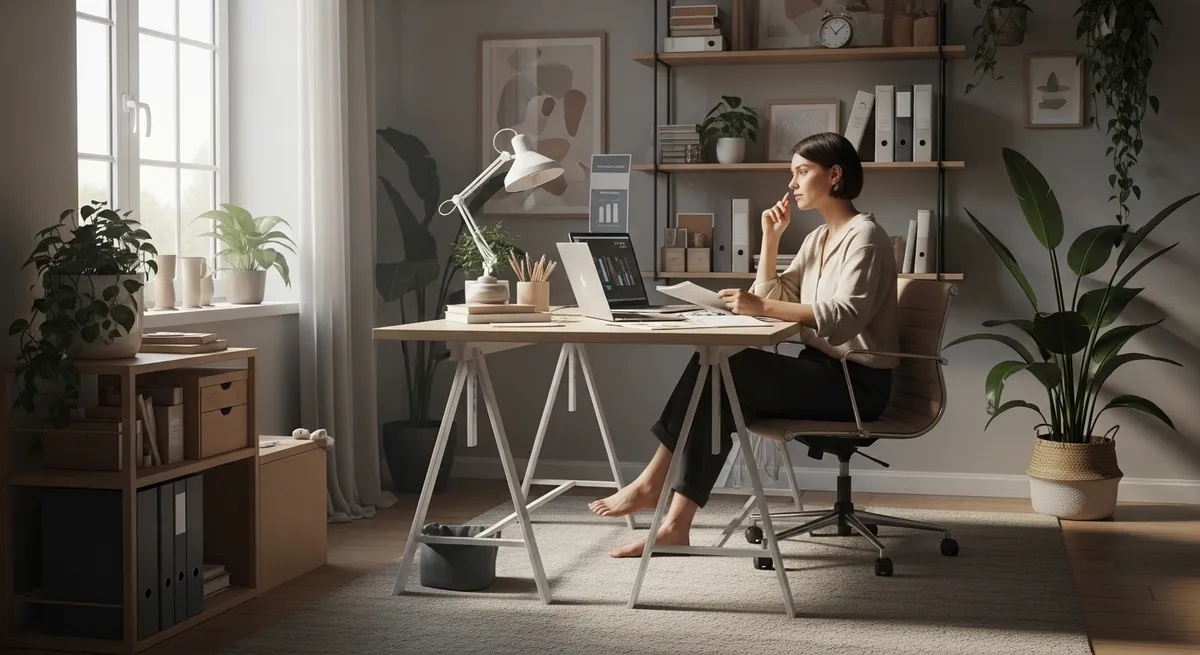
Innovative thinking is often described as rare talent or sudden inspiration, but public wellness education increasingly frames it as a practical mental habit shaped by routine, environment, and emotional steadiness. In everyday life, innovative minds are built through observation, adjustment, and follow through rather than flashes of brilliance. This grounded view helps people apply creativity calmly across work, family responsibilities, and personal wellbeing.
Modern life presents layered demands that require flexibility more than perfection. An innovative mindset supports daily decision making by encouraging experimentation without pressure or unrealistic expectations. When approached as a lifestyle skill, innovation becomes accessible to working professionals, parents, and caregivers managing limited time, mental load, and changing priorities.
Seeing innovation through a wellness lens also removes unnecessary comparison. It emphasizes sustainability, clarity, and usefulness over novelty or speed. This framing aligns with ethical wellbeing communication by offering realistic guidance that supports everyday functioning without implying therapy, diagnosis, or guaranteed outcomes.
Innovative minds as a balance of creativity and implementation
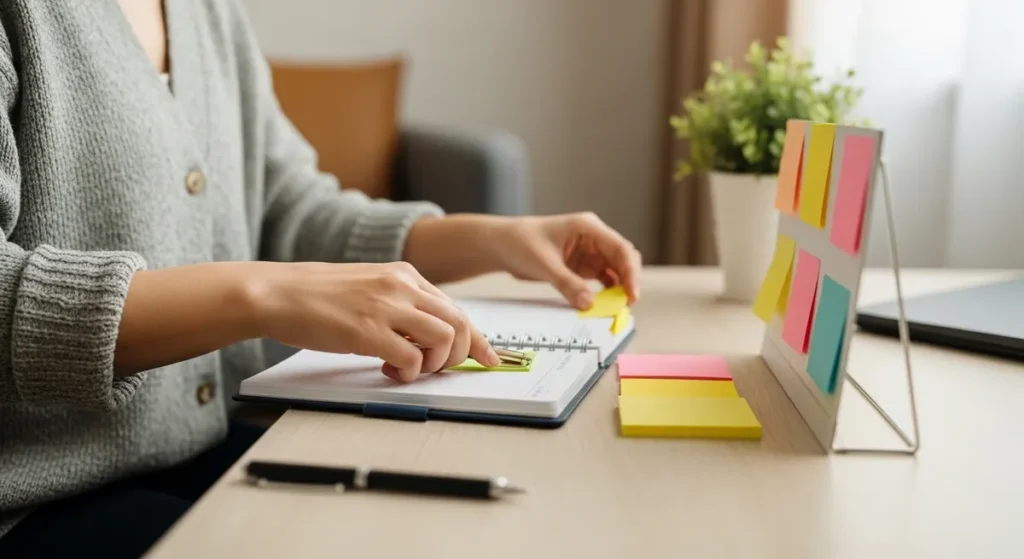
Innovative minds are best understood through their ability to move ideas into action, not simply generate them. Creativity involves imagining options, while innovation focuses on testing, refining, and applying those ideas in real situations. This distinction matters because many people have ideas but feel unsure how to act on them consistently.
In daily routines, innovation often shows up as small, thoughtful changes rather than dramatic breakthroughs. Adjusting a household system, streamlining a work process, or rethinking a schedule reflects practical innovation. These actions highlight implementation efficacy, where usefulness and follow through matter more than originality alone.
From a lifestyle perspective, this balance supports confidence and reduces decision fatigue. Practicing small implementations builds trust in judgment and reduces overthinking. Over time, innovative minds develop steadiness, allowing people to respond to change with clarity rather than urgency or self doubt.
You may also interested in:
Neuroplasticity and the adaptable brain
Neuroplasticity describes the brain’s capacity to adapt through experience, learning, and repetition. Wellness educators often reference this concept to explain how habits and thinking patterns remain flexible across adulthood. Innovative minds benefit because adaptability supports learning new approaches instead of repeating familiar responses.
Everyday activities such as learning a skill, changing routines, or reflecting on experiences are commonly associated with neural adaptation. Research from institutions like Harvard Medical School shows that repeated mental engagement strengthens connections across brain regions. These changes support learning, memory integration, and flexible problem solving over time.
From a lifestyle standpoint, neuroplasticity encourages patience and consistency. Mental change usually develops gradually, not instantly. This understanding reduces pressure and self criticism, which is especially relevant for parents and working adults balancing responsibilities and limited personal time.
Brain networks involved in creative cognition

Creative thinking relies on cooperation between several brain networks rather than a single area. Research from Stanford Medicine highlights interaction between the default mode network, executive control network, and salience network. Together, these systems support imagination, evaluation, and prioritization of ideas.
Innovative minds tend to shift smoothly between these networks. Imagination generates options, focused attention assesses feasibility, and awareness determines relevance. This coordination supports practical creativity that remains grounded rather than scattered or rigid.
Lifestyle factors often influence how effectively these networks work together. Adequate sleep, regular movement, and mental rest are commonly linked with clearer attention and emotional regulation. These foundations indirectly support innovation by maintaining cognitive stability and reducing overload.
Meditation and movement as cognitive supports
Meditation and mindful awareness are commonly presented in wellness education as supportive practices rather than treatments. Many people find that brief periods of focused attention help quiet mental noise and improve clarity. This mental space supports innovative thinking by allowing ideas to be evaluated calmly.
Physical movement is also associated with cognitive support. Aerobic activity is linked with improved blood flow and engagement of brain areas involved in learning and memory. These effects contribute indirectly to creativity by supporting overall brain health.
In everyday routines, combining light movement with short mindfulness practices often feels manageable. These approaches fit into busy schedules without demanding major lifestyle changes. They support sustained attention needed for problem solving without promising specific mental health outcomes.
Combinational creativity as an accessible method
Combinational creativity describes creating something new by blending existing ideas, skills, or systems. Innovative minds often rely on this method rather than trying to invent from nothing. It is widely observed in education, product design, and everyday problem solving.
This approach reduces pressure by encouraging people to work with what they already know. Familiar elements are adapted to new situations, making creativity feel practical and attainable. Confidence grows because innovation builds on existing understanding rather than constant originality.
In daily life, this might mean adapting a known routine to a new schedule or applying skills from one role to another. Over time, such blending strengthens conceptual flexibility and supports innovation as a repeatable habit.
Please Read: 10 Science-Backed Morning Habits That Make Workdays Easier
Base and additive thinking in daily contexts
The base and additive framework involves starting with a stable core idea and enhancing it with a supportive addition. Wellness educators often describe similar approaches when discussing habit building or routine design. The base provides reliability, while the additive introduces improvement without disruption.
In everyday settings, the base could be a familiar workflow, and the additive might be a small efficiency change. This approach reduces resistance because it respects what already works. Innovation feels manageable rather than overwhelming.
Practicing this framework supports mental prototyping, where ideas are tested gently before full adoption. This aligns with emotionally responsible wellbeing guidance by encouraging adjustment rather than risk heavy change.
Drivers of creative combination
Problem driven combination focuses on meeting a clear need by merging ideas that serve a practical purpose. This approach is common in caregiving, education, and work environments where constraints exist. It prioritizes relevance over novelty.
Similarity driven combination links ideas with shared traits such as structure or function. This pattern recognition strengthens divergent thinking and helps people transfer learning across contexts. Over time, this supports faster idea development.
Inspiration driven combination often arises from reading, conversation, or observation. It tends to occur when mental space is available rather than forced. Together, these drivers show that innovation grows from engagement and exposure, not pressure.
Lateral thinking as cognitive flexibility
Lateral thinking focuses on exploring ideas from multiple angles rather than following a linear path. Wellness educators describe it as a way to loosen rigid thinking patterns. This flexibility supports innovative minds by encouraging alternative interpretations of familiar situations.
Unlike step by step reasoning, lateral thinking allows ambiguity during exploration. It supports creativity by delaying judgment until more options emerge. This approach is commonly used in educational and creative settings.
In daily life, lateral thinking supports adaptability. When plans change or challenges arise, flexible thinking allows calmer adjustment. This makes lateral thinking a practical support tool rather than an abstract concept.
Practical lateral thinking techniques
Provocation introduces unrealistic statements to disrupt habitual thinking patterns. These statements are not meant to be taken literally but help surface hidden assumptions. This technique supports creative exploration by loosening constraints.
Random entry brings unrelated words or objects into a problem context. This encourages unexpected associations and often reveals overlooked connections. Many people use this method during planning or brainstorming sessions.
Challenge questioning examines why existing processes operate as they do. This reflection can reveal outdated practices. Used thoughtfully, these techniques support idea generation without forcing outcomes.
The Medici Effect and cross disciplinary exposure
The Medici Effect describes innovation that emerges at intersections of different disciplines or cultures. Historical examples show that combining knowledge across fields often leads to fresh perspectives. This pattern highlights the value of intellectual diversity.
Exposure to varied subjects expands mental reference points. Reading outside one’s profession or engaging with different cultures introduces alternative frameworks. These experiences enrich innovative minds by broadening context.
From a lifestyle view, cross disciplinary exposure supports curiosity rather than expertise. It encourages openness, which is commonly associated with creative cognition and flexible problem solving.
Collective innovation and psychological safety
Innovation often benefits from shared exploration rather than individual effort alone. Research in organizational psychology highlights psychological safety as a factor that supports idea sharing. When people feel safe expressing incomplete thoughts, creativity increases.
Group innovation grows when ideas build on each other. Territorial behavior can limit this process by restricting collaboration. Supportive environments encourage contribution without fear of judgment.
In families and workplaces, this principle supports healthier communication. Encouraging input from all members fosters shared problem solving and adaptability over time.
Core competencies associated with innovation
Creativity supports innovation by generating ideas that are novel and useful. It grows through curiosity, exposure, and practice rather than innate talent. This competency expands possible solutions.
Critical thinking evaluates ideas for relevance and feasibility. It keeps innovation grounded and realistic. Together with creativity, it balances exploration and judgment.
Initiative, teamwork, and networking support implementation. They move ideas into shared action and reflect the social dimension of innovative minds.
Personality traits and openness
Openness to experience is commonly linked with creative engagement. People with higher openness tend to explore new ideas and tolerate uncertainty. This supports innovation by encouraging experimentation.
Introversion and extraversion contribute differently. Reflection supports idea development, while communication supports sharing and adoption. Balanced expression supports sustainable innovation.
Personality traits are not fixed. Lifestyle habits can strengthen openness gradually. This perspective supports inclusive understanding of innovation.
Marginality and resourceful creativity
Marginal positions often foster resourcefulness due to constraint. Frugal innovation emerges when people adapt limited resources creatively. This pattern is common in community based solutions.
Such innovation emphasizes simplicity and accessibility. Solutions developed under constraint often scale well across contexts. This highlights the value of diverse lived experiences.
Recognizing marginal creativity supports inclusive innovation. It broadens understanding of where useful ideas originate.
Failure as an information source
Failure in innovation is often reframed as information rather than personal deficiency. Productive failure occurs within structured experimentation and supports learning by revealing assumptions.
Reckless failure differs because it ignores preparation or context. Wellness education emphasizes this distinction to maintain realism and safety. Learning oriented approaches support resilience.
Viewing failure neutrally reduces fear. It encourages continued engagement and supports long term creative development.
Iteration and resilience
Iteration involves refining ideas through repeated adjustment. This process supports innovation by integrating feedback gradually. Over time, outcomes improve.
Resilience supports persistence during setbacks. Neuroscience research suggests learning from mistakes strengthens adaptive control. This reinforces innovation capacity.
Daily reflection supports iteration. Simple review practices encourage learning without pressure.
Environments that support innovation
The four Ps model includes person, process, product, and press or place. Environment strongly influences creative expression. Supportive spaces encourage exploration.
Reducing the need for closure supports creativity. Exposure to fiction and cultural diversity is associated with openness. These experiences loosen rigid thinking.
Organizational culture also matters. Empowering leadership and shared ownership encourage idea contribution. Optimal uncertainty supports exploration without chaos.
Cultivating an innovative mindset safely
A growth mindset emphasizes skill development through effort rather than fixed ability. This supports innovation by reducing fear of mistakes and encouraging learning.
Deliberate practice targets specific skills through repetition. It supports neuroplastic change over time. This aligns with realistic development.
Stepping outside comfort zones gradually supports growth. Small challenges encourage adaptation while respecting emotional limits.
Parenting and working life relevance
Parents and working adults often innovate informally by adapting schedules and systems. These everyday adjustments reflect practical innovation.
Time constraints make efficiency valuable. Small innovations reduce mental load indirectly. This supports balance without promising mental health outcomes.
Modeling adaptive thinking supports children. It encourages curiosity and resilience in daily life.
Conclusion
Innovative minds develop through consistent habits, supportive environments, and realistic expectations. Framing innovation as a lifestyle skill reduces pressure and supports inclusion. Through neuroplasticity, collaboration, and reflection, innovation becomes accessible and sustainable. This balanced approach supports clarity, adaptability, and steady growth across everyday life.
Frequently Asked Questions
What defines an innovative mind
An innovative mind focuses on turning ideas into practical action. It combines creativity with evaluation and follow through. This approach supports everyday problem solving without relying on rare inspiration.
How do you develop an innovative mindset
An innovative mindset develops through exposure to new experiences and consistent reflection. Practicing small experiments supports learning over time. This gradual approach aligns with sustainable lifestyle habits.
What is the difference between creativity and innovation
Creativity involves generating ideas, while innovation focuses on applying them effectively. Both are valuable but serve different roles. Innovation emphasizes usefulness and context.
Can innovation be learned or is it innate
Innovation is widely considered a learnable skill supported by neuroplasticity. Practice and environment shape development. This view supports inclusive growth.
How does neuroplasticity help creativity
Neuroplasticity allows the brain to adapt through experience. This supports flexible thinking patterns. Over time, learning strengthens creative cognition.
What are the five pillars of innovation
Creativity, critical thinking, initiative, teamwork, and networking support innovation. Together they move ideas into action. These competencies develop gradually.
What is Edward de Bono’s lateral thinking
Lateral thinking encourages non linear exploration of ideas. It supports flexibility and alternative perspectives. This method complements analytical thinking.
How does failure lead to better innovation
Failure provides information about assumptions. Structured learning from setbacks supports improvement. This approach encourages resilience.
What is the Medici Effect in simple terms
The Medici Effect describes innovation emerging at intersections of disciplines. Diverse knowledge leads to new insights. This pattern supports creativity.
Why is diversity important for innovative thinking
Diversity introduces varied perspectives. It reduces groupthink and expands ideas. This supports adaptable solutions.
Medical disclaimer: This content is for informational purposes only and does not constitute medical or mental health advice. It does not diagnose, treat, cure, or prevent any condition. Consult a qualified healthcare professional before making changes related to health, wellbeing, or lifestyle practices.