

Mindful communication with kids often sounds simple, yet many families struggle to practice it consistently during ordinary days. Work pressure, household demands, and mental fatigue can quietly pull attention away during conversations with children. Wellness educators frequently explain that listening is not a technique to master quickly but a steady lifestyle habit that grows through awareness, patience, and repeated effort.
Listening plays a central role in how children experience safety and belonging at home. When children feel heard, they rely less on reactive behavior to express frustration or unmet needs. This article explains the art of listening as a grounded parenting skill that supports connection and emotional understanding without making therapeutic or medical claims.
Understanding the Mindful communication with kids
The art of listening in parenting refers to giving focused, respectful attention to a child’s words, emotions, and body language. It involves slowing down internal reactions and allowing the child’s experience to be acknowledged before guidance or correction appears. Lifestyle guidance often frames listening as a foundation for trust, especially during routine moments such as meals, transitions, or shared tasks.
Listening differs from simply hearing because it requires emotional steadiness from the adult. Parents may carry stress or distraction into conversations without realizing it. Mindful listening helps create space for children to express themselves clearly, which many families find reduces misunderstandings and repeated conflicts over time.
Why Listening Is a Core Parenting Skill
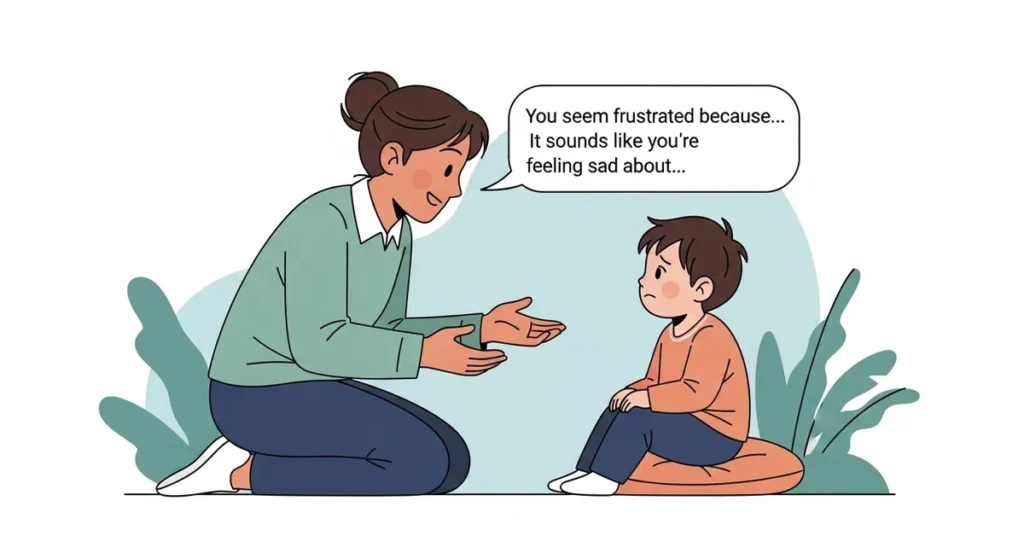
Listening supports emotional security more directly than instruction or correction. When parents listen carefully, children receive confirmation that their thoughts and feelings matter, even when rules remain unchanged. This sense of acknowledgment is commonly associated with improved cooperation and reduced emotional escalation during everyday interactions.
Children also learn communication habits by observing adults. When parents model respectful listening, children begin to mirror patience, turn taking, and emotional expression. Over time, these shared patterns contribute to calmer family dynamics and stronger relationships built on mutual respect rather than authority alone.
Listening With Full Attention
Listening with full attention means pausing other tasks and focusing entirely on the child during conversation. Simple actions such as putting devices away, facing the child, and maintaining relaxed eye contact signal interest and care. Many parents notice that children speak more openly when they sense genuine attention.
Full attention also involves noticing cues beyond words. Changes in tone, posture, or pacing often reveal emotional states children cannot yet explain clearly. Attentive listening allows parents to respond with understanding rather than assumption, which supports more accurate and supportive communication.
Moving Away From Autopilot Responses
Autopilot responses develop during busy routines when parents rely on quick phrases or familiar reactions. While efficient, these responses can unintentionally communicate dismissal. Mindful listening encourages brief pauses that allow parents to choose responses rather than repeat habits automatically.
Awareness is the first step away from autopilot. Parents often begin by noticing moments of impatience or distraction. With practice, intentional pauses become easier, leading to calmer exchanges and fewer misunderstandings during common daily challenges.
Non Judgemental Acceptance in Conversations
Non judgemental acceptance means recognizing a child’s emotional experience without labeling it as good or bad. This approach separates feelings from behavior, helping children understand that emotions are acceptable even when actions need guidance. Acceptance supports emotional safety and honest communication.
Many families find that acceptance reduces defensiveness. When children are not afraid of criticism, they share more openly. Over time, this openness supports learning and cooperation through dialogue rather than repeated correction.
Differentiating Acceptance From Agreement
Acceptance does not mean agreement, and understanding this distinction is essential for parents. Accepting feelings acknowledges emotional reality, while agreement relates to decisions or boundaries. This separation allows parents to remain empathetic while maintaining structure.
Clear language reinforces this balance. Parents who validate feelings while restating expectations often experience less resistance. Children gradually learn that emotions are respected, even when limits stay firm.
Emotional Awareness and Self Regulation
Emotional awareness involves noticing internal reactions before responding to a child. Stress, fatigue, or frustration can influence tone and timing without conscious intent. Recognizing these signals allows parents to pause and respond more thoughtfully.
Self regulation practices such as slow breathing or grounding are commonly used as lifestyle supports. These practices help parents model calm behavior. Children often learn emotional steadiness through observation rather than instruction alone.
Whole Body Listening Explained
Whole body listening involves engaging hearing, sight, and physical presence during conversations. Communication research frequently shows that emotional meaning is conveyed through body language and tone, especially for children. Paying attention to these signals improves understanding.
Children may struggle to express feelings verbally. Observing posture, movement, and facial expression provides additional context. Whole body listening supports empathy and reduces misinterpretation that can lead to unnecessary conflict.
Listening With Ears and Eyes Together

Listening with ears and eyes means attending to words and visual cues at the same time. Tone, eye contact, and facial expression often reveal emotional states more clearly than language alone. Parents who observe these cues respond more accurately.
Physical positioning also matters. Being at eye level and maintaining gentle facial expressions communicate safety. Over time, consistent visual engagement builds trust and openness in parent child communication.
Understanding Emotional Tone and Rhythm
Emotional tone includes pitch, rhythm, and volume of speech. Children often communicate stress or excitement through these patterns. Attentive listening to tone helps parents understand feelings beneath words.
Maintaining a calm vocal tone during responses often helps deescalate situations. Children tend to mirror adult regulation. This pattern supports calmer interactions without requiring correction or discipline.
Cognitive and Emotional Listening Balance
Listening includes emotional resonance and cognitive interpretation. Emotional listening allows parents to sense feelings, while cognitive listening considers context and development. Balancing both supports thoughtful responses.
Focusing only on logic can overlook emotional needs. Focusing only on emotion can miss practical context. Integrating both perspectives helps guide behavior while respecting feelings.
Action Oriented Listening in Practice
Action oriented listening translates understanding into visible care. Reflective statements acknowledge feelings, while follow up actions demonstrate responsiveness. Small adjustments often reinforce that listening has meaning.
Children notice consistency between words and actions. When listening leads to supportive change, trust grows. Over time, communication becomes more effective than reactive behavior.
Reflective Speech as Validation
Reflective speech involves restating a child’s feelings in neutral language. This confirms understanding without judgment or instruction. Many parents observe that reflection alone reduces emotional intensity.
Neutral phrasing helps children feel seen. Over time, children adopt reflective language themselves. This supports emotional awareness and communication skills beyond the family setting.
Following Words With Supportive Actions
Supportive actions do not need to be large or immediate. Adjusting routines slightly or offering reassurance often communicates care. These actions demonstrate responsiveness rather than control.
Consistency matters most. When children see that listening leads to thoughtful action, cooperation increases. This supports mutual respect in daily family life.
Active Listening in Daily Parenting
Active listening involves focused attention, clarification, and thoughtful response. Parents often use it during problem solving or emotionally charged discussions. It helps uncover unmet needs beneath behavior.
Over time, active listening encourages children to express concerns verbally. This reduces conflict and supports collaboration rather than repeated correction.
Using Open Ended Language Carefully
Open ended language allows children to explain experiences more fully. It avoids limiting responses. Neutral prompts often invite deeper sharing.
Allowing pauses after questions respects emotional processing. Children often need time to reflect. This approach supports confidence and communication skills.
Quiet Listening as Presence
Quiet listening emphasizes presence without immediate response. Silence can feel uncomfortable, yet it often gives children space to organize thoughts. Many children share more when not rushed.
Quiet presence communicates patience. This approach supports emotional safety and reduces pressure during sensitive conversations.
Resisting the Urge to Fix
Parents naturally want to solve problems quickly. Immediate solutions can unintentionally dismiss feelings. Quiet listening allows emotions to settle before guidance appears.
Delaying solutions does not remove structure. It prioritizes understanding first. This often leads to better cooperation later.
Reflective Listening and Routines
Reflective listening supports smoother routines. Transitions often trigger resistance. Acknowledging feelings related to routines reduces tension.
Predictable language and responses build understanding. Children feel less anxious when expectations are clear. Reflective listening supports this clarity.
Visual Supports and Predictability
Visual supports clarify routines without repeated reminders. Charts or pictures help children anticipate transitions. Many families find this reduces communication stress.
Predictability supports emotional regulation. When routines feel clear, children feel safer. Visual tools complement listening by preventing confusion.
Needs Based Communication Principles
Needs based communication focuses on underlying needs rather than labels. This approach avoids moral judgment. It emphasizes understanding and mutual respect.
Expressing needs calmly models healthy communication. Children learn that everyone’s needs matter. This supports cooperation.
Moving From Control to Collaboration
Collaborative communication invites children into problem solving. Parents maintain leadership while encouraging participation. This balance supports autonomy.
Children often respond positively when included. Collaboration builds responsibility and engagement over time.
Tailoring Communication for Neurodivergent Children
Neurodivergent children may process language differently. Clear, concrete phrasing supports understanding. Avoiding abstract expressions reduces confusion.
Environmental adjustments also help. Reducing sensory overload supports engagement. These adaptations respect individual differences.
Sensory Friendly Interaction Spaces
Sensory friendly spaces limit overstimulation. Calm lighting and reduced noise support focus. Many families create quiet areas for conversations.
These spaces support regulation for everyone. Over time, they become associated with safety and communication.
The Focusing Approach Explained
The focusing approach involves noticing physical sensations linked to emotions. This awareness helps children express feelings indirectly. It is used as a communication support.
Language that creates distance from emotion supports regulation. Children learn to observe feelings without being overwhelmed.
Being With Emotions Safely
Being with emotions means acknowledging them without urgency. Parents support this through calm presence. This communicates acceptance.
Over time, children gain confidence in emotional experiences. They learn feelings are manageable. This supports resilience.
Common Communication Traps to Avoid
Certain responses block communication. Immediate reassurance or advice can dismiss feelings. Sharing personal stories too early shifts focus.
Awareness helps parents adjust gradually. Small changes improve listening quality.
Respectful Language and Labels
Labels influence perception. Respectful language reinforces dignity. Speaking to children as individuals supports connection.
Children learn how language shapes relationships. This awareness supports healthy communication.
Practical Listening Exercises
Listening improves with practice. Simple exercises build awareness. Many parents integrate them into routines.
Games that share control teach autonomy. Mindfulness practices support presence.
Mindfulness Practices for Parents
Mindfulness practices emphasize present awareness. Brief breathing exercises support calm. Parents often use them before conversations.
These practices are lifestyle supports. Over time, they improve listening consistency.
Long Term Impact of Being Heard
Being heard supports emotional security. Children who feel understood communicate more openly. Listening strengthens relationships.
Perfection is not required. Consistent effort matters. Listening builds connection over time.
Frequently Asked Questions
How parents can become better listeners
Parents become better listeners by slowing responses, focusing attention, and acknowledging emotions before guidance. This approach is commonly linked to improved communication quality. Practicing pauses and reflective language supports listening without major routine changes.
Difference between active and reflective listening
Active listening involves engagement and clarification, while reflective listening mirrors emotions. Both support mindful communication with kids. Choosing depends on whether guidance or validation fits the moment.
Importance of listening in parenting
Listening supports trust and emotional safety. Children who feel heard communicate openly. This reduces repeated conflict and supports cooperation.
Encouraging children to share daily experiences
A calm, non judgemental environment supports sharing. Allowing silence and avoiding advice increases openness. Consistent listening builds trust.
Staying calm during emotional outbursts
Staying calm involves regulating personal reactions first. Slow breathing and steady tone help. Calm responses reduce escalation naturally.
Conclusion
The art of listening is a practical lifestyle skill that supports mindful communication with kids. It emphasizes presence, respect, and steady attention rather than control. When practiced consistently, listening supports trust, cooperation, and long term family connection built through everyday moments.
Medical Disclaimer
This content is for informational purposes only and does not constitute medical or mental health advice. It is not intended to diagnose, treat, cure, or prevent any condition. Always consult a qualified healthcare professional for personal medical or mental health concerns.