Parenting without yelling has gained attention as families juggle work, home responsibilities, and emotional fatigue. Raised voices often surface during overload rather than intention, leaving parents feeling disconnected afterward. This approach frames calmer communication as a practical lifestyle skill that develops through awareness, repetition, and realistic expectations rather than perfect self-control.
Many parents want respectful communication without losing authority, yet daily stress can make that feel out of reach. Wellness education explains emotional regulation in everyday terms, helping parents understand why yelling happens and how it can be reduced safely. Parenting without yelling is presented here as a supportive habit that grows gradually through consistency.
This page explains parenting without yelling through clear lifestyle principles rather than therapy or diagnosis. The focus remains educational, emotionally responsible, and grounded in real family routines. Each section stands alone, making the information useful for everyday reference.
Understanding Parenting Without Yelling as a Lifestyle Concept
Parenting without yelling refers to communicating limits and guidance without raising one’s voice during moments of conflict. It centers on noticing stress responses early and choosing calmer verbal reactions. Many wellness educators describe it as a communication habit rather than a fixed parenting style.
This approach does not remove structure, rules, or consequences from family life. It focuses on delivery, not permissiveness. In everyday households, calmer communication is often linked with clearer expectations and fewer repeated conflicts.
Parenting without yelling fits within broader lifestyle balance discussions. It aligns with mindfulness principles that encourage pause before reaction. Over time, repeated calm interactions shape more predictable family communication patterns.
Why Yelling Happens in Everyday Parenting
Yelling commonly appears when stress builds faster than emotional awareness. Noise, time pressure, and fatigue narrow patience and shorten reactions. The raised voice often reflects overload rather than intent to harm or control.
Research in stress education shows emotional responses activate before logical thought during high pressure moments. Parents may react automatically, then feel regret once calm returns. Recognizing this sequence reduces shame and encourages adjustment.
Family communication patterns are often learned early in life. Many adults repeat familiar responses under stress. Awareness creates space to respond differently with practice.
You may also interested in:
Mindfulness Activities to Do With Kids: A Complete Guide to Building Emotional Strength
Signs and Symptoms of Burnout in Working Moms 2026 – Strategies for Recovering From Burnout
How to Stay Calm When Your Kids Push Your Buttons: Parenting Guide with Proven Ways for 2026
The Role of the Nervous System in Parenting Responses
The nervous system influences how parents react during challenges. When stress rises, the body shifts toward protective reactions that limit reflection. Calm speech becomes harder during this state.
Wellness education explains that heightened arousal reduces patience and listening capacity. Control can feel urgent while connection fades. Understanding this biological response reframes yelling as a stress signal.
Learning to notice early activation allows earlier intervention. Simple awareness practices support regulation before escalation. This understanding forms the base of parenting without yelling.
Emotional Safety and Family Communication
Emotional safety means family members feel secure during disagreement. Parenting without yelling supports this by reducing sudden emotional shifts. Children tend to engage more openly when communication remains steady.
Loud reactions often redirect attention toward fear rather than learning. A calm tone keeps focus on guidance. Over time, children learn expectations without emotional shock.
Consistent emotional tone builds trust across daily routines. Predictability reduces repeated conflict. This stability supports cooperation naturally.

Identifying Personal Triggers in Parenting Situations
Triggers are situations that quickly increase emotional intensity. Mess, rushing, sibling conflict, or public settings commonly amplify stress. Identifying patterns allows preparation rather than reaction.
Physical cues often appear before verbal reactions. Tight muscles, shallow breathing, or mental agitation act as early warnings. Awareness of these signs creates intervention space.
Adjusting routines reduces trigger frequency. Preparation, pacing, and realistic expectations lower emotional load. Prevention supports calmer responses.
The Importance of Self-Awareness in Daily Parenting
Self-awareness involves noticing internal reactions without judgment. Recognizing frustration early helps prevent verbal escalation. Many people find awareness alone reduces intensity.
This practice does not suppress emotion. It creates space between feeling and action. Over time, that space supports clearer communication.
Children benefit from predictable emotional responses. Consistency builds trust. Self-awareness strengthens this consistency.
Centering Techniques Commonly Used by Parents
Centering techniques help parents regain composure quickly. Breathing, grounding, and brief pauses are common examples. These practices fit naturally into daily routines.
Slow breathing helps settle emotional arousal. A few steady breaths can change tone. Many parents use this silently during stress.
Centering does not remove challenges. It changes response quality. Repetition turns these practices into habits.
Breathing Practices as Everyday Support Tools
Breathing practices focus on controlled inhalation and exhalation. They are widely used in mindfulness education. Parents often use them during transitions.
Steady breathing signals safety to the body. This supports calmer speech and thinking. No special setting is required.
Breathing creates a pause before reacting. That pause often shifts conversation tone. Over time, it becomes automatic.
Physical Grounding in High-Stress Moments
Grounding reconnects attention to physical sensations. Feeling feet on the floor or noticing sounds can redirect focus. These actions interrupt escalating thoughts.
Grounding is common in lifestyle wellness guidance. It is simple and adaptable. Parents can use it while staying present.
Physical grounding reduces reactive speech. With repetition, it improves emotional steadiness.
Mindful Communication in Family Life
Mindful communication considers tone, timing, and language. Parenting without yelling uses deliberate word choice. This supports clarity without intensity.
Naming emotions calmly reduces tension. Children learn emotional language through example. This builds understanding.
Mindful communication values clarity over volume. Needs are expressed directly. Misunderstandings decrease over time.
The Use of Calm Authority Instead of Volume
Calm authority conveys confidence without loudness. Boundaries remain clear. Predictability supports cooperation.
Lower volume often increases attention. Children listen more closely to unexpected calm. This supports instruction without fear.
Calm authority develops gradually. Consistent repetition replaces escalation. Trust builds over time.
Reparenting Concepts Explained Safely
Reparenting describes meeting emotional needs internally. In wellness contexts, it is framed as self-support. Parents explore it to understand reactions.
It involves offering patience and validation to oneself. It does not replace professional care. It supports awareness.
Understanding reparenting reduces reactivity. Internal calm supports external communication. This aids parenting without yelling.
Self-Compassion in Parenting Routines
Self-compassion means responding kindly to mistakes. Parenting without yelling accepts learning curves. Progress matters more than perfection.
Harsh self-criticism increases stress. Stress makes regulation harder. Compassion supports resilience.
Self-compassion allows reset after difficult moments. Repair becomes easier. Trust strengthens.
Repairing After Yelling Occurs
Repair restores connection after raised voices. Parenting without yelling includes acknowledging mistakes. Calm apology reassures safety.
Clear acknowledgment builds trust. Excuses are unnecessary. Children feel secure again.
Repair reduces long-term impact. Relationships remain intact. Learning continues.
Long-Term Regulation Through Daily Habits
Daily habits affect emotional capacity. Sleep, nourishment, and routine influence patience. Parenting without yelling benefits from supportive rhythms.
Predictable routines reduce stress. Stability supports calm interaction. Decision fatigue decreases.
Small changes add up. Emotional regulation improves gradually. Consistency matters.
Vagus Nerve Regulation Explained Simply
The vagus nerve relates to calm states. Wellness education discusses gentle support methods. These practices are lifestyle-based.
Humming, slow breathing, or relaxed movement are common. They are considered supportive. Parents integrate them naturally.
Improved stress tolerance supports calmer reactions. Parenting without yelling benefits from this resilience.
Nature Exposure as Lifestyle Support
Time outdoors supports emotional balance. Natural settings reduce sensory overload. Many families notice calmer moods outside.
Nature provides gentle sensory input. Walking or observing greenery grounds attention. Planning is minimal.
Regular outdoor time supports connection. It complements regulation practices. Emotional steadiness increases.
Parenting Without Yelling During Transitions
Transitions increase stress. Mornings and bedtimes are common pressure points. Parenting without yelling addresses these patterns.
Preparation reduces urgency. Visual cues and routines help. Expectations become clearer.
Smoother transitions reduce conflict. Reactions soften. Communication improves.
Parenting Without Yelling in Public Settings
Public environments add pressure. Noise and observation increase stress. Yelling becomes more likely.
Mental preparation helps. Grounding techniques can be subtle. Expectations adjust.
Consistency develops confidence. Calm communication extends beyond home. Adaptability grows.
Parenting Without Yelling and Working Life Balance
Working parents manage multiple roles. Cognitive load affects emotional availability. Parenting without yelling acknowledges this reality.
Transition rituals support emotional shift. Short pauses help. Spillover stress decreases.
Balance evolves over time. Gentle adjustments support sustainability. Calm communication benefits.
Modeling Emotional Regulation for Children
Children learn by watching adults. Parenting without yelling models regulation. Calm responses teach emotional skills.
Repeated exposure shapes behavior. Children mirror steadiness. Emotional literacy grows.
Family culture shifts gradually. Balance becomes normal. Connection strengthens.
Parenting Without Yelling and Cultural Expectations
Cultural norms shape communication. Raised voices may be normalized. Parenting without yelling offers alternatives respectfully.
This approach adapts tradition. Emotional safety remains central. Values are honored.
Flexibility supports balance. Families choose alignment. Communication evolves.
Reducing Shame Around Parenting Challenges
Shame often follows parenting struggles. Parenting without yelling reframes challenges as skill gaps. Learning replaces blame.
Shared experiences normalize difficulty. Isolation decreases. Growth feels possible.
Reduced shame supports openness. Skills improve. Change becomes sustainable.
Parenting Without Yelling as Ongoing Practice
This approach develops through repetition. Parenting without yelling is not instant. Progress varies.
Setbacks are expected. Each attempt builds awareness. Skills strengthen.
Viewing parenting as practice supports patience. Long-term consistency matters. Growth continues.
Frequently Asked Questions
Does yelling at a child affect emotional development
Frequent yelling is often linked with increased emotional stress in children. Elevated stress can influence how children interpret communication and safety. Reducing yelling supports calmer environments without guaranteeing specific outcomes.
Why is it difficult to stop yelling immediately
Yelling usually comes from automatic stress responses rather than choice. These responses develop over time and take practice to change. Gradual regulation is more realistic than instant change.
Is parenting without yelling permissive
Parenting without yelling does not remove boundaries. It changes how limits are communicated. Calm authority maintains structure while reducing intensity.
Can calm parenting work with strong-willed children
Many families use calm communication with expressive children. Consistency and clarity are emphasized over volume. Results vary with routine and context.
How long does it take to see changes
Lifestyle changes develop gradually. Some notice shifts within weeks, others later. Consistency supports progress.
Is it normal to feel guilty after yelling
Guilt often reflects awareness rather than failure. Repair and reflection support trust. Self-compassion helps restore balance.
Does parenting without yelling mean suppressing emotions
This approach does not suppress emotion. It supports expression with awareness. Feelings are acknowledged calmly.
Can working parents practice parenting without yelling
Working parents face added stress. Small regulation practices fit busy schedules. Adaptation supports sustainability.
Does calm parenting remove consequences
Consequences remain part of guidance. They are delivered calmly. Clarity supports understanding.
Is professional help required to stop yelling
Many parents improve through lifestyle education alone. Professional support may help some situations. Parenting without yelling does not replace professional care.
Conclusion
Parenting without yelling is a supportive lifestyle practice based on awareness, routine, and communication habits. It respects real stress while offering realistic tools for calmer responses. With consistent practice, families can build emotional safety and connection without perfection.
Medical Disclaimer
This content is for informational purposes only and does not constitute medical or mental health advice. It does not diagnose, treat, cure, or prevent any condition. Consult a qualified healthcare or mental health professional for personalized guidance or concerns.
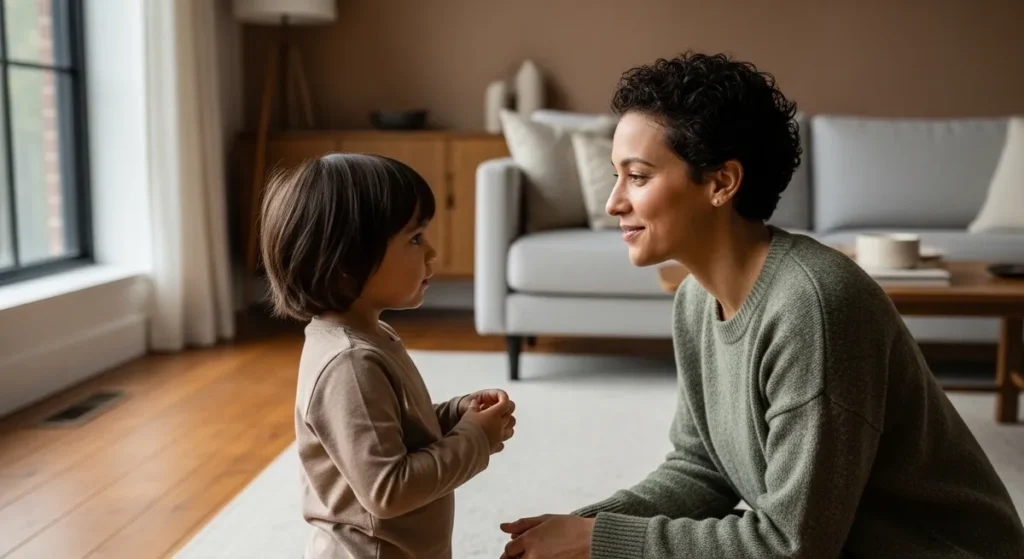
Prompt 1: Featured Image A calm parent kneeling at eye level with a child in a softly lit living room, neutral facial expressions, gentle posture, no tension visible, modern realistic home, natural window light, earth-tone palette, diverse representation, editorial photography style, shallow depth of field, horizontal composition, professional wellness magazine quality.
Prompt 2: Supporting Concept Image Close-up of adult hands resting on knees demonstrating box breathing posture, minimal background, soft natural light, muted colors, instructional clarity, calm atmosphere, realistic textures, clean composition, accessibility focused, editorial instructional photography.
Prompt 3: Inspirational Image Parent and child walking barefoot in a green park during golden hour, relaxed body language, natural interaction, emotional warmth, realistic diversity, soft sunlight, lifestyle photography aesthetic, aspirational but attainable, horizontal framing.
Alternative Headlines
- 7 Science-Backed Ways to Practice Parenting Without Yelling
- Are You Yelling Because You’re Dysregulated as a Parent?
- How to Practice Parenting Without Yelling Starting Today
- Break the Cycle with Parenting Without Yelling Techniques
- Science-Backed Parenting Without Yelling for Emotional Safety
Related keywords: parenting without yelling, calm parenting, emotional regulation for parents, stress awareness in parenting, mindful parenting communication, family emotional safety
LSI keywords: nervous system regulation, parenting triggers, co-regulation, emotional awareness, stress response, lifestyle balance, working parents wellbeing