
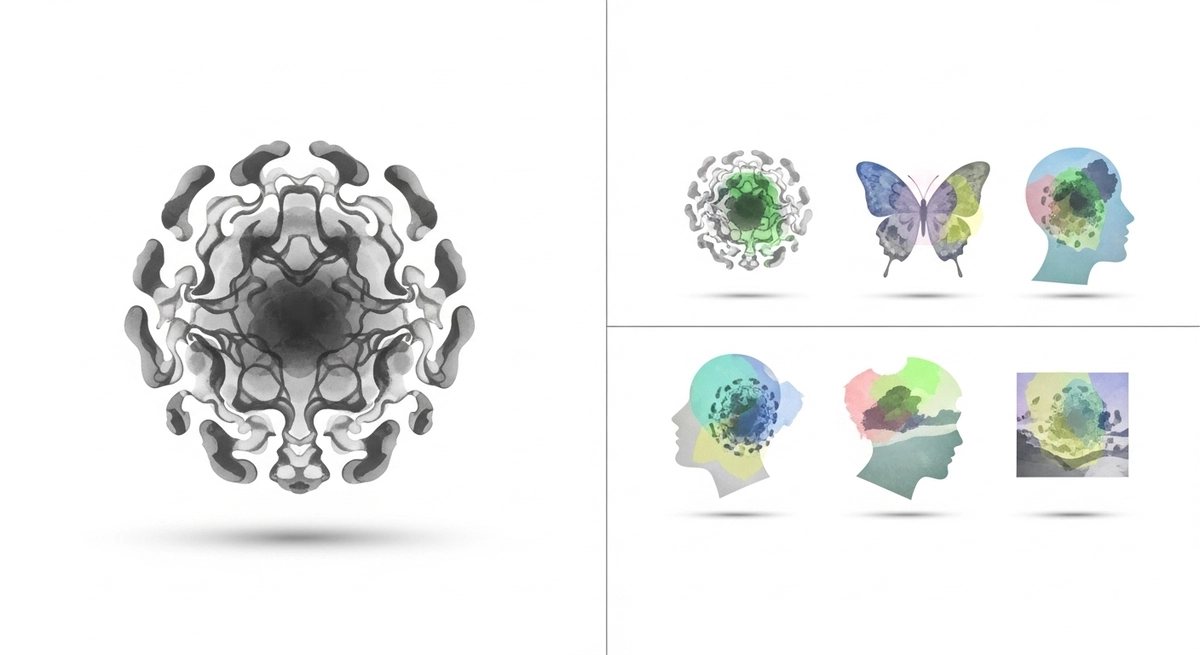
The dirty mind test gained attention because it reflects a familiar moment many people experience in daily life. An image appears harmless at first, yet the mind forms an unexpected interpretation almost instantly. Wellness educators note that this response reflects perception and learning patterns rather than values, morality, or emotional stability.
Modern life requires fast interpretation across work, family, and social settings. The brain relies on shortcuts to process information efficiently when time and attention are limited. The dirty mind test highlights how these shortcuts sometimes surface in surprising ways, especially when images or words are intentionally ambiguous.
From a lifestyle editorial perspective, understanding this topic matters because misinterpreting perception can lead to unnecessary self criticism. Many people label these reactions as flaws instead of recognizing them as neutral cognitive habits. Learning how perception works supports emotional balance and healthier self awareness.
Understanding the Dirty Mind Test as a Perceptual Exercise

The dirty mind test functions as a perceptual exercise rather than any form of psychological measurement. It typically presents unclear images or phrases that allow several reasonable interpretations. The response reflects how the brain resolves uncertainty using memory, experience, and cultural exposure at that moment.
In everyday routines, people interpret incomplete information constantly. Facial expressions, short messages, and tone of voice all require mental guesswork. The dirty mind test mirrors this common process in a simplified format, making unconscious interpretation patterns easier to notice.
Wellness editors emphasize that perception does not equal intention or belief. A spontaneous interpretation does not signal desire or character. It shows which associations are most accessible at that time, often influenced by fatigue, environment, or recent media exposure.
You may also like:
Why Are Mind Eraser Cocktail Variations Still So Popular: A Calm, Informed Lifestyle Guide 2026
The Power of Silence for Focus, Health, and Influence
Understanding Anxiety Pen and Everyday Calm in Modern Life 2026
Pareidolia and the Human Need for Meaning
Pareidolia describes the tendency to see recognizable shapes in vague or random stimuli. Faces in clouds or patterns in wood grain are familiar examples. This same process plays a role in dirty mind test reactions when images lack clear structure or context.
From an evolutionary viewpoint, pattern recognition supported survival by allowing quick detection of faces or threats. That system still operates today, even in neutral situations. When no danger exists, the result may simply be a humorous or awkward interpretation.
Wellness education treats pareidolia as a neutral brain function. It affects people regardless of background or personality. Understanding this tendency helps reduce self judgment and reinforces that perception often fills gaps automatically.
Projective Thinking in Everyday Life
Projective thinking occurs when people use internal references to interpret unclear situations. This process appears daily in conversations, social media, and news consumption. The dirty mind test relies on projection to show how meaning forms when clarity is missing.
Earlier psychological methods used ambiguous material to explore thought patterns. Contemporary practice views these tools cautiously and always within context. Interpretation shifts with mood, stress levels, and recent experiences rather than fixed traits.
From a lifestyle lens, projective thinking influences relationships and workplace communication. Awareness of this tendency supports slower interpretation and clearer dialogue. That awareness can ease misunderstandings without assigning blame.
Environmental Priming and Mental Accessibility
Priming occurs when exposure to certain ideas shapes later interpretation. Language, visuals, and conversations can increase mental accessibility of related themes. Dirty mind test results often differ depending on what someone encountered earlier that day.
Subliminal priming happens outside conscious awareness, while supraliminal priming is noticeable. Both demonstrate how responsive the brain is to surroundings. These effects are usually short lived but powerful enough to shift perception temporarily.
In daily life, managing information intake supports mental clarity. Many people find it helpful to limit overstimulating content before work or family time. This approach supports focus without rigid avoidance or restriction.
Semantic Associations and Cultural Learning
Semantic associations develop through shared language and cultural experience. Words and symbols carry layered meanings learned over time. Dirty mind test interpretations often rely on these shared meanings rather than individual imagination.
Cultural context explains why interpretations vary across regions and age groups. What seems suggestive in one environment may appear neutral in another. This variability highlights how perception is shaped socially.
From a wellbeing standpoint, cultural awareness encourages empathy. Recognizing shared learning reduces self criticism and misunderstanding. It reinforces that perception is collectively shaped.
Error Management Theory and Cognitive Bias
Error management theory suggests the brain favors certain mistakes over others. Missing important social cues once carried higher costs than false alarms. This bias still influences interpretation under uncertainty.
When information is unclear, emotionally relevant meanings often surface first. The dirty mind test demonstrates this preference without real consequences. The response reflects inherited cognitive tendencies rather than conscious choice.
Lifestyle guidance encourages awareness rather than correction. Biases are adaptive, not failures. Understanding them supports calmer reflection and emotional regulation.
Gender Patterns and Perceptual Attention
Research shows average differences in perceptual bias across genders in some contexts. Men may display higher rates of sexual overperception, while women may interpret cues more cautiously depending on social context.
These findings represent trends, not fixed rules. Individual variation is substantial, and environmental priming often reduces differences. Context remains a stronger influence than gender alone.
Wellness communication avoids reinforcing stereotypes. Editors focus on variability and situational factors. This approach supports inclusive understanding without comparison.
Non-Resolution Reasoning and Mental Flexibility
Non-resolution reasoning describes difficulty holding multiple interpretations at once. The brain prefers closure to reduce effort. Dirty mind test images encourage rapid closure by design.
Mental flexibility involves tolerating ambiguity longer. This skill supports creativity, emotional balance, and problem solving. Many people build it through reflective habits like journaling or mindful observation.
In daily life, flexibility supports parenting and work communication. Pausing before reacting reduces misunderstanding. This approach encourages thoughtful response.
Creativity and Associative Thinking

Associative thinking allows connections between unrelated ideas. It supports humor, storytelling, and innovation. Dirty mind test reactions often reflect this associative capacity.
Creativity does not equal impulsivity or immaturity. It reflects openness to multiple meanings. When paired with awareness, it becomes a useful cognitive strength.
Wellness educators frame creativity as balance. Expression combined with regulation supports clarity. This reframing removes shame and supports self understanding.
Sexual Priming and Social Connection
Sexual priming can activate social and relational motivations. Research suggests it may increase openness and cooperative behavior in appropriate contexts. These effects are temporary and depend on situation.
This does not imply constant benefit or necessity. Balance and context remain important. Excessive exposure can distract attention and reduce focus.
From a family perspective, boundaries around content support shared spaces. Awareness allows intentional media use without strict rules.
Attention, Distraction, and Daily Focus
Sexual content induced delay refers to brief slowing after exposure to sexual cues. This effect appears across genders and ages. It reflects momentary attention capture rather than lasting impact.
Understanding distraction supports productivity strategies. Many people limit stimulating content before demanding tasks. This supports focus during work and caregiving.
Lifestyle guidance emphasizes adaptability. Strategies align with individual routines rather than universal rules.
Pop Culture and Viral Quizzes
Pop culture dirty mind tests rely on humor and surprise. They use common perceptual shortcuts rather than personal insight. Their popularity reflects shared cognitive patterns.
These quizzes are entertainment, not evaluation. Results vary with mood and timing. Treating them lightly supports emotional wellbeing.
Wellness editors encourage curiosity without labeling. Understanding the mechanism reduces unnecessary concern.
Language Tricks and Preconscious Processing
Wordplay exploits rapid reading habits. The brain predicts words before fully processing letters. Dirty mind tests use this tendency intentionally.
Slowing reading speed reduces misinterpretation. This insight applies to learning and communication. It supports clarity and accuracy.
In everyday life, mindful reading improves comprehension. It reduces misunderstandings in messages and instructions.
Parenting and Working Life Relevance
Parents and working mothers often manage multiple roles simultaneously. Cognitive shortcuts become more visible under fatigue. Dirty mind test reactions may increase during busy periods.
This does not indicate imbalance. It reflects mental load and adaptive efficiency. Recognizing this supports self compassion.
Wellness education emphasizes rest and pacing. Adequate sleep and breaks support clearer perception and sustainable routines.
Mindfulness as Observational Awareness
Mindfulness involves noticing thoughts without attachment. It does not remove perception but changes relationship with it. Dirty mind test reactions become observations rather than judgments.
This approach supports emotional balance. Thoughts arise and pass without consequence. Awareness replaces suppression.
Lifestyle mindfulness is often informal. Pausing and reflecting fits naturally into daily routines.
Emotional Neutrality and Self Acceptance
Emotional neutrality allows experiences without labeling them positive or negative. Dirty mind test responses lose intensity under neutrality. They become information rather than identity.
Self acceptance supports mental wellbeing. It reduces internal conflict and rumination. Many people find this approach helpful during stressful periods.
Editorial guidance avoids extremes. Acceptance allows choice without indulgence or avoidance.
Building Healthy Perceptual Habits
Healthy perception involves awareness of context. Environment, mood, and exposure shape interpretation. Dirty mind test results highlight this interaction.
Adjusting surroundings supports clarity. Choosing content intentionally reduces unwanted priming. This fits easily into daily life.
Lifestyle balance emphasizes flexibility. Habits adapt across life stages while awareness remains constant.
Digital Media and Cognitive Load
Digital environments increase stimulus density. Rapid scrolling amplifies priming effects. Dirty mind test interpretations may rise with heavy media use.
Reducing cognitive load supports wellbeing. Scheduled breaks and focused use are commonly helpful. These practices protect attention.
Editorial wellness emphasizes moderation. Digital tools support life when used intentionally.
Workplace Communication and Interpretation
Ambiguity in workplace communication requires interpretation. Cognitive shortcuts can lead to misunderstanding. Awareness of perception supports clearer interaction.
Slower processing and clarification improve collaboration. This supports respectful communication and shared understanding.
Wellness education links perception awareness with reduced conflict. It encourages checking assumptions calmly.
Social Context and Shared Meaning
Social context strongly shapes interpretation. Group norms influence what feels suggestive or neutral. Dirty mind test reactions often mirror shared learning.
Understanding social influence reduces isolation. People recognize reactions as common. This supports reassurance.
Editorial tone emphasizes collective experience. Perception develops together.
Long Term Perspective on Perception
Perception evolves with experience. Interpretations change across life stages. Dirty mind test reactions are not fixed.
This fluidity supports growth. No interpretation defines a person permanently. Awareness allows adaptation.
Lifestyle guidance encourages patience. Mental patterns shift naturally with time.
Frequently Asked Questions
What does having a dirty mind usually indicate
Having a dirty mind usually reflects fast associative thinking under ambiguity. It shows how the brain prioritizes familiar or emotionally relevant meanings. This tendency is common and shaped by environment, fatigue, and recent exposure rather than values or personality.
Is the dirty mind test considered a psychological assessment
The dirty mind test is not a psychological assessment. It lacks standardization and diagnostic purpose. It is best understood as entertainment that demonstrates perception rather than measuring mental health or character traits.
Why do interpretations change from day to day
Interpretations change with mood, stress, and recent experiences. Mental accessibility shifts daily based on exposure. This variability reflects normal cognitive flexibility rather than instability.
Are gender differences fixed in perception
Gender differences in perception are averages, not fixed rules. Context and priming often influence outcomes more strongly. Individual variation remains substantial across all groups.
Can perception awareness support wellbeing
Perception awareness supports emotional balance by reducing self judgment. Recognizing thoughts as temporary allows calmer responses. This approach aligns with mindfulness based lifestyle practices.
Do these reactions require correction
These reactions do not require correction. They represent normal cognitive processes. Awareness rather than suppression supports healthier mental habits.
Is creativity linked to these interpretations
Creativity involves associative thinking. Dirty mind test reactions may reflect this flexibility. Awareness and context determine usefulness.
Does media exposure influence perception
Media exposure influences priming and interpretation. Limiting overstimulating content supports clarity. Intentional use aligns with wellbeing routines.
Are online quizzes reliable
Online quizzes are not reliable assessments. Results vary with context and mood. They are best viewed as demonstrations of perception.
How can parents explain this topic safely
Parents can explain perception as brain pattern recognition. Neutral framing avoids shame. This supports open and age appropriate communication.
Conclusion
The dirty mind test shows how perception works when information is unclear. It reflects normal cognitive processes shaped by environment and experience. Understanding these mechanisms supports self acceptance, emotional balance, and calmer awareness in everyday life.
Medical Disclaimer (40 words): This content is for informational purposes only and does not constitute medical or psychological advice. It does not diagnose or treat any condition. Consult a qualified healthcare or mental health professional for personalized guidance or concerns related to emotional or cognitive wellbeing.