

Family life moves quickly. Work schedules, school activities, and digital distractions often leave little space to pause and appreciate the people around us. Many wellness educators explain that simple gratitude habits, including affirmations, can help families notice everyday support, kindness, and cooperation that might otherwise pass unnoticed.
Family gratitude affirmations are short positive statements that highlight appreciation, respect, and emotional awareness within a household. These statements are usually spoken during everyday routines such as morning preparation or evening conversations. Over time, many families find that these small reminders encourage more thoughtful communication and greater appreciation for one another.
21 affirmations for family gratitude are short statements used to express appreciation and encourage positive communication within a household. Families often repeat them during everyday routines such as meals or bedtime conversations. Wellness educators frequently describe this practice as a simple lifestyle habit that encourages emotional awareness and respectful interaction among family members.
21 Affirmations for Family Gratitude

1. Our home is a sanctuary filled with love, peace, and gratitude.
This affirmation reflects the intention to create a calm and supportive household environment. Many families repeat similar statements to remind themselves that the home can be a place where everyone feels safe, respected, and emotionally supported. When this message is shared regularly, it encourages family members to treat each other with patience and appreciation.
A peaceful environment does not happen automatically. It develops gradually through respectful conversation, cooperation, and understanding. Families that intentionally focus on gratitude often report that the home feels calmer because members become more mindful about how their words and actions affect others.
2. I am grateful for the unique gifts and talents each family member brings.
Every family member has different strengths, interests, and personal qualities that contribute to daily life. Acknowledging those differences helps create a culture of appreciation rather than comparison. Parents often use affirmations like this to encourage children to recognize their abilities and respect the abilities of siblings.
Recognizing individual talents also builds confidence. When people feel valued for who they are, they often become more supportive of others. Families who regularly acknowledge each person’s strengths tend to create an environment where encouragement and cooperation grow naturally.
3. We communicate with kindness, patience, and mutual respect.
Healthy communication is a foundation of strong family relationships. Speaking with kindness and patience helps prevent misunderstandings and allows everyone to feel comfortable sharing their thoughts. Many family counselors note that respectful dialogue often leads to better problem solving.
Practicing this affirmation reminds family members to pause before reacting emotionally during disagreements. Choosing calm language can help conversations stay constructive. Over time, repeating this message encourages communication habits that support understanding rather than conflict.
4. I am blessed to share this life’s journey with my family.
This affirmation encourages appreciation for shared experiences that develop over many years. Family life includes celebrations, daily routines, and moments of support during challenges. Reflecting on these shared experiences helps individuals recognize the importance of long term relationships.
People often become busy with responsibilities and overlook the value of everyday connection. Statements like this gently redirect attention toward gratitude for the people who share daily life. Recognizing companionship can strengthen emotional bonds within the household.
5. Our family bond grows stronger through appreciation and forgiveness.
Disagreements are a normal part of any relationship because people have different perspectives and emotions. Families who practice appreciation and forgiveness often recover from conflicts more quickly. This affirmation highlights the idea that gratitude and understanding can support emotional repair.
When family members acknowledge mistakes and express appreciation afterward, relationships often remain stable. Forgiveness does not remove accountability, but it allows people to move forward with respect and patience. Over time, this mindset encourages stronger family unity.
6. I find joy in the simple, ordinary moments we spend together.
Meaningful family memories frequently come from small daily experiences rather than large celebrations. A shared meal, a short conversation, or laughter during routine activities can create lasting connection. Recognizing these moments helps people appreciate daily life more fully.
This affirmation encourages awareness of simple interactions that might otherwise feel ordinary. Families who regularly notice these moments often report stronger emotional closeness because they acknowledge the value of everyday companionship.
7. We are a team that supports each other’s dreams and aspirations.
Families often function best when members see themselves as part of a supportive team. Encouraging each other’s goals and interests creates trust and motivation. Children who feel supported by family members frequently develop stronger confidence in their abilities.
Supportive teamwork within the household can also improve communication. Family members become more willing to listen, share ideas, and cooperate. This affirmation reminds everyone that encouragement and shared effort help individuals grow while maintaining strong relationships.
8. I am grateful for the safety, security, and belonging my family provides.
A sense of belonging is considered an important emotional need in human relationships. Families often provide reassurance during uncertain situations or stressful periods. Recognizing that support can strengthen emotional stability for both adults and children.
This affirmation highlights the role of the family as a place where individuals can feel accepted and supported. When people express gratitude for belonging, they often become more attentive to maintaining that supportive environment.
9. Love and positivity multiply in our home every single day.
Positive attitudes tend to influence the emotional tone of a household. When appreciation and kindness are expressed regularly, those behaviors often spread naturally among family members. Small gestures of encouragement can gradually shape the culture of the home.
This affirmation emphasizes the idea that positive habits develop through repetition. A simple thank you, a supportive comment, or a small act of kindness can contribute to a more cooperative environment over time.
10. I choose to see the best in each family member today.
Daily life sometimes includes moments of frustration or misunderstanding. This affirmation encourages individuals to intentionally focus on positive qualities rather than small mistakes. Choosing appreciation can help reduce unnecessary criticism.
Families who practice this mindset often report calmer conversations during stressful moments. Looking for positive behavior helps reinforce cooperation and encourages patience within everyday interactions.
11. I am proud of the progress we are making together.
Family relationships evolve as people grow and adapt to new experiences. Recognizing progress helps families remain patient with one another during times of change. This affirmation highlights the value of steady improvement rather than unrealistic expectations.
Celebrating progress also encourages motivation. When family members notice improvement in communication or cooperation, they often feel encouraged to continue those positive habits.
12. We are resilient and can overcome any challenge as a unit.
Life sometimes brings unexpected challenges such as schedule changes, financial stress, or academic pressures. Families that offer encouragement and support during these times often develop stronger emotional bonds.
This affirmation reminds family members that cooperation can help them face difficulties together. Emotional support and shared effort can provide reassurance when circumstances feel uncertain.
13. I am thankful for the laughter and humor that fills our hallways.
Humor is commonly associated with strong social bonds and relaxed communication. Shared laughter can help ease tension during busy or stressful days. Families often remember humorous moments as some of their most enjoyable memories.
This affirmation encourages appreciation for lighthearted moments. Recognizing humor within daily life can strengthen connection and remind family members not to take every challenge too seriously.
14. My heart is full of gratitude for the love I receive and give.
Healthy relationships involve both giving and receiving care and support. Expressing gratitude for this exchange reinforces the value of emotional connection. Families who acknowledge mutual support often maintain stronger relationships.
This affirmation also reminds individuals to recognize the care they receive from others. Awareness of that support often encourages people to return kindness and appreciation.
15. I celebrate the traditions that make our family unique.
Family traditions create shared identity and memorable experiences across generations. Celebrations, weekly meals, and small rituals often become meaningful moments that children remember as they grow older.
Acknowledging these traditions helps families appreciate their shared culture. Over time, these routines can strengthen emotional connection and provide a sense of continuity within the household.
16. I am grateful for my family’s patience during my own growth.
Personal development often involves learning from mistakes and adjusting behavior. Supportive families usually offer patience during these moments of growth. Recognizing that patience encourages humility and appreciation.
This affirmation reminds individuals that everyone is learning and improving at their own pace. When family members show understanding toward each other, relationships often remain stable even during challenging periods.
17. We create a space where everyone feels heard and valued.
Open communication helps family members express their thoughts and emotions clearly. When people feel heard, they are more likely to share ideas respectfully and participate in family discussions.
This affirmation emphasizes the importance of listening carefully. Valuing each person’s perspective often strengthens trust and encourages meaningful conversation within the household.
18. I appreciate the small acts of kindness we show each other.
Kindness often appears through small everyday gestures rather than large actions. Helping with chores, offering encouragement, or preparing meals are simple ways family members show care for each other.
Recognizing these small acts encourages appreciation and cooperation. Families who acknowledge kindness regularly often create an environment where supportive behavior becomes a natural habit.
19. Our family radiates peace to our friends and community.
Family relationships can influence interactions beyond the home. Supportive communication within the household often shapes how individuals treat others in social settings. Positive values practiced at home can extend into the wider community.
This affirmation highlights the broader influence of family culture. When appreciation and respect are practiced regularly, those values may appear in friendships and community relationships.
20. I am enough, and my family is enough, exactly as we are.
Modern life sometimes encourages constant comparison with others. Families may feel pressure to achieve certain lifestyles or accomplishments. This affirmation promotes acceptance and appreciation for the present moment.
Recognizing enoughness can reduce unnecessary stress. Appreciating what already exists within the family often encourages gratitude rather than constant comparison.
21. Thank you for this beautiful day and another chance to love.
Daily gratitude reflections help families pause and recognize meaningful moments. Expressing appreciation at the beginning or end of the day can reinforce emotional connection between family members.
This affirmation encourages awareness of shared time together. Even brief expressions of gratitude can help individuals recognize the value of everyday relationships.
Everyday Gratitude Rituals for Families
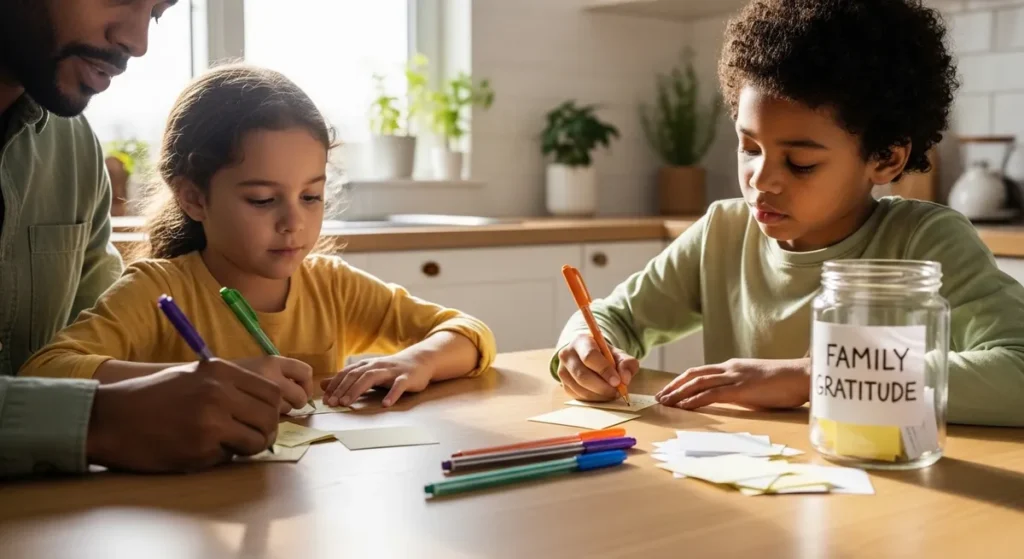
A gratitude jar is a simple activity that many families use to encourage appreciation. Family members write short notes about moments of kindness or support and place them in the jar. Over time, these notes create a collection of positive memories that families can read together.
Another common practice involves sharing gratitude during meals or evening conversations. Each person briefly mentions something positive that happened during the day. These short reflections help children and adults notice supportive interactions and meaningful experiences.
Some families begin the day with a brief gratitude circle before leaving for school or work. A short statement of appreciation or encouragement can set a positive tone for the day. Consistent routines like these often support respectful communication within the household.
Mindfulness and Emotional Awareness in Family Life
Mindfulness refers to paying attention to present experiences with awareness and without immediate judgment. Many wellness educators explain that this awareness helps individuals notice emotions and reactions more clearly. Within families, mindfulness practices can encourage calmer conversations and thoughtful responses.
Short pauses before responding during disagreements can help people reflect before speaking. Slow breathing or stepping away briefly allows emotions to settle. These practices are commonly used to maintain respectful dialogue during stressful moments.
Mindfulness also helps individuals recognize positive experiences that might otherwise go unnoticed. Shared laughter, helpful gestures, and supportive conversations become easier to appreciate when people slow down and pay attention.
Parenting and Working-Life Balance
Parents often manage many responsibilities including employment, household management, and caregiving. These responsibilities can sometimes influence family communication. Short gratitude practices can help families maintain perspective during demanding schedules.
Affirmations are usually integrated into existing routines rather than treated as separate activities. Families may share appreciation during car rides, mealtime conversations, or bedtime discussions. These small habits allow gratitude to remain part of daily life.
Working parents sometimes find that brief reflection helps shift attention toward meaningful family moments. A simple expression of appreciation after a busy day can strengthen emotional connection. Over time, these habits support a balanced and respectful home environment.
Frequently Asked Questions
How do I start a gratitude practice with my kids?
Families often begin with short daily conversations where each person shares something they appreciated during the day. Children usually respond well to simple examples related to school, hobbies, or family activities. Over time, this routine encourages awareness of kindness and supportive relationships.
What are some daily affirmations for family unity?
Daily affirmations for family unity usually focus on appreciation, cooperation, and respect between family members. Examples include statements that recognize shared efforts or express gratitude for support. Repeating these affirmations regularly helps reinforce positive communication.
Do gratitude affirmations reduce family stress?
Gratitude affirmations are commonly described as supportive practices that encourage appreciation and calm communication. Focusing on positive interactions can shift attention away from minor frustrations. While not a replacement for professional support, many families find these habits helpful for maintaining a balanced household atmosphere.
How can I teach my teenager to practice gratitude?
Teenagers often respond better to open conversation than structured exercises. Parents can introduce gratitude by sharing their own appreciation for everyday experiences. Over time, teenagers may naturally begin expressing similar reflections.
What is a gratitude jar and how does it work?
A gratitude jar is a container where family members place written notes about moments they appreciate. These notes might describe acts of kindness, achievements, or supportive interactions. Families often read the notes together periodically to revisit positive memories.
How do affirmations influence family communication?
Affirmations encourage positive language and thoughtful communication within family relationships. Repeating supportive statements reminds individuals to focus on appreciation rather than criticism. Over time, these statements can influence the tone of everyday conversations.
What are simple ways to express appreciation in a family?
Simple expressions of appreciation include thanking family members for everyday efforts or acknowledging supportive actions. Verbal recognition and small gestures of kindness can reinforce positive relationships. These habits often strengthen emotional connection within the household.
When is the best time to practice family gratitude affirmations?
Many families include affirmations during routines that already involve conversation such as meals or bedtime discussions. Consistency is often more important than timing. Regular repetition helps appreciation become part of everyday communication.
Can gratitude practices help children develop emotional awareness?
Gratitude practices often encourage children to notice supportive relationships and positive experiences. Reflecting on appreciation can help children understand emotions and social interactions. Over time, this awareness may support respectful communication.
Are affirmations suitable for busy family schedules?
Affirmations are typically brief and flexible, which allows them to fit into daily routines easily. Families often share them during car rides, meals, or bedtime conversations. This flexibility helps the practice remain manageable even during busy schedules.
Conclusion
Family gratitude affirmations are simple statements that encourage appreciation, patience, and respectful communication within the household. When practiced regularly, these reflections help families recognize supportive relationships and meaningful moments that occur throughout daily life. Over time, consistent gratitude practices can contribute to a calm, respectful environment where connection and appreciation remain central to family interactions.
Medical/Nutrition Disclaimer
This content is for informational purposes only and does not constitute medical advice. Consult a qualified healthcare provider before starting any new health program, supplement, or treatment, especially if you have existing medical conditions.