
Modern evenings often feel crowded with notifications, unfinished tasks, and constant screen exposure that keeps the mind active. Many people notice that even after putting the phone away, thoughts continue to race and delay rest. Evening rituals to unplug before bedtime offer a structured, realistic way to slow down and create a smoother transition into sleep.
These routines are not about strict discipline or perfect habits but about creating gentle signals that guide the body toward rest. Lifestyle experts often explain that the brain responds well to repetition and predictability, especially at night. Over time, even small rituals can help evenings feel more settled, reducing the sense of mental overload.
Evening Rituals to Unplug Before Bedtime: Understanding Evening Rituals to Unplug Before Bedtime
Evening rituals to unplug before bedtime are simple, repeatable habits that reduce stimulation and prepare the body for sleep. These practices often include lowering screen use, dimming lights, and engaging in calming activities like reading or journaling. Many people use them to shift from a busy, alert state into a more relaxed and quiet mental space.
The brain naturally looks for patterns, especially during transitions between activity and rest. When the same calming actions are repeated each night, the body begins to associate them with winding down. This learned connection makes it easier to settle into sleep without relying on distractions or forcing relaxation.
In everyday life, these rituals are flexible and can be adjusted based on personal schedules and responsibilities. They do not require expensive tools or major changes, which makes them accessible to most people. The focus remains on consistency and comfort rather than strict rules or ideal routines.
The Role of Digital Stimulation in Evening Fatigue
Digital devices are part of daily life, but their use often extends late into the night without clear limits. Continuous scrolling, messaging, or watching content can keep the brain in an alert state, even when the body feels tired. Many people recognize this pattern as feeling both mentally active and physically exhausted at the same time.
Research from Harvard Medical School shows that blue light from screens can influence melatonin, the hormone that helps regulate sleep timing. This effect may delay the natural signals that tell your body it is time to rest. While occasional use is not harmful, regular late-night exposure can make it harder to fall asleep consistently.
Reducing screen time in the evening does not require complete avoidance but a gradual shift toward calmer habits. Replacing digital activity with quieter alternatives can help the brain slow down naturally. Over time, this change supports a more stable sleep routine and reduces the urge to stay connected late at night.
Creating Gentle Boundaries Between Work and Rest
Work responsibilities often extend into personal time, especially for people working from home or managing flexible schedules. This overlap can make it difficult to mentally switch off, leading to prolonged stress in the evening. Without a clear boundary, the brain continues to stay in problem-solving mode.
Simple transitions can help signal the end of the workday and the beginning of personal time. Actions like shutting down your laptop, changing clothes, or stepping away from your workspace create a physical cue. These small signals gradually train the brain to recognize when it is time to relax.
Many working parents and professionals find that even a brief transition improves how evenings feel. It creates a sense of closure and allows more presence with family or personal activities. Over time, these boundaries support better emotional balance and reduce mental fatigue.
The Brain Dump Practice and Mental Clarity
Writing down thoughts before bed is a simple technique often called a brain dump. It involves listing tasks, reminders, or concerns that are still active in your mind. This process helps move those thoughts out of your head and onto paper, creating a sense of mental space.
A 2018 study from Baylor University found that people who wrote to-do lists before bed fell asleep faster than those who reflected on completed tasks. This suggests that organizing future tasks may help reduce mental tension. The act of writing provides a feeling of closure that supports relaxation.
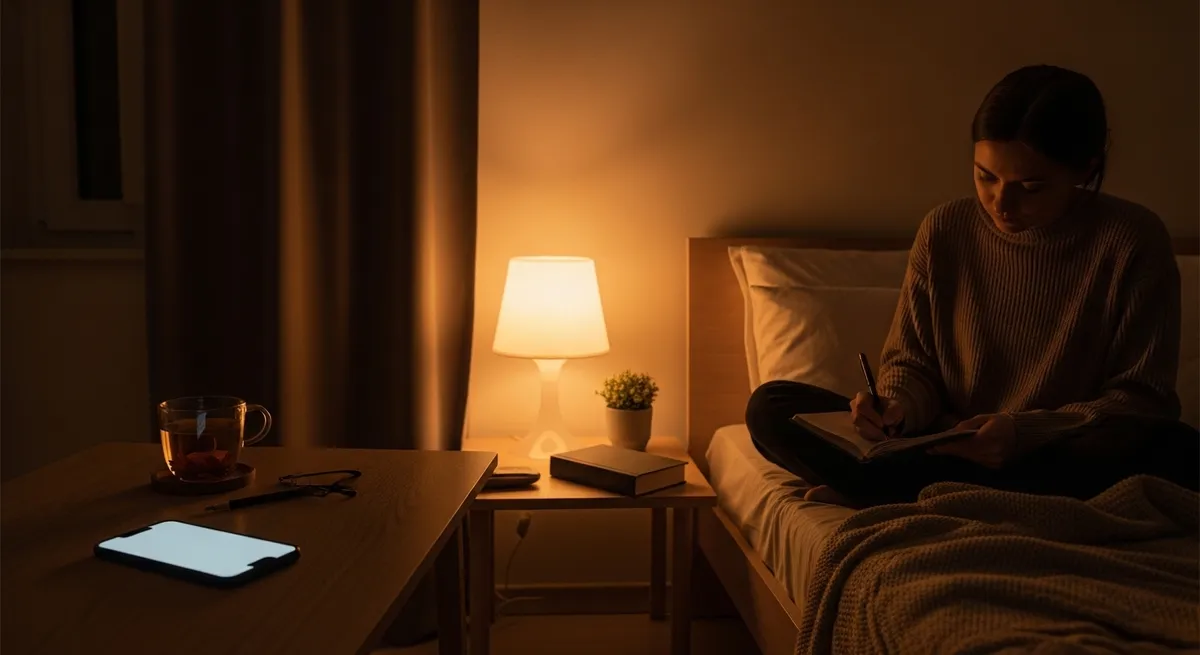
In everyday use, this practice takes only a few minutes and requires no special format. Many people keep a notebook near their bed and write freely without worrying about structure. Over time, this habit can make it easier to let go of unfinished thoughts at night.
Reading and Analog Activities as Calming Alternatives
Reading a physical book is a common way to unwind because it avoids the stimulation associated with digital devices. Printed pages do not emit blue light or interrupt focus with notifications. This creates a steady, gentle activity that allows the mind to slow down gradually.
Other hands-on activities such as coloring, knitting, or simple puzzles can also support relaxation. These analog hobbies engage the senses without overwhelming the brain. The repetitive nature of these tasks often encourages a calm and focused state.
In daily routines, these activities are not about productivity or achievement but about comfort and presence. Even a short period can reduce the urge to return to screens. Over time, they become familiar signals that the day is coming to an end.
Non-Sleep Deep Rest and Relaxation Practices
Non-sleep deep rest, often shortened to NSDR, is a relaxation method that helps the body shift into a calm state. It usually involves lying down and focusing on breathing or body sensations. The goal is not to fall asleep immediately but to reduce mental activity.
Many wellness educators describe NSDR as a gentle bridge between being awake and falling asleep. It allows the nervous system to settle without pressure or effort. This can feel especially helpful for people who struggle to relax quickly at night.
In practice, NSDR sessions often last between ten and twenty minutes and can be guided or silent. They can be adjusted based on comfort and preference. With regular use, this method can support a more relaxed approach to bedtime.
Progressive Muscle Relaxation and Physical Ease
Progressive muscle relaxation is a simple technique that involves tightening and releasing different muscle groups. This helps bring awareness to areas of tension that build up during the day. By releasing that tension, the body receives signals that it is safe to relax.
This method is often included in structured sleep support programs such as Cognitive Behavioral Therapy for Insomnia. It does not require any equipment and can be done while lying in bed. The focus is on noticing the contrast between tension and relaxation.
Many people start from their feet and slowly move upward through the body. This step-by-step approach provides a clear path to physical calmness. Over time, it can become a reliable part of an evening routine.

Warm Beverages and Evening Comfort
Warm drinks like chamomile tea or herbal infusions are commonly included in evening routines. The warmth itself can create a soothing effect that signals the body to slow down. This simple habit often becomes a comforting part of the night.
Some ingredients, such as chamomile or tart cherry, are studied for their connection to sleep support. However, they are generally used as lifestyle additions rather than medical solutions. Their main benefit comes from the routine and relaxation they encourage.
Preparing a warm drink also creates a moment of pause in the evening. It allows you to step away from activity and focus on a calming ritual. Over time, this habit can support a more peaceful transition into bedtime.
Creating a Sleep-Friendly Environment
The space where you sleep plays an important role in how easily your body relaxes. A clean, quiet, and comfortable room can help reduce distractions and mental clutter. Many people find that even small changes make a noticeable difference.
Lighting is one of the most important factors in the evening environment. Bright lights can delay the body’s natural sleep signals, while soft, warm lighting encourages relaxation. Adjusting lighting is a simple way to support better sleep habits.
Temperature, bedding, and noise levels also contribute to comfort. Keeping the room slightly cool and minimizing disruptions can improve sleep quality. Over time, a consistent environment helps the body recognize when it is time to rest.
Mindfulness and Emotional Awareness in Evenings
Mindfulness involves paying attention to the present moment in a calm and non-judgmental way. In the evening, this can include simple breathing exercises or quiet reflection. These practices are often used to reduce mental noise and support emotional balance.
Rather than trying to stop thoughts completely, mindfulness encourages observing them without reacting. This approach can reduce the intensity of racing thoughts and create a sense of distance. It allows the mind to settle naturally over time.
Even a few minutes of mindfulness before bed can make a difference. Many people focus on their breath or body sensations as a starting point. This gentle awareness supports a smoother transition into sleep.
Supporting Families and Working Parents
Evening routines can be especially helpful for families and working parents managing multiple responsibilities. Structured rituals provide predictability, which can reduce stress for both adults and children. This consistency helps everyone move toward bedtime more smoothly.
Shared activities such as reading together or using quiet, screen-free options create a calm atmosphere. These moments also support connection and emotional comfort. Over time, they become part of the family’s daily rhythm.
For working parents, simple routines can help separate work from personal life. This separation allows more presence during family time and reduces mental carryover. Small, consistent habits often have a meaningful impact on overall wellbeing.
Frequently Asked Questions
How long before bed should screens be avoided?
It is commonly recommended to reduce screen use about thirty to sixty minutes before bedtime. This allows the body to adjust to lower stimulation and supports natural sleep signals. Many people replace screen time with calming activities like reading or journaling to make this transition easier.
Does writing a to-do list help with sleep?
Writing a to-do list can help reduce mental clutter by organizing thoughts for the next day. This practice allows the brain to release unfinished tasks instead of holding onto them overnight. Many people find it useful for creating a sense of closure before going to bed.
What is a simple evening routine for beginners?
A simple routine may include dimming lights, writing down tasks, and doing a quiet activity such as reading. These steps are easy to follow and do not require much time. Consistency is usually more helpful than trying to follow a complex routine.
Is reading on a device different from reading a book?
Reading on a device may involve exposure to blue light, which can affect sleep timing. Printed books do not produce this light and are often more calming. Many people choose physical books in the evening for a more relaxed experience.
What are common screen-free evening activities?
Common options include journaling, reading, light stretching, or simple crafts. These activities provide gentle engagement without overstimulation. They are often used to replace digital habits in evening routines.
How can racing thoughts be managed at night?
Techniques such as writing thoughts down or focusing on breathing are commonly used to manage mental activity. These approaches help create space between you and your thoughts. Over time, they can support a calmer mental state before sleep.
What is non-sleep deep rest?
Non-sleep deep rest is a relaxation method that involves resting the body while staying aware. It is often practiced with guided audio or simple breathing exercises. This approach supports relaxation without requiring immediate sleep.
How does blue light affect sleep patterns?
Blue light exposure in the evening can influence melatonin levels and delay sleep timing. This effect is commonly linked to screen use before bed. Reducing exposure can support more natural sleep rhythms.
Are herbal drinks helpful before bed?
Herbal drinks are often used as part of calming evening routines. They provide warmth and comfort rather than acting as medical treatments. Many people include them as a supportive habit for relaxation.
How can work-life boundaries improve evenings?
Clear boundaries help separate work responsibilities from personal time. This reduces mental carryover and supports relaxation. Many people use simple rituals to create this transition.
Conclusion
Evening rituals to unplug before bedtime offer a practical way to move from activity into rest with greater ease. These habits support mental calmness, reduce overstimulation, and create a more predictable nighttime rhythm. With consistency, even small changes can help evenings feel more balanced, allowing the body and mind to settle naturally at the end of the day.
Medical Disclaimer
This content is for informational purposes only and does not constitute medical advice. Consult a qualified healthcare provider before starting any new health program, supplement, or treatment, especially if you have existing medical conditions.
Image Generation Prompts
For wider background on this, see the National Heart, Lung, and Blood Institute on sleep.