

You start the day with clear plans, yet hours later the most important task remains untouched. Stress builds quietly while energy fades. This pattern is common and deeply human. It reflects how the brain manages effort and reward. Understanding the Eat the Frog meaning gives you a structured way to reduce mental strain, regain focus, and make consistent progress without relying on motivation.
What is the Eat the Frog meaning?
Eat the Frog meaning refers to completing your most difficult and important task first, before attending to easier or more appealing work. The idea works because attention, self-control, and mental energy are strongest early. By finishing the hardest task first, you reduce stress, limit procrastination, and create momentum that supports focus and productivity throughout the day.

Eat the Frog meaning and its role in modern productivity
Defining your frog as a high-impact priority
Eat the Frog meaning begins with recognizing the task that matters most but feels easiest to avoid. This work often requires sustained attention, decision-making, or accountability. Because it feels uncomfortable, it gets delayed, creating background stress that follows you all day.
Completing this task early changes how your nervous system responds to work. Tension drops once the biggest obligation is handled. Smaller tasks then require less effort, not because they changed, but because your mind is no longer carrying unfinished weight.
The historical origin of the frog metaphor
The metaphor is often linked to Mark Twain, though reliable documentation is limited. The idea more accurately traces to French writer Nicolas Chamfort, who suggested swallowing a toad each morning so nothing worse could happen later. The point was deliberate discomfort to build psychological strength.
Brian Tracy later adapted this idea into a practical productivity framework. His version is simple. If you have two frogs, eat the ugliest one first. The message is about priority, not workload, and choosing significance over comfort.
Why urgency often hides the real frog
Urgent tasks demand immediate attention but rarely shape long-term outcomes. Important tasks quietly influence growth but do not create pressure. Eat the Frog meaning focuses on importance, not urgency.
When urgency controls planning, days feel reactive. When importance guides action, work becomes intentional. Over time, this shift leads to measurable improvements in focus, confidence, and sustained progress.
You may also like: Rewire Negative Thoughts into Positive Energy: Evidence-Based Mental Health Guide
Present bias, ego depletion, and procrastination explained
Peak willpower and ego depletion theory
Research in psychology suggests willpower is a limited resource that weakens with repeated use. Early hours usually offer the strongest mental reserves. This makes mornings or personal peak times ideal for demanding tasks.
Eat the Frog meaning aligns effort with these natural energy patterns. By placing the hardest task first, you protect quality and reduce the struggle that often appears later when attention and patience decline.
How present bias fuels avoidance behavior
Present bias describes the brain’s tendency to favor immediate comfort over future rewards. Difficult tasks promise delayed benefits, while distractions provide instant relief. This imbalance makes avoidance feel logical in the moment.
Eating the frog removes this inner debate. Action happens before resistance grows. Over time, this rewires how you respond to discomfort and reduces habitual procrastination.
Decision fatigue and cognitive overload
Each choice consumes mental energy. When a difficult task is postponed, the brain keeps revisiting it, adding to cognitive load. This silent drain reduces clarity and increases fatigue.
Completing the frog early clears this mental space. Fewer unresolved decisions remain, allowing attention to stay focused on execution rather than worry.
Zeigarnik effect, dopamine, and momentum
Why unfinished tasks increase stress
The Zeigarnik effect shows that unfinished tasks stay active in memory. This constant background processing increases stress and distractibility, especially when the task feels important.
Eating the frog closes the largest open loop first. Once that mental tab is closed, attention stabilizes and emotional pressure eases, making the rest of the day feel lighter.
Dopamine release and motivation reinforcement
Completing meaningful work triggers dopamine, a neurotransmitter tied to motivation and learning. Hard tasks produce a stronger reward signal than easy ones.
This reinforces productive behavior. Over time, discipline becomes associated with relief and confidence, not dread.
Why starting hard creates faster momentum
Starting with easy tasks delays the real work and slowly drains motivation. Each small win postpones the inevitable challenge.
Beginning with the hardest task sets a strong pace. Once it is done, everything else feels more manageable. This pattern builds consistency and confidence.
Please Read: 10 Grounding Techniques to Calm Anxiety Fast, Backed by Science
Identifying your frogs using proven frameworks
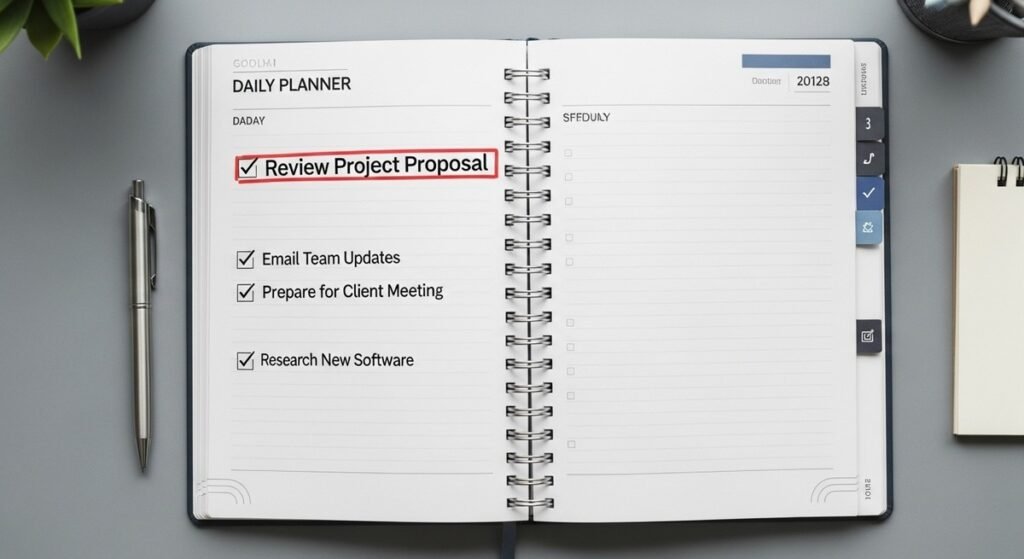
Characteristics of a true frog task
A real frog advances long-term goals, requires deep thinking, and lacks a simple checklist. Delaying it increases stress and compounds consequences.
These tasks often sit at the intersection of discomfort and importance. Without clear systems, they are easy to ignore.
Using the ABCDE prioritization method
The ABCDE method ranks tasks by consequence. A tasks carry serious consequences and represent your frogs. B tasks matter but have mild impact. C tasks are optional. D tasks can be delegated. E tasks can be eliminated.
This approach removes emotion from planning and replaces it with clarity.
Applying the Pareto Principle
The Pareto Principle suggests a small portion of actions drives most results. Frogs usually belong to this group.
Focusing on these tasks improves efficiency and reduces burnout by shifting effort toward impact.
Implementing the frog method into daily routines
Preparing the night before
Choosing tomorrow’s frog before ending the day creates mental readiness. This reduces friction when work begins.
Mornings become execution-focused instead of reactive, limiting distraction-driven delays.
The 15-minute rule for extreme resistance
When a task feels overwhelming, commit to fifteen minutes. Starting is often the hardest part.
Even short progress builds trust in your system and weakens avoidance over time.
Creating distraction-free focus zones
Single-handling means working on one task without interruption until completion.
Silencing notifications during frog time protects attention, improves quality, and shortens total work hours.
Advanced tactics for difficult frogs
The salami slice method
Large projects can feel intimidating. Breaking them into visible steps makes progress manageable.
Each completed slice builds momentum without overwhelming the brain.
The Swiss cheese method
This method involves brief work sessions without finishing the task completely.
Small engagement reduces fear and makes future work easier to start.
Reward scheduling for present bias
Short-term rewards can help counter present bias.
Linking progress to small incentives supports consistency until intrinsic motivation develops.
When Eat the Frog may not work as expected
Chronotype differences and energy timing
Not everyone works best in the morning. Some people peak later in the day.
Frog time should match personal energy rhythms for sustainability.
ADHD and momentum-building strategies
Some individuals benefit from short warm-up tasks.
Timers, clear boundaries, and structured transitions support follow-through.
Tasks requiring preparation or collaboration
Some frogs need research or coordination first.
In these cases, the frog becomes planning rather than execution.
Conclusion: making success predictable
Eat the Frog meaning focuses on disciplined attention applied consistently. Completing the most important task first reduces stress, builds confidence, and creates steady momentum. Productivity becomes predictable instead of emotional. Identify your next frog, protect time for it, and let repeated action replace procrastination with progress.
Frequently Asked Questions
Who first said eat a live frog every morning?
The saying is often attributed to Mark Twain, but historical evidence points more reliably to French writer Nicolas Chamfort. He used the metaphor to describe choosing discomfort early to prevent greater distress later. The concept entered modern productivity thinking through Brian Tracy’s structured prioritization framework.
What does eat the frog first thing in the morning mean?
It means completing your most difficult and important task at the start of your work period. Doing so uses peak mental energy, lowers stress, and prevents avoidance. This approach creates momentum that carries into the rest of the day.
Is the eat the frog method effective for everyone?
The method works for many people but benefits from personalization. Chronotype, attention differences, and task complexity matter. Some individuals prefer brief warm-up tasks first. The core principle remains prioritizing the highest-impact task during peak focus hours.
How do I know which task is my frog?
Your frog is the task with the greatest long-term impact and the strongest resistance. If delaying it increases stress or consequences, it qualifies. Tools like the ABCDE method and the Pareto Principle help identify these tasks objectively.
What is the difference between eating the frog and deep work?
Deep work describes focused, distraction-free effort. Eating the frog determines which task deserves that focus first. Together, they ensure attention is both protected and used on work that truly matters.
Can I eat more than one frog per day?
You can, but one well-chosen frog often delivers the majority of results. Additional difficult tasks should depend on energy levels and task complexity, not pressure to do more.
How does eating the frog reduce stress?
Completing the hardest task early closes a major mental loop. This reduces background anxiety and cognitive load, allowing focus and emotional balance to improve.
Does the eat the frog method help with procrastination?
Yes. It removes delay and choice, which are key drivers of procrastination. Acting early bypasses present bias and weakens avoidance habits over time.
What are the 21 rules in Eat That Frog?
The 21 rules are productivity principles outlined by Brian Tracy. They focus on clarity, prioritization, planning, and disciplined execution, all supporting the idea of tackling important tasks first.
When should I avoid eating the frog?
Avoid it when required information or collaboration is unavailable. In those cases, the frog becomes preparation or planning rather than execution.
Medical Disclaimer
This content is for informational purposes only and does not constitute medical or mental health advice. Consult a qualified healthcare or mental health professional before making changes to routines, stress management practices, or productivity strategies, especially if you have existing health or psychological conditions.
Related Reading
- How Does Body Mind and Spirit Alignment Improve Health
- How to Recognize Burnout vs Depression: A Responsible Wellness Guide for Everyday Life
- How to Create a Tech-Free Zone at Home
Doing the hard one first is week-four thinking. The subtractions that come before it are in How to Recover from Burnout.