

The science of mindfulness explains how deliberate attention to present experiences is commonly associated with measurable changes in how people relate to stress, focus, and emotional awareness. In everyday life, this topic matters because many adults balance work, caregiving, and constant digital input without structured mental rest. Wellness educators often describe mindfulness as a supportive lifestyle practice rather than a solution or treatment, which helps set realistic expectations.
Science of mindfulness: The Science of Mindfulness and why does it work?
Mindfulness has roots in long standing contemplative traditions, yet modern interest largely comes from workplace wellbeing, parenting culture, and stress awareness education. Public health discussions now describe mindfulness in skills based language that fits secular routines and diverse households. This framing allows people to explore awareness practices without religious, clinical, or performance pressure attached.
From an editorial perspective, the science of mindfulness is shared to explain patterns observed across populations, not to promise outcomes. Research language focuses on associations, observed changes, and habit consistency rather than individual transformation. This approach supports trust, safety, and emotional responsibility for readers navigating busy lives.
The science of mindfulness explains how intentional present moment attention is associated with changes in brain activity, nervous system balance, and stress signaling. Research suggests consistent practice supports prefrontal regulation, reduced emotional reactivity, and improved awareness within about eight weeks for many participants. These shifts are understood as learned skills that develop gradually through repetition rather than instant results.
The Science of Mindfulness: Brain-Based Mechanisms Explained

Prefrontal cortex strengthening and executive control
The science of mindfulness often highlights changes in the prefrontal cortex, the brain area linked with planning, focus, and self regulation. Imaging studies from academic settings have observed increased activity or thickness in this region following structured mindfulness programs. These findings help explain why people may notice better pause and response patterns during stressful moments.
In everyday routines, prefrontal engagement shows up as awareness before action rather than perfect decision making. Short, repeated moments of attention during daily tasks reinforce this skill. Wellness education frames this as practice based learning that builds over time, especially helpful for adults balancing work demands and family responsibilities.
Amygdala reactivity and stress response reduction
Amygdala reactivity is frequently discussed because this region plays a role in detecting threat and emotional intensity. Research has found reduced amygdala activation in groups practicing mindfulness over time. This change is described as quicker emotional recovery rather than emotional suppression or avoidance.
In daily life, reduced reactivity may feel like stress passing more quickly after it appears. Emotions still arise, but they do not dominate attention for as long. Editorial guidance emphasizes that this process supports resilience while respecting normal emotional range.
Hippocampus activity and memory regulation
The hippocampus supports memory processing and emotional context. Some mindfulness studies associate practice with changes in hippocampal structure or activity. These observations are discussed carefully as correlations within study groups.
For everyday application, this research supports mindful reflection and attention during learning moments. Pausing after conversations or tasks helps integrate information. This approach is especially relevant for adults managing cognitive overload from multitasking.
Default Mode Network and Attention Stability
Default Mode Network suppression and rumination
The Default Mode Network is active during mind wandering and self focused thinking. Research suggests mindfulness practice is associated with reduced activity in certain Default Mode Network areas. This is commonly linked with lower rumination rather than an absence of thoughts.
In practical terms, people often report noticing when attention drifts and returning more easily. Thoughts still appear, but they no longer pull attention for extended periods. This skill supports focus during work, caregiving, and routine activities.
Meta-awareness and attentional monitoring
Meta-awareness refers to noticing attention shifts as they occur. Mindfulness training is associated with improved monitoring of these shifts. Brain studies show faster detection of distraction during attention tasks among mindfulness practitioners.
In daily routines, this awareness helps people catch distraction earlier and reset without frustration. This supports productivity without forcing concentration. The emphasis remains on noticing rather than controlling attention.
Sustained attention and cognitive flexibility
Sustained attention and cognitive flexibility are related capacities often discussed in mindfulness research. Studies using attention tasks suggest improved vigilance and adaptability over time. These changes are gradual and vary across individuals.
Lifestyle guidance encourages mixing focused attention with open awareness practices. This combination supports flexibility during unexpected changes. Such adaptability is especially valuable in dynamic family and work environments.
Vagus Nerve Stimulation and Autonomic Balance
Respiratory vagal stimulation through breathing
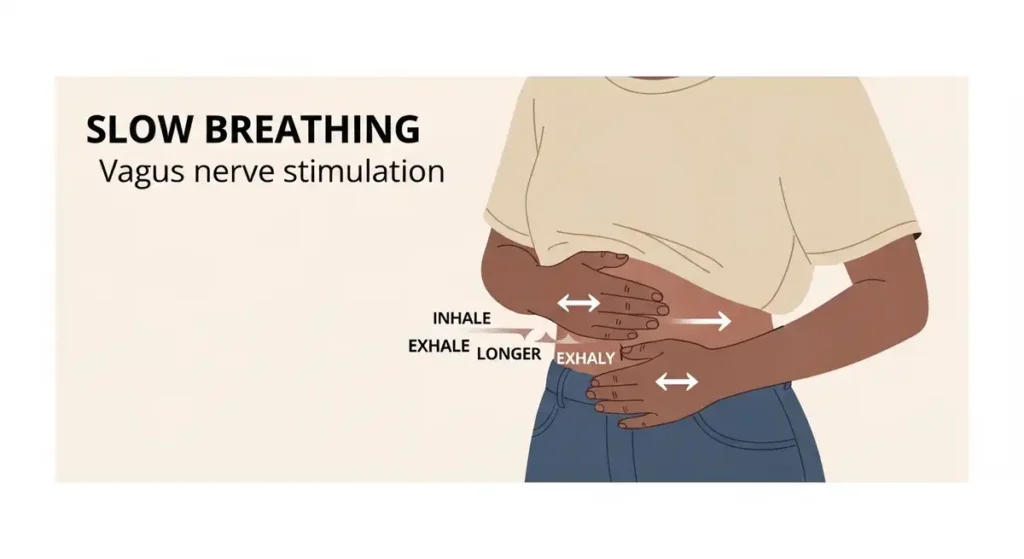
Slow, intentional breathing is associated with vagus nerve activity and parasympathetic response. Research on respiratory patterns suggests breathing at a slower pace supports nervous system regulation. This mechanism is often called respiratory vagal stimulation.
In everyday contexts, breathing awareness is used during transitions or stressful moments. It does not require special posture or extended time. Wellness education presents this as an accessible grounding habit rather than a medical technique.
Sympathetic to parasympathetic nervous system shift
Mindfulness is associated with a shift away from constant sympathetic activation toward parasympathetic balance. Studies observe changes in heart rate and stress markers over time. These findings describe patterns rather than guaranteed outcomes.
Daily micro practices help prevent stress buildup. Brief pauses between tasks support recovery. This framing emphasizes maintenance rather than optimization.
Interoception and body awareness
Interoception involves noticing internal bodily sensations. Mindfulness practices often include attention to breath, tension, or fatigue. Research links this awareness with emotional understanding and regulation.
In daily life, interoceptive awareness supports pacing and boundary setting. Recognizing early signs of strain helps prevent overload. This is particularly relevant for caregivers and working parents managing competing demands.
Stress Hormones, Inflammation, and Gene Expression
Cortisol reduction and stress hormone regulation
Cortisol is commonly called the stress hormone. Some studies show reduced cortisol levels following mindfulness programs. Results vary widely and depend on context and consistency.
Educational content frames cortisol changes as possible associations. Mindfulness is presented as part of stress hygiene alongside sleep and routine support. It is not positioned as a replacement for medical care.
Inflammatory pathways and immune balance
Chronic stress influences inflammatory signaling in the body. Research suggests mindfulness may be associated with reduced inflammatory markers in some groups. These findings are described as emerging rather than definitive.
Lifestyle education uses this information to explain how stress perception relates to physical systems. The focus remains on awareness and routine balance rather than disease prevention claims.
Epigenetics and cellular aging markers
Epigenetics explores how experiences influence gene expression. Mindfulness research in this area is early and limited. Some studies suggest changes related to stress exposure.
Responsible editorial framing labels this as preliminary. Mindfulness is described as supporting stress management habits that may influence long term wellbeing indirectly.
Emotional Resilience and Clinical Applications
Decentering and emotional regulation skills
Decentering involves noticing thoughts without identifying with them. Mindfulness based education often includes this skill. Research associates decentering with reduced rumination.
In everyday situations, this skill supports perspective during conflict or stress. Thoughts are recognized as mental events. This helps reduce escalation without suppressing emotions.
Chronic pain and sensory perception changes
Mindfulness research in pain education suggests changes in how pain is perceived. Studies describe altered anticipation and reduced distress rather than pain removal.
Lifestyle content emphasizes that pain experiences remain valid. Mindfulness supports coping strategies alongside professional care. This balanced explanation protects reader safety.
Psychological conditions and trauma considerations
Mindfulness is sometimes included in wellbeing programs for emotional support. Responses vary, and some people experience discomfort initially. Trauma informed approaches emphasize pacing and grounding.
Educational guidance encourages professional support when needed. Mindfulness is presented as optional and adaptable rather than universal.
Conclusion
The science of mindfulness offers insight into how attention habits relate to brain activity, stress awareness, and emotional regulation. These explanations help set realistic expectations for gradual skill development. As a lifestyle support tool, mindfulness is most valuable when practiced consistently, flexibly, and with respect for individual needs.
Frequently Asked Questions
How does mindfulness change the brain scientifically?
Mindfulness is associated with changes in brain regions linked with attention, emotional regulation, and awareness. Studies show patterns of altered activity in the prefrontal cortex, amygdala, and Default Mode Network after structured programs. These changes are described as learned adaptations that vary across individuals.
Why is mindfulness effective for stress reduction?
Mindfulness supports noticing stress responses earlier, which allows for more deliberate reactions. Research associates practice with changes in nervous system balance and stress signaling. This does not remove stressors but helps reduce prolonged reactivity in daily situations.
Can mindfulness rewire your brain in eight weeks?
Studies often observe brain related changes after about eight weeks of consistent practice. These findings reflect group trends rather than guarantees. Individual experiences depend on frequency, context, and personal circumstances.
What happens to the amygdala during mindfulness practice?
Research suggests mindfulness practice is associated with reduced amygdala reactivity to emotional stimuli. This is described as faster emotional recovery. Emotions continue to arise naturally.
Does mindfulness meditation lower cortisol levels?
Some studies show reduced cortisol levels following mindfulness programs. Results differ between participants. Lifestyle education presents this as a possible association rather than a predictable outcome.
How does mindfulness affect the nervous system?
Mindfulness is associated with increased parasympathetic activity and reduced stress arousal. This supports calmer physiological states. It does not override ongoing stressors or replace medical care.
Can mindfulness help with chronic inflammation?
Research suggests mindfulness may influence stress related inflammatory pathways. Evidence is emerging and mixed. Mindfulness is presented as supportive rather than curative.
What is the difference between mindfulness and relaxation?
Mindfulness involves awareness of experiences as they occur, including discomfort. Relaxation focuses on reducing arousal. Calm may result, but it is not required.
Are there negative side effects of mindfulness?
Some people experience increased discomfort or emotional intensity, especially initially. Gradual pacing and professional guidance are recommended when needed.
How often should beginners practice mindfulness?
Beginners often start with short daily sessions, such as five to ten minutes. Consistency is emphasized over duration. This supports sustainable habit formation.
Medical Disclaimer
This content is for informational purposes only and does not constitute medical advice. It does not diagnose, treat, cure, or prevent disease. Always consult a qualified healthcare provider before beginning any wellness practice, especially if you have existing health conditions.
Related Reading
- Stress Relief Techniques for Newly Married Couples: Science-Backed Ways to Happy Life
- How to Build a Daily Mindfulness Routine That Sticks
- 5 Minute Mindfulness for Overwhelmed Parents: Simple, Proven Calm
Practice helps. It does not outrun a workload. How to Recover from Burnout is the workload side of the same problem.