

Understanding how to recognize burnout vs depression has become part of everyday wellness conversations as work pressure, family duties, and constant connectivity blur emotional boundaries. Many people notice ongoing tiredness or emotional flatness without knowing whether rest will help or whether something deeper is happening. Clear, accurate information supports safer decisions without rushing to labels.
Burnout and depression are often mentioned together, yet they describe different experiences with different implications. One is commonly linked to work conditions and lifestyle strain, while the other is recognized as a mental health condition evaluated by trained professionals. Knowing the distinction encourages appropriate lifestyle changes and helps people seek support at the right time.
This guide is educational, not diagnostic, and focuses on everyday awareness rather than clinical judgment. The aim is to explain commonly observed patterns using calm, responsible language suitable for general readers. All information is presented within public facing wellness education standards and does not replace professional medical or mental health care.
Understanding the Modern Exhaustion Experience

Modern exhaustion rarely comes from a single cause. Long work hours, constant notifications, emotional labor, and limited downtime often overlap, leaving little space for recovery. Over time, this creates physical fatigue, reduced focus, and emotional strain that feel difficult to explain.
Many people feel pressure to function normally despite carrying ongoing stress. Productivity expectations often extend beyond working hours, making true rest harder to achieve. This pattern explains why exhaustion can feel persistent even when sleep seems adequate.
Language confusion adds to the challenge. Terms like burnout and depression are used casually to describe feeling overwhelmed, which can blur important differences. Understanding the broader context helps people interpret their experiences with greater clarity and care.
Defining Burnout in Everyday Terms
Burnout is described by the World Health Organization as an occupational phenomenon linked to unmanaged workplace stress. It is connected to job demands, workload imbalance, and systemic pressures rather than personal weakness. This framing shifts attention from individual blame to environmental conditions.
In daily life, burnout often shows up as emotional fatigue related to work roles. People may feel drained before the day begins or disconnected from tasks they once valued. These feelings are usually strongest in professional settings rather than across all areas of life.
Burnout is commonly considered reversible when circumstances change. Time away from work, reduced demands, or clearer boundaries often bring gradual relief. This situational pattern is a key feature that helps distinguish burnout from depression.
Understanding Depression as a Health Condition
Depression is recognized as a mental health condition that affects mood, thinking, motivation, and physical rhythms. It is assessed by qualified professionals using established criteria rather than self judgment alone. The experience typically extends beyond specific situations.
People experiencing depression often notice reduced enjoyment, persistent low mood, or emotional numbness in many areas of life. These feelings may continue regardless of work conditions or rest. This consistency across settings is often highlighted in mental health education.
Experiencing sadness or fatigue does not automatically mean depression. Duration, intensity, and daily impact matter. This distinction reinforces the importance of avoiding self diagnosis while remaining attentive to ongoing emotional changes.
The Difference Between Situational and Pervasive Experiences
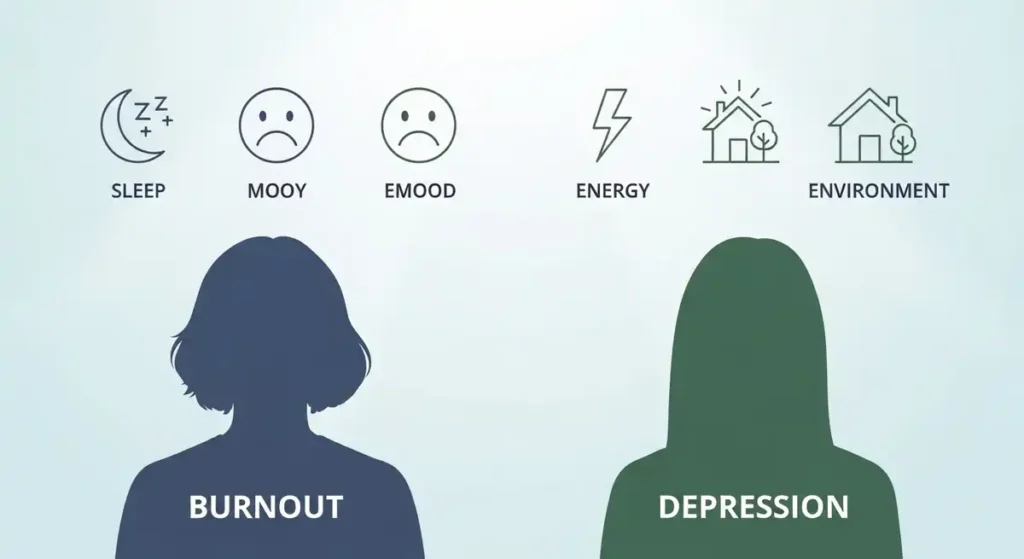
One practical way to understand how to recognize burnout vs. depression is by observing where symptoms appear. Burnout tends to be situational, with emotional strain increasing in specific environments, especially work related ones. Relief often appears when distance from those environments is created.
Depression is generally described as pervasive, meaning mood changes follow a person across settings. A change of location or reduced responsibilities may not significantly alter emotional experience. This consistency is a commonly cited educational marker.
Noticing these patterns does not require clinical expertise. It involves paying attention to whether emotional relief appears when stressors are removed. This awareness can guide decisions about lifestyle adjustments or professional consultation.
Emotional Exhaustion as a Burnout Indicator
Emotional exhaustion is widely described as a core sign of burnout. It involves feeling emotionally spent and lacking the energy to engage fully with tasks or people. This exhaustion often feels deeper than ordinary tiredness.
In everyday situations, emotional exhaustion may show up as irritability, low patience, or difficulty concentrating at work. Many people report feeling capable but drained, as though their emotional reserves are temporarily depleted. This experience is usually tied to specific roles.
When adequate rest and reduced demands are introduced, emotional energy often returns gradually. This responsiveness to rest helps distinguish burnout related exhaustion from depression related fatigue.
Depersonalization and Detachment at Work
Depersonalization refers to emotional distancing from work tasks or professional relationships. People may feel detached, cynical, or less emotionally invested in roles they once cared about. This response is often understood as a coping mechanism.
In practical terms, depersonalization may involve going through the motions at work or feeling emotionally withdrawn during interactions. Outside of work, emotional connection often remains intact, allowing enjoyment of personal relationships.
Addressing depersonalization usually focuses on workload balance and emotional boundaries. Changes in role structure or support often reduce this sense of detachment over time, reinforcing its situational nature.
Reduced Sense of Accomplishment in Burnout
Burnout often includes a reduced sense of accomplishment. People may feel their efforts no longer matter or fail to produce meaningful results. This perception commonly develops alongside prolonged stress.
In daily life, this may look like doubting work quality or feeling ineffective despite consistent effort. Importantly, this feeling is usually limited to professional identity rather than overall self worth.
When expectations become more realistic or demands ease, confidence often returns. This reversibility supports understanding burnout as an environmental response rather than a fixed personal issue.
Anhedonia as a Depression Related Experience
Anhedonia refers to reduced ability to feel pleasure from activities that once felt enjoyable. This experience is commonly associated with depression and differs from situational disinterest caused by fatigue. It reflects changes in emotional processing.
People experiencing anhedonia may find that hobbies, social interaction, or sensory experiences feel flat. Even during rest or holidays, emotional response may not return. This lack of pleasure is often described as persistent.
Anhedonia typically does not improve through rest alone. Professional guidance is commonly recommended when enjoyment does not gradually return. This distinction highlights why careful recognition matters.
Cognitive Patterns Commonly Linked to Depression
Depression is often associated with persistent negative thinking patterns. These may include harsh self criticism, feelings of worthlessness, or pessimism about the future. Such thoughts often feel convincing and internal.
Burnout related thinking usually focuses on external frustrations such as workload or system issues. The emphasis is on circumstances rather than personal value. This difference in focus is frequently noted in educational discussions.
Observing whether thoughts are situational or global can provide helpful context. This awareness supports informed decisions without replacing professional assessment.
Safety Awareness and Suicidal Ideation
Educational materials consistently note that suicidal thoughts are linked to depression rather than burnout alone. These thoughts signal significant distress and require immediate professional support. They are not considered a typical response to work stress.
Any presence of self harm thoughts should be taken seriously. Wellness education emphasizes reaching out to qualified professionals rather than managing these experiences independently.
Lifestyle content does not address crisis care. Emergency services and mental health professionals are appropriate resources when safety concerns arise.
The Role of Environment in Emotional Relief
Environment plays an important role in burnout experiences. Many people notice emotional relief when stepping away from work settings, even briefly. Weekends or short breaks may bring noticeable improvement.
This pattern supports the situational nature of burnout. Emotional response changes when stressors are reduced, suggesting external demands are driving symptoms.
In depression, environmental changes often bring little relief. Emotional state may remain largely unchanged regardless of location, reinforcing the need for professional evaluation.
Understanding the Holiday Test Concept
The Holiday Test is an informal wellness concept used to observe response to sustained rest. It is not a diagnostic tool but a practical observation method used in everyday discussions.
People experiencing burnout often notice gradual improvement during extended breaks. Sleep quality improves, irritability eases, and motivation slowly returns. This pattern supports the idea of stress related exhaustion.
In depression, emotional experience often remains unchanged despite time off. Enjoyment does not return simply through reduced demands, pointing toward the need for professional support.
Sleep Patterns in Burnout Experiences
Sleep difficulties are common in burnout and often involve trouble falling asleep. Racing thoughts related to work or responsibilities may delay rest even when tiredness is present. This reflects stress related nervous system activation.
People with burnout may experience lighter sleep during stressful periods. When stressors are reduced, sleep quality often improves. This responsiveness is a useful observation point.
Improving sleep routines and work boundaries is commonly suggested as lifestyle support. These approaches focus on recovery rather than medical treatment.
Sleep Patterns Often Discussed in Depression Education
Depression education frequently mentions early morning awakening. People may wake earlier than intended and struggle to fall back asleep. This pattern is linked to changes in biological rhythms.
Unlike burnout related sleep issues, this disruption often persists despite reduced workload. Rest alone may not restore sleep quality.
Sleep patterns are one part of a broader picture considered by professionals. Observing trends can help guide appropriate support decisions.
Stress Hormones and Energy Regulation
Chronic stress associated with burnout can affect cortisol, often described as the stress hormone. People may feel alert in the morning and depleted later in the day. This fluctuation reflects prolonged stress exposure.
Lifestyle guidance often emphasizes reducing overstimulation and improving recovery opportunities. Balanced schedules and digital boundaries are commonly suggested.
In depression, energy levels may remain consistently low rather than fluctuating. Understanding these differences helps frame lifestyle strategies realistically.
Perfectionism and High Responsibility Roles
Burnout is frequently discussed in connection with high responsibility roles. People who care deeply about performance or service may push beyond sustainable limits. This pattern is common in caregiving and leadership roles.
Perfectionistic tendencies can reduce recovery time by making it hard to disengage mentally. Wellness education focuses on balance rather than eliminating ambition.
Recognizing these patterns supports preventive lifestyle adjustments. Boundaries and realistic expectations are presented as protective tools.
Parenting and Working Life Considerations
Parents and caregivers often face layered demands from work and home. Limited recovery time can increase emotional fatigue. Emotional labor may extend across roles without clear separation.
Burnout in these contexts may appear as daily exhaustion tied to routine demands. Relief may occur during periods of shared support or reduced responsibility.
Wellness guidance for families emphasizes sustainable routines and shared responsibility. These approaches support balance without judgment.
When Burnout May Contribute to Depression Risk
Research suggests prolonged unresolved burnout may increase vulnerability to depression. Chronic stress and disconnection can gradually affect mood regulation. This progression is possible but not inevitable.
Addressing burnout early through lifestyle adjustments may reduce this risk. Rest, boundaries, and social support are commonly discussed strategies.
Professional evaluation remains important when symptoms persist. This balanced approach supports safety and clarity.
Lifestyle Support Strategies for Burnout
Lifestyle support for burnout focuses on adjusting external conditions. Changes may include workload balance, clearer role expectations, and protected rest time. These adjustments aim to reduce chronic stress exposure.
Rest is necessary but often insufficient alone. Sustainable improvement usually requires structural changes alongside rest.
These strategies are presented as supportive practices rather than cures. Individual needs and responses vary.
Professional Support in Depression Contexts
Depression education emphasizes the role of qualified professionals. Therapy, counseling, or medical evaluation may be recommended based on individual circumstances. These decisions are made collaboratively.
Lifestyle practices may complement professional care but do not replace it. Clear communication avoids minimizing the seriousness of depression.
This distinction supports informed and responsible wellness decisions.
Frequently Asked Questions
Is burnout the same as depression
Burnout and depression are not considered the same experience. Burnout is commonly linked to work related stress, while depression is a mental health condition evaluated by professionals. Overlapping symptoms can occur, but context, duration, and scope differ.
Can burnout exist without depression
Burnout can exist on its own. Many people experience burnout related exhaustion that improves with rest and lifestyle changes. Emotional relief after reducing stressors often points toward burnout rather than depression.
Can someone experience both burnout and depression
Burnout and depression can occur together. Prolonged stress may contribute to mood changes over time. Professional evaluation is recommended when symptoms persist or extend beyond specific situations.
How long does burnout usually last
Burnout duration varies based on circumstances and support. Some people notice improvement within weeks after changes, while others need longer recovery. Early recognition is often linked to better outcomes.
Does taking a break always help burnout
Breaks often reduce burnout symptoms, but they may not resolve underlying issues. Sustainable improvement usually involves addressing workload and expectations. Without change, symptoms may return.
Is constant tiredness always burnout
Constant tiredness has many possible causes. Burnout related fatigue is often tied to specific responsibilities. Ongoing tiredness should be discussed with a healthcare provider for full assessment.
Can burnout affect physical health
Chronic stress linked to burnout is often associated with physical discomfort such as headaches or tension. These effects are discussed as stress responses rather than diagnoses. Reducing stress may support physical wellbeing.
When should professional help be considered
Professional support is appropriate when distress persists, worsens, or interferes with daily life. This is especially important when rest and lifestyle changes bring little relief.
Are mindfulness practices helpful for burnout
Mindfulness practices are often used as supportive tools for stress awareness. Many people find them helpful for noticing tension and improving emotional regulation. They are considered complementary lifestyle supports.
Should depression always be treated medically
Depression treatment varies based on individual needs and professional assessment. Some people benefit from therapy, others from medication, or both. Decisions are made with qualified providers.
Conclusion
Understanding how to recognize burnout vs. depression supports safer wellbeing choices. Burnout is often linked to situational stress and responds to lifestyle changes, while depression involves broader mood patterns requiring professional care. Clear, responsible information reduces confusion and encourages appropriate support.
Medical Disclaimer
This content is for informational purposes only and does not constitute medical or mental health advice. It does not diagnose, treat, cure, or prevent any condition. Consult a qualified healthcare or mental health professional for concerns about emotional wellbeing or persistent symptoms.