

Visualization is often discussed as a personal development idea, but in everyday wellness education it is understood as a simple mental habit rooted in how the brain processes information. Many people already visualize without realizing it, such as picturing an upcoming conversation or planning a busy morning. Framing visualization clearly and responsibly helps explain why it is commonly associated with preparation, emotional steadiness, and realistic future planning.
In daily life, visualization usually appears in small, quiet moments rather than structured exercises. A person may imagine finishing work calmly, handling family responsibilities smoothly, or moving through a challenging situation with more composure. This grounded use supports routine awareness and does not rely on motivation hype or promises of change.
The Power of Positive Visualization? and how does it create a positive future?

How visualization creates a positive future is best understood as a mental process that helps the brain rehearse possible situations before they happen. By repeatedly imagining realistic actions and responses, the brain becomes more familiar with them. This familiarity often supports planning, emotional regulation, and consistent behavior, especially when practiced briefly and regularly.
How Visualization Creates a Positive Future Through Brain Science
Neuroplasticity and pattern recognition in the brain
How visualization creates a positive future is closely linked to the brain’s natural pattern recognition abilities. The brain constantly predicts what might happen next based on past experience and repeated mental input. When a person visualizes a situation often, the brain treats that imagery as meaningful practice, reinforcing neural pathways connected to attention and response.
Over time, these reinforced pathways can make certain reactions feel less unfamiliar. Many people notice they hesitate less or feel calmer in situations they have already imagined. This effect is commonly explained through neuroplasticity, which refers to the brain’s ability to adapt based on repeated experiences, including imagined ones.
Mirror neurons and mental simulation
Mirror neurons are brain cells that activate when a person performs an action and when they imagine or observe that same action. This system helps explain why visualization can feel engaging even without physical movement. The brain partially simulates the experience internally, which supports learning and emotional familiarity.
Because of this internal simulation, visualization is often used in preparation rather than prediction. People may imagine speaking clearly, staying focused, or responding patiently. This use supports emotional steadiness and does not replace real effort, but it can reduce uncertainty around familiar tasks.
Dispositional Optimism and Future-Oriented Imagery
Vivid imagery as a cognitive marker of optimism
Research in psychology suggests that people who can imagine clear, workable future scenarios often maintain steadier optimism. How visualization creates a positive future in this context relates to expectation rather than fantasy. When the future feels concrete, effort feels more worthwhile and manageable.
Vivid imagery supports this process by adding detail and structure. Instead of imagining a vague success, people picture steps, timing, and surroundings. This clarity helps optimism remain grounded, supporting persistence rather than unrealistic hope.
Right anterior cingulate cortex and emotional regulation
Studies involving brain imaging have linked positive future imagery with activity in the right anterior cingulate cortex, a region associated with emotional regulation and motivation. This area helps integrate feelings with decision making. Increased engagement here is associated with steadier emotional responses.
In everyday wellness framing, this means visualization may support emotional flexibility. People often feel better able to shift attention away from rumination when imagery remains calm and realistic. This supports balance rather than emotional control or suppression.
Mental Rehearsal and Performance Preparation
Process visualization versus outcome fixation
How visualization creates a positive future becomes clearer when the focus shifts from outcomes to processes. Outcome fixation can increase pressure, while process visualization emphasizes steps, effort, and adaptation. This approach is commonly used in sports psychology and everyday planning.
Process visualization involves mentally walking through preparation, action, and follow through. Many people find this reduces anxiety because it focuses on what can be done rather than what must be achieved. This framing supports steadier performance across daily responsibilities.
Evidence from athletes and brain machine interfaces
Mental rehearsal has been studied extensively in athletic and neurological research. Studies involving brain machine interfaces have shown that imagined movement can activate neural pathways similar to physical movement. This supports the idea that mental practice contributes to readiness.
In lifestyle contexts, this means visualization can complement real practice. It does not replace action, but it can make action feel more familiar. This combination supports confidence and consistency rather than performance guarantees.
Speculative Design and Collective Future Building
Asking “what if” to expand possibility
Visualization also appears in fields like speculative design, where imagination is used to explore alternative futures. This approach does not aim to predict outcomes but to consider possibilities. Asking structured “what if” scenarios helps identify assumptions and prepare for change.
In personal wellness contexts, speculative thinking may involve imagining different work or family scenarios. This broadens perspective and supports adaptability. Visualization then becomes a tool for awareness rather than certainty.
Tangible representations and shared understanding
Visual artifacts such as sketches, written scenarios, or models help translate abstract ideas into something concrete. These representations support communication and shared understanding. In organizations, they are often used to align people around common goals.
At an individual level, journaling or visual planning serves a similar role. These tools externalize thoughts and reduce mental clutter. The emphasis remains on clarity and reflection rather than achievement.
Best Possible Self as a Supportive Practice
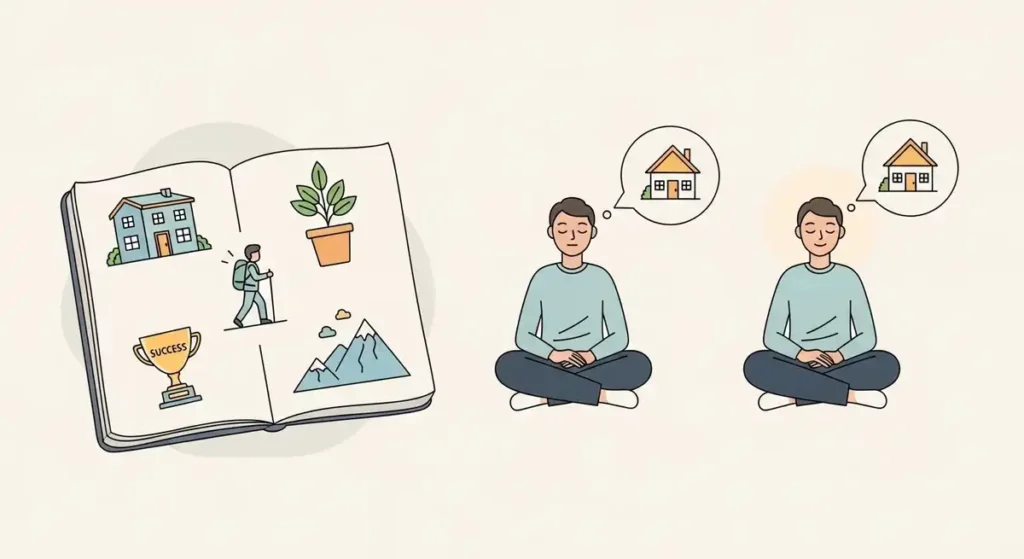
Structured steps for effective visualization
The Best Possible Self exercise is a structured visualization practice studied in psychology research. It involves imagining oneself functioning well in meaningful life areas while remaining realistic. Wellness educators describe it as a reflective activity rather than a promise of improvement.
This practice usually includes quiet focus and optional writing. The goal is to clarify values and priorities. Short sessions are commonly recommended to avoid emotional strain or unrealistic expectations.
Consistency, routine, and realistic expectations
Consistency plays a larger role than duration in visualization practices. Many people find brief daily sessions easier to maintain. Over time, this repetition supports familiarity and routine.
Visualization benefits vary depending on individual circumstances. It is generally considered a supportive habit rather than a solution. If visualization feels stressful or overwhelming, adjusting the approach or pausing is appropriate.
Visualization for Parents and Working Mothers
Supporting daily structure and routines
Parents and working mothers often manage overlapping demands and limited personal time. Visualization in this context is usually practical rather than aspirational. Imagining daily routines can support organization and reduce mental overload.
This use focuses on flow rather than control. Visualizing transitions, timing, and responsibilities supports smoother days. The practice remains flexible and optional.
Emotional steadiness in caregiving roles
Caregiving often involves unpredictability and emotional labor. Visualization may support readiness by imagining calm responses to common situations. This does not prevent stress but may reduce reactivity.
Wellness educators emphasize compassion and realism. Visualization supports emotional awareness rather than emotional suppression. This framing respects the complexity of caregiving experiences.
Visualization and Mindfulness Principles
Present-moment awareness during visualization
Visualization is sometimes paired with mindfulness to maintain balance. Mindfulness emphasizes awareness of the present moment, while visualization focuses on future imagery. When combined, they support clarity without distraction.
Mindful visualization involves noticing thoughts and sensations without judgment. This keeps imagery contained and realistic. It helps prevent overidentification with imagined outcomes.
Avoiding overuse and rumination
Excessive future thinking can increase worry for some people. Wellness guidance suggests moderation and flexibility. Visualization should feel supportive, not draining.
Shortening sessions or shifting focus can help. Persistent distress warrants professional support. Visualization is not intended to replace mental health care.
Frequently Asked Questions
How does visualization influence daily behavior
Visualization influences daily behavior by increasing familiarity with upcoming situations. When people imagine steps and responses ahead of time, tasks often feel less overwhelming. This supports preparation and steadier emotional responses without guaranteeing specific results.
What is the difference between visualization and positive thinking
Visualization focuses on imagining specific actions and scenarios, while positive thinking emphasizes attitude. Visualization includes realistic challenges and processes. This distinction helps keep expectations grounded and practical.
Can visualization be used during stressful periods
Visualization is often used as a supportive habit during busy or uncertain times. Imagining calm responses can support emotional steadiness. It does not replace professional support when stress becomes overwhelming.
How often is visualization typically practiced
Many wellness educators suggest brief, regular practice rather than long sessions. Five minutes daily is commonly referenced. Consistency supports familiarity without adding pressure.
Is visualization suitable for parents with limited time
Visualization is usually practiced quietly and briefly, making it accessible for parents. Imagining daily routines can support organization. The practice remains flexible and optional.
Does visualization replace action
Visualization does not replace action but supports readiness. Real world steps remain essential. Visualization complements planning rather than substituting effort.
Is visualization connected to mindfulness
Visualization and mindfulness are related but distinct practices. Visualization focuses on future imagery, while mindfulness emphasizes present awareness. Used together, they support balanced attention.
Can visualization feel unhelpful for some people
Some individuals find future imagery increases worry. Shorter sessions or neutral scenarios may help. Professional guidance is appropriate if distress continues.
Is visualization considered therapeutic
Visualization is presented as an educational and lifestyle practice. It does not diagnose or treat medical conditions. Professional care remains important for mental health concerns.
Can visualization support long-term habits
Visualization is often associated with habit formation by increasing familiarity with steps. Imagining actions supports consistency. Results vary depending on individual effort and context.
Conclusion
How visualization creates a positive future is best understood through clarity rather than promises. By supporting preparation, emotional steadiness, and awareness, visualization fits naturally into everyday routines. When used thoughtfully and moderately, it remains a flexible lifestyle habit that complements real action and respects individual limits.
Medical Disclaimer
This content is for informational purposes only and does not constitute medical or mental health advice. It does not diagnose, treat, cure, or prevent any condition. Always consult a qualified healthcare or mental health professional regarding personal health concerns or before starting new wellness practices.