
Evening mindfulness practices for better sleep are commonly described in wellness education as gentle lifestyle habits that support the body’s natural shift from daytime alertness into nighttime rest. These practices focus on easing mental pace, softening physical tension, and creating familiar cues that signal closure to the day. In everyday life, they are generally used as supportive routines rather than solutions or treatments for sleep problems.
Many adults notice that physical tiredness does not always lead to mental quiet, especially after demanding workdays or long hours of caregiving. Thoughts may continue replaying conversations, unfinished tasks, or tomorrow’s responsibilities even when the body is ready to rest. Evening mindfulness practices are often used to provide structure during this transition, helping evenings feel calmer and more predictable.
Wellness educators usually point out that mindfulness in the evening serves a different purpose than daytime mindfulness. The goal is not focus, productivity, or insight, but gradual disengagement from stimulation. This difference explains why slower, simpler practices are typically suggested closer to bedtime, with an emphasis on comfort and consistency.
Understanding the Evening Nervous System State

The nervous system naturally changes throughout the day in response to light, activity, and mental demand. During the evening, it is designed to move from alert engagement toward rest and recovery. Modern routines that include screens, late meals, unfinished work, and constant notifications can interrupt this shift, leaving the body alert when it expects rest.
Stress hormones such as cortisol usually decline in the evening as part of a healthy daily rhythm. When stress remains unresolved or stimulation continues late into the night, this decline may feel delayed. Evening mindfulness practices are often used as lifestyle supports that gently signal safety and closure, rather than forcing relaxation.
These practices do not aim to shut down thoughts or control emotions. Instead, they allow the nervous system to settle at its own pace. Over time, repeated exposure to calm, predictable evening cues may support a more consistent sense of readiness for sleep.
The Role of Routine and Timing
Routine plays a meaningful role in how the body interprets evening signals. When similar activities happen at similar times each night, the nervous system begins to associate them with rest. Evening mindfulness practices often feel more effective when paired with consistent sleep and wake times.
Timing also matters because practices that are too stimulating or introduced too late may feel counterproductive. Slower techniques are generally introduced one to three hours before bed, giving the body time to respond naturally. This window supports gradual unwinding rather than abrupt transitions.
Lifestyle guidance usually encourages choosing one or two practices rather than many at once. Simpler routines reduce mental effort and increase the likelihood of consistency. Even brief, repeated practices can become reliable cues that help the evening feel more settled.
Breathing as an Evening Support Tool
Breathing practices are often included in evening mindfulness routines because breathing directly influences nervous system pace. Slow, steady breathing patterns are commonly associated with reduced physical tension and quieter mental activity. These practices are accessible and can be used without equipment or prior experience.
Evening breathing typically emphasizes a gentle rhythm rather than deep or forceful breaths. Longer exhalations are often used because they are associated with calming physiological responses. This approach allows breathing to feel supportive rather than demanding.
In everyday settings, breathing exercises are practiced while sitting or lying comfortably. They are often paired with dim lighting and minimal background noise. Comfort and ease are prioritized over precision, especially for those new to mindfulness practices.
4-7-8 Breathing in Evening Routines
The 4-7-8 breathing pattern is frequently mentioned in wellness contexts as a structured yet gentle breathing approach. It involves inhaling for a count of four, pausing briefly, and exhaling slowly for a longer count. This rhythm encourages slower breathing without requiring intense focus.
In evening routines, many people adjust the counts to match their comfort rather than following them exactly. Shortening or lengthening the counts is common and generally considered acceptable. The emphasis remains on smooth breathing that feels natural.
This technique is usually practiced for a few minutes rather than extended periods. It is often introduced earlier in the evening instead of immediately before sleep. This timing allows the nervous system to respond gradually.
Box Breathing as Mental Stabilization
Box breathing uses equal counts for inhalation, holding, exhalation, and holding again. In wellness education, it is often described as a stabilizing practice that brings rhythm and predictability to breathing. This structure can feel grounding during mentally busy evenings.
For evening use, the pace of box breathing is usually slowed compared to daytime applications. Short sessions help avoid overstimulation while still offering mental organization. Visualization of a square or steady rhythm may support focus.
This practice is often chosen by people who find unstructured breathing distracting. The clear pattern provides a neutral anchor for attention. Over time, familiarity with the rhythm may make mental settling easier.
Alternate Nostril Breathing as a Calming Practice
Alternate nostril breathing is traditionally used as a balancing breathing practice. In everyday wellness settings, it is often simplified to prioritize comfort and ease. The practice involves gently alternating airflow between nostrils without strain.
Many people use this practice earlier in the evening rather than close to bedtime. The slow pacing is commonly associated with a sense of mental balance and calm. Sessions are typically brief and do not involve breath holding.
Comfort remains the main guideline. Individuals with nasal congestion or breathing discomfort often modify or skip this practice. Wellness guidance emphasizes personal comfort over strict technique.
Body Awareness and Evening Mindfulness
Body awareness practices focus attention on physical sensations rather than thoughts. In evening routines, this shift is often used to reduce mental replay of the day. Physical sensations can feel easier to notice than thoughts when energy is low.
These practices do not aim to remove discomfort or force relaxation. They encourage noticing sensations without judging or changing them. This neutral awareness is commonly associated with grounding.
Body awareness practices are usually done while sitting or lying comfortably. They require minimal effort and fit well into evening routines. Many people find them helpful after physically or emotionally demanding days.
Body Scan Meditation Explained Safely
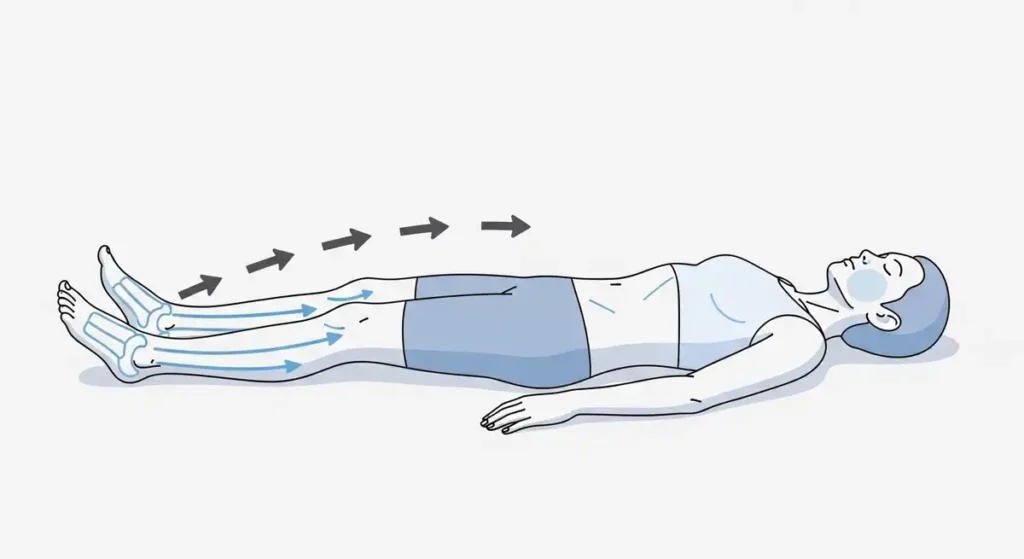
Body scan meditation involves moving attention gradually through different areas of the body. In wellness education, it is described as a way to reconnect with physical experience without analysis. This approach is often used to support evening unwinding.
The practice typically begins at the feet and moves upward toward the head. Attention rests on sensations such as warmth, pressure, or contact with surfaces. There is no requirement to relax or change what is noticed.
In everyday use, body scan meditation is practiced for about ten to twenty minutes. It is usually paired with a quiet environment and comfortable clothing. Gentle pacing helps maintain a sense of ease.
Grounding Effects of Body-Based Practices
Grounding refers to feeling physically present and settled. Body-based mindfulness practices are often associated with grounding because they emphasize sensory awareness. This focus may reduce mental looping during evenings.
Rather than stopping thoughts, grounding practices redirect attention. This redirection can feel calming because it reduces mental effort. With repetition, grounding often becomes more familiar and accessible.
These practices are generally used as supportive habits rather than interventions. They fit into broader lifestyle routines that prioritize rest and recovery. Consistency is emphasized more than intensity.
Non Sleep Deep Rest in Lifestyle Context
Non sleep deep rest, often called NSDR, refers to guided relaxation practices done while lying down. These practices are commonly used to support mental and physical recovery. Falling asleep is not required for use.
In wellness education, NSDR is described as a state between wakefulness and sleep. The body remains still while attention follows guided cues. This format is often chosen for evenings because it minimizes effort.
NSDR sessions are usually structured and time limited. They are often practiced earlier in the evening to avoid disrupting nighttime sleep. Personal comfort guides duration.
Yoga Nidra as Passive Evening Support
Yoga Nidra is a specific form of guided rest practiced while lying down. In everyday wellness settings, it is described as passive and accessible. This makes it suitable for evenings when energy is low.
The practice involves listening to verbal guidance while remaining physically still. Attention may move through sensations, imagery, or breathing awareness. Concentration is not required.
Yoga Nidra is often included as an optional evening practice. It is not considered a replacement for sleep. Moderation and timing are emphasized.
Safety and Comfort in Deep Rest Practices
Comfort is central when using deep rest practices. People are encouraged to stop or adjust practices if discomfort arises. This approach aligns with non-clinical wellness guidance.
Some individuals may notice emotional responses during deep rest. In such cases, gentler practices or shorter sessions are often suggested. Ongoing discomfort may warrant professional support.
Choice and flexibility are emphasized throughout wellness education. Practices are tools rather than obligations. Personal boundaries are respected.
Mindful Journaling in the Evening
Mindful journaling is often used to place thoughts outside the mind before bed. Writing allows unfinished ideas to feel temporarily contained. This process is commonly associated with mental relief.
Evening journaling focuses on expression rather than problem solving. Writing is usually brief and unstructured. The aim is acknowledgment, not resolution.
In daily routines, journaling is practiced in calm environments. Dim lighting and slow pacing support the evening wind down. Many people find short sessions sufficient.
Types of Evening Journaling Practices
Some journaling practices focus on listing concerns that feel repetitive. Others involve noting moments of calm or completion from the day. Both approaches are used without strict rules.
Wellness guidance often suggests choosing prompts that feel emotionally neutral. This reduces the risk of mental activation before bed. Simplicity is emphasized.
Most journaling sessions last five to ten minutes. Stopping when the body feels settled is encouraged. Overwriting is avoided.
Gratitude as Evening Perspective Support
Gratitude practices are often included to shift attention toward neutral or supportive experiences. In wellness contexts, gratitude is framed as awareness rather than forced positivity. This framing supports emotional realism.
Evening gratitude practices usually involve noting a small number of experiences. These may include moments of comfort, completion, or connection. The focus is acknowledgment.
When practiced consistently, gratitude may influence emotional tone at bedtime. It is considered a supportive habit rather than a solution. Individual responses differ.
Gentle Movement and Evening Release
Gentle movement practices are used to release physical tension built up during the day. These movements are slow and non strenuous. They are chosen for comfort rather than exertion.
Evening movement may include stretching or restorative yoga poses. Long holds and slow transitions are common. Breath awareness is often included.
Movement sessions are kept brief to avoid stimulation. The intention is closure, not effort. This supports rest readiness.
Parenting and Working Life Considerations
Parents and caregivers often have limited personal time in the evening. Evening mindfulness practices are adapted to fit short windows between responsibilities. Flexibility is prioritized.
Practices may happen after children are asleep or during quiet moments. Even short practices are considered meaningful. Consistency is framed as realistic.
Wellness education acknowledges fatigue and unpredictability in family life. Practices are optional supports. Compassion for limits is encouraged.
Evening Mindfulness for Working Mothers
Working mothers often manage overlapping professional and caregiving roles. Evening mindfulness practices may offer structured decompression after long days. These practices are usually simplified.
Short breathing or journaling sessions are commonly used. They require little preparation and can be done independently. Ease is emphasized.
Guidance avoids rigid routines. Energy levels guide choices. Adaptability supports sustainability.
Creating a Sustainable Evening Ritual
Sustainability is central to evening mindfulness routines. Practices that feel neutral or pleasant are more likely to continue. Overly complex routines are less sustainable.
Evening rituals often combine one or two elements such as breathing and journaling. Repetition builds familiarity. Familiarity supports nervous system settling.
Gradual integration is encouraged. Practices are added slowly. This reduces pressure and supports long term use.
Avoiding Overstimulation Before Bed
Overstimulation in the evening may come from screens, conversations, or multitasking. Evening mindfulness practices counterbalance this stimulation. Reducing sensory input is often recommended.
Dimming lights and lowering noise support practice effectiveness. Environmental adjustments reinforce winding down. They are part of the routine.
Guidance suggests noticing personal triggers. Adjustments are individual. There are no universal rules.
Realistic Expectations for Sleep Support
Evening mindfulness practices are associated with improved sleep readiness over time. They are not presented as immediate solutions. This framing supports trust.
Some evenings may still feel restless. Variability is normal. Consistency matters more than outcomes.
These practices are supportive tools. They work alongside other sleep habits. They do not replace professional care.
Frequently Asked Questions
What are evening mindfulness practices for better sleep?
Evening mindfulness practices for better sleep are gentle routines used before bedtime to help the body wind down. They focus on calming attention and reducing stimulation rather than forcing sleep. These practices are commonly used as supportive lifestyle habits within broader evening routines.
Does mindfulness actually help with sleep?
Mindfulness is often associated with improved sleep readiness through reduced mental activity at night. Many people find calmer evenings make falling asleep feel easier over time. Responses vary, and mindfulness is generally viewed as a support rather than a guaranteed solution.
When should evening mindfulness practices be done?
Evening mindfulness practices are typically introduced one to three hours before bed. This timing allows gradual nervous system settling. Practicing too close to bedtime may feel activating for some individuals.
Which breathing exercises are commonly used at night?
Breathing exercises such as slow paced breathing, 4-7-8 breathing, and box breathing are commonly used. These practices emphasize gentle rhythm and comfort. Short sessions are usually enough to feel supportive.
Is Yoga Nidra different from meditation?
Yoga Nidra is a guided rest practice done lying down, while many meditations are seated. Both are used in wellness routines. Choice depends on comfort and preference.
Can a body scan help with nighttime restlessness?
Body scan practices shift attention toward physical sensations. This may reduce mental replay during the evening. They are often used as grounding supports.
Why do thoughts feel louder at night?
Mental activity may feel louder when daytime distractions decrease. Evening mindfulness practices provide structure during this transition. This can make evenings feel steadier.
Is journaling before bed recommended?
Journaling is often used to externalize thoughts before sleep. Writing helps place concerns outside the mind temporarily. Short sessions are common.
Are mindfulness practices safe for everyone?
Mindfulness practices are generally considered low risk when done gently. Comfort should guide practice choice. Ongoing discomfort may warrant professional guidance.
Can evening mindfulness replace medical treatment?
Evening mindfulness practices are lifestyle supports and not medical treatments. They do not replace professional care. Persistent sleep concerns should be discussed with a healthcare provider.
Conclusion
Evening mindfulness practices for better sleep offer calm, structured ways to support the transition from day to night. These routines emphasize predictability, comfort, and realism rather than outcomes. When integrated thoughtfully into daily life, they may contribute to steadier evenings and more consistent rest patterns.
Medical Disclaimer
This content is for informational purposes only and does not constitute medical advice. It does not diagnose, treat, cure, or prevent any condition. Consult a qualified healthcare provider before starting any new wellness, sleep, or mindfulness routine, especially if you have existing health concerns.