

Creating balance between work, love, and self has become more complicated as modern life blends professional demands, family responsibilities, and personal needs into the same limited hours. Many adults experience pressure to perform well everywhere while quietly feeling depleted or disconnected. Wellness educators increasingly describe balance as a flexible lifestyle practice that adapts over time, rather than a fixed state that must be achieved or maintained perfectly.
Balance Between Work Love and Self
Balance is often misunderstood as equal time for each area, which can create frustration when circumstances shift. Career intensity rises and falls, relationships move through phases, and personal energy changes with age and responsibility. Viewing balance as responsive rather than rigid allows people to adjust with clarity instead of guilt.
This editorial explains how to create balance between work, love, and self using grounded lifestyle principles that are commonly used in wellness education. The focus remains practical and realistic, with explanations designed to support everyday decision making without medical claims or performance pressure.
Understanding Balance Beyond the Work Life Binary

Many conversations about balance still rely on a simple work life split that separates professional effort from everything else. This approach often overlooks emotional, physical, and relational needs that exist outside both categories. Wellness educators note that imbalance usually develops when internal needs are consistently postponed, not simply when schedules are full.
Work, relationships, and self-care function as connected systems rather than separate compartments. Strain in one area often affects mood, patience, and attention in others. Recognizing this connection supports more thoughtful planning and reduces the habit of blaming work or relationships when energy feels low.
Balance is better understood as alignment with values and capacity rather than symmetry. Alignment means making choices that fit current life conditions. This view allows balance to support people during demanding phases such as parenting, caregiving, or career growth without creating unrealistic expectations.
You may also like:
Women’s vitamin packs and Everyday Nutritional Support
The Three Marriages Framework Explained
The three marriages framework describes commitment to work, commitment to close relationships, and commitment to oneself as equally meaningful aspects of adult life. Each commitment needs attention, renewal, and boundaries to remain supportive. Referring to them as marriages highlights care and responsibility rather than constant achievement.
Work often provides purpose, structure, and financial stability. Relationships offer emotional support, shared meaning, and connection. The relationship with self supports physical care, emotional awareness, and value-based decision making, forming the base that sustains the other two areas.
Imbalance tends to develop when one marriage dominates without support from the others. Overinvestment in work may reduce emotional presence at home, while neglecting personal care can weaken resilience overall. This framework encourages ongoing adjustment rather than dramatic lifestyle changes.
Using the Wheel of Life as a Diagnostic Tool
The Wheel of Life is a visual self-assessment tool often used in wellness and coaching contexts. It includes areas such as career, relationships, health, and personal growth, allowing individuals to rate satisfaction levels. The visual format helps highlight patterns of overinvestment or neglect.
Many people find this tool helpful because it externalizes internal experience. Seeing imbalance on paper can feel less personal and less urgent. This supports reflection rather than impulsive change, which aligns with sustainable habit development.
Regular check-ins with the Wheel of Life support awareness over time. Monthly or quarterly reviews are common. The emphasis remains on noticing trends and making small adjustments rather than correcting everything at once.
Interpreting Imbalance Without Judgment
Lower scores in certain life areas do not signal failure. They often reflect temporary constraints such as caregiving responsibilities, health recovery, or intense work periods. Wellness guidance encourages viewing these signals as information rather than problems.
Judgment tends to increase stress and discourage honest reflection. A neutral perspective allows individuals to explore supportive actions without pressure. This approach helps prevent cycles of overcorrection followed by burnout.
Balance naturally shifts as priorities change. Accepting this movement supports emotional steadiness. This mindset is particularly relevant for parents and working adults navigating unpredictable schedules.
Reclaiming the Relationship With Self
The relationship with self includes physical maintenance, emotional awareness, and personal values. This relationship often receives the least attention when external responsibilities increase. Wellness education frames self-connection as a stabilizing factor rather than a luxury.
Common practices include rest, reflection, and simple awareness routines. These are usually brief and flexible rather than time-intensive. Their purpose is to support clarity and regulation, not to create specific emotional states.
Reconnecting with self does not require withdrawal from daily responsibilities. It often involves small, consistent moments that reinforce autonomy. Over time, this steadiness supports engagement in both work and relationships.
Silence and Contemplation in Daily Life
Silence and contemplation refer to intentional pauses that reduce constant stimulation. These moments allow mental processing without input or performance. Many people use quiet mornings, short walks, or device-free transitions to create this space.
Such pauses are commonly associated with improved emotional regulation and focus. They are not meant to remove stress but to create room for response. This distinction supports thoughtful action during busy days.
In everyday routines, contemplation may last only a few minutes. Regularity matters more than length. These pauses help people notice internal signals that guide healthier boundaries.
Understanding Self Care Versus Self Indulgence
Self-care focuses on activities that maintain functioning over time. Self-indulgence prioritizes immediate comfort without long-term support. Understanding the difference helps people make balanced choices without unnecessary guilt.
Many forms of self-care feel neutral rather than pleasurable. Adequate sleep, regular meals, and gentle movement fall into this category. These actions support stability rather than escape.
Reframing self-care as maintenance reduces moral conflict around personal needs. This framing is especially useful for parents and caregivers who often put themselves last. Maintenance supports reliability and emotional availability.
Prioritizing Yourself Without Guilt
Guilt often arises when personal needs seem to compete with responsibilities. Cognitive reframing is commonly used in wellness education to address this pattern. Reframing positions self-care as supportive of others rather than selfish.
Research on caregiver wellbeing shows that chronic depletion reduces patience and presence. Supporting oneself indirectly supports relationships and work performance. This perspective often reduces resistance to personal boundaries.
Many people start with brief routines. Small commitments are easier to sustain and less likely to trigger guilt. Over time, positive effects reinforce the habit naturally.
Setting Boundaries in Everyday Life
Boundaries define limits around time, energy, and availability. They are widely used to support emotional wellbeing and prevent chronic overextension. Clear boundaries are linked to healthier relationships and reduced stress.
Effective boundaries are communicated calmly and consistently. They do not require lengthy explanations. Over time, clarity helps others adjust expectations.
In daily routines, boundaries may include work end times or protected rest periods. These structures reduce decision fatigue. Predictability supports households with shared responsibilities.
Finding Fulfillment in Work Without Burnout
Work often provides meaning and structure. Challenges arise when work becomes the primary source of validation. Wellness research links burnout to prolonged imbalance rather than workload alone.
Fulfillment is commonly supported by autonomy, meaning, and manageable demands. These factors matter more than constant productivity. Redefining success around sustainability protects long-term engagement.
Maintaining fulfillment does not mean abandoning ambition. It involves aligning effort with capacity and values. This approach preserves energy for relationships and personal care.
Understanding Vocational Commitment
Vocational commitment refers to sustained engagement with meaningful work. Avoiding commitment through constant change can create instability. Overcommitment without boundaries can also erode wellbeing.
Balanced commitment allows growth while respecting limits. This supports confidence and skill development over time. It also reduces abrupt dissatisfaction.
Wellness education treats vocational paths as adaptable. Careers evolve with life circumstances. Flexibility supports resilience and continuity.
Professional Boundaries and Redefined Success
Professional boundaries help contain work-related stress. Examples include limiting after-hours communication and setting realistic expectations. These practices support recovery and focus.
Redefining success away from constant availability supports sustainable performance. Quality of contribution often matters more than hours worked. This shift benefits individuals and organizations.
Clear communication supports mutual understanding. Over time, consistent boundaries contribute to healthier workplace norms.
Balancing Career Ambition and Romantic Relationships
Romantic relationships provide emotional regulation and support. Career ambition can strain connection when communication fades. Relationship research consistently links presence with satisfaction.
Balance involves acknowledging competing demands without minimizing either. Open dialogue supports shared understanding. This reduces misinterpretation of absence or fatigue.
Shared planning often improves connection. Small rituals help maintain continuity during demanding periods.
Vulnerability and Emotional Support at Home
Vulnerability involves sharing internal experience without expecting solutions. Emotional support grows through presence rather than problem solving. These practices support relational resilience.
High-achieving adults sometimes suppress vulnerability. At home, this can create distance. Sharing challenges builds empathy.
Emotional support does not require long conversations. Consistent check-ins strengthen connection. This steadiness supports wellbeing across roles.
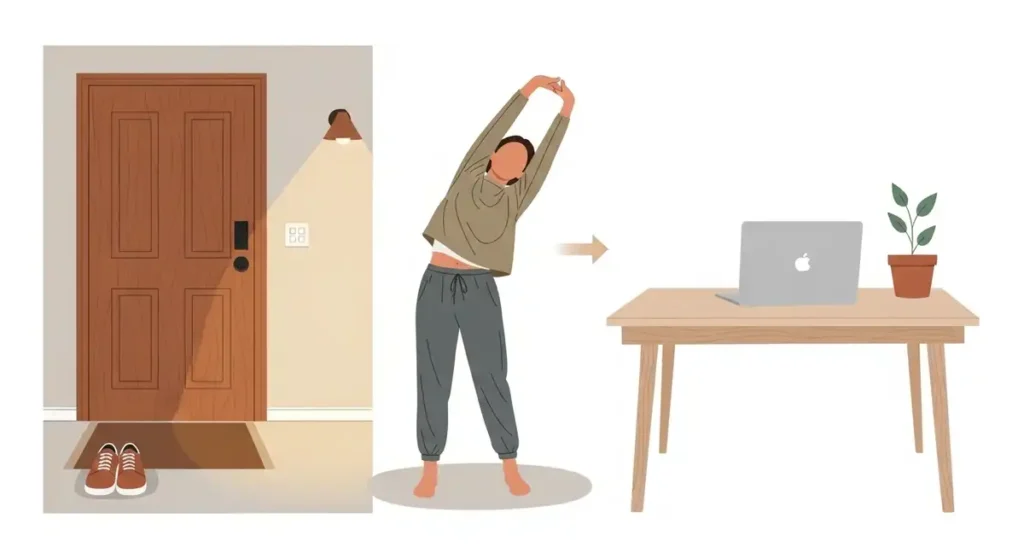
Mindful Transitions Between Roles
Mindful transitions help shift attention between work and home. Without transitions, mental load stays elevated. This can reduce emotional presence.
Transitions act as signals that one role has ended. Common examples include walking, stretching, or changing clothes. These cues support nervous system regulation.
Consistency matters more than complexity. Simple rituals practiced daily become automatic. This reduces emotional spillover.
Integrator and Separator Styles in Remote Work
Remote work blurs boundaries between roles. Some people prefer integration, others separation. Knowing personal preference supports effective structure.
Integrators blend tasks throughout the day. This approach benefits from micro-boundaries. Short task completion supports clarity.
Separators prefer distinct spaces and schedules. Dedicated environments reinforce focus. Clear start and end rituals support separation.
Navigating Overwork and Partner Wellbeing
Overwork affects partners as well as individuals. Increased work hours are linked with higher household stress. Emotional withdrawal may develop gradually.
Partners may take on additional responsibility. Awareness of this pattern allows adjustment. Joint planning reduces strain.
Shared schedule control supports connection. These practices are especially helpful in dual-earner households.
Parenting, Identity, and Personal Continuity
Parenting often reduces time for personal interests. This shift can affect identity and mood. Maintaining continuity supports resilience.
Personal interests do not require long blocks. Short, regular engagement keeps connection alive. This supports patience and presence.
Children benefit from observing balanced self-respect. Modeling personal care supports healthy norms.
Creating Manageable Moments for Self Support
Manageable moments are brief practices embedded in daily routines. Examples include stretching, journaling, or quiet reflection. These support steadiness.
Integration reduces scheduling burden. Practices fit alongside existing routines. This supports consistency.
Flexibility remains essential during disruptions. Adjusting expectations preserves engagement. Compassion supports balance.
Conclusion
Learning how to create balance between work, love, and self involves ongoing adjustment rather than completion. Balance develops through awareness, boundaries, and supportive routines woven into daily life. This approach supports sustainable wellbeing while respecting changing responsibilities and personal capacity.
Frequently Asked Questions
How can I balance my career and my personal life
Balancing career and personal life involves aligning responsibilities with realistic capacity rather than equal time division. Many people use boundaries and recovery periods to support steadiness. Balance often improves through consistency instead of constant adjustment.
Why is it hard to balance work, love, and self-care
Balancing work, love, and self-care is difficult because modern routines blur boundaries and reduce recovery time. Competing demands create strain. Intentional structure and awareness support gradual improvement.
What are the eight areas of the Wheel of Life
The Wheel of Life commonly includes career, finances, health, relationships, personal growth, recreation, environment, and spirituality. These domains reflect core life areas. Reviewing them supports balanced planning.
Can you have a successful career and a healthy relationship
Career success and healthy relationships often coexist when communication and boundaries are present. Shared planning supports connection. Emotional support strengthens resilience.
How do I stop feeling guilty for taking time for myself
Reducing guilt involves reframing self-care as maintenance rather than indulgence. Many people notice improved patience and clarity. Small routines support consistency.
How does overwork affect a marriage
Overwork can reduce emotional availability and increase household stress. Partners may feel disconnected. Awareness supports adjustment.
What is a mindful transition ritual
A mindful transition ritual signals the end of one role and the start of another. Common examples include walking or stretching. These practices support regulation.
How do remote workers set boundaries at home
Remote workers often use designated spaces and time limits. Clear rituals support separation. Communication reinforces expectations.
How can parents find time for hobbies
Parents often integrate hobbies into short daily moments. Consistency maintains identity. Flexibility supports engagement.
What are the three marriages in life
The three marriages refer to commitment to work, relationships, and self. Each requires care and boundaries. Balance supports sustainability.
Medical Disclaimer
This content is for informational purposes only and does not constitute medical or mental health advice. It is not intended to diagnose, treat, cure, or prevent any condition. Consult a qualified healthcare or mental health professional for personalized guidance.
- 7 Proven Ways to Create Balance Between Work, Love & Self
- Can You Truly Create Balance Between Work, Love & Self
- How to Create Balance Between Work, Love & Self Sustainably
- Create Balance Between Work, Love & Self Without Burnout
- Science-Backed Guide to Create Balance Between Work, Love & Self