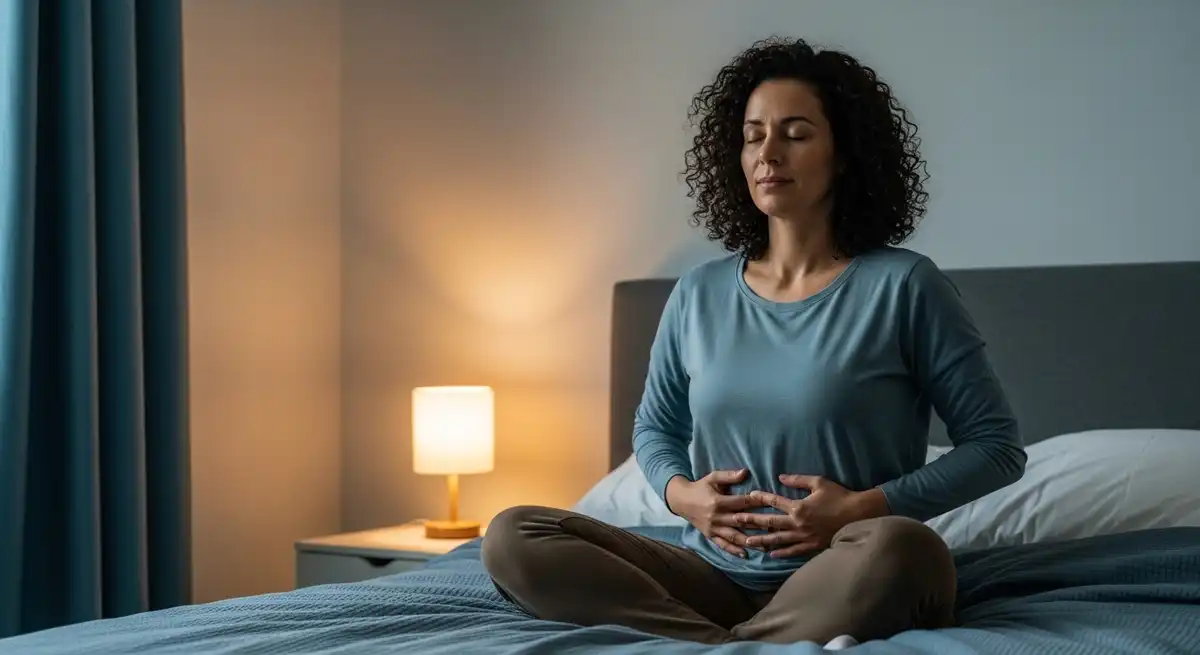
Modern life places steady demands on attention, emotional regulation, and physical energy, which often spill into the evening hours. Many people reach bedtime feeling tired but mentally alert, especially parents and working adults balancing multiple responsibilities. Breathwork is commonly discussed in wellness education as a simple, accessible practice that supports relaxation by working with natural breathing rhythms rather than trying to override them.
Breathing happens without effort, yet it is one of the few body processes that can be adjusted intentionally at any moment. Wellness educators often describe breathwork as a bridge between mental activity and physical calm because it influences both awareness and bodily signals. When practiced gently and consistently, breathing techniques are generally viewed as supportive lifestyle habits rather than corrective or therapeutic interventions.
This page explains the role of breathwork in relaxation and sleep using clear, educational language grounded in physiology and everyday experience. The focus remains on routine support, stress awareness, and nervous system balance, not diagnosis or treatment. Breathwork is presented as a complementary practice that many people use alongside healthy sleep habits and realistic daily routines.
The Role of Breathwork in Relaxation and Sleep: Understanding the role of breathwork in relaxation and sleep
The role of breathwork in relaxation and sleep is often explained through its effect on the autonomic nervous system. Breathing patterns influence heart rate, muscle tone, and alertness throughout the day. Slower and more rhythmic breathing is commonly associated with calmer physical states that support winding down during the evening.
When breathing becomes rapid or shallow, the body may interpret that pattern as a signal of urgency. This response can make it harder to feel settled at night, even when physical fatigue is present. Breathwork encourages intentional pacing of inhalation and exhalation, helping the body receive clearer signals of safety and rest readiness.
In everyday settings, people often use breathwork during transitions, such as after work or before bedtime. These practices are not about forcing relaxation but about creating conditions where calm can arise naturally. Over time, repeated exposure to slower breathing rhythms may support more predictable relaxation responses.
Autonomic nervous system balance and breathing patterns
The autonomic nervous system regulates automatic functions such as digestion, heart rhythm, and breathing pace. It includes sympathetic activity linked with alertness and parasympathetic activity linked with rest. Breathwork is often described as a gentle way to encourage parasympathetic activity during periods meant for recovery.
Slower breathing, particularly when the exhalation lasts longer than the inhalation, is commonly associated with reduced physical arousal. Wellness education often notes that this pattern can lower perceived tension and support a calmer bodily state. These effects are usually subtle and develop with regular practice rather than appearing instantly.
In daily life, people may notice these effects during quiet moments like evening routines or short breaks. Breathwork does not remove stressors but can influence how the body responds to them. This balance supports relaxation without implying medical or psychological outcomes.
Vagus nerve awareness in breath focused practices
The vagus nerve supports communication between the brain and organs such as the heart and lungs. Breathwork is frequently described as one of the simplest ways to influence vagal activity without equipment or specialized training. Slow, steady breathing patterns are commonly associated with gentle vagal engagement.
Educational sources suggest that vagal activity is linked with emotional regulation and physical calm. This does not suggest treatment of anxiety or sleep conditions. Instead, it reflects the body’s built in ability to shift toward rest when conditions feel stable and predictable.
In practical terms, breathwork helps people notice early signs of tension before they intensify. This awareness is especially useful during evening hours when mental stimulation often remains high. Gentle breathing practices are commonly used to support smoother transitions into rest.
Heart rate variability and relaxation capacity
Heart rate variability refers to the natural variation in time between heartbeats. Higher variability is generally associated with flexibility in stress responses and emotional regulation. Breathwork is frequently used as a lifestyle practice to support healthier variability patterns over time.
Paced breathing, often around five to six breaths per minute, is commonly discussed in wellness education. This rhythm supports coordination between breathing and heart activity. With consistent practice, many people report feeling steadier during everyday stressors.
In routine use, people may practice paced breathing during short breaks or before sleep. These sessions are usually brief and designed to feel manageable. The emphasis remains on regularity rather than intensity or performance.
Cardiac coherence as a lifestyle concept
Cardiac coherence describes a state where breathing rhythm and heart activity move in a coordinated pattern. Breathwork is often used to support this state during rest or recovery periods. The concept is widely discussed in non clinical wellness education.
Achieving coherence does not require devices or strict monitoring. Many people use simple timing cues or gentle counting to slow breathing naturally. These practices fit easily into daily routines without adding complexity.
Over time, coherence focused breathing may support emotional steadiness and perceived calm. The benefits are described as supportive rather than corrective. This framing aligns with lifestyle wellbeing rather than medical intervention.
Nasal breathing and respiratory stability
Nasal breathing plays an important role in regulating airflow, temperature, and moisture during respiration. Wellness educators often highlight nasal breathing as supportive for calmer and more stable breathing patterns. During rest, nasal breathing is generally associated with smoother respiratory rhythms.
Mouth breathing, particularly during sleep, is sometimes linked with disrupted breathing patterns. Nasal breathing encourages steady airflow and supports natural pacing. These effects are mechanical and physiological rather than therapeutic.
In everyday practice, people often focus on nasal breathing during waking hours. This may include awareness during walking, resting, or relaxation exercises. Over time, habitual nasal breathing can support calmer nighttime respiration.
Brain rhythm regulation and breath awareness
Breathing patterns influence brain activity through sensory feedback pathways. Educational research suggests that nasal breathing interacts with brain regions involved in emotion and memory processing. This interaction supports the idea that breathing affects more than oxygen exchange.
Breath awareness practices encourage attention to inhalation and exhalation sensations. This focus can reduce mental overstimulation by offering a simple physical anchor. The effect is often described as grounding rather than transformative.
In daily routines, breath focused awareness is commonly used during quiet moments. These moments may occur before sleep or early in the morning. The practice supports mental settling without requiring silence or complete stillness.
The 4 7 8 breathing pattern in everyday routines
The 4 7 8 breathing pattern involves structured timing of inhalation, breath holding, and exhalation. Wellness educators often describe it as a calming rhythm that slows breathing pace. The emphasis is on gentle execution rather than strict accuracy.
People commonly use this pattern during evening wind down periods. The longer exhalation phase is associated with reduced physical arousal. This makes the practice appealing for those who feel mentally active before sleep.
In everyday contexts, the technique is usually practiced for short periods. It is introduced gradually, especially for beginners. Comfort and ease are prioritized over depth or duration.
Safety considerations for structured breathing
Structured breathing patterns involve conscious control of breath timing. For most people, gentle pacing is considered safe when practiced without strain. Wellness guidance often suggests stopping if discomfort, lightheadedness, or unease appears.
Individuals with respiratory or cardiovascular conditions are often advised to consult healthcare professionals before adopting new breathing practices. Breathwork is positioned as a supportive habit rather than a replacement for care. This approach aligns with responsible wellness education.
In daily routines, modifications are common and encouraged. Shorter counts or fewer repetitions can make practices more accessible. Paying attention to bodily signals remains central to safe breath awareness.
Cyclic sighing as an exhale focused approach
Cyclic sighing emphasizes a full inhalation followed by a longer exhalation. This pattern is often discussed in wellness education for its calming effect on the body. The extended exhale is associated with a natural release of tension.
Educational studies describe cyclic sighing as approachable for beginners because it requires minimal structure. Counting is not necessary, which can make the practice feel less demanding. This simplicity suits moments of heightened stress or evening relaxation.
In daily routines, people often practice cyclic sighing for several minutes while seated or lying down. The focus remains on ease and natural rhythm. Effort and control are intentionally minimized.

Emotional awareness through breath observation
Breath observation involves noticing breathing patterns without immediately changing them. This awareness helps people recognize how emotional states influence respiration. Shallow or rapid breathing often accompanies mental tension or overstimulation.
By observing breath without judgment, individuals can identify moments when slowing may be helpful. This approach supports self regulation through awareness rather than control. It is commonly introduced in mindfulness based lifestyle education.
In everyday life, breath observation fits into short pauses during transitions. These moments may occur before sleep or after busy periods. The practice supports emotional awareness without implying psychological treatment.
Box breathing in high pressure environments
Box breathing uses equal phases of inhalation, holding, exhalation, and holding. It is often referenced in performance and stress management contexts. The structure provides a predictable rhythm that can feel stabilizing.
This breathing pattern is commonly used in professional environments that require composure. It supports steady breathing during demanding situations. The method emphasizes control without force or strain.
In daily routines, box breathing is usually practiced briefly. Conservative timing supports comfort and accessibility. It is presented as a general composure tool rather than a therapeutic practice.
Carbon dioxide tolerance and breath comfort
Breathwork discussions sometimes include carbon dioxide tolerance as a factor in breathing comfort. Slow breathing can gently increase tolerance over time. This adaptation supports calmer breathing sensations during rest.
Reduced tolerance may contribute to feelings of air hunger during relaxation. Breath awareness helps normalize these sensations without pushing limits. Education emphasizes gradual exposure rather than breath restriction.
In everyday practice, people allow breathing to slow naturally. No breath deprivation is encouraged. Comfort and safety remain central to responsible guidance.
The Buteyko method in lifestyle education
The Buteyko method focuses on reduced volume breathing and nasal respiration. It is commonly discussed in wellness education as a breathing awareness approach. The emphasis is placed on gentleness rather than endurance.
Supporters describe the method as promoting calmer breathing habits. It is often introduced gradually and practiced briefly. Claims remain framed as supportive rather than curative.
In everyday routines, Buteyko inspired practices may include nasal breathing reminders. These practices fit into walking or resting activities. The goal remains awareness and comfort.
Pranayama and traditional breathing education
Pranayama originates from traditional yoga systems and includes a variety of breathing techniques. Modern wellness education presents these practices in a secular and safety focused way. The emphasis is placed on breath awareness rather than spiritual outcomes.
Gentle pranayama practices are commonly associated with relaxation and focus. Techniques such as alternate nostril breathing are widely used in non clinical contexts. Adaptations are made for contemporary lifestyles.
In daily life, pranayama inspired breathing is practiced briefly. Simplicity and comfort guide instruction. The practices are positioned as supportive habits rather than advanced disciplines.
Bhramari breathing and sound based calm
Bhramari breathing involves gentle humming during exhalation. Wellness educators often describe it as soothing and grounding. The vibration created by humming may support relaxation sensations.
This practice is commonly used during quiet moments without complex instruction. The sound component can help shift attention away from mental noise. This makes the technique accessible for many people.
In everyday routines, bhramari is practiced while seated or lying down. Short sessions are typical. The technique supports calm without performance expectations.
Integrating breathwork into evening routines
Evening routines benefit from predictable cues that signal rest. Breathwork is often included as one of these cues. Short breathing practices help mark the transition from activity to rest.
Consistency tends to matter more than duration. Practicing at a similar time each evening supports habit formation. This predictability helps the nervous system associate breathing patterns with winding down.
In daily life, breathwork may follow hygiene routines or screen disengagement. It fits alongside other calming activities. The practice supports routine stability rather than sleep control.
Parenting responsibilities and breath awareness
Parents often experience interrupted rest due to caregiving needs. Breathwork offers brief moments of calm that fit into unpredictable schedules. These practices do not require isolation or long time commitments.
Short breathing sessions may be practiced while children play or sleep. The emphasis is on accessibility and self regulation. Breathwork supports emotional steadiness during caregiving demands.
In family contexts, calm breathing may naturally model regulation for children. This occurs without instruction or teaching. The practice supports household calm without pressure.
Working life balance and breathing habits
Working professionals face ongoing cognitive and emotional demands. Breathwork offers short pauses that support nervous system recovery. These practices can be integrated into breaks or transitions.
Gentle breathing habits help reduce accumulated tension. They are commonly used without altering workload or schedules. The focus remains on response rather than circumstances.
In everyday work routines, breath awareness supports clarity and composure. The practice complements broader lifestyle balance strategies. It does not replace rest or boundaries.
Sleep consistency and nervous system cues
Regular sleep and wake times support circadian rhythms. Breathwork reinforces these rhythms by providing consistent calming cues. Evening breathing practices signal the approach of rest.
Consistency supports predictability in physical responses. Over time, the body associates certain breathing patterns with winding down. This association develops gradually.
In daily life, breathwork complements sleep hygiene habits. It does not override irregular schedules. The emphasis remains on supportive alignment.
Long term lifestyle perspective on breathwork
Breathwork is most effective when viewed as a long term lifestyle habit. Benefits develop gradually through regular practice. Expectations focus on support rather than transformation.
Short term effects may include brief calm. Medium term effects often involve familiarity with relaxation responses. Long term effects relate to steadiness and routine stability.
In everyday life, breathwork adapts to changing needs. Practices evolve with circumstances. This flexibility supports sustainable engagement.
Emotional responsibility and realistic framing
Responsible wellness education avoids exaggerated claims. Breathwork is described as commonly helpful rather than universally effective. Individual experiences vary based on context and consistency.
Breathwork does not replace professional care. It is presented as complementary to medical or psychological support. This framing maintains trust and safety.
Neutral language supports informed decision making. Breathwork is one of many lifestyle tools. This approach aligns with YMYL standards.
Frequently Asked Questions
What is the best breathing technique for immediate relaxation
Immediate relaxation is commonly supported by exhale focused breathing patterns such as cyclic sighing or slow paced breathing. These approaches emphasize ease and comfort rather than control. Many people use them for several minutes during tense moments to encourage physical calm.
How does the 4 7 8 breathing method support sleep routines
The 4 7 8 method slows breathing rhythm and extends the exhalation phase. This pattern is commonly associated with reduced physical arousal before bedtime. It is typically used briefly as part of an evening wind down routine.
What are the benefits of nasal breathing during rest
Nasal breathing supports stable airflow and natural respiratory pacing. It is commonly associated with calmer breathing patterns during rest. Practicing nasal breathing during waking hours may support nighttime comfort.
Can breathwork replace sleep medication
Breathwork is considered a supportive lifestyle practice rather than a replacement for medication. People using sleep medication should consult healthcare professionals before making changes. Breathwork may complement broader sleep hygiene strategies.
How is the vagus nerve involved in breathing practices
The vagus nerve supports communication between the brain and internal organs. Slow breathing patterns are commonly associated with gentle vagal activity. This relationship supports relaxation responses without implying treatment.
What is the difference between box breathing and cyclic sighing
Box breathing uses equal breathing phases to support composure and focus. Cyclic sighing emphasizes extended exhalation for calming effects. Each approach suits different everyday situations.
How long does breathwork take to feel familiar
Many people notice calming sensations during initial practice. Familiarity and comfort often develop over several weeks of consistent use. Benefits depend on regular engagement.
Does slow breathing reduce stress hormones
Slow breathing is commonly associated with reduced physical arousal. Educational sources describe this as supportive of stress awareness. Individual responses vary.
What is cardiac coherence in simple terms
Cardiac coherence describes coordinated breathing and heart rhythm patterns. Slow paced breathing supports this coordination. It is discussed as a lifestyle concept.
Can beginners safely practice breathwork
Most gentle breathing practices are considered accessible for beginners. Comfort and ease are emphasized over precision. Individuals with health concerns should consult professionals before starting.
Conclusion
The role of breathwork in relaxation and sleep lies in its ability to support natural physiological rhythms. Through gentle and consistent practice, breathing awareness helps create predictable cues for rest. When framed responsibly, breathwork remains a practical lifestyle tool that supports calm, balance, and everyday wellbeing.
Medical Disclaimer
“This content is for informational purposes only and does not constitute medical advice. It is not intended to diagnose, treat, cure, or prevent any condition. Always consult a qualified healthcare provider before starting new health practices, especially if you have existing medical conditions.”
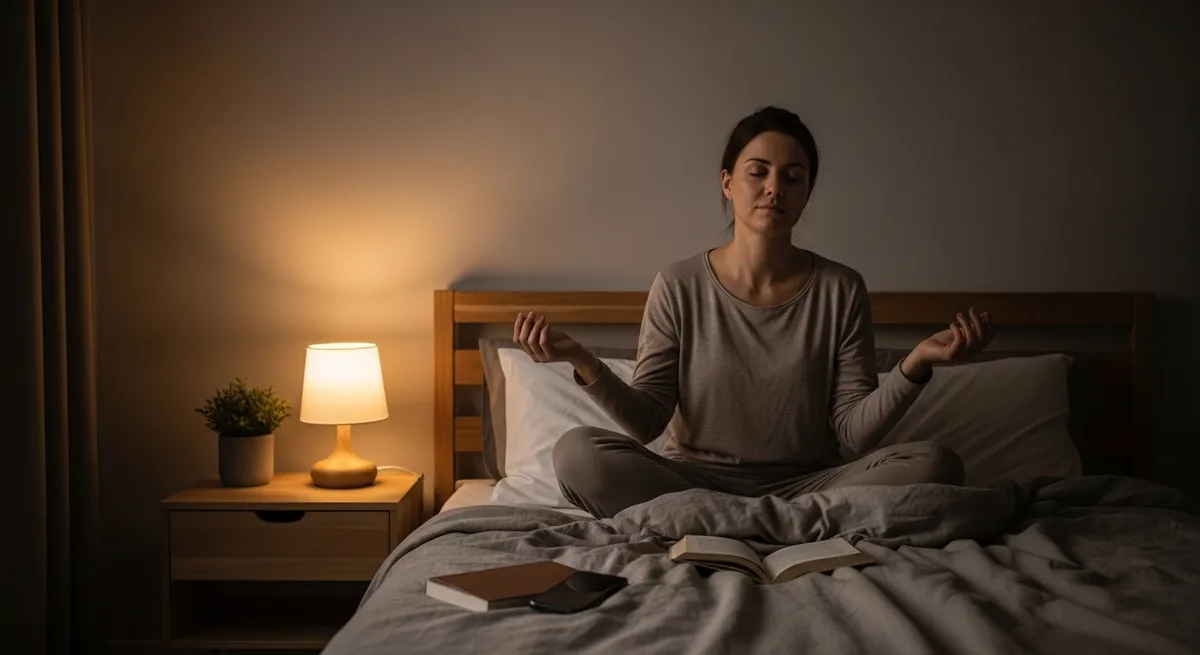
Prompt 1: Featured Image A calm evening bedroom scene with a diverse adult sitting upright on a bed practicing slow nasal breathing, eyes gently closed, hands resting naturally on the abdomen. Photorealistic editorial style, soft warm lamp lighting, muted blues and earth tones, peaceful mood, uncluttered composition with negative space, shallow depth of field, horizontal orientation, professional wellness magazine quality, realistic and approachable atmosphere.
Prompt 2: Supporting Concept Image Close up instructional image of hands placed on the abdomen and chest demonstrating diaphragmatic breathing, minimal background, clean and modern aesthetic. Soft natural daylight, neutral color palette, clear focus on breathing mechanics, educational tone, inclusive skin tones, horizontal layout, high clarity suitable for step by step explanation.
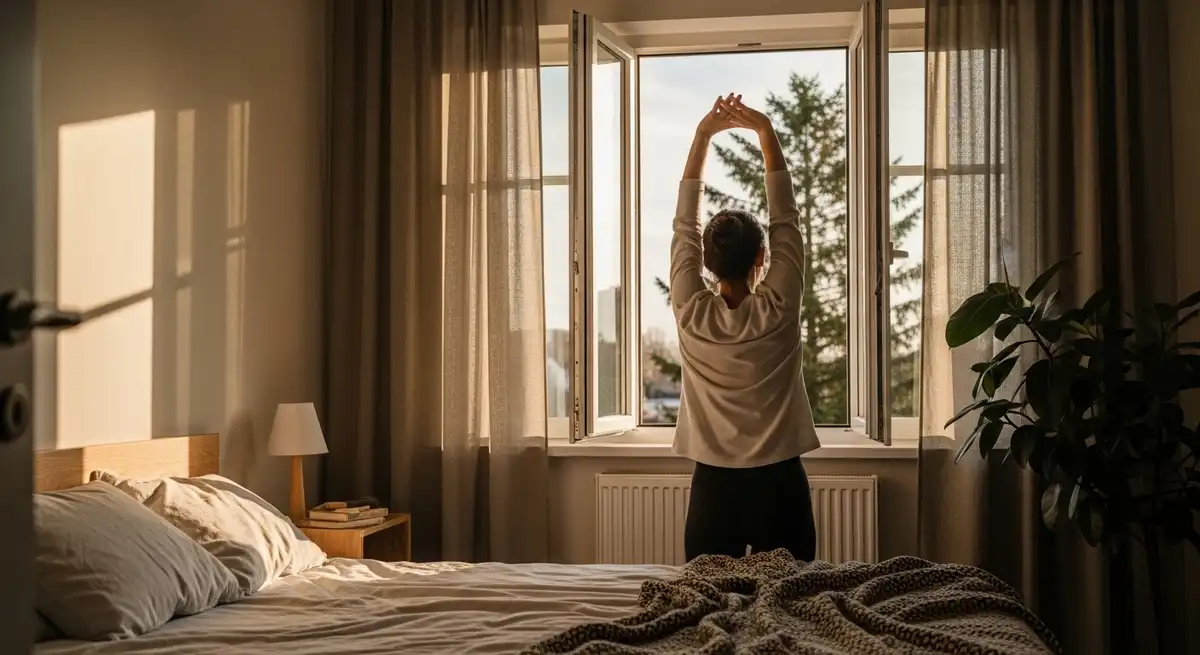
Prompt 3: Inspirational Image Early morning scene of a person waking naturally with sunlight through curtains, stretching calmly beside an open window. Lifestyle photography style, golden hour lighting, soft greens and warm neutrals, content and rested mood, balanced composition, realistic home environment, horizontal orientation, aspirational but attainable wellness feeling.
For wider background on this, see the National Heart, Lung, and Blood Institute on sleep.