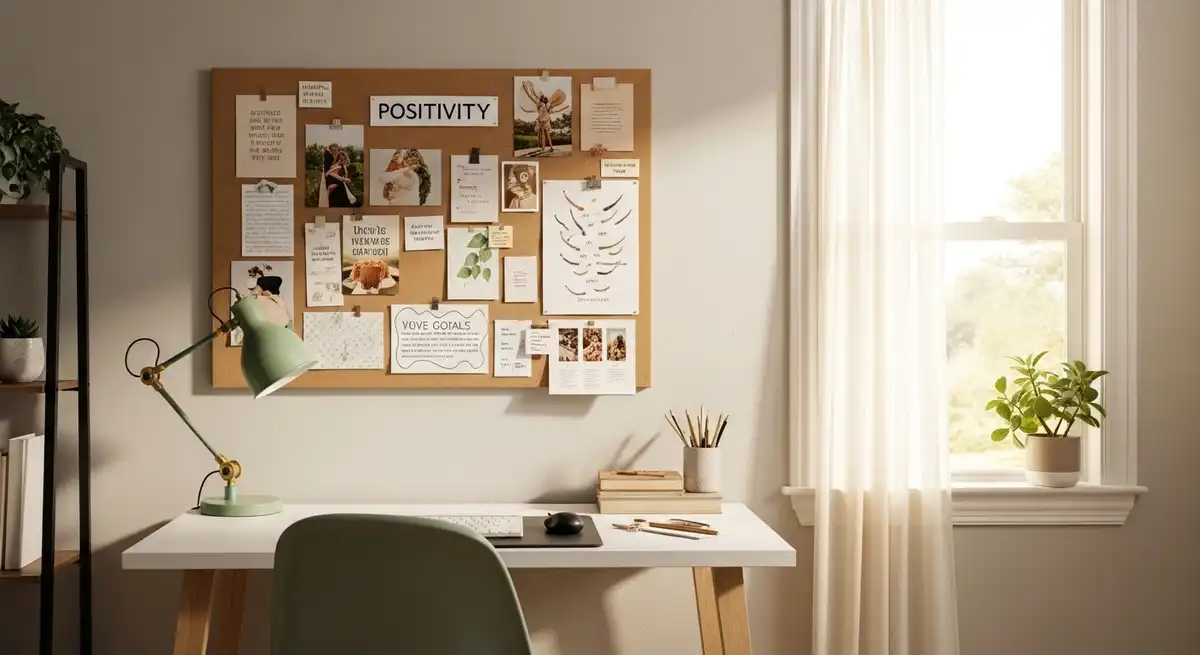
Creating a positivity vision board is often framed as a creative exercise, yet many people arrive at it while juggling work pressure, caregiving roles, and emotional fatigue. Goals can feel scattered when attention is constantly pulled in different directions. A carefully built vision board works best as a calm visual anchor that supports focus without pressure, urgency, or unrealistic expectations.
Wellness educators usually describe vision boards as lifestyle organization tools rather than motivation shortcuts. When they are built thoughtfully, they help keep values and priorities visible during ordinary routines. Learning how to create a positivity vision board in a grounded way allows it to fit into real life without emotional strain or exaggerated promises.
How to Create a Positivity Vision Board: Understanding the Core Idea of a Positivity Vision Board
A positivity vision board is a visual collection of images, words, and symbols that represent personal goals and guiding values. It is commonly used to move intentions out of the mind and into the physical or digital environment, which reduces mental clutter. In daily life, it works as a reminder system rather than a guarantee of outcomes.
Many people associate vision boards with wishful thinking, but their practical value lies in attention management. Visual cues placed in familiar spaces gently reinforce priorities during routine choices. This steady reinforcement supports consistency without relying on constant motivation or emotional highs.
Wellness guidance typically frames vision boards as reflective tools. They are most helpful when grounded in realistic goals and present life circumstances. This approach helps avoid disappointment and keeps the practice supportive instead of demanding.
The Difference Between Inspiration and Intention
Inspiration often creates a brief emotional lift, while intention provides direction over time. A positivity vision board built only with inspiring images may feel pleasant but lack practical relevance. Intention adds clarity by linking visuals to specific values, habits, or life areas.
Intentional boards are designed with awareness of time, energy, and responsibilities. They reflect not only desired outcomes but also the lifestyle needed to support them. This balance helps reduce frustration and encourages steady effort.
Lifestyle educators often note that intention based tools adapt more easily. When circumstances change, intentions can shift without abandoning the board. This flexibility makes vision boards suitable for long term use.
Everyday Relevance of Visual Focus Tools
Daily life involves constant information and decision making, which can fragment attention. Visual focus tools like vision boards help narrow attention toward chosen priorities. This narrowing supports clearer thinking throughout the day.
A positivity vision board placed where it is seen regularly becomes part of the environment. Over time, repeated exposure builds familiarity with selected goals. This process supports awareness rather than forcing action.
In practical terms, visual reminders reduce the need to repeatedly reassess priorities. They offer quiet reinforcement that fits naturally into everyday routines. This makes them accessible for people balancing multiple roles.
The Role of Reflection Before Creation
Reflection is a key step when learning how to create a positivity vision board. Looking back on recent experiences helps identify patterns, strengths, and limits. This awareness prevents setting goals that conflict with current realities.
Many people find it helpful to review what felt manageable and what felt draining. This reflection provides guidance when choosing themes and images. It supports honesty rather than idealized expectations.
Reflection also promotes self respect in goal setting. When boards reflect lived experience, they feel supportive instead of demanding. This increases the likelihood of long term engagement.
Practicing Gratitude as a Foundation
Gratitude is often used as a grounding practice in lifestyle education. Acknowledging what already feels stable or supportive creates emotional balance before focusing on change. This balance helps reduce pressure and comparison.
Including gratitude related words or images on a positivity vision board reminds viewers of what is already working. It encourages appreciation alongside aspiration. This combination supports emotional steadiness.
Gratitude does not remove challenges, but it adds perspective. In daily routines, this perspective helps maintain motivation without frustration. It supports realistic optimism.
Defining Goals With Practical Structure
Clear goals help vision boards remain functional. Vague ideas can feel inspiring but are difficult to act on. Structured goals provide direction without rigid demands.
Wellness frameworks often recommend goals that are specific, measurable, and time aware. These criteria help translate ideas into manageable steps. They also make progress easier to notice.
A positivity vision board benefits from this structure by linking images to defined intentions. This reduces ambiguity and supports consistent focus. The board becomes a planning aid rather than decoration.
Balancing Aspiration With Daily Capacity
Aspiration reflects what people hope to experience, while capacity reflects what is currently manageable. Balancing both prevents burnout and discouragement. Boards that ignore capacity may feel overwhelming.
When creating a positivity vision board, it helps to consider available time, energy, and resources. Images should reflect attainable progress rather than ideal scenarios. This supports self trust.
Lifestyle guidance emphasizes gradual growth. Boards designed with capacity in mind encourage steady effort. They remain supportive during demanding periods.
Key Life Areas Commonly Represented
Vision boards often include several life areas to support balance. These may include physical wellbeing, emotional stability, relationships, work, finances, and personal growth. Representing multiple areas prevents over focus on one part of life.
Including diverse areas reflects how wellbeing is interconnected. Progress in one area often supports others indirectly. This broader view feels realistic.
A positivity vision board does not require equal focus on every area. Emphasis can shift with changing priorities. This adaptability keeps the board relevant.
Physical Wellbeing in a Lifestyle Context
Physical wellbeing on a vision board is often represented through supportive habits rather than appearance goals. Images may reflect movement, rest, or nourishment. This framing avoids pressure and comparison.
Lifestyle educators usually encourage consistency over intensity. Boards that highlight gentle routines support sustainable behavior. They align with everyday life.
This approach respects individual differences. Physical wellbeing is shown as maintenance and care, not transformation. This supports emotional safety.
Emotional and Mental Balance Representation
Emotional balance is commonly represented through calming imagery or value based words. These elements remind viewers of desired emotional states without implying control over feelings. This distinction supports wellbeing safety.
A positivity vision board can include reminders of boundaries, rest, or self respect. These themes support emotional awareness. They encourage compassionate self management.
Wellness education recognizes that emotions fluctuate. Boards should reflect support rather than expectation. This reduces self judgment.
Relationships and Social Connection
Relationship related images often represent connection, respect, or shared time. These symbols focus on quality rather than idealized perfection. This keeps expectations realistic.
Including relationships on a vision board highlights their role in wellbeing. It encourages intentional attention. This awareness supports balance.
Lifestyle guidance emphasizes values over outcomes. Boards that reflect communication or presence support healthier relationship habits.
Work, Career, and Purpose
Work related goals on a positivity vision board often represent growth, stability, or meaning. Images may reflect skills, environments, or routines rather than titles. This supports flexible planning.
Many working adults benefit from visual reminders of purpose. These reminders support motivation during routine tasks. They reinforce direction without promising advancement.
This approach aligns with responsible wellness standards. Career goals are framed as evolving. This reduces pressure.

Financial Awareness Without Pressure
Financial themes are best represented through stability and planning. Images may symbolize saving, organization, or experiences supported by financial health. This avoids fixation on wealth.
Lifestyle educators encourage realistic financial goals tied to habits. Boards that reflect security and planning support responsible choices. They avoid unrealistic narratives.
This framing respects varied financial situations. Money is shown as a support tool rather than a measure of worth.
Personal Growth and Learning
Personal growth is often shown through books, creative tools, or calm spaces. These images represent curiosity and development. They encourage ongoing learning.
A positivity vision board can remind viewers of interests beyond obligations. This supports identity beyond roles. It contributes to balance.
Growth themes work best when open ended. They reflect process rather than endpoints. This aligns with sustainable wellbeing practices.
Choosing a Physical Vision Board
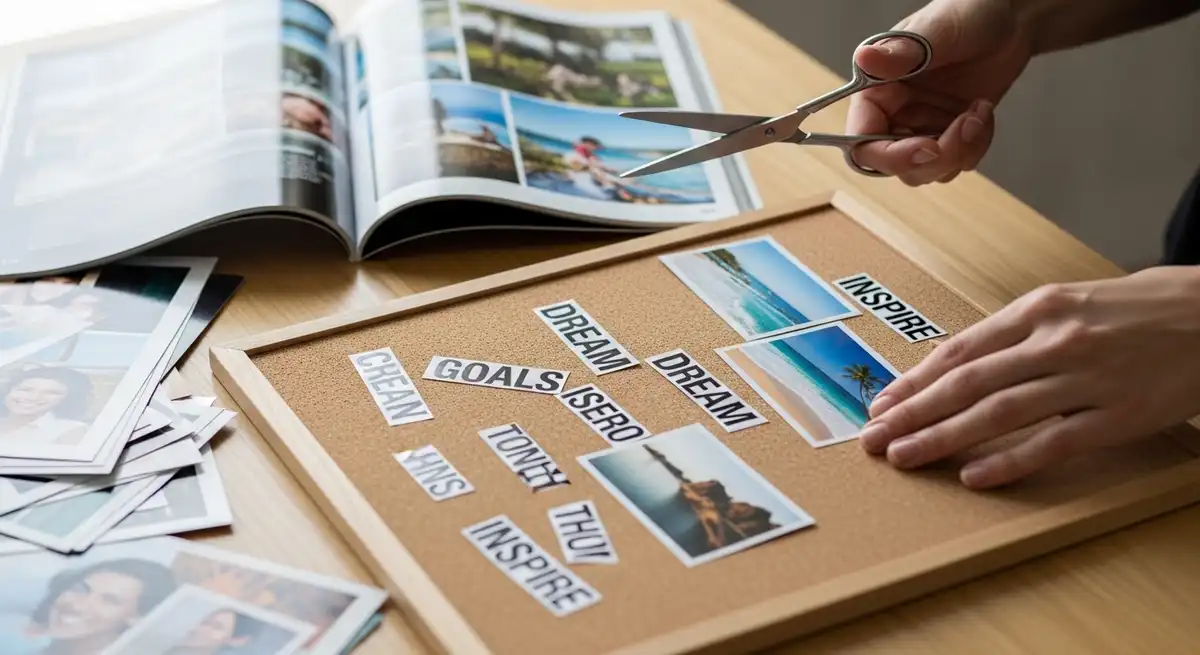
Physical vision boards involve tangible materials such as boards, magazines, and printed images. The hands on process can feel grounding for many people. It encourages slowing down and reflection.
Physical boards are often placed in bedrooms or workspaces. Their presence becomes part of the environment. This visibility supports reinforcement.
However, physical boards require space and upkeep. Choosing this format depends on preference and living conditions. There is no universal choice.
Choosing a Digital Vision Board
Digital vision boards are created using design tools or image collections. They are accessible on phones or computers. This suits mobile lifestyles.
Digital boards are easy to update as goals change. This flexibility supports evolving priorities. They integrate into daily technology use.
However, digital formats can compete with distractions. Intentional placement, such as wallpapers, helps maintain focus. Consistency remains key.
Hybrid Approaches in Modern Routines
Hybrid vision boards combine physical and digital elements. A physical board may stay at home while a digital version travels on devices. This increases exposure.
This approach suits varied schedules. It allows reinforcement across settings. It supports continuity.
Hybrid systems require minimal duplication. The same themes can appear in different forms. This adaptability supports engagement.
Selecting Images With Emotional Resonance
Images should evoke meaning rather than perfection. Emotional resonance helps sustain attention. This resonance is personal.
Lifestyle guidance suggests choosing images that reflect feelings linked to goals. This supports internal motivation. It avoids comparison.
Emotionally resonant images remain engaging over time. They prevent visual fatigue. This improves effectiveness.
Using Words and Phrases Carefully
Words on a vision board often reflect values or affirmations. These should feel realistic and supportive. Extreme language can create pressure.
Neutral, believable phrases align with wellbeing standards. They encourage reflection. This keeps emotional impact safe.
Words should feel personally true. Believability supports consistency. It reduces resistance.
Layout and Visual Organisation
Arrangement affects how a vision board feels. Cluttered layouts can overwhelm attention. Clear organization supports focus.
Some people group themes, others highlight a central priority. There is no fixed rule.
The aim is ease of viewing. A well organized board invites regular attention. This supports reinforcement.
Gentle Activation Through Routine Viewing
A positivity vision board becomes active through repeated viewing. Short daily moments are enough. Consistency matters more than duration.
Viewing can pair with quiet reflection. This supports awareness without forcing emotion. It fits daily life.
Activation does not require ritual. Simple exposure works. This lowers barriers.
Avoiding Overattachment to Outcomes
Overattachment to outcomes can create frustration. Wellness education emphasizes flexibility. Vision boards should guide, not control.
Viewing the board as direction rather than prediction reduces pressure. It allows adjustment. This supports emotional wellbeing.
Allowing goals to evolve keeps the board relevant. Change is expected. The board should reflect that.
Maintenance and Periodic Review
Regular review keeps a positivity vision board aligned with life changes. Quarterly or seasonal reviews are common. This timing supports reflection.
Removing outdated images prevents stagnation. Adding new ones reflects growth. This process reinforces engagement.
Maintenance keeps the board supportive. It prevents burden. This aligns with responsible use.
Sharing and Social Considerations
Sharing vision boards is optional. Some find accountability helpful. Others prefer privacy.
Wellness guidance suggests selective sharing. Supportive environments encourage consistency. Unsupportive reactions can discourage engagement.
Personal comfort should guide sharing. The board serves the individual first.
Parenting and Family Life Relevance
Parents often manage many responsibilities. Vision boards can clarify personal needs alongside family priorities. This balance supports wellbeing.
Including family themes can reinforce shared values. It encourages intentional time. This supports connection.
Boards should also include individual goals. Personal identity supports resilience. Balance matters.
Working Life and Time Constraints
Working adults face limited time. Vision boards offer low effort reinforcement. They fit brief moments.
This accessibility suits demanding schedules. They do not require long sessions. This supports consistency.
Work related boards should reflect realistic goals. They should support balance, not overwork.
Common Misunderstandings Clarified
Vision boards do not guarantee results. They support awareness and focus. Action remains essential.
They do not replace professional support. They are lifestyle tools. This distinction matters.
Understanding limits prevents disappointment. It encourages responsible use.
Frequently Asked Questions
What should a positivity vision board include
A positivity vision board usually includes images and words that reflect personal goals, values, and desired experiences. These elements are chosen for meaning rather than appearance. In everyday use, they act as visual reminders that support focus and intention without promising specific outcomes.
Are vision boards considered effective in wellness education
Vision boards are often discussed in wellness education as tools for focus and organization. They are linked with clearer priorities and consistency when paired with action. Their usefulness depends on realistic goal setting and regular engagement rather than belief alone.
Where can a vision board be placed safely at home or work
Vision boards are commonly placed in bedrooms, home offices, or workspaces where they are seen daily. Visibility supports reinforcement. Placement should feel comfortable and private to avoid stress or distraction.
Can a positivity vision board be created digitally
Digital vision boards are widely used and practical. They allow easy updates and portability. When viewed intentionally, they function similarly to physical boards as visual focus tools.
How often should a vision board be reviewed or updated
Many people review vision boards every three to six months. This allows goals to evolve naturally. Regular updates keep the board aligned with priorities and prevent disengagement.
Is it safe to use affirmations on a vision board
Affirmations are generally used as supportive statements rather than guarantees. Neutral and realistic language is recommended. This approach supports emotional wellbeing without creating pressure.
Do vision boards replace planning or professional guidance
Vision boards do not replace planning or professional advice. They complement existing strategies by reinforcing focus. They are considered lifestyle supports rather than solutions.
Can parents and working adults benefit from vision boards
Parents and working adults often use vision boards to clarify priorities. The practice fits busy routines. It supports balance by keeping personal and family values visible.
What materials are commonly used for physical vision boards
Common materials include poster boards, cork boards, magazines, and glue sticks. These supplies are accessible and flexible. The process itself is often calming.
How long does it take to notice changes from using a vision board
Changes related to focus or clarity often appear gradually. Many people notice increased awareness within weeks. Outcomes vary based on consistency and action.
Editorial Conclusion
Learning how to create a positivity vision board involves reflection, intention, and realistic framing. Used as a visual support tool, it helps organize priorities and maintain focus amid daily demands. When approached calmly and responsibly, a vision board can remain a steady companion within a balanced lifestyle rather than a source of pressure.
Medical Disclaimer
This content is for informational purposes only and does not constitute medical advice. It is not intended to diagnose, treat, cure, or prevent any disease. Consult a qualified healthcare provider before starting any new health or wellness practice, especially if you have existing conditions.
For wider background on this, see the American Psychological Association on stress.