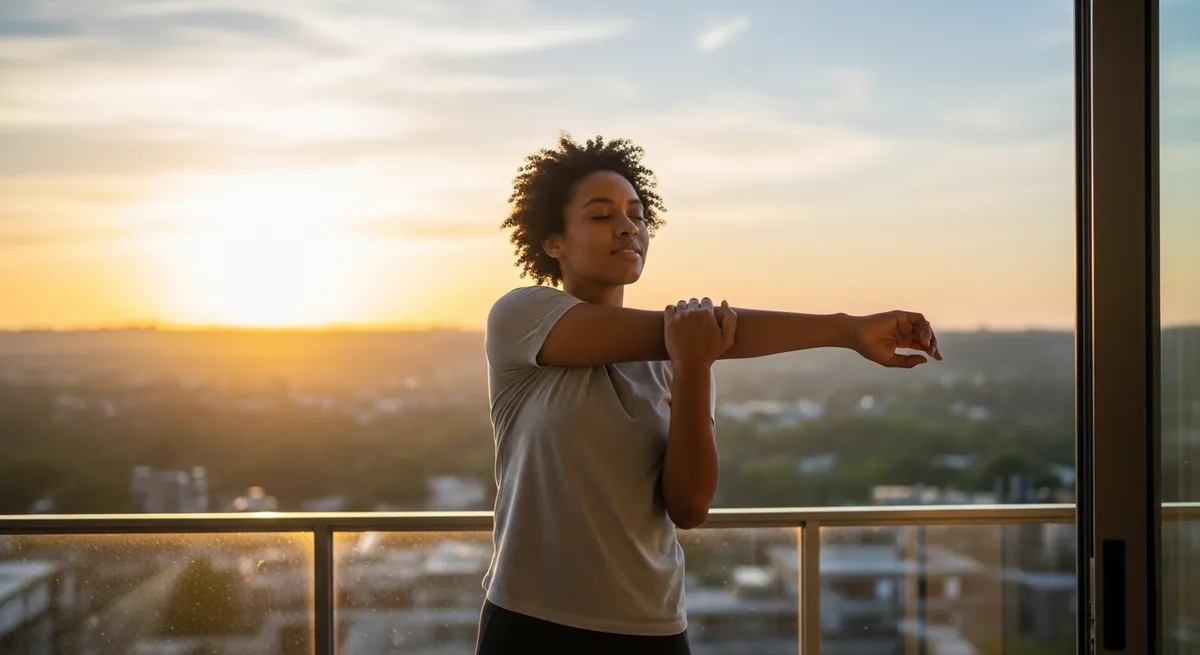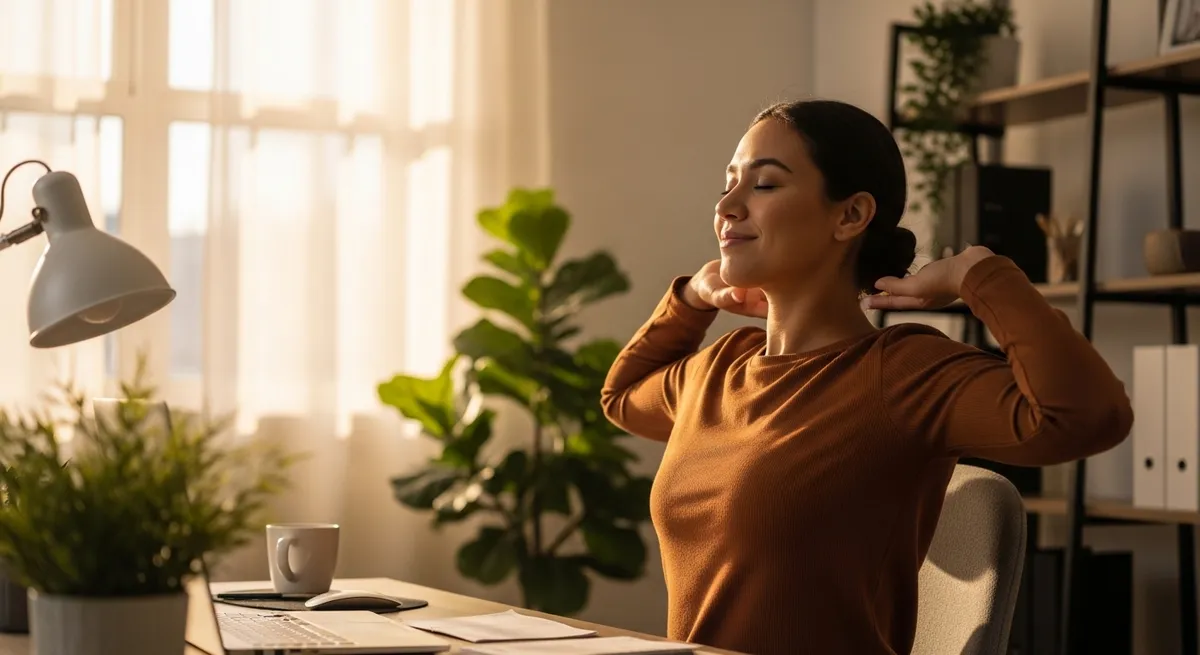
Simple desk stretches for office workers support comfort during long hours of sitting and screen use. Many people working at desks notice stiffness, reduced movement, and mild discomfort as the day progresses. These changes often build slowly and can affect posture, focus, and overall ease of movement during everyday tasks.
In regular routines, adding gentle stretches into the workday is widely used as a practical way to support physical wellbeing. These movements require no special equipment and fit easily into most office or home setups. With consistent practice, the body often feels more relaxed, flexible, and prepared to handle daily demands.
Understanding the Impact of Prolonged Sitting on the Body
Spending long hours seated is commonly linked with reduced mobility and increased muscle tightness, especially in the lower back, neck, and hips. When the body stays in one position, certain muscles remain engaged while others stay inactive. Over time, this imbalance can lead to stiffness and a limited range of motion.
In most office settings, these changes develop gradually and may go unnoticed at first. After several days or weeks, the body may begin to feel less flexible and more restricted. Gentle stretching during the day is often used as a simple way to maintain movement and support better physical comfort.
The Role of Micro-Movements in Daily Work Routines
Micro-movements are short, light activities done throughout the day to break up long periods of sitting. These movements can include small stretches, posture shifts, or brief standing breaks. They are widely used in workplace wellness practices to support circulation and reduce physical fatigue.
In everyday work life, even brief movement breaks can make tasks feel more manageable. These small actions are not meant to replace exercise but to complement it. Over time, they help create a balanced routine that supports both physical comfort and steady concentration during work hours.
Simple Desk Stretches for Office Workers in Daily Practice
Seated Spinal Twist for Everyday Mobility
The seated spinal twist is a gentle movement that supports flexibility in the back and torso. It involves slowly turning the upper body while seated, which helps maintain natural spinal motion. Many people include this stretch in simple desk stretches for office workers because it is easy to perform and does not require extra space.
To practice this movement, sit upright and turn your body slowly to one side while holding the chair for support. Keep the movement smooth and avoid forcing the twist. Regular use of this stretch can help maintain comfort in the lower back during long work sessions.
Seated Chest Opener for Posture Support
The seated chest opener is often used to support upright posture during desk work. Sitting for long periods can cause the shoulders to round forward, which may create tension in the upper body. This stretch gently opens the chest and encourages better alignment.
To perform it, place your hands behind your back or hold the sides of your chair and gently draw your shoulders back. Keep the movement relaxed and steady. Over time, this simple stretch can help you stay more aware of your posture while working.
Wrist Flexor Stretch in Repetitive Work Environments
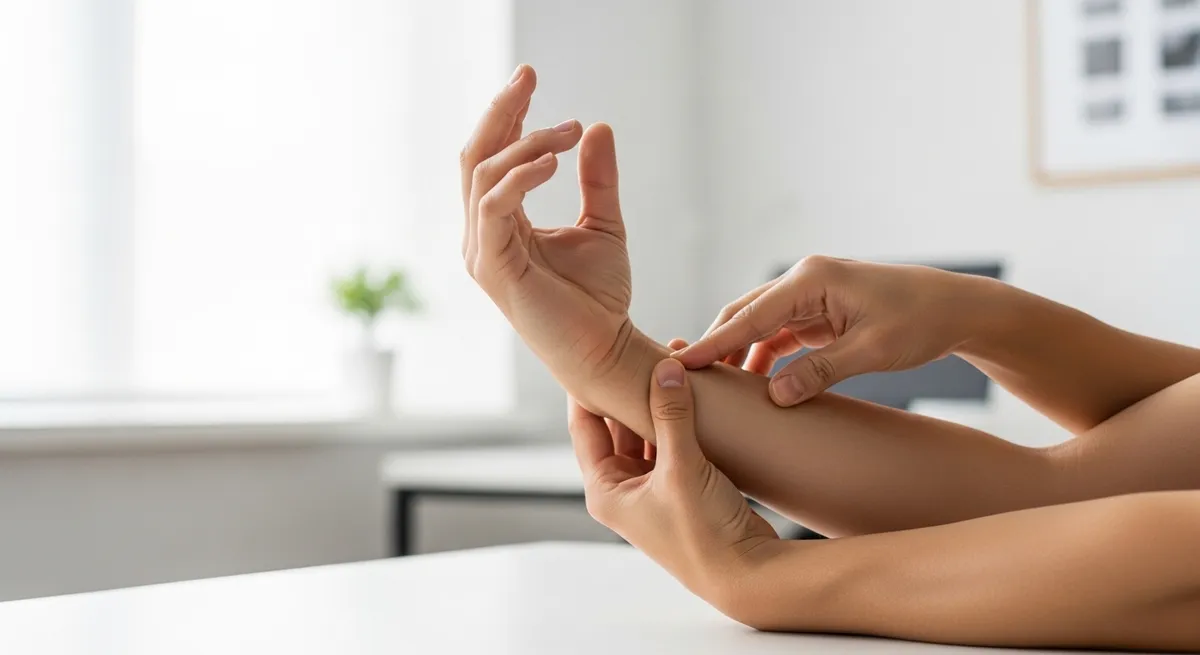
The wrist flexor stretch is commonly practiced by people who spend many hours typing or using a mouse. These repetitive movements can lead to tightness in the forearms and wrists. Stretching this area supports flexibility and helps reduce the feeling of strain.
To do this stretch, extend one arm forward with your palm facing up and gently pull your fingers back with the other hand. Hold the position briefly and repeat on both sides. Many office workers use this movement regularly to maintain comfort during repetitive tasks.
Seated Cat Cow for Gentle Spinal Movement
Seated cat cow is a slow, flowing movement that keeps the spine active during long sitting periods. It involves alternating between arching and rounding the back while seated. This pattern supports flexibility and helps reduce stiffness.
To practice, place your hands on your knees and move your spine gently with your breath. Keep the motion smooth and controlled. Including this stretch in your routine can help maintain a sense of movement throughout the workday.
Neck Side Bends for Screen-Related Tension
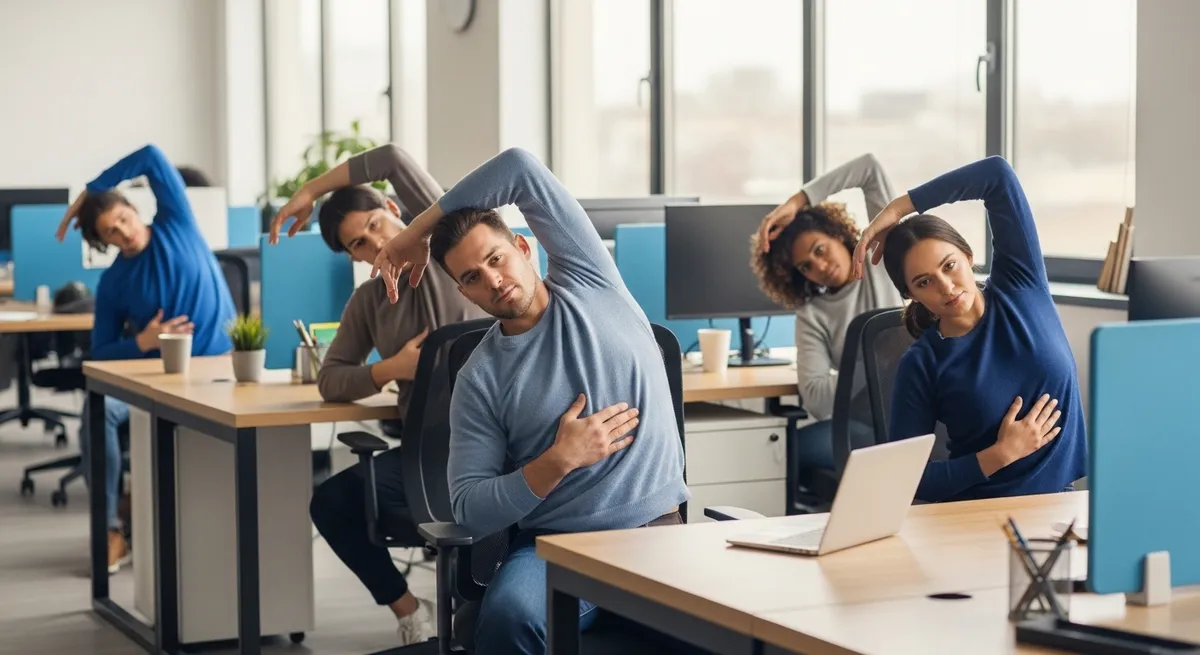
Neck side bends are simple movements used to ease tension from extended screen use. Looking at screens for long periods can cause the neck muscles to feel tight. This stretch gently lengthens those muscles and supports mobility.
To perform it, slowly tilt your head toward one shoulder and hold briefly before switching sides. Keep the movement gentle and avoid pulling forcefully. Many people include this stretch during short breaks to maintain comfort in the neck area.
Seated Figure-Four Stretch for Hip Comfort
The seated figure-four stretch is commonly used to address tightness in the hips from prolonged sitting. Sitting for extended periods keeps the hips in a fixed position, which can reduce flexibility. This stretch helps open the hip area and support movement.
To do this stretch, place one ankle over the opposite knee and lean forward slightly while keeping your back straight. Hold the position briefly before switching sides. Regular practice can help maintain comfort in the hips and lower back.
Ergonomic Awareness and Lifestyle Balance
Supporting the Body Through Ergonomic Adjustments
Ergonomic awareness focuses on arranging your workspace to support natural body alignment. This includes adjusting chair height, screen level, and keyboard position to reduce strain. These small changes work well alongside simple desk stretches for office workers.
In daily routines, combining proper setup with regular movement can make a noticeable difference. Many people find that these adjustments help reduce unnecessary tension. Over time, this approach supports a more comfortable and sustainable way of working.
Integrating Movement into Busy Work Schedules
Adding movement into a busy workday can feel challenging, but small changes often make it manageable. Short stretching breaks between tasks or meetings can be included without affecting productivity. These moments allow the body to reset and stay active.
Many individuals use reminders or natural pauses in their schedule to include these movements. Over time, these habits become part of the daily routine. This approach supports consistency without adding extra pressure to already busy schedules.
Mental Awareness and Physical Comfort Connection
Physical comfort and mental focus are closely connected during work. When the body feels stiff or uncomfortable, it can affect concentration and energy levels. Gentle stretching is often used to support both physical ease and steady attention.
People who include simple desk stretches for office workers in their routine often notice a more balanced work experience. These practices are not quick fixes but supportive habits. Over time, they help maintain comfort and improve the overall work environment.
Workplace Relevance for Parents and Working Professionals
Balancing work and personal responsibilities often requires long periods of sitting and focused attention. Many working parents manage tasks across home and office environments, which can increase physical strain. Simple desk stretches are often used as an accessible way to maintain comfort without adding extra time commitments.
In family settings, these small habits can also influence daily routines beyond work hours. When adults prioritize movement, it often encourages a more active environment at home. This creates a balanced approach that supports both professional and personal wellbeing.
Frequently Asked Questions
How can I stretch my back while sitting at my desk?
Stretching your back while sitting is often done through gentle movements like seated spinal twists or cat cow stretches. These actions help maintain flexibility and reduce stiffness from long sitting periods. Many people include them during short breaks to support comfort and keep the spine active throughout the day.
What are the best stretches for office workers?
The most useful stretches for office workers usually focus on areas affected by prolonged sitting, including the neck, shoulders, back, and wrists. Movements such as chest openers, wrist stretches, and spinal twists are widely used. These stretches are simple to perform and fit easily into most work environments.
How do I stop my neck from hurting at my computer?
Reducing neck discomfort often involves maintaining proper screen height and taking regular breaks. Gentle neck stretches and posture awareness can support comfort during long work sessions. Many people find that adjusting their sitting position and moving regularly helps ease tension in the neck area.
How often should I stretch if I sit all day?
Stretching frequency usually depends on individual comfort, but short breaks every 20 to 60 minutes are commonly suggested. These intervals allow the body to move and adjust naturally. Consistency in taking these breaks is often more helpful than doing longer stretches less frequently.
Can desk stretches prevent carpal tunnel?
Desk stretches are generally used to support wrist flexibility and reduce tension from repetitive movements. They are not considered a guaranteed way to prevent specific conditions. Many individuals include them as part of a broader approach that also includes proper ergonomics and regular breaks.
Why are my hips so tight from sitting?
Tight hips are often linked to long periods of sitting, which keep the hip muscles in a shortened position. Over time, this can limit flexibility and create stiffness. Gentle stretching and regular movement are commonly used to support comfort and maintain mobility in this area.
What are some discreet stretches to do in an office?
Discreet stretches in an office setting include small movements like ankle circles, shoulder rolls, and neck tilts. These can be done while seated without drawing attention. Many people use these subtle actions to maintain circulation and comfort during meetings or focused work periods.
How can I improve my posture while working at a desk?
Improving posture usually involves sitting upright, keeping the screen at eye level, and supporting the lower back. Regular stretching and awareness of body position can also help. Over time, these small adjustments contribute to better alignment and reduced strain.
Do micro-breaks actually improve productivity?
Micro-breaks are often linked with better focus and reduced fatigue during long work sessions. Short periods of movement or rest allow the body and mind to reset. Many people find that these breaks help maintain steady attention and improve overall work efficiency.
Is it better to stretch in the morning or at my desk?
Stretching both in the morning and during the workday is commonly seen as beneficial. Morning stretches prepare the body for activity, while desk stretches address tension that builds during work. Using both approaches helps maintain flexibility and comfort throughout the day.
Conclusion
Simple desk stretches for office workers offer a practical way to support comfort during long hours of sitting. These gentle movements fit easily into daily routines and require minimal effort. With regular practice, they can contribute to better posture, improved flexibility, and a more balanced work experience.
Medical Disclaimer
This content is for informational purposes only and does not constitute medical advice. Consult a qualified healthcare provider before starting any new health program, exercise routine, or treatment, especially if you have existing medical conditions or injuries.
Image Generation Prompts
For wider background on this, see Harvard Business Review on workplace stress.