
Self-Care Routines for Each Phase of the Cycle are now widely discussed in everyday wellness spaces, especially among individuals balancing work, family, and personal wellbeing. Many people notice shifts in energy, focus, and mood during the month, yet these patterns often feel confusing without context. Aligning daily habits with these rhythms can support a steadier and more manageable lifestyle.
This approach focuses on awareness rather than strict routines, helping individuals respond to natural body changes with flexibility. Wellness educators often explain that small adjustments in daily habits can reduce pressure and improve consistency over time. When applied gently, this method supports balance without creating unrealistic expectations.
Self-Care Routines for Each Phase of the Cycle are understood as simple lifestyle practices shaped around hormonal changes during the menstrual cycle. These routines may involve adjusting sleep, movement, nutrition, and stress management based on how the body feels. Many people use this approach as a practical way to stay consistent while respecting personal limits.
Self-Care Routines for Each Phase of the Cycle: Understanding the Natural Rhythm of the Menstrual Cycle
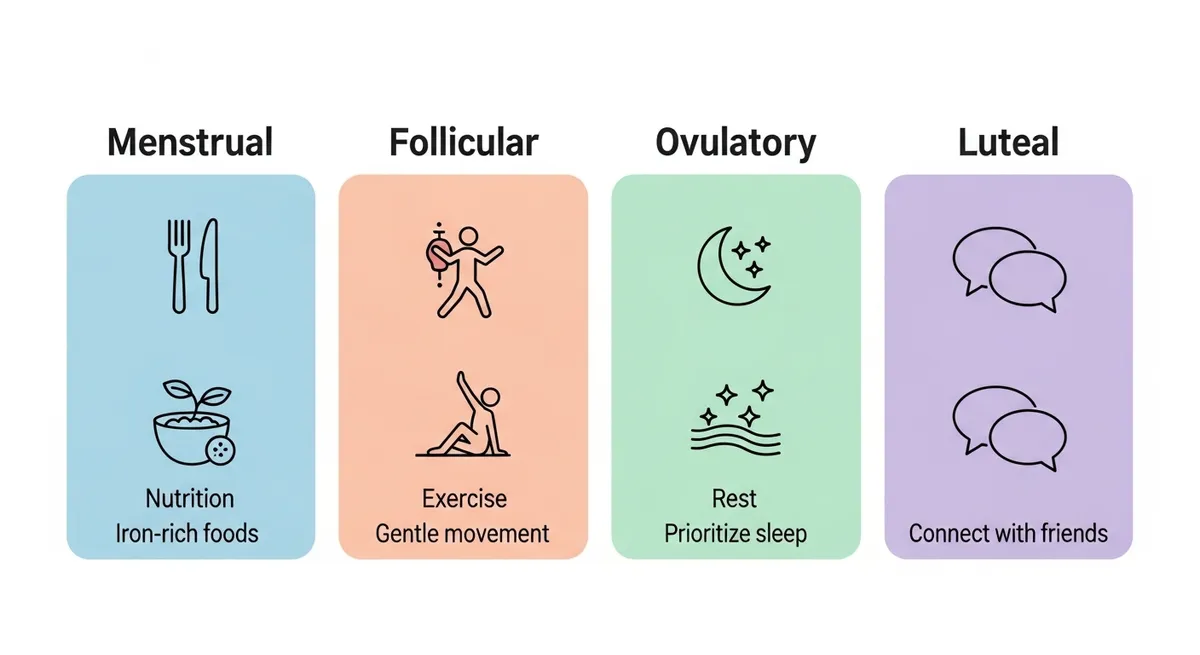
The menstrual cycle is usually divided into four phases, menstrual, follicular, ovulatory, and luteal, each influenced by hormones like estrogen and progesterone. These shifts can affect physical energy, emotional tone, and mental clarity in everyday life. Recognizing these changes helps individuals adjust their routines with greater ease.
Wellness educators often describe these phases using seasonal comparisons, such as winter for menstruation and summer for ovulation. This simple framework makes it easier to relate biological changes to daily experiences. While every cycle is slightly different, this pattern offers a useful guide for planning routines.
Cycle length varies between individuals, usually ranging from 21 to 35 days. Factors like sleep quality, stress, and diet can influence these patterns over time. Because of this, cycle syncing is treated as a flexible lifestyle approach rather than a fixed system.
Menstrual Phase: Supporting Rest and Recovery
The menstrual phase begins on the first day of bleeding, when hormone levels are at their lowest. Many people feel lower energy, increased sensitivity, and a natural need to slow down during this time. Supporting rest during this phase helps the body recover and maintain overall balance.
Simple practices such as using warmth, resting more, and keeping a lighter schedule are commonly followed during this phase. These approaches are often linked to improved comfort and reduced physical strain. Allowing quiet time can also support emotional steadiness and reduce feelings of overload.
Food choices during menstruation often include iron-rich options such as leafy greens, lentils, and whole foods. These foods are associated with supporting energy levels after menstrual flow. Staying hydrated and eating regular meals can also help maintain physical comfort.
Follicular Phase: Encouraging Energy and New Beginnings
The follicular phase starts after menstruation and is linked to rising estrogen levels. Many people notice improved focus, curiosity, and motivation during this time. This phase is often seen as a good period to begin new activities or revisit postponed plans.
Engaging in moderate exercise, creative work, or social interaction feels more natural during this stage. Energy levels gradually increase, making it easier to stay active and engaged. Planning tasks or setting goals during this phase can feel less stressful.
Personal care routines may also feel more effective during the follicular phase. Skin often appears more balanced, making gentle exfoliation or hydration routines suitable. This phase supports a sense of renewal and steady forward movement.
Ovulatory Phase: Supporting Connection and Visibility
The ovulatory phase occurs when estrogen levels peak and ovulation takes place. Many individuals report feeling more confident, expressive, and socially active during this period. Communication and interaction often feel smoother and more natural.
Work-related tasks that involve discussion, collaboration, or presentations may feel easier to handle. This is often linked to improved clarity and communication skills. Social engagement during this phase may also feel more comfortable.
Physical activity may increase naturally during this phase, allowing for more dynamic workouts if desired. However, maintaining balance remains important to prevent fatigue later. Paying attention to personal energy levels supports consistency.
Luteal Phase: Creating Stability and Gentle Structure
The luteal phase follows ovulation and is influenced by rising progesterone levels. Many people experience a gradual shift toward lower energy and increased emotional awareness. This phase often benefits from calm routines and structured daily habits.
Focusing on completing existing tasks rather than starting new ones can help reduce pressure. Simple and predictable routines support a sense of control and stability. This approach helps manage daily responsibilities without creating unnecessary stress.
Food intake may slightly increase during this phase as the body prepares for the next cycle. Balanced meals with complex carbohydrates and healthy fats are commonly preferred. Reducing stimulants such as caffeine may also support better rest.
Nutrition and Lifestyle Support Across the Cycle
Nutrition plays an important role in supporting Self-Care Routines for Each Phase of the Cycle. While core eating habits remain consistent, small adjustments can align better with changing energy needs. Balanced meals support steady energy throughout the month.
During menstruation, iron-rich foods are often included to support recovery. In the follicular phase, lighter meals may feel more comfortable, while balanced meals are common during ovulation. The luteal phase often includes more grounding foods.
Hydration supports digestion, circulation, and overall comfort across all phases. Drinking enough water throughout the day is a simple but effective habit. This flexible approach allows individuals to adjust without strict dietary rules.
Movement and Exercise Considerations
Physical activity supports overall wellbeing, but its intensity may change across the cycle. Many people find that adjusting exercise based on energy levels helps maintain consistency. This approach supports long-term balance rather than short bursts of effort.
Low-impact activities such as walking, stretching, or gentle yoga are often preferred during menstruation and the luteal phase. These activities support movement without causing strain. They also promote relaxation and circulation.
Higher energy phases such as follicular and ovulatory stages may support more active workouts. Strength training or cardio may feel easier during this time. However, listening to the body remains important to avoid overexertion.
Mental Wellbeing and Daily Productivity
Hormonal shifts can influence mood, attention, and emotional responses throughout the cycle. Understanding these patterns helps individuals approach tasks with more flexibility. This awareness often reduces frustration and improves daily flow.
The follicular and ovulatory phases are commonly linked to higher productivity and clearer thinking. These phases may support planning and decision-making tasks. The luteal phase often suits detail-focused work, while menstruation supports rest.
Simple practices such as journaling or quiet reflection can support emotional awareness. These habits are easy to include in daily routines. Over time, they help create a more balanced mental state.
Mindfulness as a Supportive Lifestyle Practice
Mindfulness is often included in Self-Care Routines for Each Phase of the Cycle because it supports awareness without pressure. This practice involves noticing thoughts and sensations without judgment. It is commonly used to maintain emotional balance.
Short practices such as slow breathing or guided relaxation can be done in a few minutes. These practices are accessible and adaptable to different lifestyles. Consistency matters more than duration.
Mindfulness does not aim to change emotions but to observe them clearly. This approach helps individuals respond calmly rather than react quickly. Over time, it supports steadier emotional responses.
Balancing Self-Care for Working Individuals and Families
Balancing self-care with work and family responsibilities can feel challenging. Self-Care Routines for Each Phase of the Cycle are often adapted to fit daily schedules. This makes the approach more practical and realistic.
Small changes, such as adjusting sleep timing or choosing lighter activities, can be included without major disruption. These changes are easier to maintain over time. Flexibility remains essential for long-term success.
Family routines can also support wellbeing by including shared quiet time or simple relaxation practices. This allows self-care to become part of everyday life. Over time, this balance supports both personal and family wellbeing.
Frequently Asked Questions
What are the 4 stages of the menstrual cycle and how do they feel?
The menstrual cycle includes menstrual, follicular, ovulatory, and luteal phases. Each phase may bring changes in energy and mood, such as lower energy during menstruation and increased confidence during ovulation. These patterns are common but vary between individuals based on lifestyle and overall health.
How do I start cycle syncing my life?
Cycle syncing usually starts by tracking your menstrual cycle and noticing patterns in energy, mood, and physical comfort. Many people use simple apps or journals to record these changes daily. Gradual adjustments based on these observations are commonly used for building consistent routines.
What should I eat during each phase of my cycle?
Food choices often change slightly across the cycle, with iron-rich foods during menstruation and lighter meals during the follicular phase. Balanced meals are common during ovulation, while the luteal phase often includes more filling foods. These changes support comfort and steady energy levels.

Why do I have more energy during the follicular phase?
Energy often increases during the follicular phase due to rising estrogen levels. This hormone is associated with improved mood and mental clarity. Many individuals find it easier to focus and stay active during this time.
Can cycle syncing help with hormonal acne?
Cycle syncing may help increase awareness of skin changes that occur during different phases of the cycle. Adjusting skincare routines based on these patterns is a common approach. Results vary, and this method is considered a supportive lifestyle practice rather than a guaranteed solution.
Is it better to rest or exercise during my period?
During menstruation, both rest and gentle movement are considered helpful depending on individual comfort. Some people prefer light activities like walking or stretching, while others choose to rest more. Listening to the body is generally recommended.
What are the best self-care rituals for the luteal phase?
The luteal phase often benefits from calming routines such as structured schedules, journaling, and quiet time. These practices support emotional stability and reduce daily pressure. Maintaining predictable habits can help create a sense of ease.
How does cycle syncing improve mental health?
Cycle syncing is commonly used as a lifestyle approach to increase awareness of emotional patterns. Aligning expectations with natural rhythms may reduce frustration and improve daily balance. It is considered supportive rather than a replacement for professional care.
Does your metabolism increase before your period?
Some research suggests a slight increase in metabolic rate during the luteal phase. This may influence appetite and energy needs. Adjusting food intake slightly during this time is a common approach.
What supplements help with cycle syncing for beginners?
Supplements such as magnesium or vitamin B6 are often discussed in relation to menstrual health. Individual needs vary, and professional guidance is recommended before use. Supplements are generally considered optional support tools.
Conclusion
Self-Care Routines for Each Phase of the Cycle provide a simple way to understand natural changes in energy and mood throughout the month. This approach focuses on awareness, flexibility, and realistic adjustments rather than strict routines. Over time, these small changes can support a more balanced and sustainable lifestyle.
By aligning sleep, movement, nutrition, and mindfulness practices with the body’s rhythm, individuals can build routines that feel supportive. This method encourages steady progress rather than perfection. With consistent awareness, it becomes a practical part of daily wellbeing.
Medical Disclaimer
This content is for informational purposes only and does not constitute medical advice. Consult a qualified healthcare provider before starting any new health program, supplement, or treatment, especially if you have existing medical conditions.
Image Generation Prompts
For wider background on this, see the National Heart, Lung, and Blood Institute on sleep.