
Daily commuting influences emotional wellbeing in quiet, repeated ways that many people underestimate. Long travel times, crowded transport, traffic delays, and constant time awareness often create background tension that follows people into work and home life. Wellness educators commonly describe commuting as a daily lifestyle exposure where small, supportive habits can ease pressure without adding new demands or unrealistic expectations.
For working adults, especially parents and caregivers, commuting may be the only predictable pause between responsibilities. Without intention, that space often fills with worry, mental replay, or irritation. With simple structure, it can support emotional steadiness, clearer transitions, and a calmer start or finish to the day, while remaining realistic and safe.
Quick stress relief techniques for commuters are best understood as everyday lifestyle supports rather than solutions or treatments. These practices aim to lower momentary nervous system activation, support awareness, and reduce emotional carryover between roles. When used consistently and gently, many people find commuting feels less draining and more manageable.
Quick Stress Relief Techniques for Commuters: Understanding Commuter Stress as a Lifestyle Factor
Commuter stress is widely recognised as a situational lifestyle pressure rather than a personal weakness. Repeated exposure to congestion, noise, crowds, and time pressure naturally increases mental load, especially when layered with work deadlines or family obligations. Over time, this can influence mood, patience, and energy without clear awareness of the cause.
Lifestyle guidance often frames commute-related strain as cumulative. One difficult journey may feel minor, but daily repetition can slowly reduce emotional flexibility and increase irritability. Recognising this pattern helps people respond with supportive habits instead of self-criticism or resignation.
Addressing commuter stress does not require eliminating travel or overhauling schedules. It involves working within an existing routine to add brief moments of regulation and awareness. These moments help the nervous system settle, even when external conditions remain unchanged.
Breath Regulation as Everyday Support During Commutes
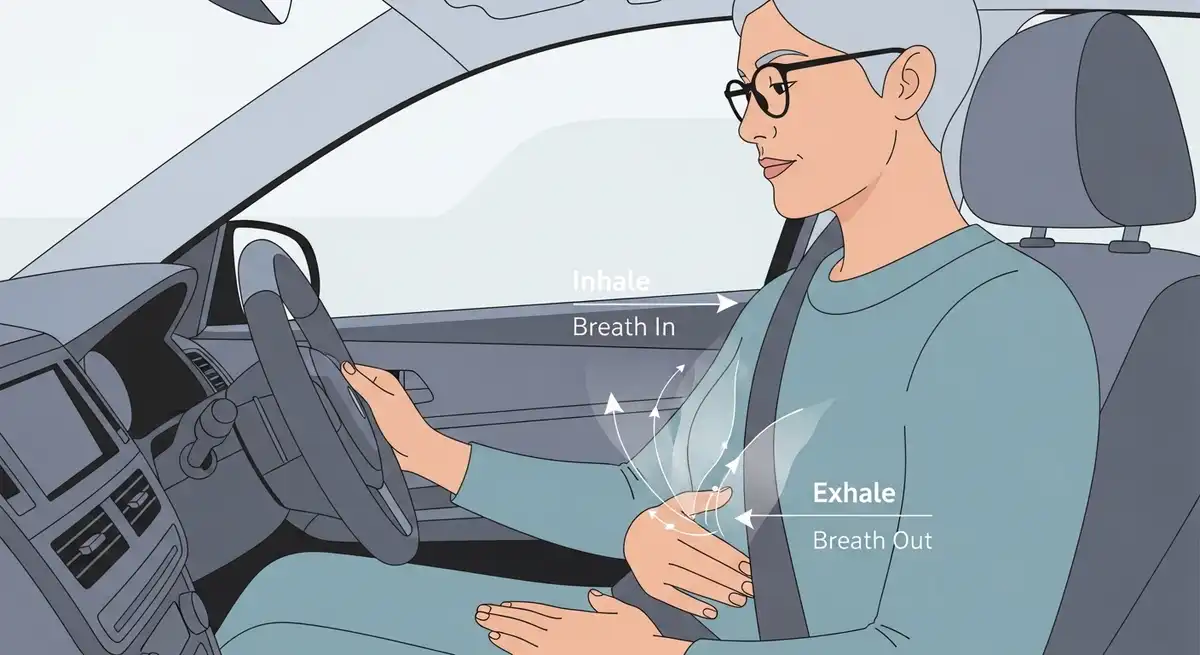
Controlled breathing is commonly taught in mindfulness and stress education as a way to influence the body’s stress response. Slower breathing patterns are associated with calming signals to the nervous system, supporting steadier heart rate and muscle relaxation. For commuters, breathing practices are practical because they require no movement or equipment.
During travel, breathing techniques are usually applied in short intervals rather than long sessions. A few steady breaths at traffic signals or while seated on public transport can reduce the sense of urgency. Over time, the body may begin to associate commuting with calmer internal cues.
Breathing practices are not intended to block thoughts or emotions. They act as anchors that support physical ease and attention. People with respiratory concerns are generally advised to keep breathing gentle and to stop if discomfort appears.
Using Sensory Awareness to Reduce Mental Overload
Sensory grounding focuses attention on immediate physical experience rather than mental narratives. In commuting environments, this can be especially supportive because surroundings are constant and familiar. Sensory awareness helps organise attention instead of allowing it to drift into frustration or worry.
Grounding methods often involve noticing visual details, contact points, ambient sounds, or temperature. This approach does not distract from reality but encourages presence within it. Many people find this reduces emotional reactivity during crowded or delayed journeys.
For drivers, sensory awareness is applied without shifting focus away from the road. For transit users, it may involve noticing the rhythm of movement or body contact with seats or floors. These methods are widely used in non-clinical mindfulness education.
Reducing Emotional Carryover Between Roles
One common challenge of commuting is carrying work stress home or family concerns into the workday. Lifestyle educators often highlight transitions as key moments for emotional regulation. Without intention, emotions can move unchanged from one setting to another.
Intentional transition practices support psychological separation between environments. These practices do not involve problem-solving or emotional analysis during the commute. Instead, they gently mark the end of one role and the beginning of another.
Simple cues such as steady breathing, posture changes, or quiet acknowledgment of transition can reduce emotional spillover. Over time, these signals help the brain recognise boundaries, supporting calmer interactions across daily roles.
Posture Awareness and Physical Comfort While Commuting
Physical discomfort during commuting often adds to emotional strain. Prolonged sitting, poor alignment, and muscle tension can increase fatigue and irritability. Ergonomic guidance frequently emphasises posture as a foundation for physical and mental comfort.
Supportive posture typically includes a neutral spine, relaxed shoulders, and proper seat distance. When the body is more comfortable, the nervous system expends less energy managing discomfort. This can support steadier attention and lower mental fatigue.
Small adjustments such as removing bulky items from pockets, adjusting seat height, or using light lumbar support are commonly suggested. These are everyday comfort strategies, not medical interventions.
Managing Irritation and Road-Based Frustration Safely
Irritation during commuting is common and well documented in traffic psychology research. The anonymity of travel environments can intensify emotional reactions, particularly under time pressure. Lifestyle education focuses on awareness and de-escalation rather than confrontation.
Reframing situations is a commonly taught cognitive approach. Interpreting others’ behaviour in neutral ways often reduces emotional intensity. This does not excuse unsafe actions but supports calmer internal responses.
Maintaining distance, avoiding engagement with aggressive behaviour, and focusing on personal pacing are generally advised for safety. These approaches prioritise emotional regulation and physical wellbeing.
Active Commuting as a Supportive Lifestyle Choice
Active commuting, such as walking or cycling part of the journey, is often linked with improved mood and energy. Physical movement supports circulation and stress hormone regulation in natural ways. Even brief walking segments can contribute to this effect.
Lifestyle research often notes that active commuting does not need to replace all motorised travel. Small changes, such as walking to transit stops or cycling occasionally, are commonly suggested. Flexibility supports consistency.
Active commuting is viewed as a complementary lifestyle practice. People with health or mobility limitations are encouraged to choose movement that feels safe and appropriate, sometimes with professional guidance.
Sound Environment and Mental Load During Travel
Sound strongly influences emotional states. Loud or confrontational audio content can increase mental stimulation during already demanding commutes. Wellness educators often suggest intentional sound choices to support calm attention.
Gentle music, neutral podcasts, or moments of silence are commonly used as auditory supports. These options reduce cognitive overload and allow mental space without effort.
Choosing sound intentionally does not mean removing enjoyment. It involves noticing how different inputs affect emotional tone and selecting options that support steadier travel experiences.
Creating Consistent Commuting Rituals
Consistency plays a key role in lifestyle habit formation. Repeating small actions daily helps reduce decision fatigue and supports nervous system familiarity. Commuting offers a predictable window that supports ritual building.
A commuting ritual may include a breathing pattern, posture check, or mental cue repeated daily. These rituals are flexible structures, not rigid rules. Over time, they often become automatic.
Lifestyle guidance generally suggests starting with one simple practice. Gradual integration supports sustainability and avoids added pressure.
Parenting and Working Life Considerations
Parents and caregivers often experience added commute stress due to scheduling demands and emotional labour. Travel time may represent the only uninterrupted personal space in the day. Acknowledging this context supports realistic wellbeing guidance.
Commuting practices for parents often focus on restoration rather than productivity. Using travel time to decompress rather than plan can support emotional availability at home.
Working mothers, in particular, may carry multiple expectations into commuting time. Gentle practices help ease this load without creating new tasks.
Mindfulness Principles Applied Safely to Daily Travel
Mindfulness in lifestyle education refers to present awareness practiced without judgement. In commuting contexts, mindfulness is adapted for safety and practicality. It does not involve deep introspection.
Common applications include noticing breath rhythm, body contact, or environmental cues. These practices anchor attention and reduce rumination.
Mindfulness during commuting is brief and situational. Its purpose is awareness and steadiness, not achieving specific outcomes.
Emotional Responsibility and Realistic Expectations
Responsible wellness education avoids promising results or presenting practices as solutions to distress. Commuting practices support everyday regulation, not treatment or prevention of conditions. Individual experiences vary.
Some people notice subtle changes in patience or mood. Others notice awareness of tension before it softens. Both are normal.
When commuting stress significantly affects wellbeing, professional support may be appropriate. Lifestyle practices are complementary supports, not replacements.
Frequently Asked Questions
How can I lower my stress while sitting in traffic?
Lowering stress while sitting in traffic often involves calming physical responses rather than changing conditions. Slow breathing, relaxed facial muscles, and posture awareness are commonly used. These approaches support steadiness without requiring changes to traffic or schedules.
What are the best breathing exercises for driving?
Breathing exercises used during driving are typically simple and steady to maintain alertness. Gentle nasal breathing with longer exhalations is often recommended. Any practice causing discomfort should be stopped, prioritising safety.
How do I deal with road rage directed at me?
Road rage directed at a commuter is usually managed through de-escalation rather than engagement. Maintaining distance, avoiding eye contact, and focusing on personal pace are commonly advised. These strategies support safety and emotional control.

Can essential oils in the car really reduce anxiety?
Essential oils in cars are sometimes used as ambient sensory supports. Certain scents are associated with calming responses for some people. Use is optional and subtle, with attention to sensitivity and ventilation.
How can I make my one-hour commute more productive?
Productive commuting often means restoration rather than output. Calming audio, posture support, or quiet awareness can support later focus. This reframing aligns with sustainable balance.
What is the correct way to sit in a car for back health?
Correct sitting posture focuses on comfort and alignment. Neutral spine position, relaxed shoulders, and proper seat distance are commonly suggested. These adjustments reduce fatigue during longer drives.
Is walking to work better for mental health than driving?
Walking to work is often linked with improved mood through physical movement. Even partial walking segments can help. Active commuting is supportive when adapted to personal capacity.
How do I stop being so angry at other drivers?
Anger toward other drivers often relates to time pressure. Reframing situations and focusing on breathing can reduce intensity. These strategies support awareness without denying frustration.
What are signs my commute is affecting my health?
Signs include ongoing irritability, fatigue, and difficulty transitioning between roles. These suggest cumulative stress. Lifestyle adjustments may help, while ongoing concerns may benefit from professional discussion.
How can I transition from work mode to home mode after commuting?
Transitioning after commuting often involves a brief pause or ritual. Sitting quietly before entering home or adjusting posture intentionally are common practices. These cues support emotional separation.
Editorial Conclusion
Quick stress relief techniques for commuters function as practical lifestyle supports within existing routines. They encourage steadier responses, smoother transitions, and reduced emotional carryover without demanding extra time. With gentle consistency, commuting can become a more neutral and sometimes restorative part of daily life.
Medical Disclaimer
This content is for informational purposes only and does not constitute medical or mental health advice. It is not intended to diagnose, treat, cure, or prevent any condition. Consult a qualified healthcare provider regarding personal health concerns or ongoing symptoms.
For wider background on this, see the American Psychological Association on mindfulness.