The point of relaxation rituals stressful nights is not discipline. It is removing decisions you should not have to make twice. Stressful nights are a common experience in modern life, especially for people managing work, family, and constant digital demands. When the day slows down, the mind often stays active, replaying responsibilities and unfinished thoughts. This mismatch between physical tiredness and mental alertness explains why sleep can feel difficult even when rest is needed.
Wellness educators frequently explain that nighttime stress reflects an overworked nervous system rather than a personal shortcoming. The body stays alert because it has not received clear signals that the day is over. Relaxation rituals for stressful nights are commonly used as lifestyle routines that help create those signals in gentle, realistic ways.
These practices are not medical treatments or cures, and they are not designed to replace professional care when sleep problems persist. They are widely used as supportive habits that encourage calm, predictability, and emotional safety before bedtime. Over time, many people find that consistent routines help nights feel less tense and more manageable.
What are relaxation rituals for stressful nights?
Relaxation rituals for stressful nights are simple, repeatable practices that help the body and mind shift out of alert mode before sleep. They are commonly associated with calming the nervous system, easing muscle tension, and reducing mental overstimulation. When practiced regularly for short periods, these rituals help create a sense of closure and readiness for rest.
Relaxation rituals stressful nights: Understanding Relaxation Rituals for Stressful Nights
Relaxation rituals for stressful nights refer to everyday practices used to signal that active demands have ended. These rituals often include calming physical movements, sensory cues, or focused attention that encourages the body to slow down. Lifestyle guidance usually emphasizes repetition and simplicity rather than intensity or effort.
Unlike productivity habits, relaxation rituals are not meant to achieve goals or track progress. Their value lies in predictability and familiarity. Over time, the nervous system begins to associate these cues with rest, making the transition to sleep feel less abrupt.
Many people find these rituals especially relevant during demanding life stages. Parents, caregivers, and working professionals often experience delayed stress responses at night. A consistent wind-down routine offers structure and emotional reassurance without adding more tasks.
Why stress peaks after dark
Stress often becomes more noticeable at night because daytime distractions fade. When external demands quiet down, unresolved thoughts and emotional tension surface more clearly. Cortisol, commonly called the stress hormone, may remain elevated, keeping the body in a state of alertness.
This experience is widely recognized in stress education. It does not mean something is wrong with the person experiencing it. Understanding this pattern helps reduce self-blame and creates space to use relaxation rituals for stressful nights with patience and realism.
How rituals interrupt the stress sleep cycle
Relaxation rituals work by creating repeated signals that the body learns to recognize. When the same calming actions happen nightly, the brain begins to associate them with safety and rest. Over time, this association supports emotional regulation and physical relaxation.
The ritual itself matters more than the individual technique. Lighting, timing, and consistency all contribute to effectiveness. This explains why small routines practiced regularly often feel more helpful than complex routines done occasionally.
1. Brain Dump Journaling for Mental Unloading
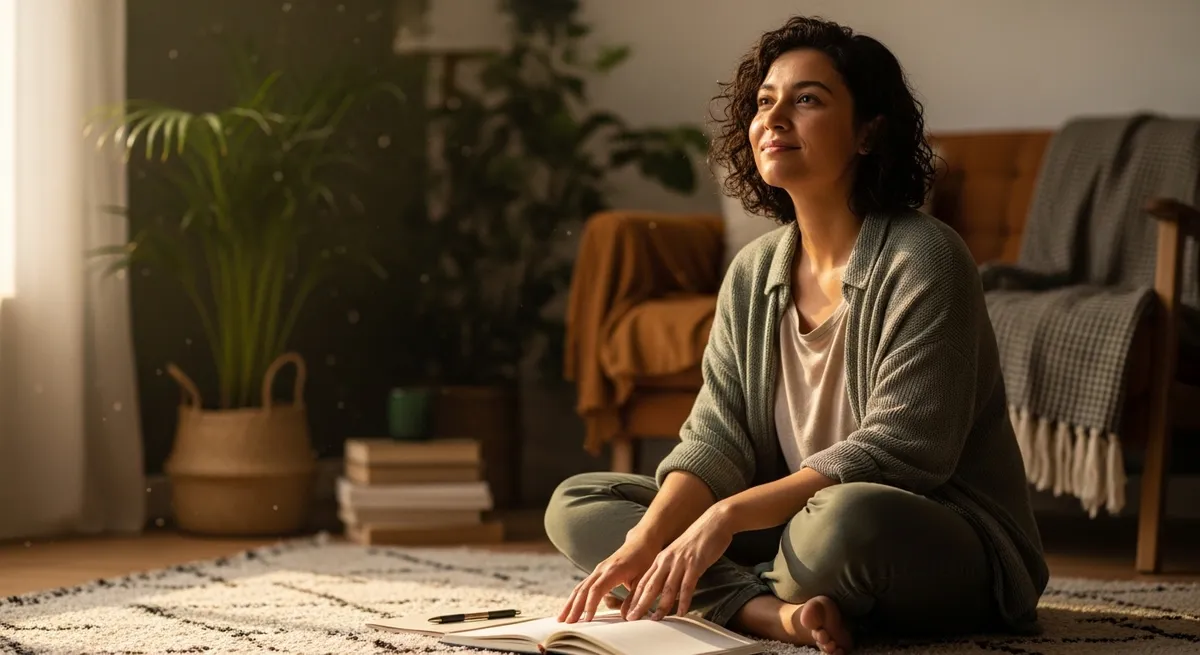
Brain dump journaling involves writing thoughts down freely before bedtime without structure or judgment. It is commonly used when the mind feels crowded with reminders, worries, or unfinished tasks. The goal is to move mental clutter out of the head and onto paper.
This practice is often helpful because the brain seeks reassurance that nothing important will be forgotten. Writing things down creates a sense of closure. Many people find that once thoughts are recorded, they feel less urgent and easier to set aside for the night.
Brain dump journaling is usually done for five to ten minutes using pen and paper. Digital devices are avoided to reduce stimulation. The notebook is then closed and put away, reinforcing the idea that planning time has ended.
Why your mind races at night
A racing mind at night often reflects unprocessed mental load from the day. Tasks, conversations, and responsibilities accumulate without space to settle. When the environment becomes quiet, the brain attempts to resolve everything at once.
This response is common and widely discussed in stress education. It does not indicate poor coping skills. Recognizing this pattern helps normalize nighttime restlessness and supports the use of gentle strategies rather than force.
How to perform a brain dump safely
A brain dump is performed by writing continuously without editing or organizing. The content can include tasks, worries, or random thoughts. There is no expectation to solve anything during the process.
Once finished, the notebook is closed and left outside the sleeping area. This physical separation reinforces mental boundaries. With consistent use, many people notice that nighttime thinking gradually becomes less intense.
2. 4-7-8 Breathing as a Calming Anchor
The 4-7-8 breathing technique is a paced breathing pattern often taught in relaxation education. It involves inhaling for four counts, holding the breath for seven, and exhaling for eight. This rhythm encourages slower breathing.
Breathing practices influence the nervous system because breath affects heart rate and muscle tension. Longer exhalations are commonly associated with calming responses. Many people find this technique helpful during stressful nights when thoughts feel fast.
The practice is usually done while sitting or lying comfortably. Beginners often start with a few cycles to avoid discomfort. Over time, it can become a familiar signal that supports relaxation before sleep.
How breath affects the nervous system
Breathing patterns send direct signals to the body about safety or alertness. Fast, shallow breathing is associated with stress responses. Slow, controlled breathing encourages the body to shift toward rest.
Wellness educators often describe breath as a bridge between conscious choice and automatic bodily processes. Using breath intentionally helps guide the nervous system without mental effort.
Step by step 4-7-8 technique
The technique begins by placing the tongue gently behind the upper front teeth. Inhale quietly through the nose for four counts. Hold the breath for seven counts, then exhale slowly through the mouth for eight counts.
This cycle is usually repeated several times. If lightheadedness occurs, the practice is paused. Over time, the rhythm becomes easier and more familiar.
3. Restorative Yoga with Legs Up the Wall
Legs up the wall is a restorative yoga posture commonly used in evening routines. It involves lying on the floor with legs resting vertically against a wall, often supported by pillows. The posture is gentle and accessible.
This position is associated with reduced lower body tension and a sense of physical ease. Many people experience relief after long periods of standing or sitting. The posture encourages stillness without effort.
The pose is usually held for five to ten minutes with relaxed breathing. Props are adjusted for comfort. Its simplicity makes it suitable for relaxation rituals for stressful nights.
Benefits of legs up the wall pose
The posture allows gravity to assist circulation and muscle release. It often feels soothing to tired legs and hips. This physical relief can support mental calm by reducing bodily discomfort.
Wellness educators often include this pose in restorative routines because it requires minimal instruction. Comfort is prioritized over form or alignment.
How to practice safely
The pose is practiced near a wall in a quiet space. A folded blanket or pillow may be placed under the hips. The focus remains on comfort rather than stretch.
If discomfort appears, the legs are lowered slowly. The pose is adapted as needed, keeping the experience gentle and supportive.
4. Progressive Muscle Relaxation for Physical Release
Progressive muscle relaxation involves tensing and releasing muscle groups one at a time. It is often used in stress education to build awareness of physical tension. The contrast between tension and release helps the body recognize relaxation.
Stress frequently shows up in the jaw, shoulders, and neck. This technique brings attention to those areas gradually. Many people appreciate its structure because it does not require visualization.
The practice usually moves from head to toe or vice versa. Each muscle group is briefly tensed and then released. Regular use supports physical comfort before bed.
The tense and release method
The method involves gently tightening a muscle group for a few seconds. The tension is then released completely. This contrast highlights the sensation of relaxation.
Over time, people become more aware of where they hold tension. This awareness supports earlier release during stressful moments.

Targeted areas of tension
Common areas include the jaw, shoulders, hands, and feet. Stress often accumulates there without notice. Spending extra time on these areas can feel grounding.
The practice remains gentle throughout. Discomfort is avoided, and breathing stays relaxed.
5. One Hour Digital Detox Before Sleep
A digital detox before bed involves avoiding screens for a set period, often one hour. Phones, tablets, and televisions provide light and stimulation that keep the brain active. Reducing this input supports natural wind-down processes.
Even passive scrolling keeps attention engaged. Notifications and bright screens encourage alertness rather than rest. Many people notice that stepping away from devices creates mental quiet.
This ritual is usually replaced with low stimulation activities. Reading, stretching, or quiet conversation are common alternatives. Over time, the absence of screens becomes a cue for sleep.
Why screens disrupt sleep rhythms
Screens emit light that can interfere with natural sleep timing. They also provide constant novelty and information. This combination keeps the brain engaged.
Reducing screen use allows the nervous system to slow naturally. This supports relaxation rituals for stressful nights without added effort.
Replacing screens with calming cues
Calming cues include dim lighting, gentle music, or quiet routines. These cues provide sensory signals aligned with rest. Consistency strengthens their effect.
The goal is not restriction but replacement. This approach feels more sustainable in daily life.
6. Mindful Herbal Tea as a Sensory Ritual
Mindful herbal tea drinking is often used as a calming evening routine. Teas like chamomile or lavender are traditionally associated with relaxation. The ritual emphasizes presence rather than outcomes.
Warmth, aroma, and taste engage the senses gently. This sensory focus helps attention shift away from worries. Many people find this comforting after long days.
The ritual is usually done without multitasking. The tea is prepared and consumed slowly. It becomes a familiar signal that the day is ending.
Best teas for nighttime calm
Herbal teas without caffeine are commonly chosen. Chamomile, lavender, and similar blends are widely used. The focus remains on the experience rather than specific effects.
People choose teas based on preference and tolerance. Simplicity and comfort guide selection.
Turning tea into a ritual
The ritual includes preparation, sitting quietly, and noticing sensory details. The pace is slow and unhurried. This creates a pause between activity and rest.
Over time, this pause becomes meaningful. It supports relaxation rituals for stressful nights naturally.
7. Guided Imagery for Mental Ease
Guided imagery uses imagination to create calming mental scenes. Examples include warmth spreading through the body or visualizing a peaceful place. This practice gently occupies attention.
Rather than forcing silence, imagery gives the mind something neutral to focus on. This redirection often feels easier than traditional meditation. Many people find it soothing.
Guided imagery can be practiced independently or with recordings. It is usually done while lying in bed. The imagery remains simple and comforting.
Visualization techniques for nighttime stress
Common techniques include imagining gentle movement or descending steps. These visuals encourage a sense of settling. The imagery stays non emotional and safe.
The focus remains on comfort rather than vivid detail. This keeps the practice accessible.
Creating a sense of safety
Imagery often emphasizes warmth, support, or enclosure. These themes are commonly associated with calm. The practice supports emotional ease.
Consistency helps imagery feel familiar. Familiarity strengthens relaxation responses.
8. Mantra Repetition for Mental Stability
Mantra repetition involves silently repeating a short phrase. Phrases often focus on calm or rest. This repetition provides a steady mental anchor.
Stressful nights often involve looping thoughts. A mantra interrupts that loop gently. Many people find comfort in its simplicity.
The practice is often paired with slow breathing. There is no requirement to feel immediate change. It is used as a supportive element.
Replacing negative internal dialogue
Mantras offer neutral language that replaces self critical thoughts. This shift reduces mental noise. The repetition creates rhythm.
Over time, the mantra becomes familiar. Familiarity supports calm attention.
Creating a mental boundary
Some people imagine closing a mental door or eyelid. This symbolizes separation from the day. The imagery reinforces closure.
This boundary helps reduce carryover stress. It supports rest without force.
9. Gentle Body Scanning in Bed
Body scanning involves moving attention through the body slowly. Sensations are noticed without judgment. This practice bridges mental activity and physical rest.
Attention shifts from thinking to sensing. This shift often reduces mental chatter. Many people notice drowsiness emerging naturally.
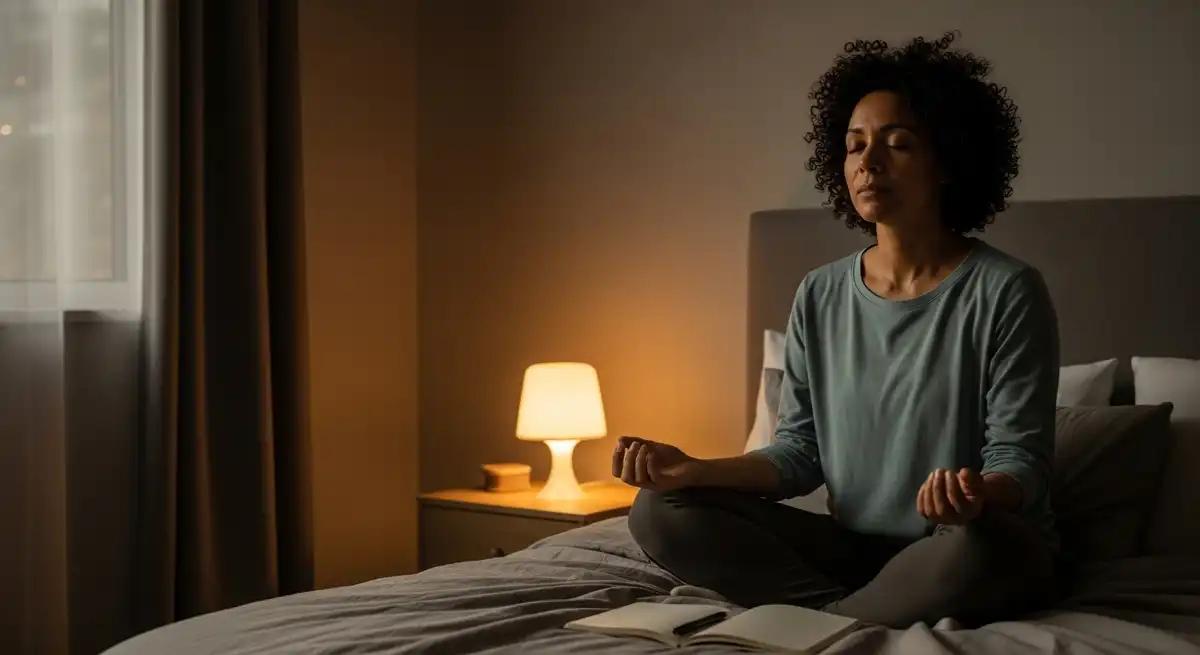
Body scanning is usually practiced lying in bed. The pace remains slow and gentle. It often becomes the final step before sleep.
Connecting mind and body
Body scanning highlights the relationship between attention and sensation. Awareness increases without effort. This supports relaxation.
The practice remains observational. There is no attempt to change sensations.
Noticing tension and ease
Both tension and comfort are noticed. This balanced attention reduces resistance. The body is allowed to settle naturally.
Over time, awareness becomes familiar. Familiarity supports rest.

10. Aromatherapy and Gentle Facial Massage
Aromatherapy uses scent to create a calming environment. Lavender and similar scents are commonly associated with relaxation. The goal is atmosphere rather than effect.
Gentle facial massage uses light touch to release jaw and facial tension. Stress often accumulates there. Touch based practices are grounding.
This ritual is brief and gentle. Oils are used sparingly. It provides a physical signal that the day is ending.
Sensory relaxation through scent
Scent influences emotional centers of the brain. Familiar calming scents support ease. The experience remains subtle.
Consistency matters more than intensity. Simple use is effective.
Facial release with light touch
Light massage reduces muscle holding. The jaw and temples often benefit. Pressure stays gentle.
This touch based ritual complements other practices. It supports relaxation rituals for stressful nights.
Mindfulness Principles Behind Nighttime Rituals
Mindfulness in evening routines involves paying attention without judgment. It does not require deep meditation. The focus remains on presence.
Many relaxation rituals naturally include mindfulness elements. Slow movement and sensory awareness encourage attention. This reduces mental noise.
Mindfulness based routines are accessible. They fit into busy lives without added pressure.
Relevance for Parents and Working Individuals
Parents and working professionals often experience delayed stress responses. Responsibilities fill the day. Nighttime becomes the first quiet moment.
Relaxation rituals create boundaries between roles and rest. These boundaries feel emotionally supportive. They do not require extra time.
Short routines can still be effective. Consistency matters more than length. Flexibility supports sustainability.
Frequently Asked Questions
How can I relax my mind to sleep?
Relaxing the mind before sleep often involves reducing stimulation and creating mental closure. Practices like writing thoughts down or focusing on breath are commonly used. These routines are generally considered supportive lifestyle habits rather than solutions.
What is the 4-7-8 breathing technique?
The 4-7-8 breathing technique is a paced breathing pattern used in relaxation education. It follows a set rhythm of inhaling, holding, and exhaling. Many people use it to slow breathing before bedtime.
Does chamomile tea really help you sleep?
Chamomile tea is traditionally associated with calming routines. It is often used as part of a relaxing evening ritual rather than as a sleep aid. The warmth and routine contribute to its comfort.
How do I stop my mind from racing at night?
Racing thoughts at night are commonly linked to unprocessed daytime stress. Techniques that externalize thoughts or redirect attention are often used. These practices aim to reduce mental activity gently.
What are the best yoga poses for sleep?
Gentle, restorative poses are commonly used before sleep. Legs up the wall and supported child’s pose are examples. These poses focus on comfort rather than effort.
How does a digital detox improve sleep quality?
Reducing screen use before bed lowers stimulation and light exposure. This supports natural wind-down processes. Many people include this step in evening routines.
What is progressive muscle relaxation and how does it work?
Progressive muscle relaxation involves tensing and releasing muscles intentionally. It builds awareness of physical tension. This awareness supports relaxation before sleep.
Why do I feel more stressed at night?
Nighttime stress often becomes noticeable when distractions decrease. The body may still be processing the day. This experience is common.
Is it better to journal or meditate before bed?
Both journaling and meditation are commonly used in evening routines. Journaling externalizes thoughts, while meditation supports attention regulation. Preference often guides choice.
How long should a bedtime relaxation routine last?
Bedtime routines commonly last between fifteen and thirty minutes. Consistency is more important than length. Short routines practiced regularly are often helpful.
Editorial Conclusion
Relaxation rituals for stressful nights are widely used as gentle lifestyle supports rather than treatments. They help signal closure and safety after demanding days. With consistency and realistic expectations, these rituals can support a calmer relationship with nighttime rest.
Medical Disclaimer
This content is for informational purposes only and does not constitute medical advice. It is not intended to diagnose, treat, cure, or prevent any disease. Consult a qualified healthcare provider before starting any new health routine, especially if you have existing medical conditions.
For wider background on this, see the American Psychological Association on stress.