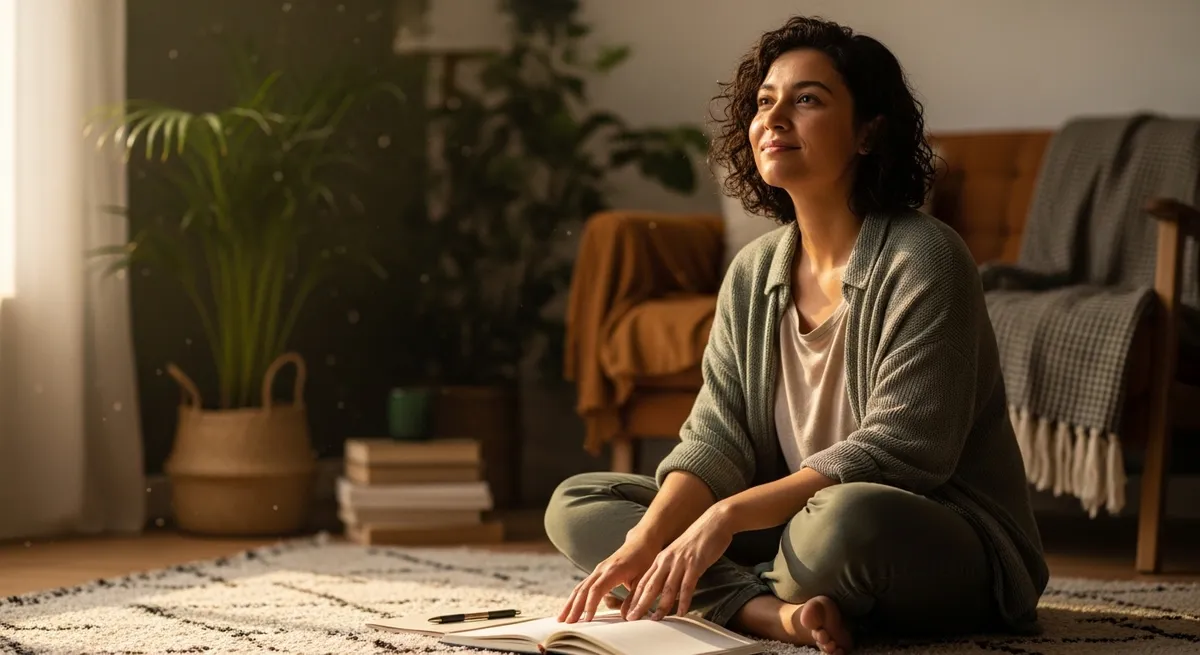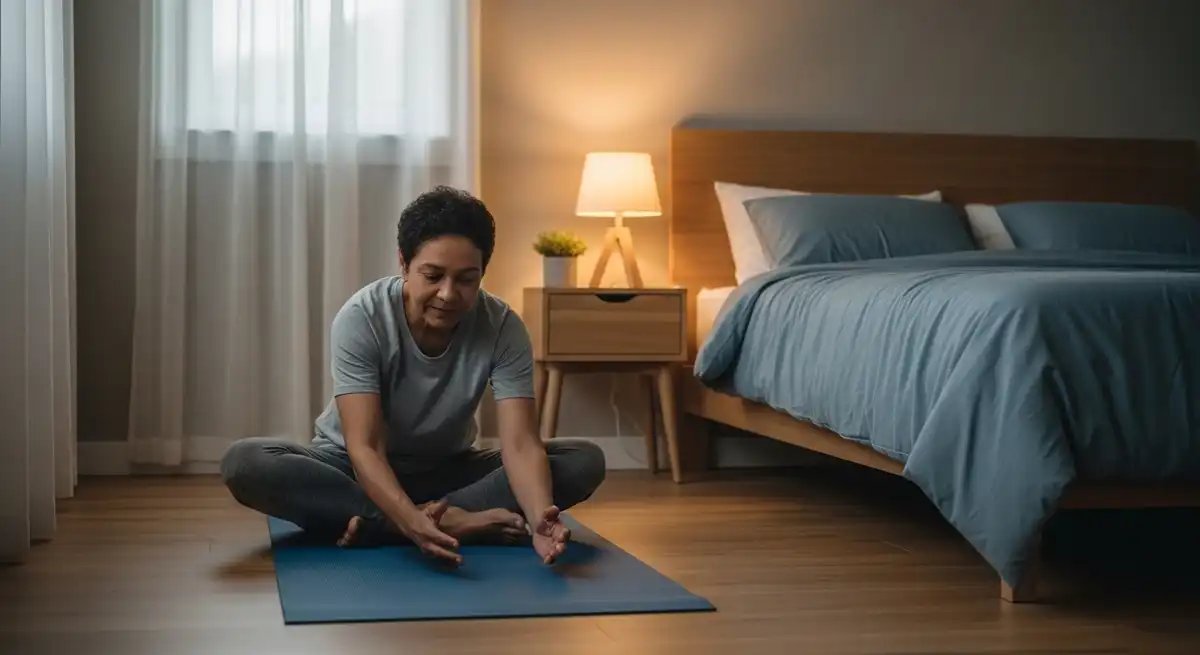
Sleep difficulties are common in everyday life, especially for people balancing work, family duties, and constant digital demands. Many feel physically exhausted at night while the mind remains alert, replaying tasks and concerns from the day. Bedtime yoga stretches for better sleep are widely used as a gentle lifestyle practice that helps the body slow down without pressure, performance goals, or promises of instant rest.
From a wellness editorial perspective, sleep is best understood as a natural state that emerges when the nervous system feels settled. It cannot be forced, rushed, or optimized through effort alone. Evening routines that include calm movement are often used to signal closure to the day, helping the body shift from alertness into rest through familiarity and consistency.
This guide explains bedtime yoga stretches for better sleep in a clear, non-clinical way. It focuses on how these stretches are commonly practiced, why many people include them in evening routines, and how they fit safely into modern family and work-focused lifestyles. The emphasis remains on clarity, realism, and emotional responsibility rather than motivation or transformation claims.
Bedtime Yoga Stretches for Better Sleep: Understanding Bedtime Yoga Stretches for Better Sleep
Bedtime yoga stretches for better sleep refer to slow, low-effort movements practiced in the evening with comfort as the priority. These stretches are not designed to increase flexibility or strength aggressively but to help release physical tension built up through sitting, standing, and daily stress. Many wellness educators describe them as transitional movements rather than exercise.
In everyday routines, these stretches are often practiced for ten to twenty minutes, sometimes less, without strict sequencing. The focus remains on gentle motion and noticing physical sensations without judgment. This approach aligns with lifestyle guidance that values consistency and ease over intensity or precision.
From a safety standpoint, bedtime yoga stretches are generally considered low risk when practiced within comfortable limits. Pain, breath holding, or strain are avoided. People with injuries or medical conditions are typically advised to seek personalized guidance, as general wellness practices are not substitutes for professional care.
The Relaxation Response and Evening Movement
The relaxation response is a term often used to describe the body’s natural shift away from stress activation. It is commonly associated with slower breathing, reduced muscle tension, and a sense of physical settling. Bedtime yoga stretches for better sleep are frequently included in routines that aim to support this shift through gentle movement.
Daily stress tends to collect in predictable areas such as the neck, shoulders, hips, and lower back. Evening stretching allows these areas to soften gradually, which many people find makes lying down more comfortable later. The goal is not deep stretching but easing the body out of holding patterns.
Movement can feel more accessible than immediate stillness after a busy day. A gradual transition often feels more natural than stopping abruptly. Over time, consistent evening movement may become a familiar cue that signals safety and rest to the nervous system.
Choosing Appropriate Yoga Styles for Evening Practice
Not all yoga styles are suited to nighttime routines. Bedtime yoga stretches for better sleep are typically drawn from slower approaches that emphasize ease rather than flow. Hatha yoga, restorative yoga, and floor-based gentle sequences are commonly referenced in lifestyle guidance.
Hatha-style evening practices usually involve simple postures held with steady breathing. The pace remains slow, allowing the body to settle without stimulation. Restorative approaches rely on props such as pillows or blankets to support the body fully, reducing muscular effort and fatigue.
More physically demanding styles are usually positioned earlier in the day. Faster movements and heated environments can raise heart rate and body temperature, which many people find alerting rather than calming at night. Gentle styles support alignment with natural sleep rhythms without making claims about guaranteed outcomes.
Core Bedtime Yoga Stretches Commonly Used
Several yoga stretches appear frequently in bedtime routines because they are simple and adaptable. These movements are usually practiced on the floor or bed, which reduces balance demands and physical effort. Their value lies in comfort, predictability, and ease of repetition.
Cat Cow stretch involves slow spinal movement coordinated with breathing. This gentle motion helps release stiffness from prolonged sitting and standing. Coordinating breath with movement can also shift attention away from mental replay and toward physical sensation.
Child’s Pose is a resting posture that folds the body forward with support. It reduces external stimulation and encourages a sense of containment. Many people use it as a pause rather than an active stretch, allowing the body to rest without effort.
Legs Up the Wall is a supported inversion where the legs rest vertically while the body remains on the floor. It is often associated with easing lower body fatigue after long days. In everyday practice, it is held briefly and exited slowly to maintain comfort.
Supine twists involve gentle rotation of the spine while lying on the back. These movements are used to release tension along the spine and hips without strain. Depth is kept minimal, with comfort guiding the range of motion.
Savasana, or resting on the back, often concludes bedtime yoga stretches for better sleep. It allows the body to absorb the effects of gentle movement while remaining supported. Natural breathing is usually encouraged without instruction or control.
Breath Awareness as a Supportive Element
Breath awareness is often included alongside bedtime yoga stretches for better sleep because breathing patterns influence physical arousal. Slow, steady breathing is commonly associated with calm states, while shallow or rapid breathing often accompanies stress. Evening practices encourage natural, unforced breathing.
Diaphragmatic breathing involves allowing the abdomen to rise and fall with each breath. This approach is introduced as awareness rather than technique. Placing a hand on the abdomen can help maintain gentle focus without control.
Structured breathing patterns, such as extending the exhale, may appear in bedtime routines. These are usually practiced briefly and stopped if discomfort arises. Within wellness education, comfort remains the guiding principle rather than precision.
Alternate nostril breathing may be included in some evening practices. When used at night, it is performed gently and without breath holding. If restlessness appears, it is typically set aside in favor of simpler breathing awareness.
Consistency and Routine in Daily Life
Consistency plays a central role in lifestyle discussions around bedtime yoga stretches for better sleep. Familiar timing and repetition often matter more than technique. Performing similar movements each evening can create a predictable signal that the day is ending.
For working parents and caregivers, short and flexible routines are more realistic. Evening yoga is often adapted around household responsibilities rather than replacing them. Even brief sessions are commonly viewed as supportive when practiced regularly.
The physical environment also reinforces routine. Lower lighting, reduced screen exposure, and a quiet space can support the calming intention of bedtime yoga stretches. These cues work together with movement rather than acting alone.

Parenting and Family-Life Considerations
In family settings, evenings often involve multiple demands and limited quiet time. Bedtime yoga stretches for better sleep are sometimes practiced after children are asleep or alongside them as part of winding down. When shared with children, movements are simplified and kept relaxed.
For parents, evening yoga may become one of the few moments of physical self-attention during the day. Wellness guidance frames this practice as optional support rather than another task to complete. Flexibility helps prevent routines from becoming burdensome.
Caregivers are encouraged to view bedtime yoga stretches as adaptable tools. Missing sessions due to fatigue or schedule changes is considered part of realistic lifestyle balance. This perspective supports sustainability rather than perfection.
Safety, Comfort, and Boundaries
Bedtime yoga stretches for better sleep are generally considered safe when practiced gently. Pain, sharp sensations, or breath restriction signal the need to adjust or stop. Wellness education emphasizes listening to physical cues rather than pushing through discomfort.
People with recent injuries, chronic pain, or medical conditions are usually advised to seek personalized guidance. General wellness practices are positioned as complementary, not replacements for medical care.
Using pillows, blankets, or practicing in bed is widely accepted. Comfort remains essential to the purpose of bedtime practice. Any sense of strain is viewed as counterproductive to relaxation.
Managing Expectations Around Sleep Support
Bedtime yoga stretches for better sleep are associated with relaxation and comfort rather than guaranteed sleep outcomes. Wellness educators avoid presenting these practices as cures for insomnia or alternatives to professional care. Individual responses vary widely.
Some people notice immediate relaxation, while others experience subtle changes over time. The practice is usually framed as one element within broader sleep-supportive habits. Patience and consistency are emphasized over quick results.
Viewing bedtime yoga as supportive rather than corrective helps reduce pressure. This framing aligns with emotionally responsible wellness communication.
Frequently Asked Questions
What yoga is commonly practiced before bed for better sleep
Gentle yoga styles are most commonly practiced before bed because they emphasize slow movement and comfort. Bedtime yoga stretches for better sleep usually include floor-based postures, supported resting poses, and simple spinal movements. These approaches are often chosen because they feel calming rather than energizing within everyday routines.
Does practicing yoga briefly before bed support relaxation
Short periods of gentle yoga before bed are often used to unwind physically after the day. Even ten minutes of slow stretching and breathing can help many people feel more settled. Lifestyle guidance generally highlights consistency over duration for long-term support.
Is practicing yoga in bed considered acceptable
Practicing yoga in bed is commonly considered acceptable when movements remain gentle and stable. Supine stretches, light twists, and breathing awareness are often adapted for mattresses. The focus remains on comfort and safety rather than posture precision.
Which yoga stretches are often associated with evening calm
Stretches such as Child’s Pose, gentle spinal movements, and supported resting postures are often associated with evening calm. These poses reduce muscular effort and encourage stillness. They are commonly included because they feel accessible to many people.

Can yoga replace sleep or reduce sleep needs
Yoga is not considered a replacement for sleep or a way to reduce necessary sleep time. Practices such as Yoga Nidra may promote deep relaxation but do not provide the same restorative functions as sleep. Yoga is generally framed as supportive rather than substitutive.
How long after eating is yoga usually practiced at night
Evening yoga is commonly practiced one to two hours after eating. This allows digestion to proceed without discomfort during movement. Gentle stretching may feel more comfortable than deeper poses if practiced closer to meals.
Why some people feel alert after evening yoga
Feeling alert after evening yoga often relates to the intensity or style practiced. Faster movements or strong poses may increase arousal. Slower stretches and relaxed breathing usually align better with bedtime routines.
Is Yoga Nidra considered sleep
Yoga Nidra is not considered sleep, although it is associated with deep relaxation. It is often used as a calming practice that supports restfulness. It does not replace natural sleep cycles.
Can yoga be part of non-medical insomnia support
Yoga is often included as part of lifestyle approaches that support healthier sleep habits. It is not presented as treatment for insomnia. People with persistent sleep difficulties are generally encouraged to seek professional evaluation.
Is stretching the same as bedtime yoga
Stretching and yoga overlap but are not identical. Bedtime yoga stretches for better sleep usually include breath awareness and rest periods. This broader approach distinguishes yoga from stretching alone.
A Calm Editorial Conclusion
Bedtime yoga stretches for better sleep are best understood as gentle lifestyle practices that support the body’s natural transition into rest. Their value lies in consistency, comfort, and emotional neutrality rather than performance or promise. When approached with patience and realism, they can fit safely into modern routines as one of many supportive habits that encourage calmer evenings and more settled nights.
Medical Disclaimer
This content is for informational purposes only and does not constitute medical advice. It is not intended to diagnose, treat, cure, or prevent any disease. Consult a qualified healthcare provider before starting any new exercise or wellness practice, especially if you have existing medical conditions.
For wider background on this, see the National Heart, Lung, and Blood Institute on sleep.