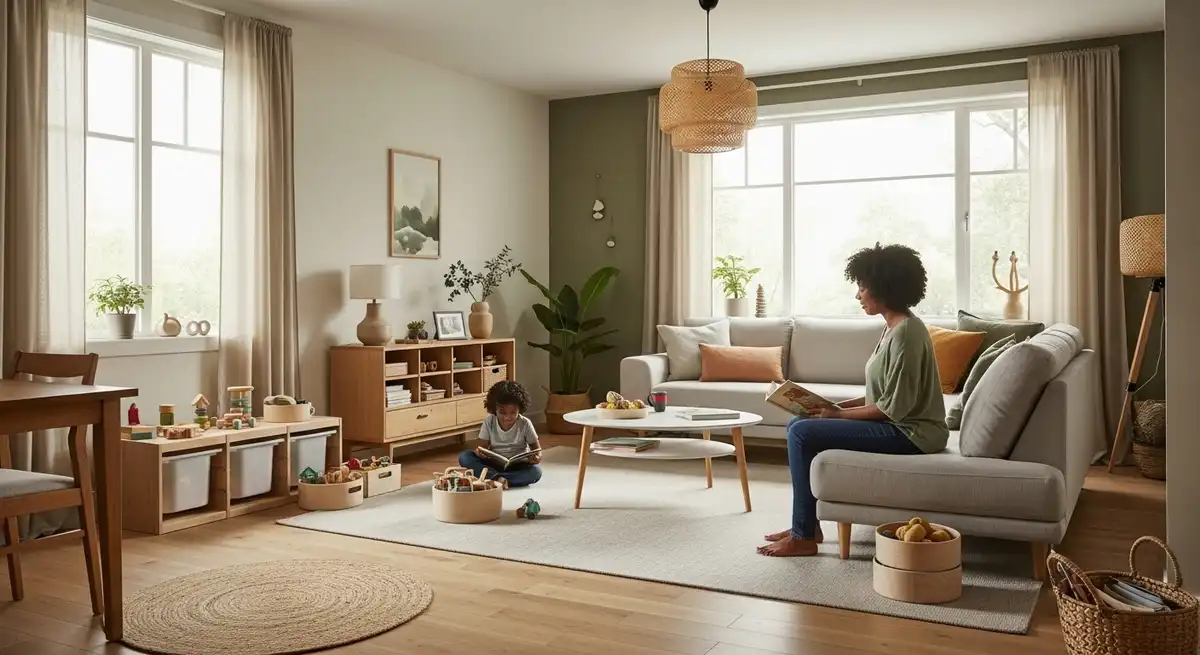

Motherhood often carries an unspoken expectation of constant productivity, emotional availability, and visible competence. Many women absorb the idea that unfinished tasks reflect personal failure rather than normal human limits shaped by time, energy, and competing responsibilities. The Lazy Mom’s Guide to Getting Things Done offers a calmer, more realistic way to manage daily life while protecting emotional balance and long term wellbeing.
This approach does not promote avoidance or carelessness. Instead, it recognises that parenting already involves steady physical effort, emotional regulation, and decision-making that rarely receives acknowledgment. By simplifying routines and expectations, many mothers find daily responsibilities become more manageable without the constant feeling of falling short.
Rather than encouraging people to do more, this guide focuses on doing what matters in ways that fit real life. It supports a shift away from guilt-driven productivity toward sustainable habits that respect mental limits. The aim is not perfection, but steadiness, self-respect, and a household that functions without ongoing pressure.
Lazy mom getting things: Understanding The Lazy Mom’s Guide to Getting Things Done
The Lazy Mom’s Guide to Getting Things Done is a lifestyle framework centered on conserving effort while maintaining essential responsibilities. It reframes laziness as intentional efficiency, where tasks are simplified, delegated, or removed when they no longer add meaningful value. This perspective fits the everyday reality of parenting, where time, focus, and emotional energy are often stretched.
At its core, this approach accepts that not all tasks deserve equal attention. Cleaning, planning, and caregiving are handled through repeatable systems rather than constant motivation. Many people find this helpful because it removes emotional weight from incomplete tasks and replaces it with clarity and prioritisation.
This guide also recognises that productivity shifts across seasons of life. What works during early parenting may not work later. By focusing on adaptable habits instead of rigid routines, mothers can respond to change without feeling constantly behind.
Redefining Laziness as Efficiency in Motherhood
In everyday language, laziness is often treated as a flaw or lack of effort. Within this guide, laziness is reframed as choosing methods that reduce unnecessary work while still meeting real needs. This shift allows mothers to stop linking exhaustion with worth or commitment.
Efficiency in motherhood often means releasing tasks that do not meaningfully improve daily life. Perfectly folded laundry, elaborate meals every day, or constant tidying rarely influence family wellbeing. When these expectations are softened, energy becomes available for connection and rest.
Wellness educators often note that reduced pressure supports emotional steadiness. A calmer parent usually creates a calmer household, even when tasks remain unfinished. Efficiency becomes an act of care rather than neglect.
Releasing Guilt Around Unfinished Tasks
Guilt commonly appears when daily to-do lists remain incomplete. Cultural messaging often ties productivity to responsibility, especially for mothers. The Lazy Mom’s Guide to Getting Things Done encourages viewing unfinished tasks as neutral information rather than personal failure.
When tasks carry emotional weight, they tend to linger mentally even when postponed. Writing tasks down, intentionally deferring them, or removing them entirely helps reduce this mental load. Many people feel lighter once tasks are clearly defined rather than vaguely remembered.
This perspective supports a healthier relationship with time. Days become flexible containers rather than performance tests. Over time, this reduces chronic stress linked to constant self-evaluation.
Lowering Expectations with the 80 Percent Rule
The 80 percent rule suggests that completing a task well enough is usually sufficient. This principle reduces overworking and perfectionism, both of which are commonly associated with burnout. In household management, finishing at 80 percent often delivers the same practical benefit as perfect completion.
A quick surface clean can still support comfort and hygiene. Simple meals still nourish without extensive planning. These choices preserve energy without compromising core needs.
Lifestyle guidance consistently suggests that consistency matters more than intensity. By accepting imperfect completion, many mothers maintain routines more reliably. Over time, steadiness replaces cycles of overexertion.
Prioritising Tasks Using Simple Decision Filters
The Lazy Mom’s Guide to Getting Things Done relies on prioritisation rather than long task lists. One commonly used filter separates urgent needs from those that can wait. This prevents constant reaction to minor demands that consume energy without adding value.
Daily prioritisation often works best when limited to a small number of tasks. Choosing three essential actions aligns with how attention realistically functions. Many people find this reduces overwhelm and increases follow-through.
This method also supports flexibility. When unexpected demands arise, priorities can shift without self-criticism. Productivity becomes responsive rather than rigid.
Recognising Overwhelm Disguised as Laziness
What feels like laziness is often mental overload. When too many tasks remain unprocessed, motivation drops as a protective response. Recognising this pattern reduces self-blame and supports healthier problem-solving.
Externalising tasks through lists or simple planning tools clears cognitive space. This allows the mind to focus on action instead of constant remembering. Many people report relief simply from seeing tasks written down.
This understanding reframes pauses as functional rather than indulgent. Stepping back briefly often restores clarity more effectively than forcing effort.
Building Sustainable Habits Through Environmental Design
Habit formation in this guide focuses on making tasks easier rather than relying on willpower. Placing items where they are used, keeping routines visible, and reducing steps all support consistency. This approach works well in busy households with shared spaces.
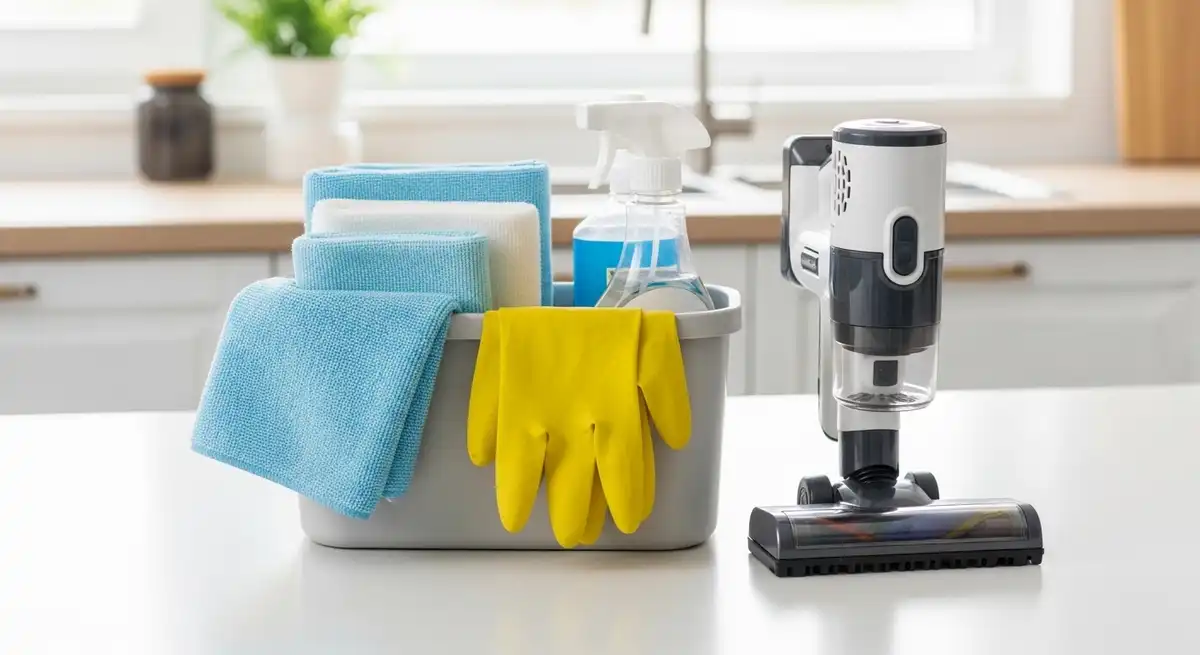
For example, storing cleaning supplies in frequently used rooms encourages quick upkeep. Keeping school items near homework areas reduces daily friction. Small adjustments often create noticeable improvements over time.
Behavioural science consistently shows that behaviour follows environment. When systems support desired actions, habits form more naturally. This reduces the need for reminders or self-discipline.
Habit Stacking in Everyday Parenting Life
Habit stacking links a new action to an existing routine. This works by using familiar cues instead of creating new schedules. For busy mothers, this reduces planning effort and supports consistency.
Rinsing dishes immediately after meals or preparing clothes while brushing teeth integrates tasks into habits that already exist. Over time, these actions become automatic and require little thought.
Many people find habit stacking effective because it respects limited energy. Rather than adding more to the day, it works within current routines.
The Ten Minute Cleaning Approach
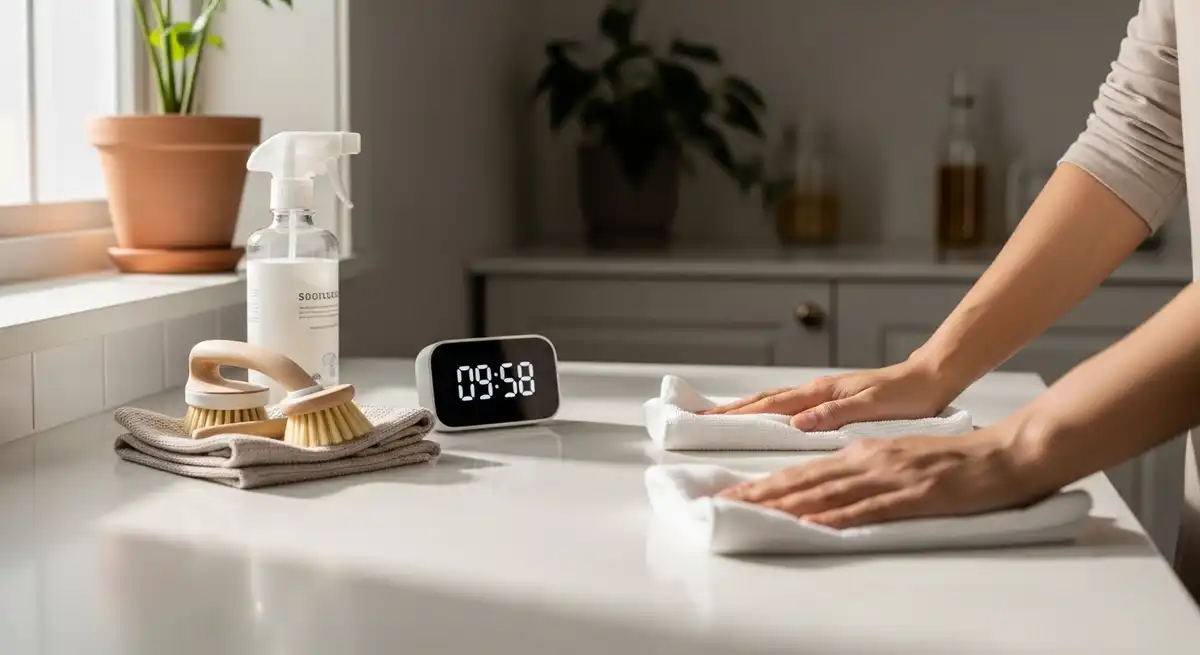
The ten minute cleaning approach emphasises short, regular maintenance instead of infrequent deep cleaning. Setting a timer creates a clear boundary that prevents overexertion. This makes cleaning feel manageable rather than overwhelming.
Consistency is the focus, not visual perfection. Even brief daily efforts prevent buildup that later requires more energy. Many households find this keeps spaces functional with minimal stress.
This method also reduces all-or-nothing thinking. Cleaning becomes part of daily rhythm instead of a looming obligation.
The One Touch Rule for Reducing Clutter
The one touch rule involves completing an action fully once it begins. When an item is picked up, it is returned to its proper place instead of being moved temporarily. This prevents clutter cycles that create visual and mental noise.
Over time, this practice simplifies household flow. Items move less and surfaces stay clearer. Many people find frustration decreases as repetitive handling disappears.
This rule supports efficiency without additional effort. It relies on mindful completion rather than speed.
Daily Essentials That Create Visible Order
Within the Lazy Mom’s Guide to Getting Things Done, certain tasks are prioritised because they create visible order quickly. These often include beds, floors, counters, decluttering, and laundry flow. Addressing these areas helps homes feel calmer even when other tasks wait.
Completing these essentials usually takes less time than tackling every detail. The visual impact often improves mood and motivation. Many people find this approach keeps homes functional without extensive cleaning.
This prioritisation respects limited energy while maintaining order. It also allows flexibility during demanding days.
Simplifying Meal Planning to Reduce Decision Fatigue
Meal planning often becomes a daily source of stress. This guide recommends simple meal formulas instead of complex recipes. Combining a protein, carbohydrate, vegetables, and a basic sauce reduces planning effort while supporting balanced eating.
Repetition is encouraged rather than avoided. Eating similar meals reduces decision fatigue and grocery complexity. Many families find gentle variation keeps meals satisfying without stress.
This approach is used as a practical lifestyle support, not a nutritional prescription. Ease and sustainability come first.
Using Batch Cooking and Freezing Strategically
Batch cooking involves preparing larger quantities of food and storing portions for later use. This reduces how often cooking decisions must be made. For many mothers, this supports smoother evenings.
Freezing meals extends this benefit across busy weeks. Having prepared options available reduces skipped meals or reliance on takeaway. This supports regular eating without daily effort.
Batch cooking is used flexibly. Even occasional use can reduce overall stress around meals.
Creating a Child Accessible Food Space
A child accessible food space allows children to manage basic needs independently. Snacks, cups, and water placed within reach reduce interruptions. This setup supports autonomy in daily routines.
Children learn responsibility through small choices within safe limits. Over time, this reduces parental workload and builds confidence. Many families notice smoother daily flow.
This practice aligns with developmental guidance around gradual independence. It is adjusted based on age and household needs.
Delegating and Releasing Control
Delegation is a central part of the Lazy Mom’s Guide to Getting Things Done. Sharing tasks reduces individual burden and supports shared responsibility. This often requires accepting different methods without constant correction.
Perfectionism can undermine delegation by creating more work. Allowing tasks to be done differently supports cooperation. Many families find relationships improve with shared effort.
Delegation also models realistic expectations. Children learn that homes function through teamwork.
Supporting Independence in Children
Encouraging independence involves teaching children to handle simple tasks themselves. This may include preparing basic breakfasts, organising belongings, or managing school items. These practices reduce parental workload while building life skills.
Natural consequences often support learning. Forgetting homework or facing small inconveniences teaches responsibility without punishment. Many parents find daily conflict decreases.
This approach is gradual and flexible. It respects developmental readiness rather than strict timelines.
Simple Household Hacks That Reduce Effort
Household hacks in this guide focus on combining tasks or reducing steps. Cleaning bathrooms during bath time or simplifying laundry routines are common examples. These changes reduce the number of separate chores.
Removing unnecessary steps, such as excessive sorting or folding, saves time. Many households reclaim hours each week through simplification.
These hacks are about aligning effort with benefit, not cutting corners.
Protecting Mental Space Through Intentional Omission
Mental space is often consumed by tasks that feel obligatory but add little value. Creating a list of things intentionally not done removes them from consideration. This reduces background stress.
Examples may include ironing, elaborate baking, or frequent hosting. Removing these tasks frees attention for priorities that matter. Many people feel relief from conscious omission.
This practice reinforces that time and energy are limited resources.
Understanding Rest as a Functional Need
Rest is treated as a practical requirement rather than a reward. Periods of inactivity support emotional regulation and physical recovery. Without rest, productivity often declines.
Short naps, quiet breaks, or leisure activities are common forms of rest. These moments support steadiness rather than indulgence.
Lifestyle guidance consistently notes that sustainable routines include recovery.
Integrating Rest Into Daily Routines
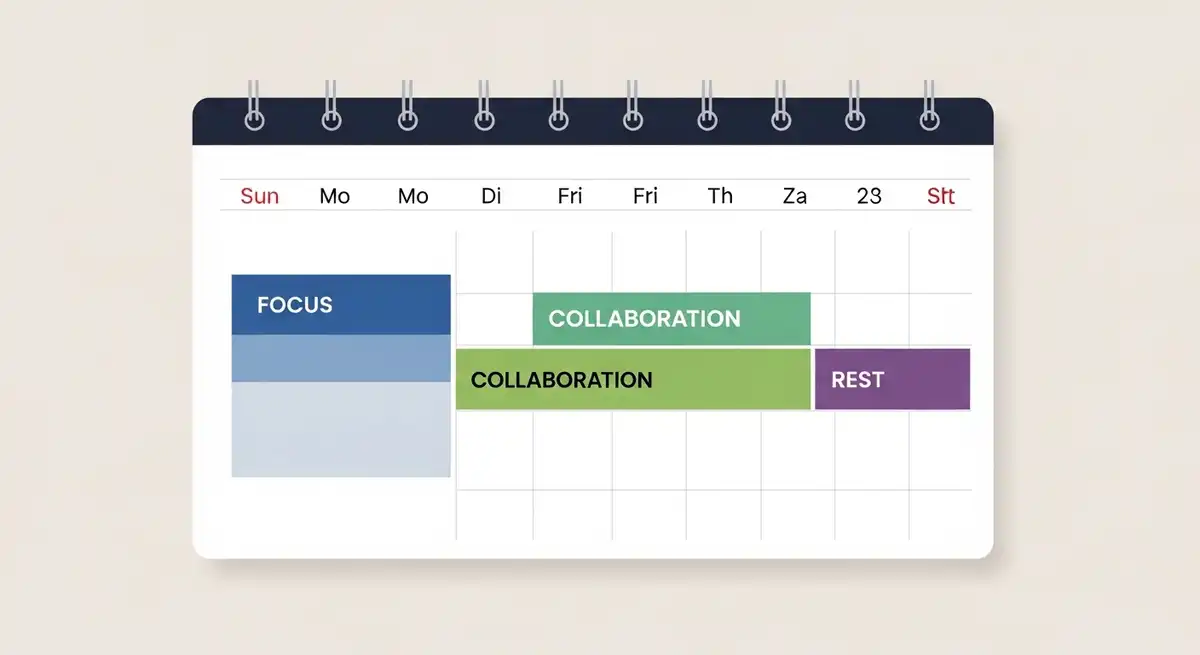
Rest becomes reliable when scheduled intentionally. Waiting for free time often results in none. Setting aside small windows protects rest from being crowded out.
This may include resting while children nap or choosing calm evenings. These choices support balance without major changes.
Normalising rest reduces guilt and supports long term wellbeing.
Parenting and Working Life Balance
For working mothers, efficiency is especially important. Simplified routines reduce cognitive load after work. This supports smoother transitions between roles.
Using the Lazy Mom’s Guide to Getting Things Done helps prioritise recovery alongside responsibility. Evenings focus on essentials rather than catch-up.
This approach respects competing demands. Balance is framed as flexibility.

Emotional Wellbeing and Productivity
Emotional wellbeing and productivity are closely connected. Constant pressure often reduces effectiveness. By reducing guilt and unrealistic expectations, emotional steadiness improves.
Steadier emotions support clearer decisions and patience. Homes often feel calmer as a result.
This guide treats emotional wellbeing as foundational rather than optional.
Frequently Asked Questions
What does being a lazy mom actually mean
Being a lazy mom in this context refers to prioritising efficiency and simplicity over unnecessary effort. It involves using systems and routines that reduce workload while meeting essential needs. This approach is commonly used as a lifestyle support strategy rather than a reflection of care or motivation.
How can a lazy mom still stay productive
Productivity is maintained by focusing on high impact tasks and removing low value activities. Simple prioritisation, habit stacking, and environmental support help tasks get done with less effort. Many people find productivity improves when pressure and perfectionism decrease.
Is this approach suitable for working mothers
This approach is commonly used by working mothers because it respects limited time and energy. Simplified routines and delegated tasks reduce after work strain. It supports consistency without extensive planning.
Does lowering standards mean neglecting responsibilities
Lowering standards refers to adjusting expectations, not abandoning care. Essential needs are still met, while unnecessary extras are reduced. Many households function more smoothly when effort aligns with real priorities.
Can this method help reduce daily stress
This method is often associated with reduced stress because it limits overcommitment and mental load. Simplifying decisions and routines makes daily life feel more manageable. It is used as a supportive lifestyle framework rather than a treatment.
How do children benefit from lazy mom routines
Children benefit through increased independence and clearer expectations. Participating in simple routines builds confidence and responsibility. Many families notice improved cooperation when systems replace constant reminders.
Is this guide about doing the bare minimum
This guide focuses on doing what matters most in sustainable ways. The goal is functional wellbeing rather than minimal effort. Many people find they show up more fully when energy is conserved.
Can perfectionism interfere with productivity
Perfectionism often increases stress and delays completion. Accepting good enough outcomes supports consistency. Many productivity educators note perfectionism reduces efficiency over time.
How does this guide support emotional wellbeing
The guide reduces guilt and self judgment around productivity. By reframing expectations, emotional load decreases. This supports steadier moods and clearer thinking.
Is this approach flexible over time
Flexibility is a core principle of this guide. Routines and priorities are adjusted as circumstances change. This adaptability supports long term sustainability.
Conclusion
The Lazy Mom’s Guide to Getting Things Done presents a grounded way to manage daily life without constant pressure. By redefining productivity, simplifying routines, and protecting mental space, it supports steadier functioning across parenting and work. This framework values realistic expectations, shared responsibility, and emotional balance as foundations for sustainable living.
Medical Disclaimer
This content is for informational purposes only and does not constitute medical or mental health advice. It does not diagnose, treat, cure, or prevent any condition. Consult a qualified healthcare professional for personalised medical or mental health guidance.
For wider background on this, see the American Psychological Association on healthy relationships.