
Modern life often feels crowded with unfinished tasks, constant notifications, and overlapping responsibilities that begin the moment the day starts. Many people experience daily stress not because they lack effort, but because their routines leave no space for orientation or calm. A short, predictable routine offers a steady way to introduce order without adding pressure or unrealistic expectations.
The 10-minute daily routine that keeps chaos away is designed around realism rather than ambition. It acknowledges limited time, variable energy, and the emotional weight of modern life. By focusing on repeatable actions instead of outcomes, the routine supports steadiness and clarity before the day’s demands begin.
This approach is especially relevant for parents, caregivers, and working adults managing multiple roles. It does not aim to fix everything or promise emotional relief. Instead, it offers a reliable daily structure that gently reduces disorder and mental strain over time.
Minute routine keeps chaos: Understanding Everyday Overwhelm and Mental Load
Daily overwhelm often develops from mental load rather than visible work. Mental load includes remembering schedules, tracking unfinished tasks, anticipating others’ needs, and holding emotional responsibilities. When these demands remain unstructured, they quietly accumulate and contribute to persistent stress.
Mornings are particularly vulnerable to mental overload. Sleep disruption, time pressure, and immediate exposure to digital information reduce cognitive flexibility early in the day. Without a stabilising routine, people often start reacting to demands before they feel mentally present.
Over time, this reactive pattern can affect focus, mood, and household relationships. Clutter and unfinished tasks become symbols of strain rather than simple disorganisation. A brief daily routine helps contain this load by offering a clear starting point.
The Role of Small Daily Actions in Lifestyle Stability
Small daily actions are widely used in lifestyle planning because they are easier to repeat consistently. Ten minutes feels manageable even on demanding days, which supports long-term adherence rather than short bursts of effort. Consistency allows habits to settle naturally into everyday life.
Behavioural research suggests that predictable routines reduce decision fatigue. When actions follow a known sequence, less energy is spent negotiating whether to act. This predictability supports follow-through, especially for people managing work schedules, caregiving duties, or attention-related challenges.
Rather than aiming for perfection, small routines prioritise continuity. The routine works because it lowers the threshold for participation. Over time, these brief actions often contribute to improved order, confidence, and emotional steadiness.
Mindfulness Principles in a Short Daily Routine
Mindfulness in this routine refers to brief moments of intentional awareness rather than formal meditation sessions. Short pauses for breathing or stillness are commonly used as lifestyle supports to settle attention. They are not intended as therapy, but as grounding practices integrated into daily routines.
Wellness educators often note that even brief pauses can influence how the nervous system responds to stress. Slower breathing patterns are commonly associated with a sense of calm and improved focus. This makes mindfulness particularly useful at the beginning of the day.
In a ten-minute routine, mindfulness serves as a foundation rather than a goal. It creates a pause between waking and doing. This pause supports more intentional engagement with tasks instead of immediate reactivity.
Minute One: Mindful Stillness and Breathing
The first minute focuses on mindful stillness supported by gentle breathing. This involves sitting or standing quietly and breathing at a steady, comfortable pace. The intention is to create a moment of awareness before engaging with tasks, people, or technology.
This practice is commonly used because it requires no equipment or preparation. Many people find that even a short pause helps ease physical tension and mental noise. It supports a smoother transition from rest into activity.
Mindful stillness is generally considered safe as a lifestyle practice. People with respiratory or medical conditions may choose gentler breathing patterns. Comfort and regularity matter more than technique.
Minutes Two and Three: Gratitude and Mindset Priming
Minutes two and three are dedicated to brief gratitude or affirmation writing. This practice directs attention toward stability and existing supports in daily life. It is often used to balance the brain’s tendency to focus on problems and unfinished tasks.
Writing simple, specific observations helps anchor attention in the present. The content does not need to be profound. Ordinary moments often provide the strongest sense of grounding and perspective.
Affirmations used here remain realistic and neutral. Statements focus on capability and steadiness rather than ideal outcomes. Over time, this practice supports a calmer emotional tone when approaching responsibilities.
Minutes Four and Five: Gentle Movement for Alertness
Strategic movement during minutes four and five helps the body shift from rest into activity. This may include stretching, neck rolls, or light movement that increases circulation. The goal is alertness without strain.
Movement is commonly included in morning routines because it supports physical comfort and mental clarity. Gentle motion eases stiffness from sleep and signals readiness for the day.
This movement can be adapted to different abilities and environments. It requires little space and can be adjusted for physical limitations. Ease and consistency remain the priority.
Minutes Six to Ten: High-Impact Everyday Habits
The final minutes combine small habits that support daily functioning. These include hydration, brief boundaries around digital use, and short periods of learning or reflection. Together, these actions create momentum without overwhelm.
Drinking water early in the day supports basic physical needs and signals routine completion. This simple action often anchors the rest of the routine.
Delaying phone use protects attention. A short pause before engaging with notifications reduces urgency. Brief reading or listening supports focus without adding pressure.
Managing Digital Chaos Through Simple Structure
Digital clutter contributes significantly to daily stress. Emails, messages, and alerts compete for attention throughout the day. Without boundaries, they create a sense of constant urgency.
A short inbox routine helps contain digital demands. Scanning, responding briefly, organising messages, and setting reminders reduce the mental weight of unresolved communication.
This structure limits time spent on digital tasks. Knowing there is a set window for engagement reduces anxiety and supports a healthier relationship with technology.
Using the Eisenhower Box for Everyday Decisions
The Eisenhower Box categorises tasks by urgency and importance. It separates immediate needs from tasks that can be planned or deferred. This clarity reduces impulsive reactions to incoming information.
Applied to emails or messages, the framework supports quicker decisions. Tasks are sorted rather than emotionally evaluated, which reduces cognitive load.
The method adapts well to home and work routines. Its value lies in simplicity rather than strict adherence.

Preventing Physical Clutter Through Daily Resets
Physical clutter often reflects postponed decisions rather than lack of effort. Items accumulate when there is no regular moment to reset spaces. Short daily resets address this through visibility and containment.
High-impact tasks include wiping surfaces, clearing sinks, and resetting commonly used areas. These actions change how a space feels even if deeper cleaning remains undone.
Daily resets prevent clutter from becoming overwhelming. Over time, they reduce the need for exhausting cleanup sessions.
Laundry Forwarding as a Maintenance Habit
Laundry becomes stressful when it stalls between stages. Laundry forwarding involves moving one load to the next step each day. This keeps the process flowing.
This habit breaks a large task into manageable parts. Each small action maintains momentum and reduces buildup.
Laundry forwarding fits easily into a ten-minute routine. It requires minimal decision-making and supports visual order.
The One-Basket Method for Clutter Control
The one-basket method collects misplaced items into a single container. Items are returned later or redistributed efficiently. This limits distraction.
The method creates immediate visual order without forcing decisions. The basket acts as a temporary holding space.
Used daily, it supports consistency and keeps clutter manageable.
Habit Stacking for Long-Term Consistency
Habit stacking links new habits to existing routines. For example, wiping counters after making coffee connects cleaning to an established action.
This approach aligns with how habits naturally form. Existing routines provide cues that trigger additional actions.
Habit stacking supports sustainability rather than intensity, making routines easier to maintain.
The Two-Minute Rule for Difficult Days
The two-minute rule reduces habits to their smallest version. This preserves continuity during low-energy days.
Partial completion reinforces consistency and identity. It avoids all-or-nothing thinking.
This flexibility helps routines survive stress and disruption.
Executive Functioning and Evening Preparation
Executive functioning includes planning, organising, and task initiation. These skills are often weaker in the morning.
Evening preparation shifts decisions to a lower-stress time. Choosing clothes or preparing bags reduces morning friction.
This practice preserves mental energy and supports calmer mornings.
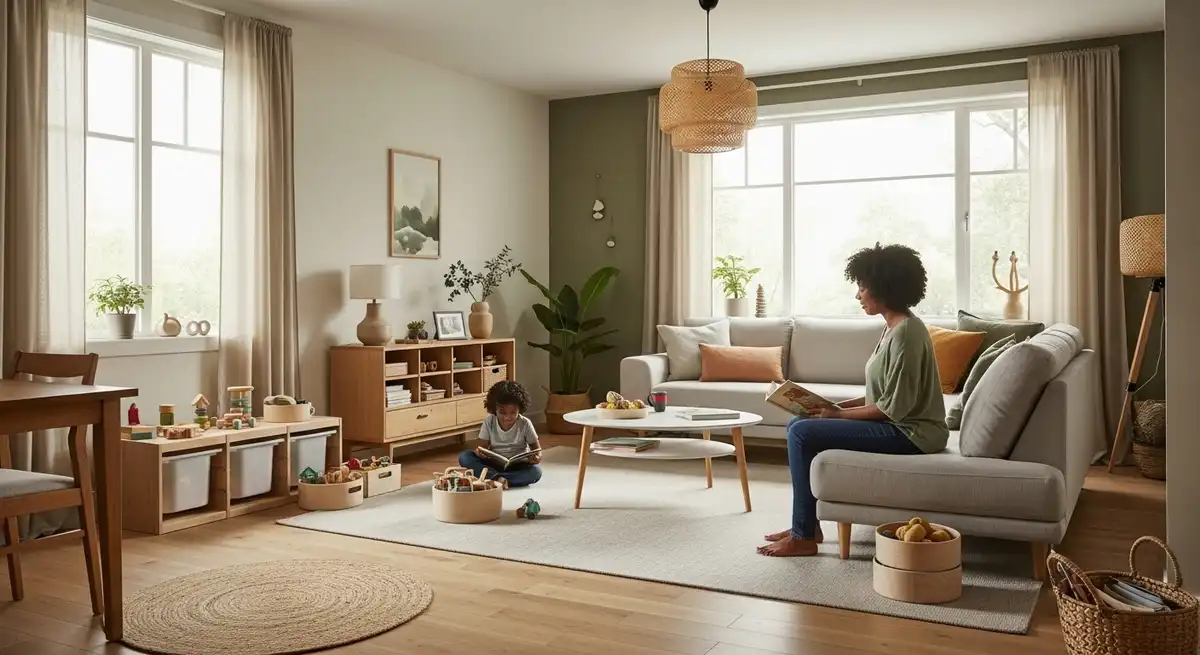
Supporting Children Through Predictable Routines
Children often respond well to predictable routines. Clear sequences reduce uncertainty and support cooperation.
Visual cues and simple systems help externalise organisation. This supports independence without pressure.
Brief connection before tasks supports smoother transitions and emotional regulation.
Managing Paper and High-Traffic Areas
Paper clutter accumulates quickly in busy spaces. Immediate sorting prevents buildup.
The “deal with it now” approach reduces deferred decisions. Items are recycled, filed, or placed in designated folders.
Daily attention keeps high-traffic areas functional and calm.
Integrating the Routine Into Working Life
Working adults juggle multiple roles and expectations. A ten-minute routine provides a stable anchor.
It supports mental transitions between personal and professional roles. This clarity improves focus.
The routine adapts to different schedules and work environments.
Emotional Responsibility and Realistic Expectations
This routine is a lifestyle support, not a solution to all stress. Results vary by consistency and context.
Wellness guidance emphasises realistic expectations. Small routines support daily functioning but do not replace professional care.
Neutral, patient use supports long-term benefit.
Frequently Asked Questions

How can a ten-minute routine reduce daily chaos
A ten-minute routine reduces daily chaos by creating predictable structure at the start of the day. Predictability lowers mental load and decision fatigue. Over time, consistent small actions help prevent tasks and clutter from building into overwhelming situations.
Is this routine suitable for busy parents
This routine is commonly used by busy parents because it is brief and flexible. It adapts to shared spaces and interruptions. The focus on containment rather than completion makes it practical for family life.
Can this routine replace professional mental health support
This routine does not replace professional mental health support. It is a general lifestyle practice that supports organisation and steadiness. Ongoing emotional distress should be discussed with qualified professionals.
Does the routine need to be done perfectly
The routine does not require perfection to be helpful. Consistency matters more than completeness. Partial completion still supports structure and continuity.
Is it safe to practice mindfulness briefly every day
Brief mindfulness practices are generally considered safe as lifestyle supports. They involve simple awareness and breathing. People with specific medical concerns may adapt practices or consult professionals.
How long before benefits are noticed
Benefits vary by individual and consistency. Some notice small changes within days, others over weeks. The routine supports gradual steadiness rather than immediate results.
Can the routine be done at a different time of day
Although mornings are common, the routine can be adapted to other times. Consistency matters more than timing. Evening or midday resets can also support organisation.
Does the routine help with digital overwhelm
The routine helps manage digital overwhelm by creating short boundaries around phone and email use. Structured engagement reduces urgency and mental clutter.
Is this routine suitable for small living spaces
The routine works well in small spaces because it focuses on high-impact actions. It does not require storage systems or equipment.
What if the routine is skipped
Skipping a day does not negate the routine’s value. Returning the next day maintains consistency. Many people use a reduced version during challenging periods.
Conclusion
The 10-Minute Daily Routine That Keeps Chaos Away offers a grounded way to support daily organisation and emotional steadiness. Through small, repeatable actions, it reduces disorder without pressure or promises. Over time, this routine supports calmer mornings, clearer focus, and more manageable days.
Medical Disclaimer
This content is for informational purposes only and does not constitute medical advice. It is not intended to diagnose, treat, cure, or prevent any condition. Consult a qualified healthcare provider before starting any new wellness routine, especially if you have existing medical concerns.
For wider background on this, see the American Psychological Association on stress.