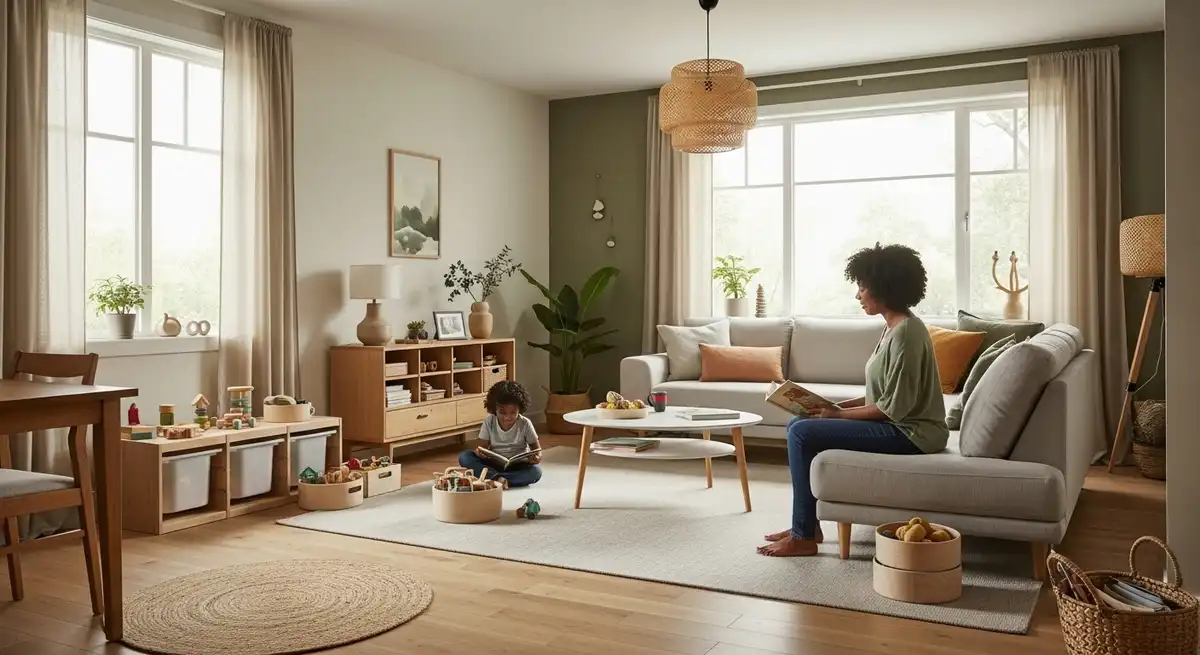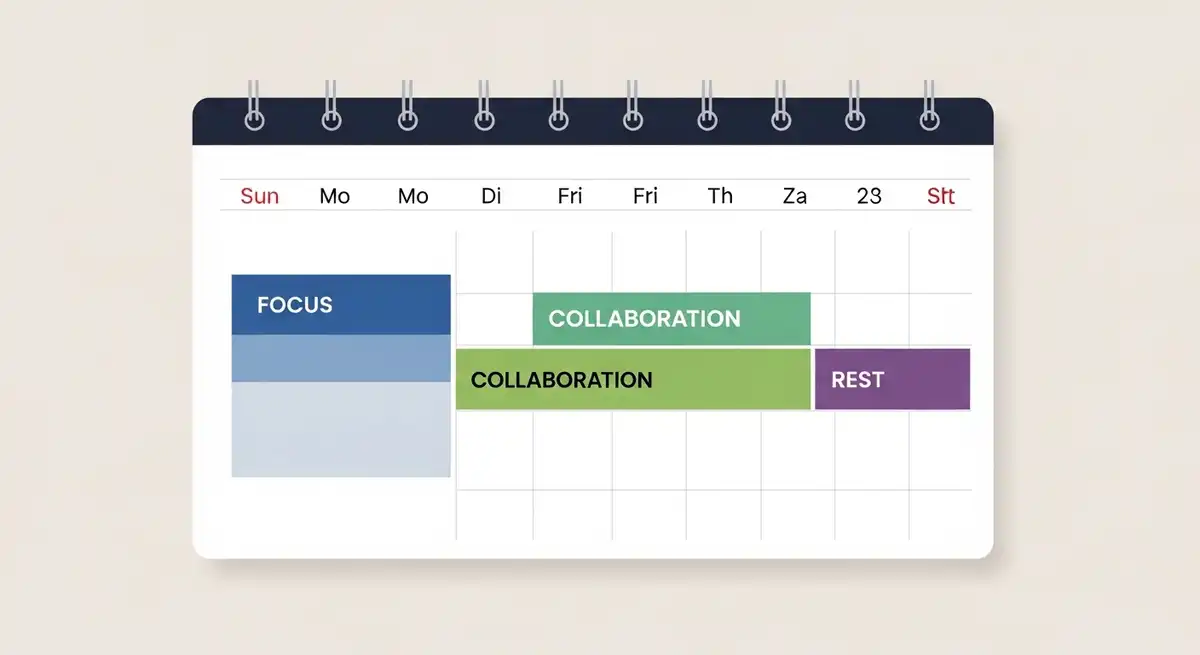

Modern motherhood often unfolds inside crowded schedules shaped by caregiving, paid work, household coordination, and emotional labor. Many mothers carry overlapping responsibilities without clear boundaries, which steadily drains attention and energy. Time-blocking for moms is widely discussed as a planning method, yet its real value lies in supporting realistic expectations, emotional steadiness, and a sense of daily order that feels humane rather than demanding.
Time-blocking for moms refers to organizing the day into flexible time sections instead of relying only on long task lists. This approach is commonly used in lifestyle planning because it limits constant decision-making and reduces mental overload. When applied with care, time-blocking supports clarity and balance without expecting perfection or uninterrupted focus.
Wellness educators often describe time-blocking as a supportive structure rather than a strict productivity system. It does not aim to control every minute or eliminate interruptions. Instead, it offers a practical way to acknowledge limits, plan with honesty, and move through daily responsibilities with less internal friction.
Time blocking moms control: The Everyday Experience of Feeling Behind
Many mothers describe starting the day with pressure already present, even before tasks begin. This sense of urgency often grows from internalized timelines shaped by cultural expectations, family roles, and social comparison. Without visible structure, unfinished tasks remain mentally active, which can keep the body and mind in a heightened state of alert.
The shift from structured education or early career paths into motherhood often removes clear markers of progress. Daily efforts repeat, interruptions increase, and completion feels harder to measure. This gap between effort and visible outcome can quietly fuel self-criticism, even when responsibility and care remain constant.
Lifestyle guidance often points to structure as a way to reduce this background strain. Time-blocking for moms introduces boundaries around responsibilities, helping the brain recognize that tasks have a place. This recognition can soften the feeling of always being behind and restore a sense of daily direction.
Understanding Mental Load in Daily Routines
Mental load describes the ongoing work of planning, remembering, anticipating, and coordinating. In many households, mothers manage much of this invisible labor alongside physical tasks. Over time, this constant cognitive engagement contributes to fatigue and reduced mental clarity.
Mental load continues even during rest because the mind stays alert to upcoming needs. Thoughts about schedules, supplies, appointments, and emotional support often remain active. Without containment, this continuous awareness makes true downtime difficult.
Time-blocking for moms is often used to externalize mental load. Assigning time blocks to broad categories rather than individual tasks reduces what the brain must hold at once. This external structure creates breathing room and supports smoother transitions throughout the day.
Social Comparison and Productivity Pressure
Social platforms frequently present curated images of parenting and productivity. These snapshots can quietly set unrealistic standards that ignore context, support systems, and personal limits. Repeated exposure to these comparisons often increases dissatisfaction rather than motivation.
Research on social comparison shows that upward comparison commonly leads to self-judgment during periods of stress. For mothers already managing high demands, this pressure intensifies feelings of inadequacy. Productivity culture can further reinforce the idea that rest requires justification.
Time-blocking for moms offers a counterbalance by shifting attention away from visible output. When caregiving, rest, and recovery appear as planned blocks, they gain legitimacy. This reframing supports healthier self-evaluation and reduces dependence on external benchmarks.
Time-Blocking as a Lifestyle Structure
Time-blocking is often mistaken for rigid scheduling, yet its strength lies in flexibility. Blocks represent intention rather than strict rules, creating space without demanding constant adjustment. This approach allows planning without overcontrol.
Predictability plays an important role in emotional regulation. When the day has a recognizable shape, the nervous system receives cues of safety. This does not remove stressors, but it reduces background tension caused by uncertainty.
Many people find that time-blocking for moms supports steadier energy. Knowing when activities will occur reduces rushing and multitasking. Over time, routines feel calmer and less reactive.
The Difference Between Lists and Time Blocks
Traditional to-do lists often expand faster than they shrink. Each unfinished item can feel like a reminder of failure rather than effort. Lists also require repeated decisions about timing and order.
Time-blocking differs because it accounts for limited time and energy. Assigning tasks to blocks forces realistic prioritization. This approach limits overcommitment and aligns expectations with capacity.
Lifestyle educators often recommend using lists alongside time blocks. The list captures tasks, while the schedule defines what fits. This separation reduces overload and supports kinder planning.
Predictability and Emotional Regulation
Uncertainty keeps the body alert. When plans remain vague, the nervous system stays on guard. Over time, this state can contribute to physical tension and mental fatigue.
Predictable routines provide signals that reduce the need for constant vigilance. Expected time frames make transitions easier. This supports smoother movement between caregiving, work, and rest.
Time-blocking for moms often emphasizes rhythm rather than precision. Repeating similar blocks builds familiarity. Familiarity encourages calm and reduces the feeling that each day must be reinvented.
Executive Function and Daily Planning
Executive function includes planning, prioritizing, and shifting attention. Parenting challenges these skills, especially under sleep disruption or emotional load. Decision-making can become exhausting.
Time-blocking supports executive function by reducing choice overload. When the schedule defines what comes next, fewer decisions are needed. This conserves mental energy and supports patience.
Many mothers find that planning once daily or weekly works better than constant revisions. A stable framework allows attention to stay on the present task. Stability makes daily demands feel more manageable.
Identifying Time Triggers in Daily Life
Certain times of day consistently feel harder. These patterns often reflect energy cycles, environmental factors, or emotional associations. Recognizing them supports realistic planning.
Common triggers include mornings, late afternoons, or role transitions. When these periods lack structure, frustration grows. Avoidance or overcompensation often follows.
Time-blocking for moms encourages honest observation without judgment. Blocks can match energy rather than ideals. This alignment supports consistency and reduces unnecessary pressure.
Understanding Safety Behaviors Around Time
Safety behaviors are habits used to reduce discomfort, such as excessive checking or avoidance. While they bring short-term relief, they often maintain stress. These patterns are common under sustained responsibility.
In planning, safety behaviors may include rewriting schedules repeatedly or avoiding structure altogether. Both increase uncertainty. Without awareness, they undermine planning efforts.
Time-blocking gently replaces safety behaviors with steadier routines. Consistent blocks reduce the need for reassurance. Over time, confidence grows in the ability to manage the day.
Gradual Exposure to Structure
New routines often feel uncomfortable at first. This discomfort reflects unfamiliarity rather than unsuitability. Gradual exposure allows adaptation without overwhelm.
Maintaining a schedule long enough for discomfort to settle is important. Frequent changes reinforce the belief that structure is unsafe. Stability supports adjustment.
Many people notice routines eventually feel neutral or boring. This neutrality often signals reduced anxiety. Familiarity brings ease.
Flexibility Within Consistency
Flexibility does not mean abandoning structure. It means allowing movement within boundaries. Time-blocking supports this balance.
Interruptions are a natural part of caregiving. Blocks absorb disruption without collapsing the plan. This resilience supports steadier emotions.
Consistency means returning to structure, not enforcing perfection. Over time, this builds trust in the system and reduces resistance.
Shifting From External to Internal Goals
External goals focus on visible outcomes such as completed tasks. While useful, they may ignore emotional needs. Overreliance increases pressure.
Internal goals emphasize qualities like patience or presence. These align with caregiving realities and depend less on circumstances.
Time-blocking for moms supports internal goals by creating space for valued behaviors. Blocks represent how one wants to show up, not just what must be done.
Limitations of Traditional Goal Frameworks
Many goal systems assume stable conditions and personal control. Parenting rarely fits these assumptions. Rigid goals feel discouraging.
When goals ignore variability, they increase feelings of inadequacy. Adaptation becomes necessary.
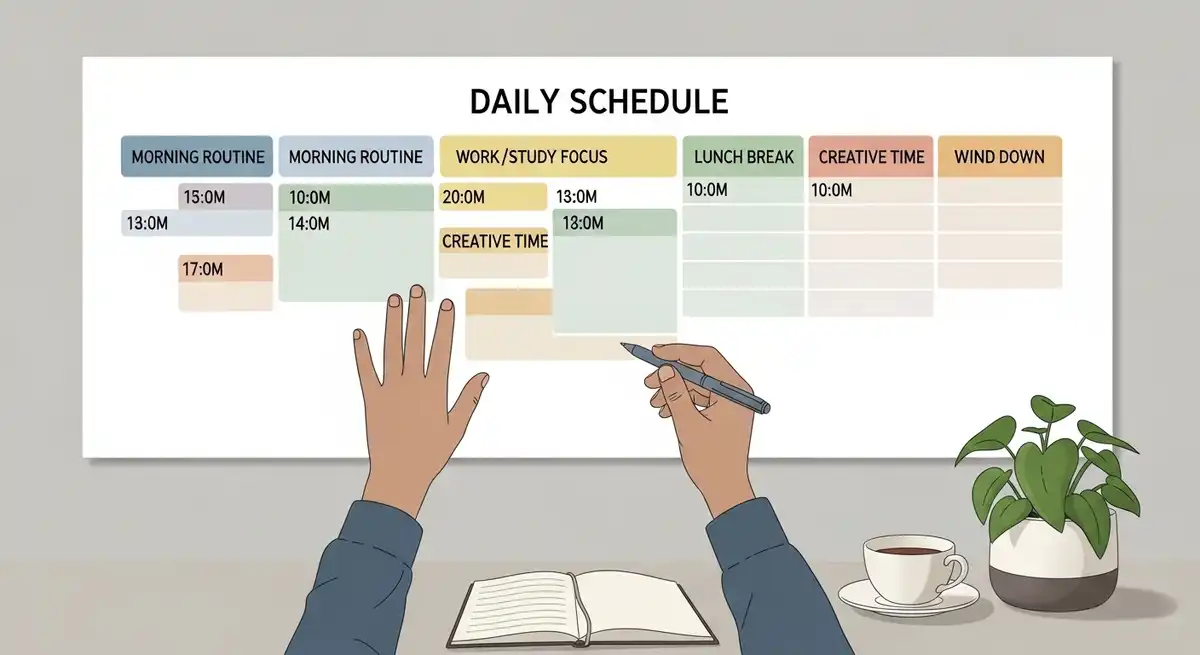
Time-blocking offers context-based planning. Flexible containers replace fixed targets. This accommodates unpredictability while maintaining direction.
Time-Blocking as a Skill
Time-blocking develops through repetition. Early attempts often feel awkward. Skill-building requires practice.
Viewing planning as a skill encourages patience. Mistakes become part of learning.
Starting small builds comfort. Expansion follows naturally as familiarity grows.
Recognizing Cognitive Distortions
Cognitive distortions simplify complex situations. Examples include all-or-nothing thinking and perfectionism. These patterns shape how schedules are judged.
Missing a block may label the day as ruined. This ignores partial success.
Time-blocking benefits from neutral reflection. Observing what worked supports adjustment and reduces emotional intensity.
Challenging Internal Shoulds
Internal shoulds dictate how days ought to look. These rules often come from culture or habit. When unmet, guilt follows.
Time-blocking externalizes expectations. Seeing limits on paper clarifies what is reasonable.
Replacing shoulds with preferences increases flexibility. Preferences honor values without absolutes.
Self-Compassion in Daily Planning
Self-compassion means responding to difficulty with understanding. Research links it to resilience. It does not remove accountability.
In scheduling, self-compassion allows missed blocks without harsh judgment. Reflection replaces blame.
Time-blocking paired with compassion supports sustainable routines. Adaptation becomes possible.
Discipline Versus Kindness
Strict discipline relies on pressure. It may work briefly but increases stress.
Kindness supports motivation through safety. Engagement remains possible after mistakes.
Time-blocking thrives under kind discipline. Boundaries exist, but they remain humane.
Managing Long-Term Consistency
Consistency does not require uniform days. Life disrupts routines. Acceptance prevents discouragement.
Time-blocking provides a reference point during disruption. Returning restores orientation.
Consistency grows from repeated returns, not perfection.
Boundaries and Energy Protection
Boundaries define capacity. Without them, overextension becomes common.
Time-blocking makes boundaries visible. Full blocks show limits clearly.
Protecting rest supports sustainability. Recovery is foundational.
Parenting and Working-Life Integration
Many mothers balance paid work with caregiving. Roles overlap, blurring boundaries.
Time-blocking allocates space to each domain. This acknowledges competing demands.
Clear blocks reduce role conflict. Focus improves satisfaction.
Adapting Time-Blocking for Different Life Stages
Parenting needs change across stages. What works now may shift later.
Time-blocking adapts through block length and content. Principles remain stable.
Structure supports clarity across stages.
Time-Blocking With Toddlers
Toddlers bring unpredictability. Rigid schedules fail.
Broad caregiving blocks accommodate variability. Pressure decreases.
Patterns emerge over time, guiding adjustment.
Rest as a Scheduled Priority
Rest is often postponed. Burnout follows.
Scheduling rest legitimizes it. Guilt decreases.
Rest blocks support recovery and energy.
Accepting Imperfect Days
No schedule fits every day. Acceptance prevents escalation.
Partial adherence still provides structure.
Days exist on a continuum, not pass or fail.

Time-Blocking and Emotional Awareness
Planning intersects with emotion. Awareness supports adjustment.
Patterns between mood and capacity inform planning.
Responsiveness supports well-being.
Practical Integration Into Daily Life
Simple tools work best. Consistency matters.
Accessible tools reduce resistance.
Regular review maintains alignment.
Time-Blocking as Influence Rather Than Control
Control seeks certainty. Influence shapes direction.
Time-blocking guides attention.
This framing supports realistic expectations.
Expanded FAQ Section
Starting time-blocking with unpredictable days
Time-blocking often begins with anchoring predictable elements such as sleep, meals, and caregiving routines. These anchors create a basic framework without detailing every task. Over time, additional blocks can be added as patterns emerge and comfort increases.
Time-blocking and anxiety awareness
Time-blocking is commonly associated with reduced overwhelm because it lowers uncertainty around daily demands. Predictable structure can support emotional steadiness without addressing anxiety as a condition. Many people use it as a lifestyle support alongside other coping strategies.
When schedules do not work as planned
A schedule that does not unfold as expected provides information rather than failure. Reviewing which blocks were unrealistic supports adjustment. This reflective approach encourages learning and continued use.
Difference between lists and blocked schedules
Lists capture tasks without acknowledging time limits. Blocked schedules assign tasks to specific periods, making capacity visible. This visibility supports realistic expectations and reduces overload.
Scheduling rest without guilt
Rest supports ongoing functioning and caregiving capacity. Including rest as a planned block frames it as necessary rather than indulgent. This framing reduces internal conflict around pausing.
Using time-blocking with young children
Time-blocking with young children relies on broad categories rather than precise timing. Flexible caregiving blocks accommodate variability. This approach supports structure without rigidity.
Adjustment period for new routines
New routines often feel uncomfortable due to unfamiliarity. Consistent use allows adaptation over weeks. Gradual ease often follows repeated exposure.
Productivity and sustainability
Time-blocking supports sustainable productivity by aligning tasks with energy and limits. It emphasizes completion within capacity rather than volume. This focus supports long-term engagement.
Burnout awareness and prevention framing
Burnout relates to prolonged overload without recovery. Time-blocking supports balance by protecting rest and limiting overcommitment. It functions as a preventive lifestyle structure rather than a treatment.
Choosing planning tools
Both digital and paper tools can support time-blocking. The best choice feels calming and accessible. Consistent use matters more than format.
Conclusion
Time-blocking for moms offers a grounded way to navigate complex daily demands with clarity and care. By emphasizing structure, flexibility, and self-compassion, it supports steadier routines without unrealistic expectations. When used as a lifestyle support rather than a productivity mandate, time-blocking contributes to calmer days and sustainable balance.
Medical Disclaimer
This content is for informational purposes only and does not constitute medical or mental health advice. It is not intended to diagnose, treat, cure, or prevent any condition. Always consult a qualified healthcare professional regarding personal health concerns or ongoing symptoms.
For wider background on this, see the American Psychological Association on stress.