

Work stress is a shared experience shaped by deadlines, expectations, and the steady pressure to perform well while managing personal responsibilities. For many working adults, especially parents and caregivers, stress builds quietly and becomes part of everyday routine rather than a single overwhelming event. Wellness education increasingly focuses on simple, responsible lifestyle tools that support steadiness without exaggeration or unrealistic promises.
Daily affirmations are often introduced within this context as supportive, non-clinical practices. They are not designed to change emotions instantly or replace professional care, but to guide attention and self-talk in calmer directions. When used consistently, affirmations are commonly associated with improved self-awareness, clearer boundaries, and more balanced responses to routine work pressure.
This page explains twenty daily affirmations to overcome work stress, presented carefully and one by one. Each affirmation is expanded to clarify what it represents, why it is commonly used, and how it fits into everyday life safely. The tone remains factual, calm, and aligned with responsible wellness and lifestyle standards.
20 daily Affirmations to Overcome work stress: Understanding Affirmations as a Lifestyle Practice
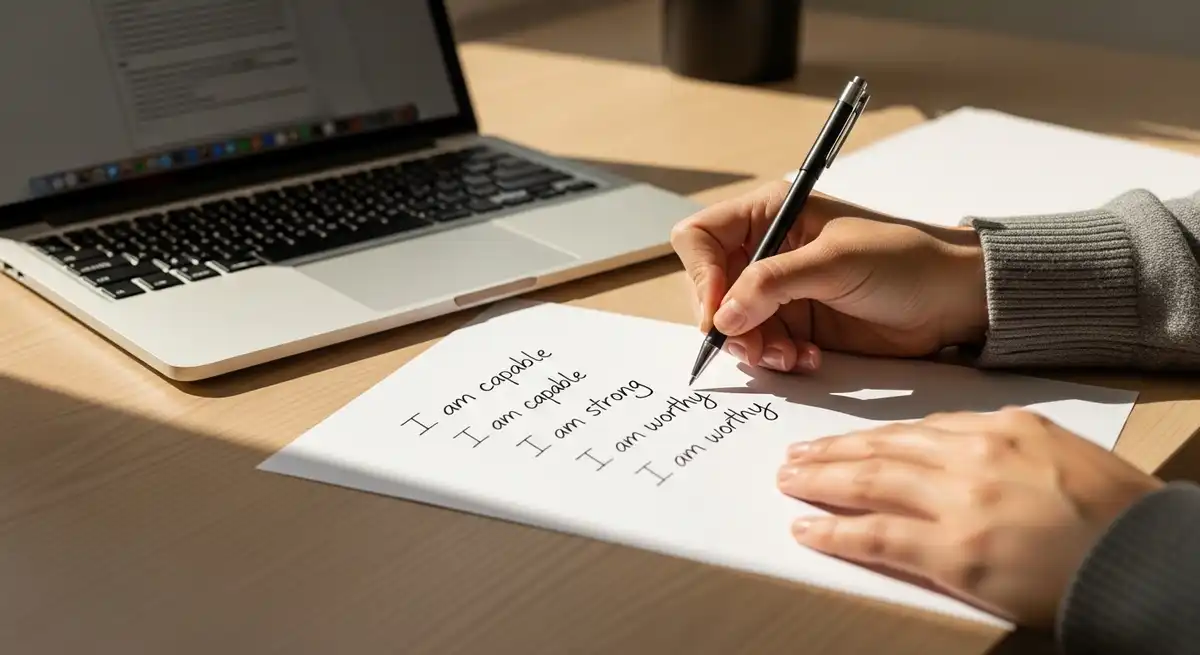
Affirmations are short statements people use to focus attention on realistic, stabilizing perspectives. In wellness education, they are usually described as attention-guiding tools rather than emotional fixes. Many people use affirmations to interrupt automatic negative self-talk that tends to surface during pressure-filled moments at work.
In everyday routines, affirmations are often woven into existing habits such as morning preparation, commuting, or brief pauses between tasks. Their usefulness is generally linked to consistency and believability rather than emotional intensity. Wellness educators often note that affirmations work best when they sound reasonable and reflect lived experience.
Affirmations are not substitutes for rest, boundaries, or professional support. Instead, they are commonly used alongside practical habits like adequate sleep, workload planning, and clear communication. When framed responsibly, affirmations support emotional steadiness without creating unrealistic expectations or promises.
1. I am capable and competent in handling my work responsibilities
This affirmation emphasizes existing capability rather than future success. It is commonly used when tasks feel overwhelming or when workload piles up faster than expected. By reminding the mind of competence, it helps reduce stress driven by self-doubt rather than actual lack of ability.
In daily life, people often repeat this affirmation before starting complex tasks or during moments of overload. It does not deny difficulty or suggest perfection. Instead, it reinforces trust in skills already developed through experience, which can steady thinking during demanding workdays.
2. I have the skills necessary to succeed in this role
This statement focuses attention on skills rather than comparison or fear. Work stress often increases when people underestimate their abilities or measure themselves constantly against others. This affirmation helps redirect attention toward training, experience, and knowledge already in place.
Many people use this affirmation during role transitions, evaluations, or unfamiliar assignments. It supports confidence without exaggeration and allows room for learning. Wellness guidance typically frames skill-based affirmations as grounding rather than motivational hype.
3. I am knowledgeable about what I am building and will continue to learn
This affirmation balances confidence with openness to growth. Stress often arises from the belief that one must already know everything to perform well. This statement normalizes learning as an ongoing part of professional life.
In everyday routines, this affirmation is used to reduce pressure around uncertainty or new challenges. It encourages patience without lowering standards. This approach aligns with lifestyle guidance that supports adaptability and long-term engagement at work.
4. I trust myself to make good decisions
Decision fatigue is a common source of work stress, especially in roles requiring constant judgment. This affirmation reinforces internal trust rather than dependence on external approval. It supports steadier thinking when choices feel heavy or urgent.
People often repeat this affirmation before meetings or when prioritizing tasks. It does not imply flawless decisions. Instead, it acknowledges reasonable judgment built through experience, which helps limit overthinking and mental exhaustion.
5. I can handle the challenges that come my way
This statement focuses on coping capacity rather than ease. Stress often intensifies when challenges are perceived as threatening or unmanageable. This affirmation supports a calmer appraisal of difficulties as situations to respond to, not threats to identity.
In daily use, people turn to this affirmation during unexpected demands or tight deadlines. It draws on past experiences of coping without predicting outcomes. Wellness educators often describe resilience-based affirmations as stabilizing rather than inspirational.
6. It is okay to take breaks, rest supports my productivity
This affirmation addresses guilt associated with stepping away from work. Many people feel stress when rest is framed as laziness or lack of commitment. This statement reframes rest as a normal part of functioning.
It is commonly used during scheduled breaks or after long work periods. By validating rest, it supports sustainable routines. Lifestyle guidance often highlights this perspective as essential for preventing long-term exhaustion.
7. Rest is work too, it supports sustainable performance
This affirmation builds on the idea that recovery contributes to consistent output over time. Stress increases when rest is delayed or undervalued. This statement reframes rest as part of responsible effort, not a reward.
In everyday contexts, it supports healthier pacing and energy management. It does not suggest avoiding effort, but balancing it. Wellness education often presents this mindset as practical rather than idealistic.
8. I can set healthy boundaries without guilt
Boundary-related stress is common in collaborative workplaces. This affirmation reinforces the idea that limits are reasonable and necessary. It supports emotional clarity when managing time, energy, and availability.
People often use this affirmation when declining tasks or setting expectations. It encourages respectful self-protection without confrontation. This framing aligns with responsible lifestyle communication around sustainability.
9. Taking time to recharge improves my effectiveness
This statement links rest directly to work quality. Stress frequently builds when fatigue is ignored. This affirmation supports awareness of energy cycles rather than constant output.
It is often used after work hours or during recovery periods. By reinforcing this connection, it supports balanced decisions. Wellness educators commonly describe this perspective as grounded and realistic.
10. I am allowed to say no when necessary
This affirmation addresses overload caused by agreeing to too much. Many people experience stress from difficulty declining requests. This statement reinforces permission rather than avoidance.
In daily life, it supports thoughtful decisions about capacity. It does not encourage disengagement, but realistic assessment. Lifestyle guidance often frames this as essential for long-term wellbeing.
11. My worth is not defined by my to-do list
This affirmation separates personal value from productivity. Stress often spikes when self-worth depends entirely on output. This statement supports emotional balance during fluctuating workloads.
People commonly use this affirmation on slower days or when tasks remain unfinished. It reinforces intrinsic worth without reducing responsibility. Wellness education frequently highlights this distinction for mental steadiness.
12. I am more than my job title
This affirmation broadens identity beyond professional roles. Work stress can intensify when identity becomes too narrow. This statement supports a more balanced sense of self.
In everyday contexts, it helps maintain perspective during career changes or challenges. It does not diminish commitment, but contextualizes it. This approach supports resilience across life transitions.
13. I work to live, not live to work
This affirmation reinforces proportion between work and personal life. Stress often increases when work dominates attention. This statement supports intentional balance without rejecting responsibility.
It is commonly used to reaffirm priorities outside working hours. Lifestyle guidance often presents this view as protective against burnout. It supports sustainable engagement rather than withdrawal.
14. I do not need to prove my worth constantly
This affirmation addresses performance anxiety driven by constant evaluation. Stress grows when effort feels like a test of value. This statement supports steady contribution instead of overexertion.
In daily routines, it helps reduce emotional strain. It encourages consistency rather than intensity. Wellness educators often describe this mindset as supportive for long-term balance.
15. I deserve respect for my contributions
This affirmation reinforces self-respect without entitlement. Stress can arise when effort feels unnoticed. This statement supports internal validation rather than confrontation.
People use it to maintain composure in challenging interactions. It does not promise recognition, but supports steadiness. This framing aligns with ethical emotional wellbeing communication.
16. I choose progress over perfection
Perfectionism is a frequent source of work stress. This affirmation reframes success as gradual improvement. It supports action without excessive pressure.
In daily use, it reduces procrastination and self-criticism. It encourages learning from outcomes. Wellness guidance often frames this approach as sustainable.
17. Mistakes help me grow and adapt
This affirmation reframes errors as part of learning. Stress often increases when mistakes are treated as personal failures. This statement supports reflection and adjustment.
It is commonly used after feedback or setbacks. It does not remove accountability, but adds perspective. This aligns with balanced wellbeing education.
18. I am resilient and capable of change
This affirmation emphasizes adaptability rather than endurance. Work environments change, which creates uncertainty. This statement supports confidence in adjustment.
In everyday life, it reinforces coping capacity during transitions. It does not promise ease. Wellness guidance often highlights adaptability as a stabilizing trait.
19. This moment does not define my future
Stress narrows perspective and magnifies setbacks. This affirmation restores a broader view. It supports emotional regulation during difficult days.
People often use it after high-pressure situations. By reinforcing time perspective, it reduces rumination. This aligns with responsible stress awareness practices.
20. Each new day offers a fresh start
This affirmation supports psychological closure between workdays. Carrying stress forward compounds fatigue. This statement reinforces routine reset.
In daily life, it supports better transitions into rest and sleep. It encourages separation between days. Wellness educators often describe this as helpful for consistency.

Parenting and Working Life Context
For working parents, stress often involves switching roles between professional and caregiving responsibilities. Affirmations are commonly used as brief grounding tools during these transitions. Their simplicity allows use without adding time demands.
Affirmations do not solve structural challenges like workload or childcare. They can, however, support steadiness when managing overlapping responsibilities. This framing respects limits while offering support.
Mindfulness and Affirmations Together
Affirmations are often paired with simple mindfulness habits such as slow breathing or quiet pauses. This combination supports attention regulation rather than emotional suppression. Many people find this pairing easier to maintain.
Mindfulness-based use remains informational and non-clinical. It focuses on noticing thoughts rather than changing feelings directly. This approach aligns with YMYL-safe wellness education.
Frequently Asked Questions
Do daily affirmations really help with work stress
Daily affirmations are commonly used as supportive tools for everyday stress. They guide attention and reduce negative self-talk. Their usefulness depends on consistency and realism and they are usually combined with other healthy routines.
How do you start affirmations if you feel unsure
Many people begin with neutral statements that feel believable. Affirmations aligned with real skills or values are often easier to maintain. Short, consistent use is generally preferred.
What are effective affirmations for imposter feelings
Skill-focused affirmations are often used for imposter feelings. They emphasize contribution and learning rather than comparison. This supports steadiness without denying growth areas.
Can affirmations lower stress responses
Affirmations are associated with calmer thought patterns. They support emotional regulation by reducing rumination. They are lifestyle tools, not medical interventions.
How long before affirmations feel natural
Comfort often develops over a few weeks of consistent practice. Familiarity builds gradually. Experiences vary across individuals.
When is the best time to practice affirmations
Many people practice affirmations in the morning or during transitions. Consistency matters more than timing. Flexibility supports habit formation.
How are affirmations different from forced positivity
Affirmations acknowledge difficulty while offering balanced perspective. They do not deny challenges. This makes them emotionally responsible.
Can affirmations help in difficult work environments
Affirmations can support internal steadiness during challenging situations. They do not change external conditions. They are commonly paired with practical strategies.
Do affirmations improve productivity
Affirmations may support focus by reducing mental distraction. This can influence productivity indirectly. They are supportive tools, not performance guarantees.
Are short affirmations effective during meetings
Short affirmations are often used discreetly for grounding. They support calm attention. Their simplicity makes them practical.
Conclusion
Daily affirmations to overcome work stress are commonly used as simple lifestyle support tools. They emphasize balance, self-awareness, and realistic perspective without promising outcomes. When integrated thoughtfully, affirmations support calmer routines and sustainable engagement with work while respecting individual limits.
Medical Disclaimer
This content is for informational purposes only and does not constitute medical or mental health advice. It does not diagnose, treat, cure, or prevent any condition. Consult a qualified healthcare or mental health professional for personalized guidance.
For wider background on this, see the Greater Good Science Center at UC Berkeley.
Keep reading
- 18 Powerful Affirmations for Peaceful Parenting That Reduce Daily Stress
- 21 Science-Backed Affirmations for Work Success and Professional Growth
- 17 Affirmations to Overcome Self-Doubt and Anxiety
Attach each to a moment — while the call connects, hand on the meeting-room door — and they get used. How to Write Affirmations explains why the moment matters more than the repetition.