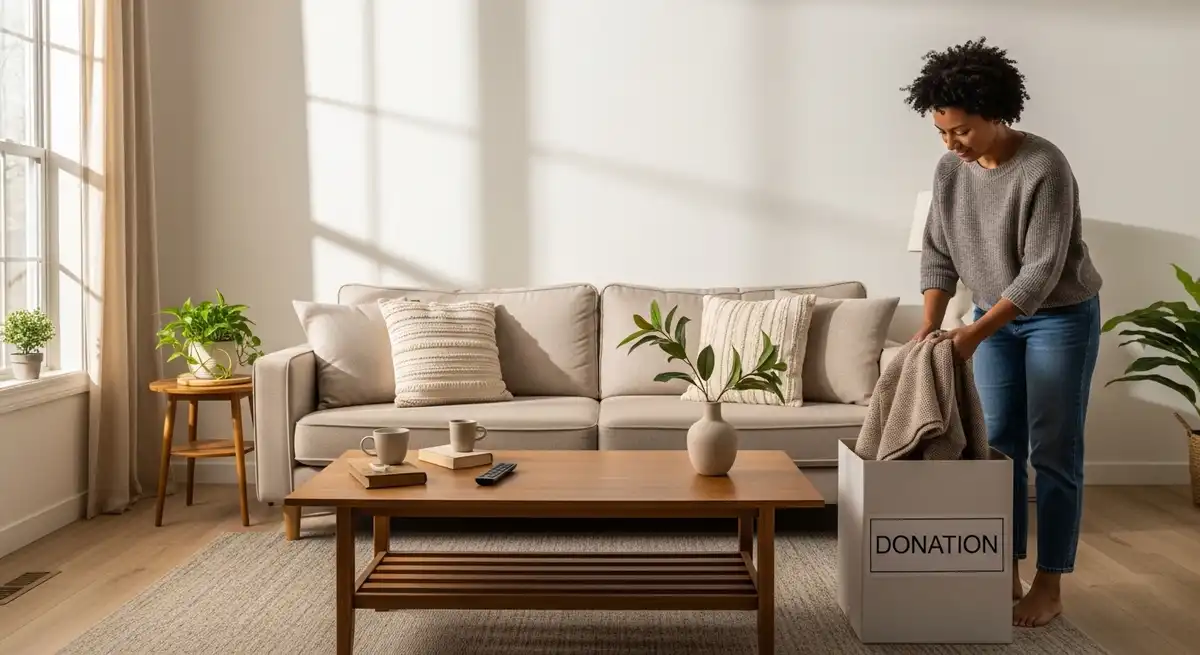
Clutter is rarely only about objects. In many households, especially those balancing work, caregiving, and personal responsibilities, accumulated belongings quietly reflect postponed decisions, emotional attachment, and limited time. Learning how to declutter your home without overwhelm starts with accepting that calm spaces are built through steady, realistic habits rather than dramatic cleanouts.
Modern homes fill faster than they empty because daily routines leave little space for maintenance. Items enter with practical or emotional reasons, then remain because energy runs out before decisions are made. A sustainable approach respects mental limits, ongoing responsibilities, and the reality that order must work alongside everyday life.
This page presents decluttering as a long-term lifestyle skill, not a single project. The focus stays on emotionally responsible methods that reduce cognitive strain and fit real households. Each section explains commonly used principles in a grounded, non-clinical way suitable for lasting home management.
Declutter Your Home Without Overwhelm: Understanding Why Decluttering Feels Overwhelming
Clutter often feels heavier than it looks because it demands continuous decision-making. Each object represents a choice about usefulness, memory, cost, or future need, which quietly drains mental energy. Over time, this constant evaluation creates fatigue that makes even simple sorting feel unmanageable.
Many wellness educators note that overwhelm increases when people expect quick transformation. Homes collect items over years, while decluttering is often expected to happen in a weekend. This mismatch between expectation and reality creates frustration rather than progress.
Decluttering becomes more manageable when framed as an ongoing process. Accepting gradual change allows consistent effort without emotional pressure. This perspective supports calmer decisions and reduces the urge to abandon the process midway.
Decision Fatigue and Cognitive Load in the Home
Decision fatigue describes the mental exhaustion that follows repeated choices. In cluttered environments, every visible item requires evaluation, which steadily reduces focus and patience. As fatigue builds, people often delay decisions, keep unnecessary items, or stop altogether.
Research in cognitive psychology shows that decision quality drops as mental load increases. This explains why long decluttering sessions often end in frustration instead of clarity. Shorter, structured efforts reduce strain and help maintain steady progress.
Working with cognitive limits is a practical strategy. Structuring decluttering to reduce decisions per session supports clearer thinking. Over time, this approach builds confidence and protects emotional energy.
The Role of Time Constraints in Sustainable Decluttering
Time scarcity is one of the most common barriers to home organization. Working parents and caregivers manage many responsibilities, leaving limited energy for household projects. Expecting long decluttering sessions in this context often leads to disappointment.
Short, defined time blocks align better with modern schedules. Setting aside brief periods creates predictability without disrupting routines. This structure supports consistency, which is more effective than occasional intense efforts.
Lifestyle guidance often suggests building habits that fit existing routines. Decluttering that respects time limits becomes easier to repeat. Repetition, rather than duration, gradually reshapes the home environment.
The Fifteen Minute Decluttering Practice
The fifteen minute decluttering practice limits effort to a short, clear window. This boundary lowers resistance because a known endpoint feels manageable. The approach emphasizes completion over volume, which supports motivation.
Short sessions reduce the chance of creating extra mess. People remain focused, make fewer rushed decisions, and stop before fatigue sets in. This keeps the home usable throughout the process.
Many households find that daily or near-daily short sessions lead to visible improvement over weeks. Progress accumulates quietly without overwhelming schedules. This steady rhythm supports long-term maintenance.
Choosing Appropriate Decluttering Starting Points
Starting small reduces emotional and visual overload. A single drawer, shelf, or cabinet offers a contained space where results appear quickly. This sense of completion builds confidence and reduces avoidance.
Visible progress reinforces habit formation. When effort leads to immediate improvement, motivation grows naturally. This feedback makes future sessions feel less daunting.
Beginning with functional areas instead of sentimental ones often eases the process. Practical spaces involve fewer emotional decisions, allowing skills to develop before tackling complex categories.
Avoiding the All at Once Cleanout Trap
Emptying entire rooms is often promoted as efficient, yet it frequently leads to overwhelm. Large piles increase visual chaos and cognitive load. When exhaustion sets in, items are pushed aside or returned unsorted.
A no-mess approach prioritizes stability. Removing and deciding on items one at a time prevents the environment from becoming unmanageable. This method keeps daily life functioning during decluttering.
Stability supports persistence. When the home remains usable, decluttering fits into routines rather than disrupting them. This increases the likelihood of finishing what was started.
Working in Zones for Clarity
Zoning divides the home into broad functional areas such as kitchen, sleeping spaces, bathrooms, living areas, and storage. Each zone is addressed separately over time. This structure prevents scattered effort and unfinished projects.
Familiarity with one zone reduces mental effort. Repeated sessions in the same area build awareness and streamline decisions. Over time, this familiarity makes maintenance easier.
A zoned approach supports planning without rigidity. Direction stays clear while progress remains flexible. This balance supports long-term engagement.
Using Simple Decision Rules
Clear decision rules reduce mental strain. Guidelines based on time, use, or replaceability limit emotional debate. These frameworks provide support when motivation is low.
Time-based rules shift focus from imagined futures to present reality. Items unused for long periods often no longer serve daily life. This perspective encourages practical choices.
Rules do not remove emotion but contain it. By narrowing options, they reduce rumination and support steady progress. This containment protects emotional wellbeing.
Understanding the Twenty Twenty Twenty Rule
The twenty twenty twenty rule considers cost, time, and distance of replacement. Items that are inexpensive and easy to replace often do not need long-term storage. This guideline reduces fear-based retention.
Many people overestimate the likelihood of needing certain items again. This rule introduces proportional thinking. Space and mental ease often outweigh hypothetical reuse.
Using this rule selectively supports confidence. It works best for household duplicates and rarely used tools. Applying it consistently reduces clutter volume over time.
Applying Time Based Evaluation Rules
Time-based evaluation focuses on recent and near-future use. The one-year guideline accounts for seasonal variation while setting boundaries. Items unused across full cycles often no longer align with current needs.
Shorter time frames provide clarity for everyday items. The ninety day approach helps identify belongings that have quietly lost relevance. This clarity reduces emotional hesitation.
These rules support practical living. They align possessions with present routines rather than past identities. This alignment makes homes easier to manage.

Addressing Sentimental Belongings Thoughtfully
Sentimental items often represent relationships, milestones, or personal history. Letting go can feel like erasing meaning rather than clearing space. Recognizing this emotional layer reduces self-judgment.
Wellness educators often emphasize that memories live within people, not objects. Items act as reminders, not containers of experience. This distinction can ease guilt during decisions.
Thoughtful selection rather than total retention honors memory without overwhelming space. Choosing representative pieces supports emotional respect and functional living.
Using Memory Preservation Alternatives
Photographing sentimental items preserves visual memory without physical storage. Digital archives allow reflection without clutter. This method is commonly used for children’s artwork and inherited belongings.
Memory books or folders create intentional collections. Instead of scattered items, memories are gathered into a single format. This consolidation supports clarity and preservation.
Alternatives respect emotional readiness. They offer options rather than pressure. Over time, many people find this balance reduces attachment strain.
Creating a Temporary Holding Area
A holding area allows a pause instead of an immediate decision. Items placed there are neither discarded nor kept permanently. This reduces pressure during emotionally complex sessions.
Holding zones are limited in size to prevent avoidance. When space fills, reevaluation happens naturally. This boundary encourages eventual clarity.
Temporary holding respects emotional pacing. It acknowledges that readiness varies. This compassion supports long-term follow-through.
The Container Concept Explained
The container concept treats physical space as a natural limit. Shelves, drawers, and bins define capacity. When full, choices must be made before adding more.
This method shifts focus from worthiness to fit. Items compete for limited space rather than abstract value. This simplifies decisions.
Containers create visible order. Boundaries prevent gradual overflow. Over time, this structure maintains balance with less effort.
Why Storage Expansion Often Fails
Adding storage increases capacity but not clarity. Extra bins often delay decisions rather than resolve them. Clutter becomes hidden instead of reduced.
Consumer behavior research shows that available space encourages accumulation. Without limits, belongings expand to fill containers. This pattern undermines decluttering goals.
Using existing storage encourages intentional selection. Limits support discernment. This approach protects physical space and mental ease.
Managing Items That Belong Elsewhere
Items often collect in the wrong locations. Papers migrate, clothing drifts, and shared objects lose clear homes. This creates visual clutter even when storage exists.
Returning items to their proper places reduces surface buildup. This habit supports daily order without major effort. Consistency prevents accumulation.
This practice reinforces household systems. When items have defined homes, maintenance becomes easier. Over time, clutter decreases naturally.
Fast Sorting Practices for Momentum
Quick sorting practices focus on obvious decisions such as trash or donations. Removing these items provides immediate visual relief. This progress boosts motivation.
These practices are usually used sparingly. They complement slower decision-making rather than replace it. Balance maintains quality and speed.
Momentum supports engagement. Visible change encourages continuation. This emotional reinforcement sustains the process.
Comparing Decluttering Philosophies
Different decluttering philosophies emphasize different values. Some focus on present comfort, while others consider long-term responsibility. Understanding these perspectives allows informed choices.
Approaches centered on current usefulness prioritize daily ease. Those considering future impact aim to reduce burden on others. Both offer valid lenses.
Many households blend philosophies. This flexibility supports balanced decisions. Adaptation increases sustainability.
Preventing Clutter From Returning
Maintenance habits protect progress. Without systems, cleared spaces refill quickly. Prevention requires consistent, simple practices.
One in one out guidelines maintain equilibrium. New items replace old ones rather than adding volume. This rule aligns consumption with space.
Closed zones such as clear counters act as visual anchors. They signal when clutter begins to return. Early correction prevents buildup.
The Role of Daily Reset Practices
Daily resets involve brief tidying periods. These practices restore order without major effort. They are commonly used at the end of the day.
Environmental psychology links tidy spaces with improved rest. Resetting supports calmer mornings. This rhythm benefits household flow.
Short resets are easier to maintain. They prevent accumulation. Consistency matters more than duration.
Decluttering in Homes With Children
Homes with children naturally cycle through belongings. Toys, clothing, and school materials change frequently. Expecting permanent order is unrealistic.
Decluttering in these environments focuses on rotation and boundaries. Limiting categories supports independence and responsibility. Children learn through participation.
Flexibility is essential. Systems adapt as needs evolve. This adaptability supports family harmony.

Supporting Working Parents Through Decluttering
Working parents often face compounded demands. Limited time and energy require efficient methods. Decluttering must fit around responsibilities.
Short sessions and clear rules support consistency. Predictable routines reduce decision fatigue. This approach respects limited capacity.
Supportive methods reduce guilt. Progress occurs without perfection. This balance supports wellbeing.
Emotional Responsibility in Decluttering
Decluttering intersects with identity and memory. Emotional responses are normal and expected. Recognizing this prevents self-criticism.
Neutral language supports calm engagement. Avoiding moral judgment about possessions reduces stress. Belongings reflect life stages, not failure.
Responsible decluttering prioritizes mental safety. It allows pauses when needed. This care sustains long-term change.
Frequently Asked Questions
Why does decluttering feel so overwhelming?
Decluttering often feels overwhelming because it requires many small decisions in a short time. Each decision uses mental energy, which builds fatigue quickly. Recognizing this cognitive load explains why structured, limited approaches are commonly recommended.
How do I start decluttering when I feel stuck?
Starting is usually easier when focusing on a very small, contained area. Short time limits reduce resistance and protect energy. This approach allows gradual progress without emotional overload.
What is the 20/20/20 rule in decluttering?
The 20/20/20 rule is a guideline for evaluating replaceability. It reduces fear-based retention by focusing on cost, time, and distance of replacement. This rule is commonly used for non-sentimental household items.
How can I declutter without making a bigger mess?
Decluttering without making a bigger mess involves removing items one at a time. Avoiding full-room emptying keeps the environment functional. This method supports consistency and completion.
How should sentimental items be handled?
Sentimental items are often managed through selective keeping and memory preservation. Photographs and memory books allow emotional respect without physical clutter. This balance reduces guilt.
Is decluttering helpful for people with attention challenges?
Decluttering approaches are often adapted for attention challenges. Clear rules and short sessions reduce cognitive strain. Structure supports focus without pressure.
How do I stop clutter from returning?
Preventing clutter return relies on maintenance habits. One in one out guidelines and daily resets help maintain balance. These practices reduce the need for repeated cleanouts.
Does the 15 minute method really work?
Short decluttering sessions are commonly effective because they protect motivation. Limiting duration reduces burnout. Consistency produces cumulative results.
How do I decide what to keep?
Deciding what to keep becomes easier with time-based rules. These frameworks shift focus to present usefulness. This clarity reduces emotional hesitation.
Are different decluttering philosophies compatible?
Different decluttering philosophies emphasize present comfort or future responsibility. Many people blend approaches. Flexibility supports sustainable decision-making.
Conclusion
Learning how to declutter your home without overwhelm involves aligning expectations with reality. Calm, structured methods support steady progress without emotional strain. When decluttering is treated as a lifestyle skill rather than a test of discipline, homes become easier to manage and daily life feels more supported.
Medical Disclaimer
This content is for informational purposes only and does not constitute medical or mental health advice. It is not intended to diagnose, treat, cure, or prevent any condition. Always consult a qualified healthcare or mental health professional regarding personal health concerns.
Prompt 1: Featured Image A photorealistic living room transitioning from cluttered to calm, soft morning window light, neutral earth tones, subtle greenery, diverse adult homeowner gently placing items into a donation box, minimal modern interior, editorial lifestyle photography, shallow depth of field, horizontal composition, peaceful mood, professional magazine quality, realistic home environment, no perfection styling, natural textures, balanced negative space.
Prompt 2: Supporting Concept Image Close-up instructional image of hands organizing a single drawer using the container concept, neutral background, natural daylight, clean minimalist aesthetic, clear visual hierarchy, warm wood tones, calm instructional mood, photorealistic style, horizontal layout, editorial clarity, inclusive representation, practical everyday setting, sharp focus on objects, no decorative clutter.
Prompt 3: Inspirational Image Photorealistic image of a calm evening home scene after decluttering, soft golden-hour lighting, person relaxing on sofa with tea, uncluttered surfaces, muted greens and warm neutrals, authentic lived-in environment, emotional relief and contentment, lifestyle editorial style, horizontal orientation, natural shadows, approachable realism, non-idealized wellness atmosphere.
For wider background on this, see the World Health Organization classifies burn-out as an occupational phenomenon.