

Emotional strain and mental overload are everyday realities for many adults balancing work, family, and personal responsibilities. People often look for gentle, accessible ways to support emotional balance without relying only on medication or intensive therapy. Emotional Freedom Techniques, commonly called EFT tapping, is widely discussed in wellness education as a structured, self-guided emotional regulation practice.
EFT tapping is typically described as a method that combines focused attention, spoken acceptance statements, and light fingertip tapping on specific points of the body. Wellness educators present it as a supportive lifestyle practice rather than a treatment or cure. Learning how EFT is framed and used helps readers approach it with clarity, realistic expectations, and appropriate caution.
This guide explains Emotional Freedom Techniques in a calm, educational manner suitable for general wellbeing learning. The information focuses on everyday use, current research context, and lifestyle integration, not clinical claims. It is intended to support informed understanding and does not replace professional medical or mental health care.
Emotional Freedom Techniques (EFT Tapping) Explained: Understanding Emotional Freedom Techniques as a Lifestyle Practice
Emotional Freedom Techniques is commonly described as a self-regulation practice used within wellness routines. It involves tapping with the fingertips on specific points of the face and upper body while holding attention on a chosen emotional concern. Many people use it as part of stress awareness habits rather than as a solution to medical or psychological conditions.
Wellness educators explain EFT as a way to combine body awareness with conscious thought. The tapping provides gentle physical input, while the spoken phrases keep attention on the emotional experience. Together, these elements are often associated with a sense of calm and improved emotional clarity in everyday situations.
EFT is frequently grouped under energy psychology, although modern explanations increasingly rely on nervous system language. Educational discussions emphasize personal experience and self-observation, not diagnosis or treatment. This framing supports responsible use within lifestyle and self-care contexts.
The Core Components That Shape EFT Tapping
EFT is built around three commonly discussed components, focused attention, cognitive framing, and acupoint stimulation. Focused attention means deliberately acknowledging a specific emotional state rather than ignoring it. This approach aligns with mindfulness-based practices that encourage awareness without judgment.
Cognitive framing refers to the acceptance-based statements spoken during tapping. These statements usually combine recognition of discomfort with a phrase of self-acceptance. They are not meant to force positivity, but to reduce inner resistance while emotions are acknowledged.
Acupoint stimulation involves gently tapping specific points with the fingertips. These points overlap with locations used in acupuncture, though EFT uses no needles. In wellness education, tapping is described as a simple sensory input that may encourage a calmer nervous system response.
Historical Context and Evolution of EFT
The development of EFT is linked to earlier approaches such as Thought Field Therapy, introduced in the late twentieth century. Thought Field Therapy proposed that tapping certain points could influence emotional responses connected to specific thoughts. EFT later emerged as a simplified and more accessible version of this approach.
Gary Craig introduced EFT in the 1990s with the goal of making tapping easier to learn and apply. He removed complex diagnostic steps and created a consistent tapping sequence. This simplification helped EFT spread within self-help and wellness communities.
Over time, researchers defined a standardized form known as Clinical EFT for study purposes. Clinical EFT follows specific protocols used in research settings. Self-help EFT remains more flexible and informal, which is an important distinction for responsible understanding.
Biological and Neurological Perspectives on Tapping
Modern discussions of EFT often focus on its relationship to the body’s stress response. Researchers have examined how tapping may be associated with changes in stress-related systems such as the hypothalamic-pituitary-adrenal axis. These discussions are careful to describe associations rather than direct cause-and-effect claims.
Some studies have reported reductions in salivary cortisol, often called the stress hormone, after EFT sessions. Cortisol naturally fluctuates throughout the day, so educators emphasize that these findings suggest relaxation responses rather than guaranteed outcomes. EFT is presented as one of many lifestyle factors that may influence stress patterns.
Neuroscience-based explanations also reference the limbic system, especially the amygdala, which plays a role in emotional threat perception. Gentle tapping combined with focused attention may help signal safety to the nervous system. These explanations aim to keep EFT grounded in established physiology rather than speculative models.
Memory Awareness and Emotional Processing in EFT
EFT is often discussed in relation to emotional memory awareness. During tapping, individuals focus on a specific memory, feeling, or thought while remaining physically calm. This process encourages observation of emotional reactions without becoming overwhelmed.
Educational explanations sometimes reference memory reconsolidation, a process studied in neuroscience. Memory reconsolidation suggests that when memories are recalled, they can be experienced with less emotional intensity under calmer conditions. EFT is described as potentially supporting this process without claiming permanent change.
Wellness educators clarify that EFT does not erase memories or alter factual experiences. It is framed as a way some people notice reduced emotional intensity over time. This careful language avoids therapeutic claims and supports ethical communication.
The Basic EFT Tapping Sequence Explained Safely
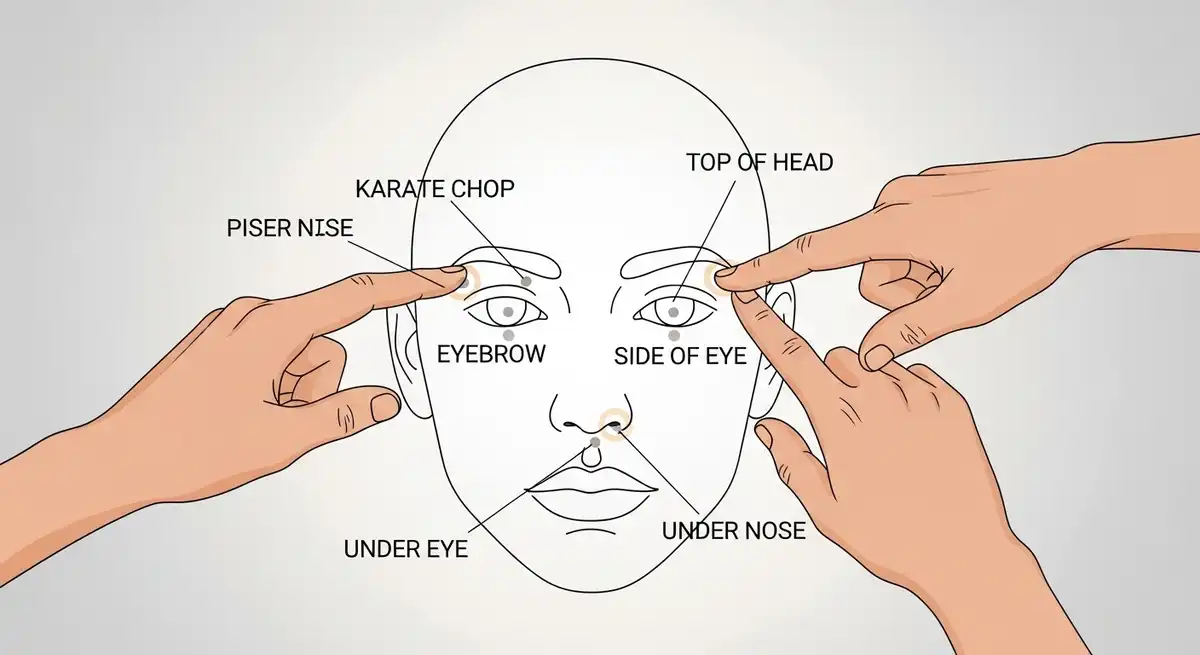
The basic EFT tapping sequence is usually taught as a consistent order of tapping points. It often begins with the side of the hand, sometimes called the karate chop point. This point is used while stating a setup phrase that names the emotional concern and affirms acceptance.
Tapping then continues through points on the face and upper body, including the eyebrow, side of the eye, under the eye, under the nose, chin, collarbone, under the arm, and top of the head. Each point is tapped gently several times while staying focused.
Wellness guidance usually suggests sessions lasting a few minutes. There is no strict rule about duration or frequency. EFT is presented as flexible and adaptable, reinforcing its role as a supportive habit rather than a formal intervention.
Understanding the Tapping Points and Their Context
The tapping points used in EFT correspond to locations recognized in traditional acupuncture systems. In lifestyle education, these points are discussed as areas of sensory stimulation rather than energy flow. This approach helps maintain clarity for a general audience.
The side of the hand point is commonly used to set intention and focus. Facial points are close to sensory nerves and are easy to access. Tapping them is described as providing calming tactile feedback.
The collarbone and underarm points help complete the sequence and support whole-body awareness. Educators emphasize that accuracy is less important than gentle, consistent tapping. This reduces pressure and encourages relaxed participation.
Everyday Applications of EFT in Wellness Routines
Many people include EFT tapping in daily stress awareness routines. It is often used during moments of mental overload, emotional tension, or fatigue. In everyday contexts, tapping is usually practiced privately and quietly.
Working adults may use EFT during short breaks to reset attention. A brief tapping session can act as a pause that supports emotional regulation. This aligns with broader lifestyle guidance that encourages regular rest and reflection.
Parents and caregivers sometimes use EFT to manage daily emotional demands. It is not presented as a solution to parenting challenges, but as a personal self-care practice. Educators stress realistic expectations and personal boundaries.
EFT and Emotional Awareness Rather Than Emotional Control
Responsible EFT education emphasizes emotional awareness rather than emotional suppression. Tapping encourages acknowledging feelings as they are, without trying to eliminate them. This approach supports healthy emotional literacy.
By naming specific emotions during tapping, people may notice patterns in their responses. This awareness can support better self-understanding over time. Educators highlight that awareness itself is a meaningful outcome.
EFT is not framed as a way to control emotions. It is described as a way to relate to emotions with less reactivity. This distinction supports safe and ethical use.
Research Landscape and Evidence-Informed Discussion
A growing number of studies have explored EFT in controlled research settings. Randomized controlled trials have examined self-reported emotional distress and stress markers. Results are often described as encouraging but not definitive.
Meta-analyses have reported moderate to large effect sizes for emotional wellbeing measures. Researchers also note differences in study design and quality. Responsible summaries acknowledge these limitations clearly.
Some institutions have explored EFT as a complementary wellness option. Educational discussions clarify that exploration does not equal universal endorsement. This balanced approach supports trust.
Addressing Skepticism With Transparency
EFT has faced skepticism due to early use of energy meridian language. Critics often question whether results are placebo-related. Responsible content acknowledges these concerns openly.
Some studies suggest that tapping specific points produces different outcomes than tapping randomly. This supports the idea that location may matter, though explanations remain cautious. Educators avoid overstating conclusions.
Transparency about uncertainty is essential. EFT is presented as one option among many, not a guaranteed solution. This tone supports informed choice.
Safety Considerations and Responsible Use
EFT is generally considered low risk when used for everyday emotional awareness. It involves light touch and focused attention. However, emotional discomfort may arise when sensitive topics are addressed.
Wellness educators advise stopping if distress increases. Professional support is recommended for overwhelming or persistent emotional difficulties. EFT should not replace mental health or medical care.
Clear boundaries help ensure responsible use. EFT is positioned as a supportive lifestyle practice, not a diagnostic or therapeutic method.
Parenting, Caregiving, and EFT Contexts
Parents and caregivers often experience ongoing emotional demands. EFT is sometimes used privately as a way to pause and reset. It is not presented as a technique for managing children’s behavior.
Some adults find that practicing self-regulation supports calmer interactions. This benefit comes from personal awareness rather than direct teaching. Consent and appropriateness are emphasized.
For caregivers, EFT is framed as a personal support habit. This reinforces its role as self-care rather than outcome control.
EFT in Digital and Remote Wellness Spaces
EFT guidance is widely available through apps, videos, and online programs. These formats increase access but vary in quality. Users are encouraged to evaluate sources carefully.
Responsible content suggests checking practitioner training and avoiding exaggerated claims. Certified Clinical EFT practitioners follow defined standards, while self-help resources remain informal.
Virtual EFT sessions follow similar structures to in-person sessions. Experiences vary by individual. Educational framing avoids equivalency claims and focuses on accessibility.
Frequently Asked Questions
What is Emotional Freedom Techniques (EFT Tapping)?
Emotional Freedom Techniques is commonly described as a self-help practice combining focused attention with gentle tapping on specific body points. It is often used in wellness routines to support emotional awareness and stress regulation. EFT is not a medical treatment and does not replace professional care.
What is the science behind EFT tapping?
Research on EFT tapping includes studies examining stress markers such as cortisol and self-reported emotional states. Some studies suggest associations with relaxation responses, though mechanisms are still being studied. Findings are presented as supportive evidence, not definitive proof.

Does EFT tapping actually work for anxiety?
EFT tapping is often used by people seeking everyday emotional balance. Research indicates many participants report reduced emotional distress after sessions. Results vary by individual, and EFT is best viewed as a supportive practice rather than a standalone solution.
Where are the nine tapping points for EFT?
The nine EFT tapping points are located on the side of the hand, face, upper chest, under the arm, and top of the head. They are tapped gently in a consistent sequence. Exact placement is less important than comfort and focus.
How many times should you tap on each EFT point?
Most EFT guidance suggests tapping each point several times, often around five to seven taps. There is flexibility, and strict counting is not required. Maintaining awareness of the emotional focus is considered more important.
What do you say during an EFT tapping session?
During EFT tapping, people commonly use acceptance-based statements that acknowledge emotional discomfort. These phrases are meant to support awareness rather than force positive thinking. Language is adjusted to feel honest and respectful.
Is EFT tapping recognized by psychologists?
Some psychologists view EFT as a complementary wellness practice. Acceptance varies across professional communities. It is generally discussed within integrative or lifestyle contexts rather than as a primary therapy.
Can I do EFT tapping on myself for trauma?
Self-use of EFT is generally limited to mild or everyday emotional concerns. For trauma-related experiences, professional mental health support is recommended. EFT should not replace trauma-informed care.
How quickly does EFT tapping reduce stress?
Many people report feeling calmer shortly after tapping sessions. This response is associated with relaxation rather than treatment. Longer-term experiences depend on consistent use and personal factors.
What is the difference between EFT and EMDR?
EFT and EMDR differ in structure and professional use. EFT combines tapping with spoken statements, while EMDR follows structured therapeutic protocols. Each approach should be understood within its appropriate scope.
Editorial Conclusion
Emotional Freedom Techniques is best understood as a structured lifestyle practice that supports emotional awareness and stress regulation. Its combination of focused attention, acceptance-based language, and gentle tapping offers a simple way to pause and reflect. When used responsibly, EFT can sit alongside other wellbeing habits as part of a balanced approach to emotional care.
Medical Disclaimer
This content is for informational purposes only and does not constitute medical advice. It is not intended to diagnose, treat, cure, or prevent any condition. Always consult a qualified healthcare provider before starting any new wellness practice, especially if you have existing health concerns.
For wider background on this, see the American Psychological Association on mindfulness.