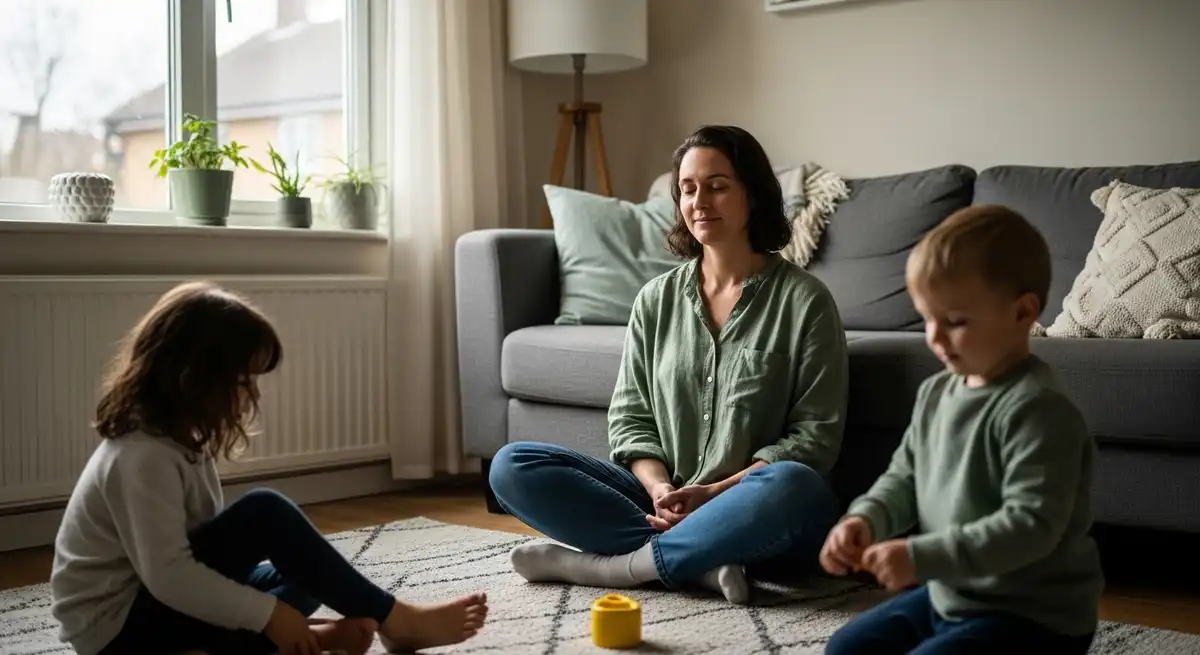
Meditation for parents is often discussed as a response to the constant pace and emotional demands of family life. Parenting commonly involves overlapping responsibilities, frequent interruptions, and continuous decision making, which can quietly wear down emotional reserves over time. Meditation for parents is generally presented as a lifestyle practice that supports awareness and steadiness within real family routines, rather than an escape from them.
In everyday settings, meditation does not require silence, special equipment, or long periods of uninterrupted time. Many wellness educators describe meditation for parents as a way of working with attention in ordinary moments, such as during transitions, household tasks, or brief pauses. This framing allows meditation to fit naturally into family life without adding pressure or unrealistic expectations.
The sections below explain meditation for parents as an educational and supportive practice. The focus remains on clarity, safety, and realism, with no therapeutic claims or promises of specific outcomes. Meditation is presented as one of many lifestyle tools that can support thoughtful engagement and emotional steadiness over time.
Meditation for parents: Understanding Meditation for Parents as a Lifestyle Practice
Meditation for parents is commonly defined as a form of attention training adapted to family environments. It usually involves noticing breathing patterns, bodily sensations, or present experiences while remaining aware of surroundings. This approach emphasizes observation rather than control, allowing parents to relate to thoughts and emotions without immediately reacting to them.
In daily life, meditation for parents often appears in short, informal moments rather than structured sessions. Parents may pause briefly while waiting, walking, or completing routine tasks. These moments are commonly used to reconnect with the present activity and reduce mental overload.
Lifestyle guidance consistently frames meditation as a supportive habit, not a cure or solution. Many people find it helpful for building awareness over time, but experiences vary. The value lies in regular, gentle practice rather than intensity or duration.
Emotional Reactivity and Everyday Parenting Stress
Parenting regularly involves emotionally charged situations, including time pressure, noise, and conflicting needs. Emotional reactivity refers to automatic responses that arise quickly, often before conscious reflection. These reactions are a normal part of human behavior, especially in demanding caregiving roles.
Meditation for parents is often used to notice these reactive patterns more clearly. By paying attention to physical signals such as tightened muscles or shallow breathing, parents can recognize rising stress earlier. This awareness may help create space for more measured responses.
Wellness educators emphasize that reducing reactivity does not mean suppressing emotions. Instead, it involves acknowledging emotional signals while choosing responses thoughtfully. Meditation supports this process by encouraging observation rather than immediate action.
The Role of the Pause in Family Interactions
The pause is a central idea in mindfulness based lifestyle practices. It refers to a brief moment of awareness between an event and a response. For parents, this pause may occur before speaking, correcting behavior, or making decisions during stressful moments.
Meditation for parents supports the development of this pause through repeated attention to breath or sensation. Over time, many people notice reactions forming sooner, which allows for greater choice in how they respond. This can support calmer communication and consistency.
The pause does not remove challenges or emotional reactions. Instead, it offers a chance to align actions with personal values. This alignment is often associated with clearer boundaries and more intentional caregiving.
Nervous System Awareness in Daily Routines
The nervous system plays an important role in how people respond to stress and stimulation. Lifestyle education often explains that slow breathing and focused attention are commonly linked with calming physiological responses. Meditation for parents uses these principles in simple, accessible ways.
Breathing based practices are frequently chosen because they are discreet and adaptable. Parents can practice while standing, sitting, or moving, without drawing attention or interrupting responsibilities. This flexibility supports regular use in busy environments.
Awareness of bodily sensations also supports nervous system regulation. By noticing posture, tension, or movement, parents stay connected to physical cues. This connection can support steadiness during demanding moments without stepping away from caregiving duties.
Habit Stacking and Realistic Practice Integration
Habit stacking involves pairing a new practice with an existing routine. Meditation for parents is often linked to activities such as morning preparation, household chores, or commuting. This approach reduces the effort needed to remember or schedule practice.
By attaching meditation to familiar actions, parents avoid the expectation of creating extra time. This makes the practice more sustainable, especially in households with changing schedules. Over time, meditation becomes part of daily rhythm rather than an added task.
Lifestyle guidance encourages flexibility over rigid routines. When routines shift, the practice adapts instead of stopping. This adaptability helps maintain consistency without self criticism.
Morning Micro Practices for Busy Households
Morning routines often influence how the rest of the day feels, yet mornings can also be rushed and overstimulating. Meditation for parents in the morning is usually brief and simple. Many parents focus on breathing or bodily awareness for a few minutes before the day fully begins.
These short practices are not intended to create perfect calm. Instead, they support orientation and presence before engaging with responsibilities. Even brief moments of awareness can help parents move into the day with greater steadiness.
Lifestyle educators note that interruptions do not cancel practice. Noise, movement, or early waking children are part of real life. Meditation adapts to these conditions rather than requiring ideal settings.
Using Household Chores as Mindfulness Opportunities
Household chores are repetitive and sensory, which makes them suitable for mindfulness practices. Meditation for parents often includes paying attention to physical sensations during tasks such as washing dishes or folding laundry. These activities offer natural anchors for awareness.
By focusing on touch, temperature, or movement, parents reduce mental multitasking. This can ease mental strain and support clarity during busy days. Over time, chores may feel less mentally draining.
Wellness educators explain that this approach does not change the task itself. It changes how the task is experienced. Meditation supports engagement without resistance or distraction.
Moving Meditation Through Everyday Activity
Movement based mindfulness includes walking, cleaning, or gentle stretching with awareness. Meditation for parents often includes these forms because they align with active family environments. Movement keeps the body engaged while attention remains present.
Parents may notice breathing patterns or physical rhythm during movement. This supports grounding without requiring stillness. These practices are accessible across different energy levels and living situations.
Moving meditation emphasizes participation rather than withdrawal. Parents stay involved while supporting personal awareness, which fits naturally with caregiving roles.
On the Go Mindfulness During Transitions
Daily transitions such as school drop offs or commuting can carry emotional weight. Meditation for parents often focuses on grounding techniques during these moments. Attention to posture, breath, or physical contact with objects can support presence.
These brief practices fit naturally into waiting periods. They do not require closing eyes or disengaging from surroundings. Parents often use them to reset between roles or responsibilities.
Lifestyle guidance frames transitions as opportunities for recalibration. Over time, these moments can support steadier emotional flow throughout the day.
Breathing Practices for Heightened Moments
Breathing practices are widely used in mindfulness education because they are accessible and flexible. Meditation for parents often includes slow, structured breathing during moments of heightened stimulation. These practices support steadiness while remaining attentive to children.
Breathing techniques are typically practiced gently and without force. Parents are encouraged to stay within comfortable limits and avoid strain. This supports safe use in everyday situations.
Wellness guidance emphasizes that breathing practices are supportive tools. They do not replace communication or problem solving. Instead, they create conditions for clearer engagement.

Sensory Anchoring in Active Environments
Sensory anchoring involves directing attention to sounds, textures, or physical sensations. Meditation for parents often uses this method when stillness is not possible. Listening to ambient sounds or noticing physical contact can support grounding.
This approach allows parents to remain attentive to children while practicing awareness. It avoids withdrawal or disengagement. Sensory anchoring fits well into shared spaces and busy households.
Lifestyle educators describe this practice as inclusive of the environment rather than separate from it. Surroundings become part of the practice rather than obstacles.
Meditating With Children Present
Many parents assume meditation requires privacy. Meditation for parents acknowledges that children are often nearby. Practices adapt by emphasizing open awareness instead of silence.
Parents may practice while children play safely or engage in activities. Awareness includes sound and movement without resistance. This supports presence rather than frustration.
Wellness guidance encourages realistic expectations. Meditation does not depend on uninterrupted conditions. It depends on gentle attention within existing circumstances.
Identity Shifts in Mindful Parenting
Mindful parenting involves recognizing caregiving itself as a site of practice. Meditation for parents supports a shift from separate practice to integrated awareness. Being present with children becomes part of mindfulness.
This perspective reduces pressure to create extra time. It values relational presence as meaningful engagement. Parents remain involved while cultivating awareness.
Lifestyle educators note that this shift supports sustainability. When practice aligns with daily identity, consistency becomes easier.
Self Compassion as a Foundational Principle
Self compassion involves responding to personal difficulty with kindness rather than criticism. Meditation for parents often includes practices that support gentle self awareness. This can help reduce harsh self judgment during challenging moments.
Parents frequently experience guilt or unrealistic expectations. Self compassion acknowledges these experiences without reinforcing them. Awareness creates space for understanding rather than blame.
Wellness education frames self compassion as supportive and responsible. It aligns with caregiving by supporting emotional steadiness rather than self neglect.
Addressing Perfectionism in Parenting Culture
Perfectionism is common in modern parenting narratives. Meditation for parents counters this by emphasizing acceptance of imperfection. Practices are considered meaningful even when brief or interrupted.
This perspective reduces pressure and mental strain. Parents learn to value effort over outcome. Consistency becomes more achievable without self evaluation.
Lifestyle guidance highlights that imperfection is part of human experience. Meditation supports working with reality as it is.
Building Sustainable Family Routines
Sustainability is central to long term wellness practices. Meditation for parents focuses on small, repeatable actions rather than complex plans. This approach fits changing schedules and energy levels.
Family routines may include brief shared quiet moments or individual practice. These routines support emotional stability across the household. Flexibility allows practices to evolve as needs change.
Wellness educators emphasize communication and adaptability. Practices adjust rather than disappear, supporting long term engagement.
Partnered Awareness and Shared Support
When caregiving is shared, meditation can support communication. Meditation for parents encourages awareness of emotional states during interactions. This awareness supports listening and thoughtful dialogue.
Shared understanding of mindfulness principles may reduce miscommunication. Partners recognize stress signals earlier and respond with clarity. This can support cooperative problem solving.
Lifestyle guidance frames partnered awareness as optional. Individual practice remains valuable even without shared participation.
Modeling Emotional Regulation for Children
Children often learn emotional responses through observation. Meditation for parents supports modeling calm and reflective behavior. Parents demonstrate pausing and regulating responses during challenges.
This modeling occurs naturally without formal instruction. Children absorb behaviors through everyday interactions. Over time, this supports emotional awareness and communication.
Wellness education emphasizes authenticity. Parents do not need to perform calm. They practice awareness openly and realistically.
Boundaries and Presence in Daily Life
Meditation for parents supports clearer awareness of personal limits. Recognizing boundaries helps parents respond consistently without guilt. Clear boundaries support stable caregiving environments.
Presence does not mean constant availability. It means intentional engagement when present. Meditation supports recognizing when rest or space is needed.
Lifestyle guidance emphasizes balance. Sustainable caregiving includes attention to personal awareness alongside family needs.
Cultural and Accessibility Considerations
Meditation practices vary across cultures and traditions. Meditation for parents is presented here in a secular and inclusive manner. It respects diverse backgrounds and belief systems.
Accessibility remains important. Practices require no cost or special equipment. They adapt to different living spaces and family structures.
Wellness education emphasizes choice. Parents select practices that align with personal values and circumstances.

Safety and Responsible Framing
Meditation for parents is discussed as a lifestyle support practice. It does not diagnose or treat mental health conditions. Parents experiencing ongoing distress are encouraged to seek professional support.
Practices are described gently and without physical strain. Parents are advised to remain within comfortable limits. Listening to bodily signals supports safe participation.
Responsible framing maintains trust. Meditation complements professional care rather than replacing it.
Frequently Asked Questions
How do parents typically find time for meditation
Parents often integrate meditation into existing routines instead of setting aside separate time. Short moments during chores, transitions, or mornings are commonly used. This approach allows meditation to fit naturally into daily life without adding extra demands.
Is meditation often associated with reduced parental stress
Meditation is commonly associated with increased awareness and steadier emotional responses. Many parents find that regular practice supports calmer engagement with everyday challenges. Individual experiences vary, and meditation remains a supportive lifestyle practice rather than a guaranteed solution.
Can meditation be practiced while children are present
Meditation can be practiced with children nearby using open awareness or sensory anchoring. Parents remain attentive while noticing breath or physical sensations. This reflects real family environments and supports realistic practice.
What type of meditation is commonly used by parents
Parents often use simple breathing or awareness practices because they adapt easily to busy settings. These approaches work with movement and sound. They are commonly chosen for accessibility and ease.
How long do parents usually practice meditation
Many parents practice meditation for short periods, often between two and ten minutes. Consistency is generally valued more than duration. Short practices are easier to maintain within busy schedules.
Is meditation meant to replace other forms of support
Meditation is not intended to replace professional or community support. It complements other resources and healthy routines. Parents are encouraged to seek additional support when needed.
Can meditation help parents become more patient
Meditation is often associated with increased awareness of emotional responses. This awareness can support more deliberate reactions over time. Results vary and depend on personal circumstances and consistency.
Is meditation suitable for working parents
Meditation adapts well to working parents due to its flexibility. Short practices can be used during commutes or workday transitions. This supports continuity across different roles.
Do parents need prior experience to meditate
Meditation does not require prior experience. Practices are simple and accessible for beginners. Guidance emphasizes gentle exploration rather than mastery.
Can meditation be part of family routines
Meditation can be included in family routines through shared quiet moments or individual practice. Flexibility allows each family to adapt practices to their needs.
Conclusion
Meditation for parents is best understood as a supportive lifestyle practice that fits within everyday family life. It emphasizes awareness, adaptability, and presence rather than performance or outcomes. With gentle, consistent integration, meditation for parents can support thoughtful engagement and emotional steadiness amid daily family demands.
Medical Disclaimer
This content is for informational purposes only and does not constitute medical or mental health advice. It is not intended to diagnose, treat, cure, or prevent any condition. Consult a qualified healthcare or mental health professional regarding personal health concerns.
For wider background on this, see the National Heart, Lung, and Blood Institute on sleep.