

Many mothers move through each day managing visible tasks while also carrying a heavy layer of invisible responsibilities. These unseen duties often include planning, remembering, anticipating needs, and emotionally coordinating family life. The Mom Productivity Blueprint exists as a lifestyle-focused framework that helps simplify to-do lists, reduce mental overload, and support sustainable daily balance without pressure, guilt, or unrealistic productivity ideals.
This framework does not treat productivity as speed or constant output. Instead, it views productivity as the ability to manage attention, energy, and responsibilities in ways that protect wellbeing over time. Wellness educators often describe this as systems-based living, where routines and shared structures replace constant decision-making and mental strain.
At its foundation, the Mom Productivity Blueprint helps mothers shift away from reactive task management. It emphasizes clarity, realistic prioritization, and shared responsibility so daily life feels manageable rather than overwhelming. This approach aligns with wellness editorial standards by remaining educational, supportive, and grounded in everyday realities.
Mom productivity blueprint simplify: Understanding the Mental Load Behind Overwhelming To-Do Lists
Mental load refers to the ongoing cognitive work of planning, organizing, and anticipating household and family needs. Mothers often carry this responsibility silently, managing schedules, remembering deadlines, and tracking emotional dynamics without visible acknowledgment. Over time, this constant mental engagement contributes to fatigue, reduced focus, and emotional depletion.
Wellness research frequently links prolonged cognitive strain with increased stress levels, particularly when responsibilities are continuous and unsupported. This experience does not reflect personal failure but rather highlights how unmanaged systems place pressure on individuals. Recognizing mental load as structural rather than personal creates space for practical change.
The Mom Productivity Blueprint begins by clearly naming mental load. Once responsibilities are identified and written down, they become visible and easier to address collaboratively. Visibility allows tasks to be reassessed, shared, or removed, turning overwhelm into structured awareness.
Why Doing Everything Feels Unsustainable Over Time
Many mothers internalize the idea that being capable means being constantly available. This belief often leads to overcommitment, where rest and recovery are delayed indefinitely. Lifestyle guidance commonly notes that this pattern leads to exhaustion rather than fulfillment.
Burnout is often associated with prolonged imbalance between effort and recovery. When daily routines lack boundaries, emotional and physical resources gradually decline, affecting patience, clarity, and emotional regulation. Reduced capacity does not signal reduced competence, but rather depleted reserves.
The blueprint reframes productivity as sustainability. Instead of encouraging more effort, it promotes better systems that support realistic pacing. This perspective allows mothers to function consistently without framing exhaustion as a personal shortcoming.
Essentialism as a Foundation for Simplifying Tasks
Essentialism focuses on intentionally choosing fewer priorities to protect time and energy. Many daily tasks feel necessary even when their impact is limited, which creates cluttered schedules and diluted attention. Simplification begins by questioning which tasks truly matter.
Lifestyle educators often observe that essentialism helps people separate core responsibilities from optional commitments. This distinction encourages conscious decision-making rather than automatic agreement. Over time, fewer decisions reduce mental fatigue and sharpen focus.
Within the Mom Productivity Blueprint, essentialism supports simpler to-do lists. Tasks are evaluated based on alignment with health, family stability, and core responsibilities. This reduces guilt around unfinished tasks and creates space for rest and connection.
The Role of Boundaries in Everyday Productivity
Boundaries are often misunderstood as restrictions rather than supports. In daily life, boundaries protect time and energy by clarifying availability and responsibility. Without them, productivity becomes reactive and emotionally draining.
Wellness guidance frames boundaries as preventive tools that reduce conflict and confusion. When limits are communicated early, expectations become clearer for everyone involved. This supports smoother coordination at home and work.
The blueprint integrates boundaries directly into task planning. By defining what can realistically be handled, mothers create to-do lists that reflect actual capacity. This supports clarity without confrontation.
Clearing Mental Clutter Through Externalization
Mental clutter forms when unfinished tasks cycle repeatedly in the mind. Cognitive research shows that the brain expends energy holding reminders and unresolved obligations. Writing tasks down allows the mind to release that burden.
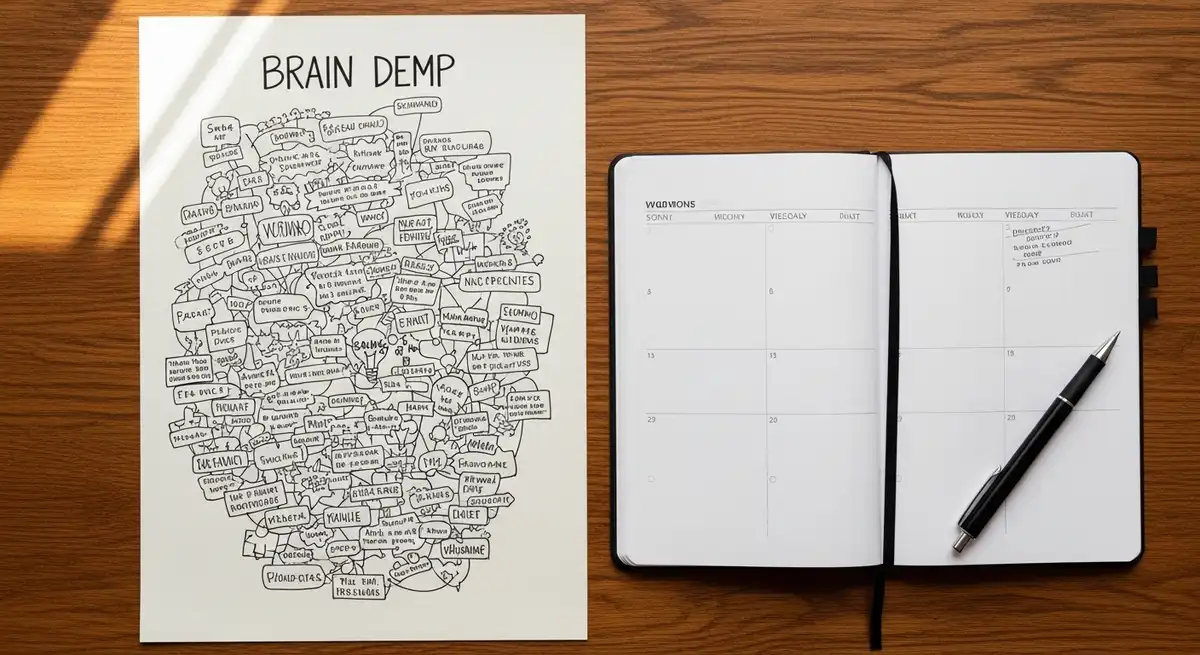
A master brain dump involves listing every responsibility without organizing them initially. This process transfers mental weight onto paper, making it tangible and manageable. Many people notice immediate relief after externalizing tasks.
In the blueprint, externalization acts as a reset. Once tasks are visible, they can be grouped, shared, or eliminated. This reduces anxiety tied to forgetting and supports deliberate planning.
Making Invisible Work Visible and Shareable
Invisible work includes planning, monitoring, and emotional coordination that often goes unnoticed. Examples include tracking school needs, managing appointments, and anticipating family dynamics. Although essential, this work is rarely counted as labor.
Wellness studies frequently show that unacknowledged responsibilities contribute to overload and resentment. Making this work visible helps validate effort and supports fairer distribution. Visibility creates opportunity for collaboration.
The blueprint encourages documenting invisible tasks alongside physical chores. This full picture supports balanced conversations about workload. Over time, shared awareness reduces imbalance and strain.
Using Structured Prioritization to Reduce Overwhelm
Without prioritization frameworks, daily life becomes reactive, driven by urgency rather than importance. This often leaves long-term needs neglected. Structured prioritization brings intention back into planning.
The Eisenhower Matrix categorizes tasks by urgency and importance, helping clarify what deserves attention. This method supports proactive decision-making instead of constant firefighting. Many productivity educators recommend it for complex caregiving roles.
Within the Mom Productivity Blueprint, prioritization aligns effort with impact. High-value tasks receive protected time, while distractions are minimized. This restores control without rigidity.
Delegation as a Productivity Skill
Delegation is often misunderstood as avoidance rather than shared responsibility. In family settings, effective delegation distributes tasks based on capacity and skill. This prevents one person from managing everything mentally.
Wellness educators note that partial delegation often increases stress. When one person retains planning while others execute, mental load remains centralized. Full ownership creates relief.
The blueprint treats delegation as essential. Tasks are assigned with planning and execution included. This reduces cognitive burden and supports healthier household dynamics.
Eliminating Tasks That Do Not Add Value
Not every task deserves space on a to-do list. Some activities consume time without contributing meaningfully to wellbeing. Identifying and removing these tasks frees energy.
Digital distractions are a common example. While occasional use may feel relaxing, habitual scrolling often increases fatigue. Intentional engagement supports healthier routines.
The blueprint recognizes elimination as productive. Removing low-value commitments protects capacity and reduces chronic overload.
Rebalancing Household Responsibilities Fairly
Unequal household responsibility often creates stress. Many systems rely on one person managing planning while others assist. This imbalance increases mental load.
The Fair Play framework introduces complete task ownership, including conception, planning, and execution. This reduces reminders and oversight. Accountability becomes shared.
Incorporating fair division supports balanced responsibility. When time is valued equally, conversations become more respectful. Productivity aligns with relationship wellbeing.
Viewing Time as an Equal Resource
Cultural norms often prioritize paid work over unpaid labor. This hierarchy minimizes caregiving contributions. Recognizing all time as valuable supports healthier expectations.
Wellness research highlights that undervaluing unpaid labor contributes to burnout. When one person’s time is treated as unlimited, imbalance grows.
The blueprint reframes time as shared and finite. This encourages realistic scheduling and mutual respect.
Writing To-Do Lists That Support Action
Vague tasks increase procrastination. Clear, outcome-focused wording improves execution. Specificity reduces mental friction.
Result-oriented descriptions clarify completion. This approach is widely recommended in productivity research. Clear tasks move faster.
The blueprint emphasizes actionable wording. Each item reflects a defined outcome, supporting momentum.
Planning Ahead to Reduce Morning Stress
Decision-making requires energy, and mornings often involve competing demands. Planning ahead reduces cognitive strain.
Writing priorities the night before supports follow-through. Goal-setting research shows written plans improve consistency.
The blueprint uses advance planning as a protective habit. Fewer morning decisions support calmer starts.
Breaking Tasks Into Manageable Segments
Large tasks often delay action. Smaller segments feel approachable and fit unpredictable schedules.
Time-based segmentation aligns with attention span. Short blocks reduce fatigue.
The blueprint encourages incremental task design. This supports steady progress without pressure.
Flexible Time Blocking for Real Life
Rigid schedules often fail in caregiving environments. Interruptions are common. Flexibility supports resilience.
Broad time blocks offer guidance without rigidity. This allows adaptation.
The blueprint balances structure and flexibility. Routines recover more easily when plans change.
Batching Tasks to Improve Efficiency
Task batching groups similar activities to reduce switching. This preserves focus and energy.
Common examples include email windows or meal prep. Many find this simplifies schedules.
The blueprint incorporates batching to streamline routines. Efficiency improves without added effort.
Routine Stacking as Mental Automation
Routine stacking combines small tasks into sequences. This reduces decision-making.
Morning routines and weekly reviews are common examples. Predictability creates stability.
The blueprint uses routine stacking to free mental space. Automation supports balance.
Protecting Personal Time Without Guilt
Personal time supports emotional resilience. Maintaining interests beyond caregiving reduces burnout risk.
Unstructured time allows mental recovery. This separation supports engagement elsewhere.
The blueprint frames personal time as productive. Fulfillment supports capacity.
Distinguishing Restorative Activities From Draining Ones
Not all downtime restores energy. Some distractions increase fatigue.
Restorative activities often involve creativity or movement. Awareness supports healthier choices.
The blueprint encourages evaluating energy impact. Routines become more nourishing.
Weekly Reviews for Sustainable Systems
Regular reviews maintain systems. Without reflection, routines degrade.
Calm review supports constructive adjustment. Emotional distance matters.
The blueprint integrates weekly check-ins. Consistency improves with maintenance.
Adapting When Plans Change
Unpredictability is part of family life. Flexibility supports resilience.
Adaptation reduces frustration. Systems should flex.
The blueprint expects change. Adjustments are normal.

Progress-Oriented Thinking Over Perfection
Perfectionism increases stress. Progress supports sustainability.
Small actions accumulate. Consistency matters.
The blueprint values progress. Balance replaces pressure.
Conclusion
The Mom Productivity Blueprint simplifies to-do lists by addressing mental load, prioritization, and shared responsibility. It treats productivity as lifestyle support, not performance. Through clarity and realistic systems, it supports sustainable balance without pressure.
Frequently Asked Questions
What is the invisible load of motherhood
Invisible load refers to the mental work of planning, remembering, and anticipating family needs. It includes scheduling, emotional coordination, and monitoring tasks that are rarely acknowledged. Making this work visible supports fairer task distribution and reduces cognitive strain.
How do I stop feeling overwhelmed as a mom
Overwhelm often decreases when responsibilities are externalized and prioritized. Writing tasks down, reducing unnecessary commitments, and sharing planning responsibilities are commonly helpful strategies. These approaches support clarity without relying on willpower.
How does the Fair Play system work
The Fair Play system assigns full ownership of tasks, including planning and execution. This reduces the need for reminders and oversight. It supports balanced responsibility and clearer expectations within households.
What is the Eisenhower Matrix method
The Eisenhower Matrix categorizes tasks by urgency and importance. This helps identify priorities and reduce reactive decision-making. It is often used to align daily effort with long-term goals.
How do I make a realistic to-do list
Realistic lists focus on specific actions rather than broad intentions. Limiting daily priorities and breaking tasks into smaller segments improves follow-through. This approach supports consistency without pressure.
Why do moms struggle with mental load
Social expectations often place planning responsibilities on mothers. This creates continuous cognitive engagement. Shared systems and visibility help reduce this imbalance.
Can productivity tools reduce burnout
Productivity tools may support burnout reduction when they focus on simplification and balance. Systems that reduce decision-making and protect rest are commonly associated with improved sustainability.
How do I divide chores fairly
Fair division considers planning and execution, not just physical tasks. Assigning complete ownership supports clarity. Regular reviews help maintain balance.
What is routine stacking
Routine stacking combines small tasks into automatic sequences. This reduces decision fatigue. It is often used to simplify recurring activities.
How long does it take to see changes
Many people notice reduced mental clutter within one to two weeks. Sustainable changes develop over several weeks as routines stabilize. Individual experiences vary based on consistency and context.
Medical Disclaimer
This content is for informational purposes only and does not constitute medical advice. It is not intended to diagnose, treat, cure, or prevent any condition. Consult a qualified healthcare provider before making changes to health, lifestyle, or mental wellbeing routines.
For wider background on this, see the World Health Organization classifies burn-out as an occupational phenomenon.




















