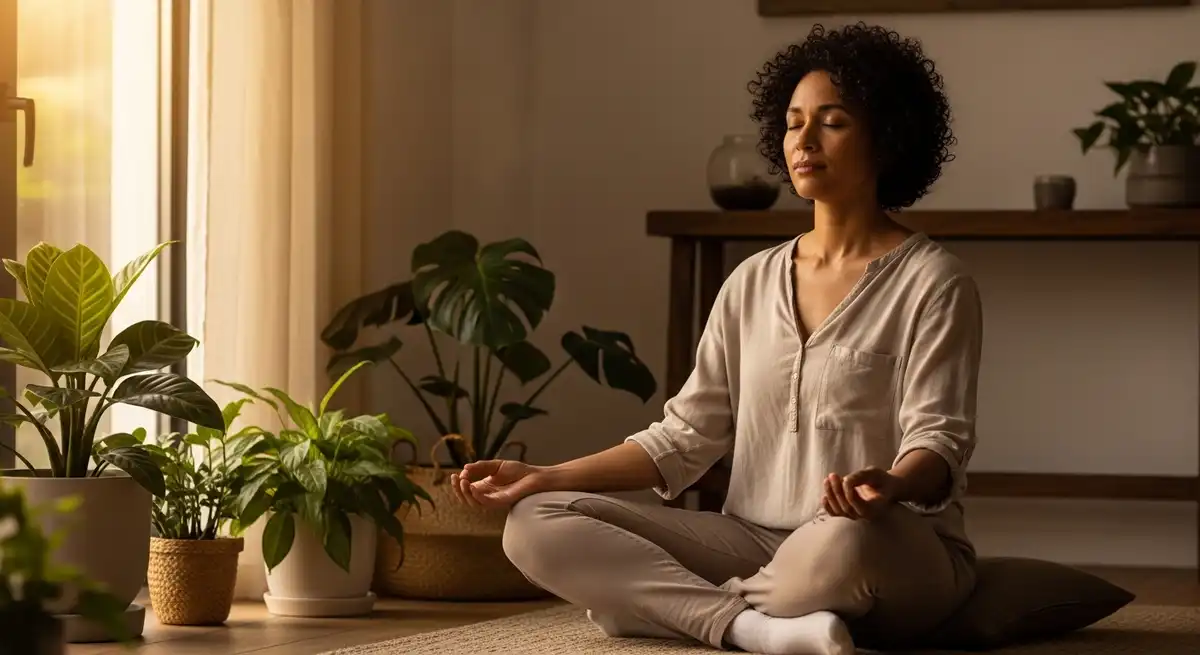
Morning meditation rituals are often described as a simple lifestyle habit, but their relevance comes from how they fit into ordinary mornings shaped by responsibilities, deadlines, and family needs. Many people wake already thinking about tasks ahead, which can create mental tension before the day even begins. A brief, intentional pause early in the morning is commonly used to introduce calm awareness before daily demands start shaping attention.
For working adults and caregivers, mornings often feel like a narrow window of personal space. Even a few minutes of quiet sitting can create a sense of grounding before emails, school routines, or commuting begin. Morning meditation rituals are generally approached as supportive routines, not solutions, helping people begin the day with steadier attention and emotional balance.
Unlike spiritual or therapeutic practices, these rituals are usually framed as practical lifestyle support. Wellness educators often emphasize consistency over depth, noting that regular, gentle practice matters more than intensity. The focus stays on realistic integration into everyday life rather than achieving specific mental states or outcomes.
Why mornings matter for mindfulness practices
Mornings are commonly seen as a favorable time for mindfulness because mental activity is often less crowded immediately after waking. Before conversations, screens, and obligations take over, attention tends to feel softer and more receptive. This quieter mental state can make mindfulness practices feel more approachable, especially for people who struggle to slow down later in the day.
Lifestyle guidance often highlights that habits placed early in the day are easier to maintain. When meditation happens in the morning, it faces fewer interruptions from work or family responsibilities. This predictability supports habit formation, which is a key reason morning meditation rituals are often recommended for beginners.
For parents and caregivers, mornings may be the only consistent personal time available. Even a short practice before others wake can offer a sense of autonomy and emotional steadiness. This makes morning meditation rituals practical rather than idealistic for real household routines.
Understanding stress and the waking nervous system
When the body wakes, it naturally shifts into a state of alertness driven by circadian rhythms. Hormones linked to focus and readiness increase, which helps people start the day but can also feel like tension. Without grounding practices, this alert state may turn into restlessness or anxiety for some individuals.
Morning meditation rituals are often used to observe this transition rather than immediately reacting to it. Sitting quietly allows awareness of breathing, posture, and muscle tension without trying to change them. This simple observation is commonly associated with a calmer relationship to physical sensations during the rest of the day.
Wellness educators usually clarify that meditation does not remove stressors. Instead, it supports how people relate to them. Morning meditation rituals are framed as a way to notice internal states early, which can make later challenges feel less overwhelming.
Morning Meditation Rituals and the Science of Starting Early
Cortisol levels and the morning advantage
Morning meditation rituals often align with the body’s natural cortisol rhythm. Cortisol, often described as a stress hormone, rises after waking to support alertness and energy. When unmanaged, this rise can feel like anxiety or pressure, which is why early mindfulness practices are commonly suggested as a stabilizing routine.
Research in behavioral health suggests that mindfulness practices may support calmer stress responses when practiced consistently. Morning meditation rituals are commonly associated with smoother emotional transitions into daily tasks. The goal is not to suppress cortisol but to relate to bodily alertness with awareness.
Practicing early also reduces exposure to stress triggers before meditation begins. Emails, news, and conversations can intensify mental activity quickly. Morning meditation rituals create a buffer that allows people to start the day with steadier attention.
Theta brainwaves and creative awareness
During the transition from sleep to wakefulness, the brain often passes through slower brainwave patterns linked to relaxed awareness. These states are sometimes associated with creativity and reflective thinking. Morning meditation rituals take advantage of this natural window when attention feels less rigid.
Many people report that sitting quietly soon after waking feels easier than later in the day. Thoughts arise more slowly, making it simpler to notice breathing or sensations. This makes morning practice accessible without forcing concentration.
Over time, practicing during this transition can strengthen awareness skills. Morning meditation rituals are commonly used to support clarity and reflective thinking during daily activities. This effect builds gradually through repetition rather than effort.
Habit formation and neuroplasticity benefits
Habit research suggests that routines anchored to existing daily cues are easier to maintain. Waking up is one of the most reliable cues in daily life. Morning meditation rituals benefit from this predictability, making consistency more achievable.
Repeating the same practice each morning strengthens mental associations between waking and calm attention. Over weeks, this repetition supports habit stability. Wellness educators often note that consistency matters more than session length.
Morning routines also reduce decision fatigue. When meditation is built into the start of the day, fewer choices are required. This simplicity helps protect the habit during busy or stressful periods.
Neuroplasticity and How Meditation Rewires Resilience
Amygdala shrinkage and stress reduction
The amygdala is a brain region involved in processing emotional responses, especially related to threat. Studies in neuroscience suggest that regular mindfulness practices are associated with changes in how this area responds to stress. These findings are often discussed as structural or functional shifts rather than cures or treatments.
Morning meditation rituals are commonly associated with steadier emotional reactions over time. By observing thoughts and sensations without reacting, people practice responding rather than reacting. This skill can influence how emotional signals are handled throughout the day.
Wellness educators emphasize that these changes occur gradually. Consistent practice over weeks or months is usually required. Morning meditation rituals are presented as supportive habits rather than interventions with guaranteed outcomes.
Prefrontal cortex and emotional regulation
The prefrontal cortex supports planning, focus, and emotional regulation. Research in mindfulness suggests that regular meditation is associated with increased activity in this region. These changes are discussed as supportive of attention and decision making rather than performance enhancement.
Practicing meditation early in the day engages these cognitive systems before mental fatigue sets in. Morning meditation rituals may support clearer thinking during work and family interactions. This benefit is often described as steadier focus rather than heightened productivity.
Over time, people may notice greater emotional awareness. This does not eliminate difficult emotions but can make them easier to recognize and manage. Morning practice helps establish this awareness early.

Default mode network and rumination control
The default mode network is associated with mind wandering and repetitive thinking. Excessive activation of this network is linked to rumination. Mindfulness practices are often described as supporting awareness of these thought patterns.
Morning meditation rituals allow people to notice mental habits before they dominate attention. Sitting quietly makes it easier to observe recurring thoughts without engaging them. This awareness supports a calmer mental tone during daily activities.
Wellness educators clarify that thoughts do not stop during meditation. The practice focuses on noticing and gently redirecting attention. This skill becomes useful when mental distractions arise later in the day.
Creating a Meditation Space That Supports Consistency
Small-space meditation setup strategies
A meditation space does not need to be large or separate from daily living areas. Many people practice in a small corner of a bedroom or living room. Consistency of location matters more than size or decoration.
Comfortable seating supports attention by reducing physical strain. A chair, cushion, or folded blanket can work equally well. Wellness guidance often suggests choosing stability over traditional postures.
Keeping the space uncluttered helps reduce distraction. Visual simplicity supports focus without requiring special equipment. Over time, the space becomes associated with calm attention.
Light exposure and circadian rhythm alignment
Natural light in the morning supports healthy circadian rhythms. Sitting near a window allows gentle light exposure without overstimulation. This supports alertness while maintaining a calm environment.
When natural light is unavailable, warm artificial lighting is often preferred. Harsh lighting can increase tension. Soft lighting supports relaxed awareness during meditation.
Timing remains flexible. Some people meditate immediately after waking, others after washing or hydrating. Morning meditation rituals adapt to individual routines rather than fixed rules.
Sensory anchors for grounding practice
Simple sensory cues can support focus during meditation. Natural elements like plants or subtle scents are commonly used. These cues ground attention without overwhelming the senses.
The purpose of sensory anchors is gentle support. Strong fragrances or loud sounds are usually avoided. Minimal stimulation helps maintain calm awareness.
Over time, these cues become associated with meditation. Sitting in the same space with familiar sensory elements can make settling easier. This association supports consistency.
Breathwork Techniques for Morning Energy and Calm
Diaphragmatic breathing for nervous system balance
Diaphragmatic breathing involves breathing deeply into the abdomen rather than shallow chest breathing. This pattern is commonly associated with calmer nervous system activity. It is often used as a foundation for meditation.
During morning meditation rituals, attention is placed on the natural rise and fall of the abdomen. This supports awareness without forcing breath control. Practicing for a few minutes can prepare the mind for stillness.
Wellness educators emphasize gentle breathing. Forcing deep breaths can create tension. Natural, relaxed breathing is usually recommended.
Dirgha pranayama for full lung capacity
Dirgha pranayama, sometimes called three-part breathing, involves expanding the breath through different areas of the lungs. This technique is often used to support alert calmness. It is practiced slowly and intentionally.
The breath fills the abdomen, rib cage, and upper chest in sequence. Exhalation follows the same order. This pattern supports awareness of breathing mechanics.
This technique is usually practiced briefly in the morning. It is not meant to replace calm breathing but to prepare for stillness. Comfort and ease remain priorities.
Kapalabhati contraindications and safe use
Kapalabhati is a more active breathing technique involving forceful exhalations. It is traditionally used to support alertness and digestion. Wellness guidance emphasizes careful use and proper instruction.
This technique is not recommended for everyone. Individuals with certain medical conditions are advised to consult qualified professionals. Safety and moderation are emphasized.
In morning meditation rituals, Kapalabhati is usually optional and brief. It is often followed by calming practices. This balance helps maintain emotional steadiness.
Closing Paragraph
Morning meditation rituals are best understood as gentle lifestyle practices that support awareness at the start of the day. By creating a small pause before responsibilities begin, many people experience steadier attention and emotional balance. When practiced consistently and flexibly, morning meditation rituals fit naturally into everyday life without pressure or unrealistic expectations.
Frequently Asked Questions

What is the best time for morning meditation rituals
Morning meditation rituals are commonly practiced within the first thirty minutes after waking. This timing supports consistency and takes advantage of quieter mental states. Many people adjust the exact time based on household or work routines.
How long should morning meditation sessions be
Morning meditation rituals often last three to ten minutes for beginners. Short sessions reduce resistance and support consistency. Duration may increase naturally, but longer practice is not required for benefit.
Can morning meditation be practiced while lying down
Morning meditation rituals can be practiced lying down if sitting is uncomfortable. Alertness may be lower in this position. Many people prefer sitting to support wakefulness.
Does morning meditation replace professional mental health care
Morning meditation rituals are considered supportive lifestyle practices. They do not replace professional mental health care. Individuals experiencing persistent distress are encouraged to seek qualified support.
Is guided meditation suitable for mornings
Guided morning meditation rituals are often helpful for beginners. Audio guidance provides structure and reassurance. Some people alternate guided and silent practice.
Can parents realistically maintain morning meditation routines
Morning meditation rituals for parents are often brief and flexible. Practice times may change based on family needs. Even short pauses are commonly viewed as supportive.
What should be the focus during meditation
Morning meditation rituals typically focus on breathing, body sensations, or simple intentions. These anchors are accessible and neutral. Returning attention gently is central to practice.
How soon do people notice changes from meditation
Many people notice immediate calm after morning meditation rituals. Broader changes in awareness often develop over weeks. Experiences vary between individuals.
Is meditation appropriate for busy work schedules
Morning meditation rituals are often chosen because they fit busy schedules. Short practices before work are easier to maintain. This supports consistency.
Can meditation be combined with other morning routines
Morning meditation rituals are frequently combined with journaling or stretching. These combinations support integration into daily life. Simplicity remains important.
Medical Disclaimer
This content is for informational purposes only and does not constitute medical or mental health advice. It does not replace professional care. Consult a qualified healthcare provider before starting any new wellness practice, especially if you have existing medical conditions or concerns.
For wider background on this, see the National Heart, Lung, and Blood Institute on sleep.