

Burnout rarely appears overnight and is more often experienced as a slow reduction in energy, patience, and emotional availability. Many working adults and caregivers notice this shift during ordinary routines, when responsibilities continue to grow but recovery time quietly disappears. Wellness educators commonly describe burnout as a lifestyle pattern shaped by repeated overextension rather than a personal shortcoming.
Daily schedules often reward constant availability, which can make early signs of strain feel normal. Over time, this expectation trains people to ignore fatigue until motivation and wellbeing noticeably decline. Learning how burnout develops supports earlier, calmer adjustments that protect long-term balance.
This article explains burnout as an everyday lifestyle issue using clear, non-clinical language. The goal is to support awareness, routine balance, and realistic self-management without offering medical advice or guarantees. All information reflects public-facing wellness education aligned with editorial health standards.
Prevent burnout starts through: Understanding Burnout as a Lifestyle Pattern
Burnout is widely recognized as a response to prolonged stress exposure, particularly in work and caregiving roles. Public health organizations describe it as an occupational phenomenon rather than a medical diagnosis. This framing helps people see burnout as a signal of imbalance instead of a personal failure.
In daily life, burnout often forms when demands increase while rest, autonomy, and support remain limited. Many people manage busy periods well in the short term, but sustained imbalance slowly erodes emotional reserves. Seeing burnout as a pattern encourages practical changes before exhaustion deepens.
Lifestyle educators emphasize that burnout reflects systems, expectations, and routines interacting over time. When recovery is repeatedly postponed, even capable and motivated people feel depleted. Prevention focuses on adjusting structures rather than pushing harder.
Common Dimensions of Burnout Experience
Burnout is commonly described through three overlapping experiences that develop gradually. Emotional exhaustion appears first and involves feeling drained even after rest. This can affect patience, focus, and emotional regulation during ordinary tasks.
Cynicism or detachment often follows exhaustion and shows up as emotional distance from work or caregiving roles. Tasks that once felt meaningful may begin to feel heavy or irritating. This reaction often reflects self-protection rather than disengagement.
Reduced effectiveness typically appears later and includes difficulty concentrating, slower thinking, and lower confidence. These changes are frequently mistaken for incompetence instead of fatigue. Recognizing this progression supports earlier, more compassionate responses.
Distinguishing Burnout From Clinical Conditions
Burnout can resemble clinical conditions such as depression because both involve low energy and withdrawal. A key difference is that burnout usually centers on specific roles and may improve with rest or workload changes. Clinical conditions often persist across life areas and over longer periods.
This distinction matters for safety and appropriate care. Persistent distress that does not ease with reasonable lifestyle changes deserves professional evaluation. Educational content cannot replace assessment by qualified healthcare providers.
Lifestyle education focuses on awareness rather than diagnosis. When symptoms feel overwhelming or unrelenting, seeking professional support is widely encouraged. Clear boundaries between education and care protect readers and maintain accuracy.
The Role of Chronic Stress in Burnout Development
Chronic stress differs from short-term pressure because it remains unresolved and ongoing. Repeated stress responses without adequate recovery keep the body and mind in a heightened alert state. Over time, this reduces emotional flexibility and physical resilience.
Many people adapt by pushing harder rather than slowing down. This approach often deepens fatigue instead of resolving it. Stress becomes background noise rather than a clear signal to adjust.
Understanding stress as cumulative supports earlier lifestyle changes. Small, consistent adjustments often reduce total stress load more effectively than dramatic interventions. Prevention emphasizes pacing and recovery rather than eliminating responsibility.
The Job Demands and Resources Framework Explained
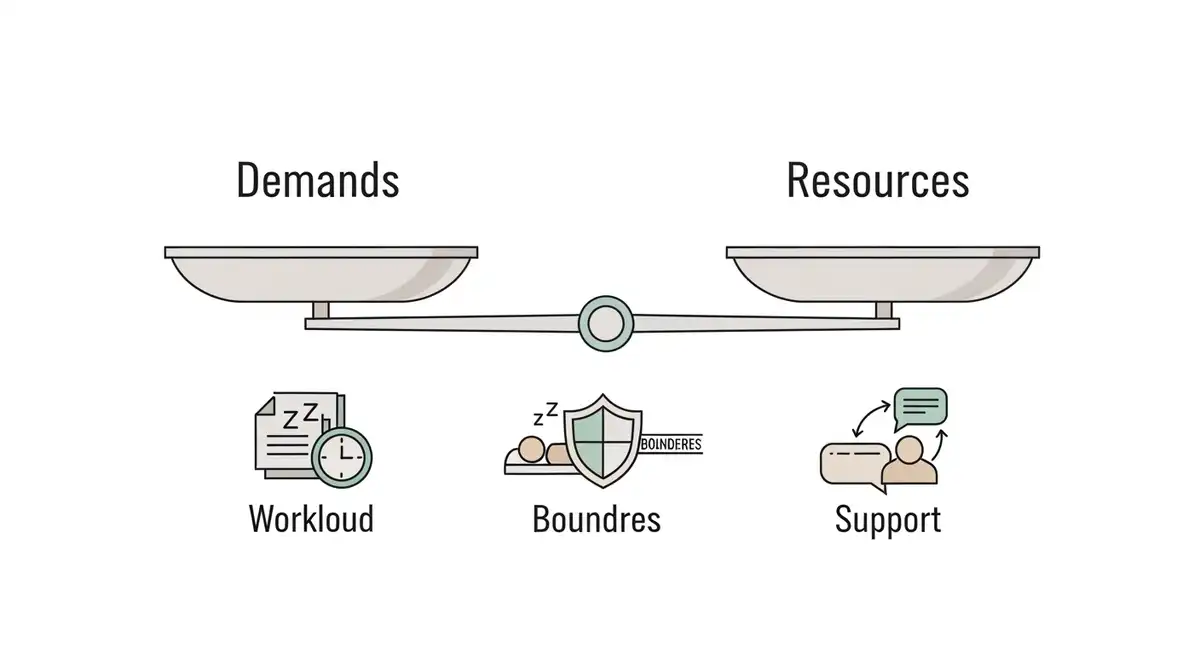
Wellness and organizational research often explain burnout using the job demands and resources framework. Job demands include workload, time pressure, emotional labor, and unclear roles. Resources include autonomy, feedback, social support, and recovery opportunities.
Burnout risk rises when demands consistently outweigh available resources. Even meaningful work becomes draining without support or control. This model shifts attention away from endurance and toward balance.
The framework highlights multiple prevention points. Increasing resources can be as helpful as reducing demands. This balance-focused view aligns well with everyday lifestyle strategies.
Applying Balance Principles to Everyday Routines
In daily life, balance involves regularly noticing how energy is spent and restored. High-demand periods benefit from intentional recovery before and after intense tasks. Without this planning, fatigue accumulates quietly.
Many people find it helpful to identify which activities drain energy most and which gently restore it. Restoration often includes rest, quiet time, or light movement rather than elaborate routines. These practices support sustainability.
Routine reflection allows early correction instead of crisis response. Lifestyle balance shifts with seasons, family needs, and work cycles. Flexibility remains essential.
Early Cognitive and Emotional Warning Signs
Early burnout signals often appear in thinking and emotional responses. Difficulty concentrating, decision fatigue, and increased irritability are common early indicators. These changes usually emerge before physical exhaustion becomes obvious.
Emotionally, people may feel less patient or less connected to their roles. Motivation may decline even when commitment remains strong. These signs reflect overload rather than disengagement.
Recognizing these signals early allows gentler adjustments. Ignoring them often leads to overcompensation through longer hours. Awareness supports timely boundary setting and rest.
Physical Signals Linked to Prolonged Stress
Physical cues often accompany emotional strain during early burnout stages. Common experiences include headaches, muscle tension, digestive discomfort, and disrupted sleep. These signals reflect ongoing stress responses in the body.
Sleep disruption deserves particular attention because it both reflects and worsens fatigue. Reduced sleep quality affects mood and concentration. Over time, this cycle can deepen exhaustion.
Lifestyle education encourages listening to physical cues without alarm. Persistent or severe symptoms should be discussed with healthcare professionals. Early attention supports safety.
Behavioral Changes That Signal Strain
Behavioral shifts often become visible to others first. Withdrawal from social interaction, reduced enthusiasm, and irritability are common signs. Overworking without breaks can also indicate underlying strain.
These behaviors usually reflect coping attempts rather than intentional disengagement. People may narrow focus to conserve energy. Without adjustment, this pattern can intensify.
Noticing behavioral changes provides useful feedback. Responding with support and realistic changes helps restore balance. Ignoring them increases burnout risk.
The Concept of Preventive Self-Care
Preventive self-care focuses on maintaining baseline wellbeing rather than recovering from collapse. It emphasizes consistency, simplicity, and realistic integration into daily life. Wellness educators often describe self-care as routine maintenance.
Short, regular practices tend to be more sustainable than occasional intense efforts. These practices support emotional steadiness and stress regulation. Over time, consistency builds resilience.
Preventive self-care avoids extremes and guilt. It adapts to changing schedules and responsibilities. This approach suits busy family and work lives.
Short Daily Practices and Time Protection
Many people find that short daily practices support balance when done consistently. Ten to fifteen minutes of quiet activity or gentle movement can interrupt constant stimulation. These pauses are commonly associated with calmer focus.
Protecting time matters more than duration. Scheduling brief recovery periods helps ensure they are not repeatedly postponed. This consistency supports nervous system settling.
Short practices reduce barriers to participation. They fit varied lifestyles and reduce pressure to perform. Accessibility supports long-term use.
Sleep as a Foundational Lifestyle Support
Sleep plays a central role in emotional and cognitive wellbeing. Irregular or insufficient sleep amplifies stress responses and reduces resilience. Over time, this increases vulnerability to burnout.
Lifestyle guidance often highlights protecting sleep routines as foundational. Regular sleep and wake times support internal rhythms. Even small improvements can stabilize energy.
Sleep challenges have many causes. Persistent difficulties should be discussed with healthcare professionals. Education supports awareness rather than treatment.
Nutrition and Energy Stability in Daily Life
Nutrition influences energy levels and mood stability across the day. Skipped meals or highly processed foods may contribute to energy swings. Balanced nourishment supports steadier functioning.
Lifestyle education avoids rigid rules and focuses on practicality. Simple, accessible meals often support consistency better than complex plans. This respects diverse cultural contexts.
Nutrition guidance remains general. Individual needs vary and medical conditions require professional input. Education supports informed choices.
Movement as Gentle Stress Regulation
Regular movement is commonly associated with stress regulation and emotional balance. Gentle activity supports circulation and reduces physical tension. Intensity is not required to be helpful.
Many people integrate movement through walking, stretching, or household tasks. These options are often more sustainable during busy periods. Enjoyment supports consistency.
Movement choices should respect physical limitations. Consulting healthcare providers before major changes supports safety. Lifestyle education emphasizes adaptability.
Boundaries as a Protective Lifestyle Tool
Boundaries help manage how energy and attention are distributed. Examples include limiting work communication outside set hours or protecting personal time. Boundaries support recovery and reduce constant alertness.
Setting boundaries often involves communication and adjustment. Clear expectations reduce misunderstanding. Over time, boundaries support wellbeing and effectiveness.
Boundaries are flexible rather than rigid. They adapt as responsibilities change. This flexibility supports sustainability.
Quiet Thriving as a Sustainable Work Philosophy
Quiet thriving focuses on steady engagement without constant overextension. It emphasizes aligning effort with values and capacity. This differs from withdrawal-based coping.
People practicing quiet thriving prioritize maintaining energy over maximizing output. This approach supports longevity in demanding roles. Growth becomes sustainable.
Quiet thriving involves thoughtful participation rather than disengagement. It aligns well with burnout prevention and realistic ambition.
Job Crafting Through Small Adjustments
Job crafting involves small changes that align tasks with strengths. Examples include adjusting workflows or task timing. These changes often increase engagement without role changes.
Micro-adjustments restore a sense of control and meaning. Even small autonomy improvements support motivation. This reduces emotional strain.
Job crafting works within existing roles. Its practicality supports wider use. Sustainability remains the focus.
Relational Support and Connection
Supportive relationships buffer stress and reduce isolation. Connection with colleagues, friends, or family supports emotional regulation. Shared understanding reduces emotional load.
Support does not require problem solving. Presence and listening often provide relief. This aligns with everyday contexts.
Intentional connection supports resilience. Isolation increases burnout risk. Community remains protective.
Cognitive Reframing in Everyday Contexts
Cognitive reframing involves adjusting interpretation rather than changing circumstances. In wellness education, this refers to perspective shifts, not therapy. Viewing work as contributing to shared goals can reduce cynicism.
Reframing does not deny difficulty. It adds context and meaning. This supports emotional balance.
Cognitive approaches are optional and supportive. They complement practical changes. Education avoids clinical claims.
Communication as Early Prevention
Early communication about workload supports prevention. Sharing observable impacts keeps discussions practical. Documentation supports clarity.
Collaborative conversations focus on solutions. Adjustments often prevent escalation. This supports wellbeing and performance.
Communication works best before crisis. Early dialogue reduces stigma. Shared responsibility increases success.
Organizational Culture and Burnout Risk
Workplace culture strongly influences burnout risk. Norms around availability and breaks shape daily experience. Supportive cultures reduce chronic stress.
Organizations play a role in prevention. Training, realistic workloads, and feedback matter. Individual coping alone is insufficient.
Advocacy for healthy systems benefits everyone. Cultural shifts support long-term wellbeing.
Parenting, Caregiving, and Burnout Vulnerability
Parents and caregivers often face overlapping demands. Emotional labor and time scarcity increase strain. Recovery time is limited.
Lifestyle education recognizes these pressures without judgment. Small adjustments matter more than perfection. Support networks are crucial.
Prevention emphasizes compassion and flexibility. Rigid expectations increase stress. Adaptable routines support sustainability.
Managing Expectations in Busy Life Stages
Life stages influence capacity and priorities. Caregiving or transition periods require adjusted expectations. Recognizing this reduces self-criticism.
Wellness guidance encourages realistic standards. Productivity fluctuates across seasons. Acceptance supports balance.
Expectation management protects wellbeing. Chronic dissatisfaction decreases. Sustainability improves.
Integrating Mindfulness Safely in Daily Life
Mindfulness in lifestyle education refers to present-moment awareness without judgment. It is often used to notice stress signals earlier. This supports informed adjustment.
Practices are brief and informal. Examples include noticing breathing or physical sensations. These practices support awareness.
Mindfulness remains optional and non-therapeutic. It complements routines. Education avoids exaggerated claims.
Mindfulness for Working Parents
Working parents experience divided attention and multitasking. Mindfulness may support noticing fatigue earlier. Awareness allows gentler pacing.
Short moments fit busy schedules. Mindfulness integrates into daily tasks. It does not require isolation.
This approach respects constraints. It supports balance rather than perfection. Practicality matters.

Preventive Planning and Flexibility
Preventive planning involves anticipating high-demand periods. Identifying stressors supports preparation. This reduces overload.
Plans remain flexible. Adjustment is expected. Adaptability supports resilience.
Planning builds confidence and calm. Reactive coping decreases. Preparation supports balance.
Editorial Perspective on Professional Support
Educational content encourages professional support when needed. Persistent distress deserves qualified care. Lifestyle guidance complements services.
Clear boundaries protect readers. Non-clinical language supports safety. Editorial standards prioritize accuracy.
Seeking support reflects responsibility. It aligns with wellbeing values. Education supports informed choice.
Expanded Frequently Asked Topics
The five stages of burnout explained
Burnout is often described as moving through enthusiasm, mounting stress, chronic strain, burnout, and habitual exhaustion. These stages reflect gradual changes rather than fixed categories. Recognizing early stages supports lifestyle adjustments before exhaustion becomes deeply rooted.
Approaches commonly used to reduce burnout risk
Burnout risk is often addressed through workload balance, protected rest, and supportive routines. Many people find boundary setting and regular recovery helpful. These approaches focus on sustainability rather than eliminating responsibility.
Typical experiences during pre-burnout phases
Pre-burnout often includes persistent tiredness, irritability, and reduced focus. These experiences signal overload rather than disengagement. Early response supports balance and prevents escalation.
General differences between burnout and depression
Burnout is usually linked to specific roles and may ease with rest or change. Depression often affects broader life areas and lasts longer. Persistent symptoms require professional evaluation.
Recovery timelines discussed in wellness education
Recovery timelines vary depending on severity and support. Mild burnout may ease within weeks after adjustments. Deeper exhaustion may take longer and benefit from professional guidance.
Leave and rest considerations in burnout contexts
Some people use leave or reduced workload to support recovery. Policies vary by workplace. Professional consultation helps determine appropriate steps.
Self-care practices often discussed for prevention
Common practices include sleep protection, gentle movement, and quiet time. These support baseline wellbeing. Consistency matters more than intensity.
Communicating workload strain professionally
Clear communication focuses on observable impacts rather than emotions. Documentation supports productive discussion. Early dialogue prevents escalation.
Recognition of burnout in health classifications
Burnout is recognized as an occupational phenomenon rather than a medical diagnosis. This emphasizes environmental factors. Persistent distress requires professional care.
Situations that warrant professional consultation
Professional consultation is recommended when symptoms persist or worsen. Severe exhaustion or emotional distress deserve attention. Education supports awareness, not diagnosis.
Conclusion
Burnout develops gradually through sustained imbalance rather than sudden failure. Understanding how to prevent burnout before it starts involves awareness, routine support, and realistic expectations. Small, consistent lifestyle adjustments support resilience over time. Compassion and practicality help sustain meaningful work and caregiving.
Medical Disclaimer
This content is for informational purposes only and does not constitute medical advice. It does not diagnose, treat, cure, or prevent any condition. Consult a qualified healthcare provider before making health, lifestyle, or routine changes, especially if you have existing medical or mental health concerns.
For wider background on this, see the World Health Organization classifies burn-out as an occupational phenomenon.
Keep reading
- How to Avoid Burnout in Corporate Jobs: A Practical Guide for Sustainable Work Life
- Workplace Burnout Recovery: Steps to Reclaim Your Energy
- How to Avoid Burnout Without Quitting Everything
This is the prevention end of it. If you are already past that, How to Recover from Burnout is the thirty-day plan written for someone who cannot take three months off.