
Modern motherhood often collides with productivity advice built for predictable schedules and uninterrupted focus. Many mothers move through days filled with shifting needs, emotional labor, and constant recalibration, yet are still measured against rigid systems. This article presents a grounded, lifestyle based productivity framework that supports busy moms without pressure, hype, or unrealistic expectations.
Productivity in parenting contexts is less about efficiency and more about sustainability. Daily life involves caregiving, paid work, household management, and emotional presence, often at the same time. When productivity is framed as a supportive lifestyle structure rather than a performance metric, it becomes calmer, more realistic, and easier to maintain.
The Productivity Formula for Busy Moms is not a rigid system or a promise of control. It is a set of practical principles focused on energy awareness, reduced decision strain, stable routines, and realistic expectations. These ideas are commonly used as everyday lifestyle supports that help mothers function with greater clarity and less internal pressure.
Productivity formula busy moms: Why Traditional Time Management Often Fails Mothers
Conventional time management systems assume stable conditions, uninterrupted task blocks, and predictable outcomes. Parenting rarely follows those assumptions, which means even well planned schedules can collapse without warning. When systems fail repeatedly, the result is often frustration rather than improved organization.
Many mothers experience days filled with activity yet feel little sense of completion. This pattern is closely tied to constant interruptions, emotional caregiving, and mental tracking that traditional productivity models overlook. Without accounting for these realities, time based systems can increase stress instead of reducing it.
When productivity advice does not reflect lived caregiving experiences, it often leads to self blame. Wellness educators frequently note that this gap encourages personal criticism rather than system adjustment. A more effective approach begins by accepting that motherhood requires different productivity foundations.
Understanding Mental Load in Everyday Parenting
Mental load refers to the ongoing effort of remembering, planning, anticipating, and coordinating daily life. It includes tracking appointments, emotional needs, household supplies, and future responsibilities that may never appear on a written list. For many mothers, this mental effort runs continuously in the background.
Cognitive psychology research links sustained mental load with reduced focus and faster fatigue. When productivity systems ignore this invisible work, they often fail to deliver relief. Addressing mental load means recognizing it as real effort rather than treating overwhelm as a personal weakness.
Reducing mental load usually involves externalizing information and simplifying planning. Shared calendars, visible reminders, and fewer daily decisions can ease cognitive strain. These adjustments are widely used as practical lifestyle supports rather than formal productivity techniques.
Redefining Productivity Through Values and Priorities
Many productivity systems reward volume rather than relevance. A values based perspective shifts attention toward what truly matters within a family’s current season. Productivity becomes about alignment with priorities instead of constant completion.
Values function as a steady reference point rather than a fixed destination. Unlike goals, which change or expire, values guide decisions even when plans shift. Behavioral research suggests that value aligned choices reduce internal conflict and support consistency under stress.
When tasks align with values, decision making becomes simpler. Energy is directed toward what matters most, while non essential tasks lose urgency. This approach allows flexibility without guilt and supports sustainable productivity during demanding periods.
Energy Management as a Lifestyle Support Tool
Energy management focuses on preserving functional capacity rather than maximizing output. It recognizes that physical, mental, emotional, and reflective energy fluctuate daily. Productivity becomes more reliable when routines protect energy instead of consuming it.
Physical energy is influenced by sleep, nourishment, hydration, and movement patterns. Mental energy depends on cognitive load and information intake. Emotional energy relates to boundaries and relationship demands, while reflective energy includes moments of quiet that support perspective.
Balancing energy areas does not require intensive routines. Small, consistent habits often make the biggest difference. Many people find that protecting energy stabilizes productivity more effectively than adding complex planning tools.
Mode Management and Reduced Task Switching
Mode management involves grouping similar activities and limiting frequent role changes. Switching rapidly between caregiving, work tasks, and household duties places strain on attention. Cognitive research associates frequent task switching with reduced accuracy and increased fatigue.
Simple transitions help signal role changes. Adjusting lighting, location, or posture can mark the shift from one mode to another. These cues support focus by reducing the mental cost of constant adjustment.
Mode management does not eliminate interruptions, but it reduces unnecessary switching. This approach is flexible enough for parenting life while still supporting steadier progress across responsibilities.
The Role of White Space in Daily Routines
White space refers to intentional gaps within schedules that are not assigned specific tasks. These buffers allow room for unexpected needs and reduce the emotional impact of disruptions. Lifestyle guidance often emphasizes white space as a stabilizing factor.
Without buffer time, minor disruptions can derail entire plans. White space absorbs variability without creating a sense of failure. This flexibility supports emotional steadiness and reduces pressure to constantly recover lost productivity.
White space also allows brief recovery and reflection. Over time, this practice helps routines remain supportive rather than restrictive.
Task Batching for Household Stability
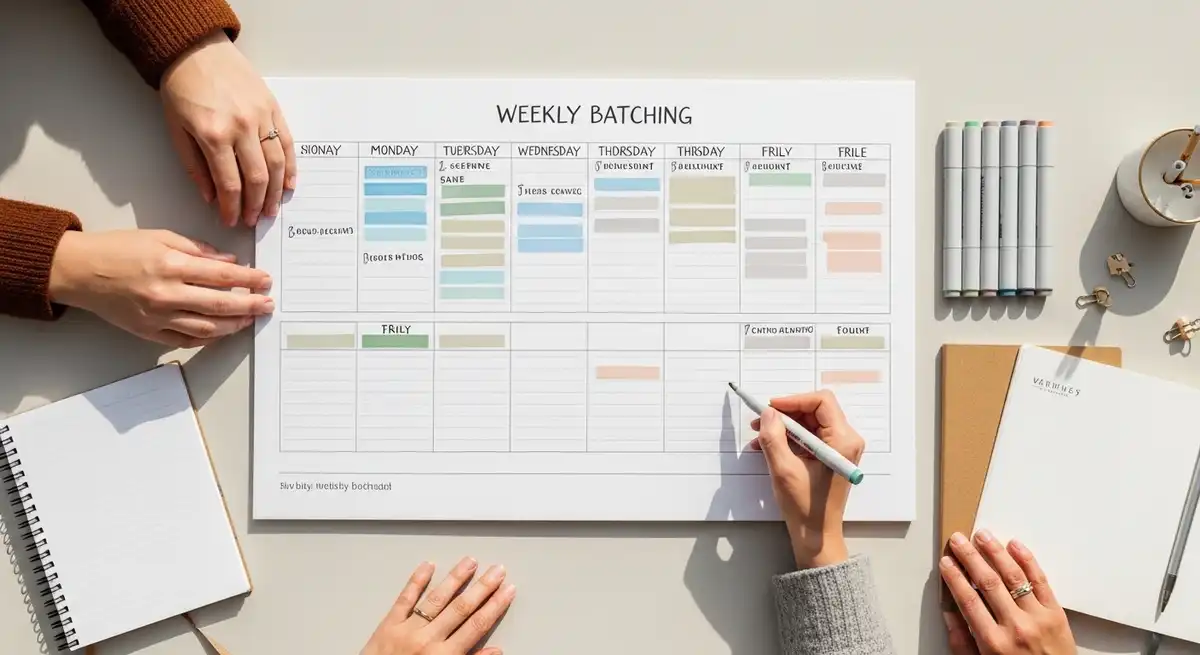
Task batching means grouping similar tasks and completing them together. Common examples include meal planning, laundry, and administrative work. This approach reduces repeated decision making and task initiation effort.
Behavioral science research links batching with lower decision fatigue. Assigning tasks to specific periods removes the need to constantly choose what comes next. Predictability supports follow through even on low energy days.
Batching does not require perfection. It provides a loose structure that supports progress without constant reassessment. Many families use simplified batching as an ongoing household management tool.
Managing Decision Fatigue in Parenting Life
Decision fatigue develops when repeated choices drain mental clarity and patience. Parenting involves a high number of daily decisions, many carrying emotional weight. Over time, this can affect focus, mood, and responsiveness.
Reducing decision fatigue often involves simplifying recurring choices. Rotating meals, limiting clothing options, and standardizing routines help preserve mental energy. These practices are commonly used to protect attention for higher priority decisions.
Limiting information intake also matters. Constant exposure to advice and comparison increases cognitive load. Reducing unnecessary input is a practical lifestyle adjustment that supports clarity.
External Systems as Cognitive Supports
External systems act as extensions of memory and organization. Calendars, whiteboards, shared lists, and reminder tools reduce reliance on internal tracking. This approach is especially helpful when attention is already stretched.
Executive function research shows that visible cues improve task initiation and follow through. External systems provide prompts that support action without requiring constant mental effort.
Effective systems are simple and accessible. Consistency matters more than complexity. Centralized information reduces cognitive strain and makes productivity more manageable.
Neurodiversity Inclusive Productivity Practices
Neurodiversity inclusive strategies acknowledge that attention and executive function vary widely. Practices such as body doubling, visual cues, and short task intervals support focus without demanding sustained concentration. These methods are commonly used as everyday supports.
Body doubling involves working alongside another person, either physically or virtually. Shared presence provides gentle accountability and structure. Many people find this helps with task initiation and completion.
Short task intervals reduce resistance. Committing to brief effort periods lowers the barrier to starting. These strategies emphasize accessibility rather than performance.
Prioritization Frameworks for Household Tasks
Simple prioritization frameworks help distinguish between urgent and important tasks. Tools like the Eisenhower Matrix categorize tasks based on urgency and relevance. This structure supports intentional decision making.
Using prioritization frameworks weekly reduces reactive task management. Important tasks receive attention before becoming emergencies. This approach supports stability rather than constant urgency.
These frameworks adapt easily to household contexts. They provide clarity without rigid enforcement and help guide planning during busy periods.
Physical Environment and Mental Clarity
Physical surroundings influence attention and mental load. Cluttered surfaces increase visual stimulation and distraction. Lifestyle organization guidance often focuses on managing surfaces rather than entire rooms.
The fifteen minute reset approach clears one area at a time. Items return only if they belong there. This method supports clarity without overwhelming effort.
Preventing re accumulation involves mindful intake. The one in one out habit helps maintain balance. These practices support ongoing stability rather than periodic overhauls.
Reflection as a Productivity Support
Reflection allows observation without judgment. Brief daily or weekly reflection helps identify patterns and adjust routines. Organizational psychology research links reflection with improved insight and performance.
Reflection does not involve problem solving or evaluation. It focuses on noticing what worked and what drained energy. Many people use journaling or quiet review for this purpose.
Over time, reflection supports adaptive productivity. Systems evolve based on experience rather than expectation, which is especially helpful in parenting life.
Restoration and Refueling in Daily Life
Restoration refers to activities that replenish energy without requiring output. Examples include rest, gentle movement, quiet activities, and unstructured time. Lifestyle educators emphasize restoration as essential for consistency.
Without restoration, productivity becomes fragile. Chronic depletion reduces focus and patience. Small daily restoration practices support steadiness and resilience.
Restoration is not a reward for productivity. It is a functional requirement that supports long term balance.
Progress Oriented Productivity Mindsets
Perfection oriented thinking often leads to avoidance and dissatisfaction. Progress oriented perspectives emphasize learning and completion rather than ideal outcomes. Psychological research links progress focus with persistence.
A progress mindset allows flexibility. Tasks can shift or pause without self criticism. This approach supports ongoing engagement instead of all or nothing cycles.
Progress orientation is particularly supportive during demanding life stages. It encourages realistic expectations and self compassion.
Parenting and Working Life Integration
Many mothers balance caregiving with professional responsibilities. Treating these roles as separate often increases strain. Integrated approaches acknowledge shared energy demands across roles.
Clear boundaries support role clarity, while flexibility allows responsiveness. Lifestyle balance guidance often emphasizes alignment rather than strict separation.
Integrated productivity considers the whole person. Energy, time, and attention are managed across family and work life, supporting sustainable engagement.
Frequently Asked Questions
How can busy mothers approach productivity without burnout
Busy mothers often approach productivity by simplifying routines and protecting energy rather than maximizing output. Lifestyle guidance emphasizes consistency over intensity and realistic expectations. Supportive systems and reduced decision making help maintain balance.

What is the role of routines in motherhood productivity
Routines provide predictability and reduce daily planning effort. They support flow without rigid scheduling. Many families use flexible routines as stabilizing structures.
Why does productivity advice often feel ineffective for moms
Many systems ignore mental load, interruptions, and emotional labor. This mismatch creates frustration. Adjusting systems to reflect caregiving realities improves usefulness.
How does task batching support family life
Task batching reduces repeated decisions and saves mental energy. Grouping tasks creates rhythm and predictability. This supports consistency without daily planning.
Are productivity tools necessary for everyone
Productivity tools are optional supports. Simple visible systems are often enough. The goal is reduced cognitive strain, not tool accumulation.
Can productivity approaches support neurodivergent parents
Neuro inclusive strategies emphasize flexibility and accessibility. External cues and short task intervals support focus. These practices are commonly used as everyday supports.
How can decision fatigue be reduced at home
Decision fatigue decreases when recurring choices are simplified. Standardized meals and routines preserve mental energy. Limiting information intake also helps.
Is rest part of productivity
Rest supports sustained productivity by replenishing energy. Without restoration, consistency declines. Many routines include rest as a functional component.
How long does it take to feel benefits from these approaches
Many people notice reduced overwhelm within weeks. Habit stability develops over months. Experiences vary based on consistency and life context.
Can productivity systems adapt to changing family needs
Adaptive systems evolve over time. Flexibility allows adjustment without failure. This adaptability supports long term use across parenting stages.
Editorial Conclusion
The Productivity Formula for Busy Moms emphasizes support rather than pressure. By focusing on energy, simplicity, and alignment, productivity becomes a lifestyle tool instead of a performance demand. This approach respects real life complexity and encourages steady, compassionate progress over time.
Medical Disclaimer
This content is for informational purposes only and does not constitute medical advice. It does not diagnose, treat, cure, or prevent any condition. Consult a qualified healthcare provider before making changes related to health, mental wellbeing, exercise, or lifestyle routines.
For wider background on this, see the American Psychological Association on healthy workplaces.