
Balancing motherhood, work, and home life often feels heavy because responsibility is rarely evenly distributed. Many mothers manage visible tasks while also carrying the unseen planning, remembering, and emotional coordination that keeps families functioning. Wellness educators consistently observe that imbalance grows quietly through accumulation. A clear, realistic structure can support everyday balance without pressure, guilt, or unrealistic expectations.
The mom life balance checklist you actually need focuses on clarity rather than perfection. It supports shared responsibility, predictable routines, and reduced mental strain instead of constant self-correction. When balance is treated as a household system rather than a personal trait, it becomes easier to maintain over time. This approach emphasizes fairness, structure, and emotional responsibility in daily life.
This guide is written as an educational lifestyle resource, not as therapy or medical advice. It explains commonly used frameworks that many families find supportive for managing routines and responsibilities. The focus remains on realistic habits, shared ownership, and emotional steadiness within everyday parenting contexts. Nothing here replaces professional care when it is needed.
Mom life balance checklist: Understanding Why “Doing It All” Leads to Burnout
The expectation that mothers should manage everything smoothly has been normalized over time. Household planning, emotional care, scheduling, and coordination often fall to one person without discussion. Even when tasks appear manageable, the ongoing responsibility creates steady mental strain. Burnout develops gradually when recovery and shared ownership are missing.
Parental burnout is described in research as emotional exhaustion, emotional distancing, and a reduced sense of effectiveness. Studies published in Frontiers in Psychology show that mothers experience this more often due to continuous responsibility and limited rest. This pattern reflects structural imbalance rather than individual weakness. Recognizing this distinction reduces self-blame and opens space for change.
Lifestyle guidance suggests burnout prevention depends more on shared systems than personal endurance. When planning, remembering, and anticipating remain centralized, stress accumulates even during calm periods. Addressing the structure rather than the symptoms supports long-term balance. A checklist approach works by redistributing responsibility and making invisible work visible.
Decoding the Invisible Mental Load
Mental load refers to the constant cognitive work required to manage daily life. It includes remembering appointments, tracking supplies, anticipating needs, and coordinating schedules. This work often continues during rest or sleep. Because it produces no visible output, it is easy to overlook and rarely shared.
Research in family sociology shows mental load is unevenly distributed in most households. Mothers often manage planning and oversight even when chores are divided. This imbalance contributes to decision fatigue and emotional exhaustion. Mental load increases during transitions such as early parenting, school changes, or work shifts.
Viewing mental load as labor changes how balance is discussed. It shifts focus from effort to responsibility. When mental tasks are named and written down, they can be shared. The checklist supports this by externalizing memory and reducing constant internal tracking.
Emotional Labor in Everyday Parenting
Emotional labor involves managing emotions within the household. This includes supporting children through stress, maintaining calm, and smoothing conflicts. Mothers often become default emotional coordinators through habit rather than choice. This role requires ongoing emotional regulation.
Wellness educators note emotional labor can be as draining as physical work. It requires attention, empathy, and constant adjustment. When carried alone, it reduces patience and emotional availability. Emotional labor itself is not harmful, imbalance is the issue.
Addressing emotional labor begins with recognition. Families benefit when emotional responsibilities are discussed openly. The checklist encourages clarity about who handles emotional coordination in different situations. Shared responsibility supports healthier relationships and emotional steadiness.
Moving From Manager to Partner Using the CNE Framework
Many households operate with one partner planning and another executing. This manager executor pattern often develops quietly. The planning partner remains mentally engaged even after tasks are completed. This keeps mental load concentrated.
The CNE framework offers an alternative. CNE stands for Conception, Norms, and Execution. Conception means noticing the task, norms define standards, and execution completes it. Sharing requires transferring all three parts together.
Research shows partial delegation does not reduce mental load. When one person still plans and monitors, responsibility stays uneven. The checklist supports full ownership by clearly assigning tasks end to end. This reduces reminders and mental strain.
Full Ownership and the Fair Play Method
The Fair Play method treats household tasks as owned responsibilities. Each task includes planning, standards, and follow through. This clarity reduces conflict and confusion. It also makes workload distribution visible.
Studies show perceived fairness matters as much as actual workload. Clear ownership improves satisfaction even when tasks shift temporarily. The checklist uses Fair Play principles to support clarity rather than strict equality. Regular review maintains flexibility.
Ownership based systems encourage accountability without control. Each person manages their responsibilities independently. Over time, this builds trust and cooperation. Mental load decreases as clarity increases.
Creating a Weekly Family Command Center
A weekly family command center is a shared planning routine. It aligns schedules, responsibilities, and expectations. Family meetings are commonly recommended for managing complex households. They reduce last minute stress.
Effective meetings focus on clarity, not problem solving. Reviewing the week ahead prevents surprises. Keeping meetings brief supports consistency. Predictable planning reduces daily cognitive load.
The checklist frames planning as shared work. When information is centralized, memory does not depend on one person. This supports calm and coordination throughout the week.
Using Shared Digital Tools Safely and Effectively
Shared calendars and task tools reduce mental load by acting as external memory. Cognitive research shows offloading memory improves focus. Visibility prevents misunderstandings.
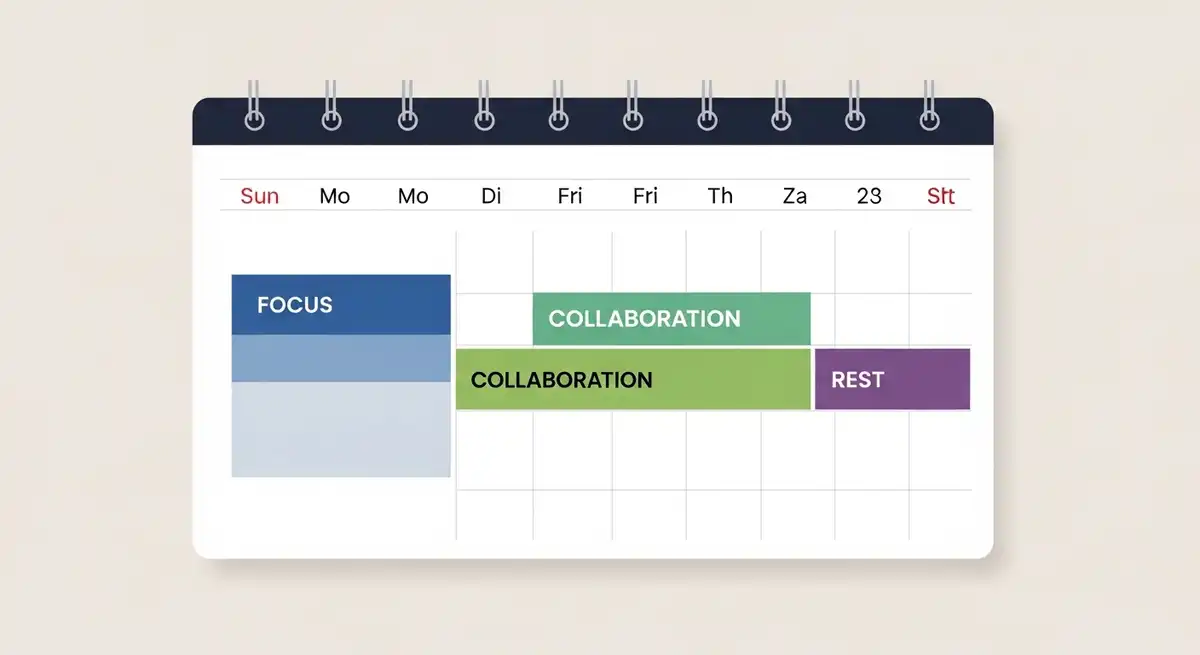
Color coding responsibilities makes workload distribution clear. Imbalance becomes visible early. Shared tools work best when treated as authoritative. Consistency matters more than features.
The checklist emphasizes simplicity. Overly complex systems add stress. Clear tools used regularly support balance and cooperation.
Strategic Time Management Through Time Blocking
Time blocking assigns specific periods to focused activities. It reduces multitasking and mental switching. Research from Stanford shows multitasking increases stress and reduces efficiency.
For mothers, time blocking protects energy rather than maximizing output. Blocking work, rest, or personal time creates structure. Boundaries reduce constant availability.
The checklist encourages flexible blocks. Adjustments are expected. The goal is reduced fragmentation, not rigid schedules.

Communicating Boundaries Without Conflict
Boundaries clarify availability and protect wellbeing. They are often misunderstood as rejection. In reality, boundaries support sustainable engagement.
Clear communication helps others adjust expectations. Shared calendars reduce repeated explanations. Consistency builds understanding over time.
The checklist frames boundaries as household support tools. Protected energy supports presence and patience. Guilt decreases as routines stabilize.
Meal Planning as Cognitive Load Reduction
Meal planning often creates daily decision fatigue. Choosing meals and managing groceries requires ongoing mental effort. Reducing decisions supports emotional regulation.
Planning starts with the weekly schedule. Busy days need simple meals. Theme nights reduce choices. Batch cooking supports efficiency.
The checklist emphasizes realistic planning. Backup options prevent stress when plans change. Flexibility supports sustainability.
Auditing Low-Joy Tasks for Delegation
Low joy tasks consume energy without satisfaction. Identifying them allows delegation or automation. Research links outsourcing low value tasks with improved wellbeing.
Delegation shifts execution without abandoning responsibility. Automation reduces repeated attention. Together, they reduce cognitive clutter.
The checklist encourages evaluating tasks by energy cost. This reframing supports balance without moral judgment.
Letting Go of Guilt Around Outsourcing
Guilt often follows delegation due to cultural expectations. Wellness educators note this guilt is learned. Delegation supports emotional availability.
Outsourcing frees mental space for meaningful engagement. Reduced mental load improves mood and patience. These benefits support family relationships.
The checklist frames outsourcing as a support tool. Used intentionally, it strengthens caregiving rather than weakening it.
Setting Boundaries Using the Ladder of Involvement
The ladder of involvement scales participation based on capacity. Responses are adjusted instead of all or nothing. This protects energy while maintaining connection.
High effort roles require significant commitment. Medium effort roles are limited. Low effort options provide support without overload.
Lifestyle guidance supports tiered responses. The checklist integrates this model for sustainable involvement.
Reclaiming Self-Care as a Non-Negotiable Component
Self care is basic maintenance, not indulgence. Without recovery, stress accumulates. Lifestyle education frames self care as functional support.
Accessible self care integrates into daily life. Short movement, hobbies, or quiet time support regulation. These practices are commonly linked to steadier mood.
The checklist positions self care as structural. Scheduling recovery supports consistency. Balance improves without pressure.
Addressing Mom Guilt and Comparison Culture
Comparison culture amplifies unrealistic expectations. Social psychology research links comparison with distress. Mothers are especially affected.
Reality based reframing supports emotional balance. Parenting effectiveness is not perfection. Consistency matters more than appearance.
The checklist encourages focus on daily stability. Self compassion reduces comparison driven stress. Perspective supports wellbeing.
Conclusion: Prioritizing Quality Over Quantity
The mom life balance checklist you actually need centers structure over self sacrifice. Shared responsibility, externalized memory, and protected energy support steadier routines. Balance becomes collective rather than individual. This approach respects modern motherhood while supporting sustainable wellbeing.
Frequently Asked Questions
What exactly is the mental load
Mental load refers to ongoing cognitive work like planning, remembering, and anticipating daily needs. It includes invisible tasks such as scheduling and emotional tracking. Shared systems and clear ownership help reduce reliance on one person’s memory.

How do I stop being the default parent
Stopping default parenting begins by making responsibilities visible and assigning full ownership. Shared tools and clear standards support balance. Consistent structure retrains expectations over time.
What is the Fair Play method for chores
The Fair Play method assigns complete responsibility for tasks, including planning and follow through. Clear ownership reduces conflict and confusion. This approach supports fairness through clarity.
Why do I feel overwhelmed even when things look fine
Overwhelm often comes from sustained cognitive strain rather than visible chaos. Carrying planning and emotional responsibility limits recovery. Structural changes often improve wellbeing.
How can I share the mental load with my partner
Sharing mental load requires transferring planning and execution together. Clear ownership and shared tools support this. Consistency matters more than initial effort.
What are the signs of maternal burnout
Common signs include persistent exhaustion, irritability, and emotional distance. These experiences are often linked to imbalance rather than personal failure. Professional support may be helpful if symptoms continue.
How do I make a family chores checklist
A family chores checklist assigns tasks with full ownership. Standards and review times are included. Shared visibility supports fairness.
How do working moms deal with guilt
Working mom guilt is shaped by unrealistic expectations. Research shows children benefit from emotional availability. Balanced routines support healthier perspectives.
What are the best apps for sharing the mental load
Shared calendars and task managers are commonly used. Consistent use matters most. Simplicity supports sustainability.
How do I set boundaries with my family
Boundaries clarify availability and protect energy. Clear communication supports cooperation. Over time, boundaries become routine.
Medical Disclaimer
This content is for informational purposes only and does not constitute medical advice. It does not diagnose, treat, cure, or prevent any condition. Consult a qualified healthcare provider before making changes to routines, especially if you have physical or mental health concerns.
Prompt 1: Featured Image A realistic, editorial-style photograph of a diverse mother sitting at a kitchen table with a planner, laptop, and coffee, soft morning light through a window, neutral earth tones, calm and focused mood, uncluttered background, horizontal composition, professional lifestyle photography, natural expressions, no posed perfection, high resolution, shallow depth of field.
Prompt 2: Supporting Concept Image Illustrated scene showing a shared family calendar on a tablet with color-coded responsibilities, hands of two adults interacting together, clean minimalist design, warm lighting, muted blues and greens, instructional clarity, modern flat illustration style, horizontal layout suitable for blog section header.
Prompt 3: Aspirational Image Photorealistic image of a mother walking outdoors alone at golden hour, relaxed posture, genuine calm expression, everyday clothing, suburban or park setting, soft natural colors, sense of freedom and balance, cinematic depth, editorial wellness aesthetic, horizontal framing.
For wider background on this, see the American Psychological Association on mindfulness.