Nature walks as the ultimate tech detox are increasingly discussed because constant screen exposure has quietly reshaped how people think, rest, and focus. Digital tools are essential for work, parenting, and communication, yet uninterrupted connectivity often leaves the mind overstimulated and emotionally flat. Many wellness educators now frame nature walks as a grounded lifestyle habit that supports mental balance without extreme rules or dramatic changes.
Daily life rarely offers clear boundaries between work, rest, and attention. Notifications arrive during family time, and scrolling fills moments once used for quiet reflection. Nature walks as the ultimate tech detox create a defined pause, offering a simple shift away from digital input toward physical surroundings, helping attention settle and emotional tone soften.
This practice remains accessible because it relies on something familiar and widely available. Walking outdoors does not demand special skills, equipment, or beliefs. Nature walks as the ultimate tech detox fit naturally into everyday routines, making them easier to sustain than structured wellness programs or intensive digital restrictions.
Nature Walks as the Ultimate Tech Detox Explained
Nature walks as the ultimate tech detox refer to intentional walks in natural environments without digital devices. The focus is not exercise intensity or performance but sensory engagement and reduced cognitive demand. By stepping away from screens, the mind experiences fewer decisions, alerts, and evaluations, allowing attention to recover in a gradual, natural way.
This idea is grounded in environmental psychology rather than motivation trends. Research consistently links time in green spaces with improved attention and lower stress markers. Nature walks as the ultimate tech detox support mental clarity by reducing the constant mental switching that digital environments encourage.
Over time, this practice can influence how people relate to technology. Regular exposure to non-digital environments often makes constant checking feel less necessary. The effect is subtle, supporting healthier habits rather than forcing rigid rules around screen use.
Digital overuse and directed attention fatigue
Directed attention fatigue describes mental tiredness caused by sustained focus and self-control. Screens demand repeated decisions, filtering, and response, even during leisure activities. Nature walks as the ultimate tech detox reduce these demands by shifting attention away from task-based focus toward effortless awareness.
This fatigue often shows up as irritability, reduced concentration, and a feeling of being mentally drained. Many people notice these signs without connecting them to digital habits. Nature walks as the ultimate tech detox address this pattern by offering a low-demand environment where attention can rest.
Unlike passive rest indoors, outdoor environments change gently without requiring action. Leaves move, light shifts, and sounds vary naturally. These features allow the mind to remain engaged without effort, supporting recovery from cognitive strain.
Attention Restoration Theory and soft fascination
Attention Restoration Theory explains why nature walks as the ultimate tech detox feel mentally refreshing. The theory suggests that natural environments support attention recovery through soft fascination. Soft fascination holds awareness gently, without forcing focus or decision making.
Examples include watching clouds, listening to birds, or noticing water movement. These experiences occupy attention just enough to prevent rumination while allowing cognitive systems to rest. Nature walks as the ultimate tech detox rely on this balance, offering engagement without effort.
This process differs from entertainment or media consumption. Digital content often demands evaluation and reaction. Natural settings invite observation without judgment, creating conditions that support reflection and mental ease.
Why urban unplugging falls short
Urban spaces require constant monitoring, even without devices. Traffic, signage, and crowds demand alertness. Nature walks as the ultimate tech detox outperform urban unplugging because they reduce the need for vigilance.
Research comparing urban and green environments shows stronger attention recovery in natural settings. Even quiet streets maintain subtle stress responses. Choosing parks, forests, or tree-lined paths helps ensure that nature walks as the ultimate tech detox provide meaningful restoration rather than partial relief.
This distinction matters for busy adults who expect relaxation from any break. Location influences mental recovery as much as time spent away from screens.
Biophilia Hypothesis and Biological Stress Reset
The biophilia hypothesis suggests humans have an innate preference for natural environments. This preference is often linked with emotional comfort and physiological calm. Nature walks as the ultimate tech detox align with this idea by reconnecting people with environments their nervous systems recognize as safe and familiar.
Biological responses to nature exposure help explain why this practice feels calming. Changes in stress hormones and nervous system activity occur even during short outdoor walks. These shifts support emotional regulation without requiring conscious effort.
Over time, repeated exposure strengthens stress resilience. Nature walks as the ultimate tech detox work gradually, supporting wellbeing through consistency rather than intensity.
Cortisol reduction and nervous system balance
Cortisol is commonly known as the stress hormone. Elevated cortisol levels are associated with prolonged alertness and tension. Studies show that time in natural environments is linked with lower cortisol levels compared to urban settings.
Nature walks as the ultimate tech detox support this shift by reducing perceived demands. Lower cortisol levels are associated with steadier energy and improved sleep quality. These effects support daily functioning rather than serving as medical treatment.
The reduction occurs without structured relaxation techniques. Simply being present outdoors allows the nervous system to move toward balance.
Heart rate variability and vagal tone
Heart rate variability reflects how well the body adapts to stress. Higher variability suggests better nervous system flexibility. Nature exposure is often linked with increased heart rate variability, indicating stronger parasympathetic activity.
Nature walks as the ultimate tech detox encourage rhythmic movement and natural breathing. These factors support vagal tone, which influences emotional regulation and stress response. The effect is subtle but meaningful over time.
This response helps explain why people often feel calmer after walking outdoors, even without consciously trying to relax.
Default Mode Network activation
The Default Mode Network becomes active during rest and reflection. Constant screen use often suppresses this network by keeping attention externally focused. Nature walks as the ultimate tech detox reduce external demands, allowing reflective thought to return.
This state supports memory processing and perspective. Thoughts settle without distraction, contributing to mental clarity. The experience is supportive, not therapeutic, fitting within responsible wellness guidance.

No-Phone Rule and Cognitive Recovery
The absence of devices is central to nature walks as the ultimate tech detox. Screens reintroduce cognitive demands that interrupt attention recovery. Even brief checking shifts the brain back into task-oriented mode.
Research shows that device use in green spaces limits attention benefits. Nature walks as the ultimate tech detox depend on uninterrupted sensory engagement to support restoration.
Setting this boundary is often the most challenging part. Yet it protects the quality of the experience.
Why phones block restoration outdoors
Phones demand evaluation, response, and decision making. These actions activate directed attention. Nature walks as the ultimate tech detox require the opposite condition, low demand and gentle awareness.
Even using a phone for music or photos can fragment attention. Removing devices allows sensory input to guide awareness naturally. This supports the soft fascination described in Attention Restoration Theory.
Over time, this practice may reduce compulsive checking habits.
Sensory richness and involuntary attention
Natural environments offer layered sensory input. Sounds, textures, and visual depth engage involuntary attention. Nature walks as the ultimate tech detox rely on this richness to hold awareness without effort.
Involuntary attention does not tire easily. It allows cognitive control systems to rest. This difference explains why outdoor time feels refreshing compared to screen-based leisure.
Repeated exposure strengthens tolerance for quiet and stillness.
Rumination reduction and emotional clarity
Rumination involves repetitive negative thinking. Studies link time in nature with reduced rumination levels. Nature walks as the ultimate tech detox support this effect by creating space for thoughts to pass without reinforcement.
Reduced rumination supports emotional steadiness and patience. The effect is often noticed as a lighter mental state rather than a dramatic shift.
This framing keeps expectations realistic and aligned with wellness ethics.
Practical Steps for a Device-Free Nature Walk
Nature walks as the ultimate tech detox do not require rigid rules. Simple guidelines support consistency and safety. The focus remains on accessibility rather than performance.
Adapting the practice to individual circumstances helps maintain long-term use. Flexibility matters more than precision.
Choosing restorative environments
Quiet green spaces support attention recovery best. Tree-lined paths, parks, and gardens reduce noise and visual clutter. Nature walks as the ultimate tech detox benefit from environments that feel safe and predictable.
Even small green spaces can work when distractions are limited. The goal is reduced cognitive demand, not distance or scenic perfection.
Accessibility and comfort should guide choices.
Using the 5-4-3-2-1 sensory method
The 5-4-3-2-1 method structures awareness without effort. It involves noticing five visual details, four sounds, three physical sensations, two scents, and one taste. Nature walks as the ultimate tech detox often use this method to anchor attention.
This approach supports presence without forcing concentration. It fits easily into walking and adapts to different environments.
Over time, sensory awareness becomes more natural.
Frequency, duration, and safety considerations
Research suggests benefits after about twenty minutes outdoors. Weekly totals around two hours are often linked with improved wellbeing. Nature walks as the ultimate tech detox work best when practiced regularly.
Individuals should adapt pace and terrain to their abilities. This practice supports wellbeing but does not replace professional care.
Consistency supports sustainable results.
Frequently Asked Questions
How does nature help with digital detox
Nature helps with digital detox by reducing cognitive load and sensory overload created by screens. Nature walks as the ultimate tech detox shift attention toward natural stimuli, which require less mental effort. This change supports attention recovery and mental calm without relying on structured techniques.

What is Attention Restoration Theory in nature
Attention Restoration Theory explains how natural environments help tired attention systems recover. Nature walks as the ultimate tech detox align with this theory by offering soft fascination, gentle sensory engagement that allows directed attention to rest. This process supports focus and mental clarity over time.
How long should a nature walk be to reduce stress
Studies suggest measurable stress reduction after about twenty minutes outdoors. Nature walks as the ultimate tech detox become more supportive with regular practice. Short, frequent walks are often more sustainable than occasional long outings.
Does using a phone in nature reduce benefits
Using a phone reintroduces cognitive demands that limit attention recovery. Nature walks as the ultimate tech detox depend on device-free engagement. Reducing screen use helps preserve the restorative qualities of natural environments.
Why does city life feel mentally draining
Urban environments demand constant alertness and decision making. Nature walks as the ultimate tech detox reduce these demands by offering calmer surroundings. This shift supports mental ease and attentional recovery.
Can viewing nature images replace outdoor walks
Nature images may offer limited benefits but lack multisensory input. Nature walks as the ultimate tech detox provide deeper engagement through sound, movement, and physical presence. Outdoor exposure remains more supportive overall.
What are common signs of digital overload
Common signs include mental fatigue, irritability, poor concentration, and disrupted sleep. Nature walks as the ultimate tech detox are often used as a lifestyle support to counter these patterns without addressing symptoms directly.
How does forest bathing relate to nature walks
Forest bathing involves immersive time in wooded environments. Nature walks as the ultimate tech detox share similar principles through gentle exposure and sensory awareness. Both practices emphasize presence rather than performance.
Is twenty minutes enough for mental reset
Twenty minutes can support noticeable calming effects. Nature walks as the ultimate tech detox become more effective with repeated exposure. Regular practice matters more than exact duration.
What is the difference between voluntary and involuntary attention
Voluntary attention requires effort and control, while involuntary attention responds naturally to stimuli. Nature walks as the ultimate tech detox engage involuntary attention through natural surroundings. This supports recovery from mental fatigue.
Nature walks as the ultimate tech detox offer a calm, accessible way to support mental balance in a digitally saturated world. By reducing cognitive demands and encouraging sensory engagement, they align with established wellness principles. Integrated gently into daily life, nature walks as the ultimate tech detox support attention, emotional steadiness, and sustainable lifestyle balance.
Medical Disclaimer
This content is for informational purposes only and does not constitute medical advice. It does not diagnose, treat, cure, or prevent any condition. Consult a qualified healthcare provider before starting new wellness practices, especially if you have medical conditions or ongoing health concerns.
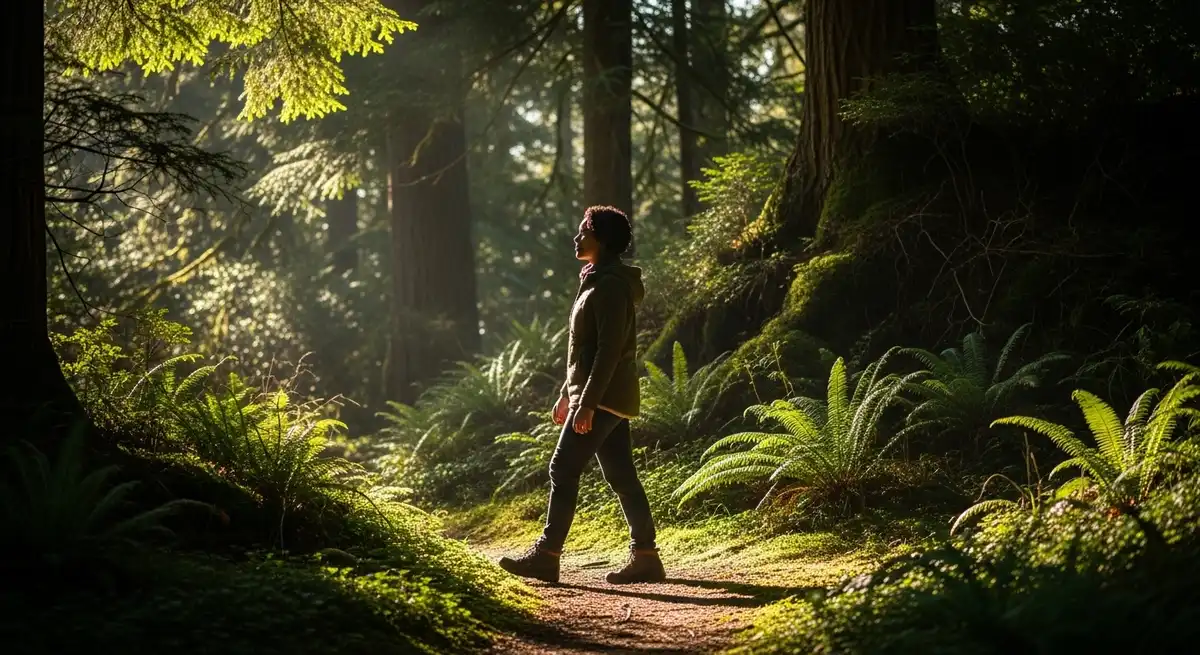
Prompt 1 – Featured Image: A diverse adult walking alone along a quiet forest path surrounded by tall trees and filtered sunlight, phone absent, hands relaxed at sides, photorealistic editorial style, natural morning light, soft greens and earth tones, calm contemplative mood, rule-of-thirds composition, shallow depth of field, horizontal landscape, wellness magazine quality, authentic non-posed posture.
Prompt 2 – Supporting Concept Image: Close-up of shoes walking on a leaf-covered trail, subtle motion blur, no visible technology, minimalist composition, natural daylight, warm earthy palette, instructional editorial photography style, focus on texture and movement, accessible visual demonstrating mindful walking, horizontal orientation, clean background.
Prompt 3 – Inspirational Image: Person resting on a park bench after walking, eyes gently closed, relaxed posture, city skyline distant and softened by trees, golden hour lighting, soft greens and blues, peaceful satisfied emotion, lifestyle realism, inclusive representation, shallow depth of field, professional editorial quality, horizontal composition.
For wider background on this, see the American Psychological Association on stress.