

Planning a week as a working mother often means balancing professional responsibilities, family logistics, and personal needs within limited time and energy. Many mothers carry responsibilities that extend beyond visible tasks, including planning, remembering, and anticipating, which can quietly increase daily strain. A stress-free week does not remove effort, but it supports steadier routines, clearer priorities, and more predictable days.
Work and family schedules rarely slow down, which makes intentional weekly planning a practical lifestyle skill rather than a productivity trend. When structure is missing, small decisions stack up and create mental fatigue that affects focus, patience, and rest. A thoughtfully planned week reduces uncertainty and supports emotional steadiness for both parents and children.
This guide explains commonly used planning approaches in a calm, educational way. The focus remains on realistic routines, supportive systems, and sustainable habits rather than perfection or performance. Each section stands alone so the ideas can be applied gradually, depending on personal circumstances.
Plan stress free week: Understanding the Mental Load of Working Motherhood
The mental load describes the ongoing responsibility of tracking, organizing, and anticipating tasks that keep daily life running smoothly. This includes remembering appointments, school requirements, meals, work deadlines, and emotional needs, often without clear boundaries. Wellness educators note that mental load requires constant cognitive effort, even during rest.
For many working mothers, mental load feels like background noise rather than a single task. Because it is invisible, it is often underestimated or unshared within families and workplaces. Over time, this continuous planning can contribute to exhaustion and reduced emotional capacity.
Recognizing mental load as real effort allows it to be addressed more intentionally. When tasks and reminders are externalized into systems or shared with others, cognitive strain often decreases. This shift supports clearer thinking and steadier emotional responses.
Shifting Away from the Supermom Expectation
Cultural expectations often suggest that successful motherhood requires unlimited energy and constant availability. These ideas encourage comparison and perfectionism, which can quietly increase stress. Lifestyle guidance usually recommends replacing idealized standards with realistic, functional expectations.
Letting go of the supermom image does not reduce care or commitment. It reframes success around consistency, presence, and sustainability rather than constant achievement. Children tend to benefit more from predictable routines and emotionally steady caregivers than from flawless execution.
A “good enough” mindset is often linked with lower pressure and improved balance. It allows flexibility when plans change due to illness, workload, or family needs. Over time, this approach supports resilience rather than burnout.
Conducting a Weekly Time Audit
A time audit involves tracking daily activities in simple intervals over several days. This method helps reveal how time is actually spent rather than how it feels. Behavioral research often uses this approach to highlight patterns that contribute to overload.
Many people discover that short, fragmented activities take up more time than expected. Repeated phone checks or unplanned errands can quietly drain energy. Seeing these patterns on paper helps clarify where changes are possible.
The goal of a time audit is insight, not self-criticism. Once patterns are visible, adjustments become easier to make. Even small changes can reduce weekly pressure and create more breathing room.
Identifying Priority Gaps and Energy Mismatch
Reviewing a time audit often shows a gap between stated priorities and daily actions. Rest, connection, and health may be valued, yet rarely scheduled. This mismatch often contributes to emotional fatigue rather than lack of motivation.
Energy mismatch happens when demanding tasks fill periods of low mental or physical energy. Scheduling difficult work during these times increases frustration. Shifting task timing often improves flow without adding effort.
Aligning priorities with energy patterns supports steadier days. When focus-heavy tasks match higher energy periods, efficiency improves naturally. This alignment reduces the feeling of constant catch-up.
Applying the Eisenhower Matrix at Home and Work
The Eisenhower Matrix sorts tasks by urgency and importance, creating four clear categories. Urgent and important tasks require immediate attention, while important but non-urgent tasks support long-term stability. This framework is widely used in planning and executive function coaching.
Many working mothers find that urgent but low-impact tasks crowd out meaningful activities. These tasks feel pressing but offer little long-term benefit. Identifying them creates space for delegation or simplification.
Scheduling important but non-urgent tasks protects them from being displaced. Planning, movement, and relationship care often fall into this category. Prioritizing them supports lower long-term stress.
Designing a Week Using Time Blocking
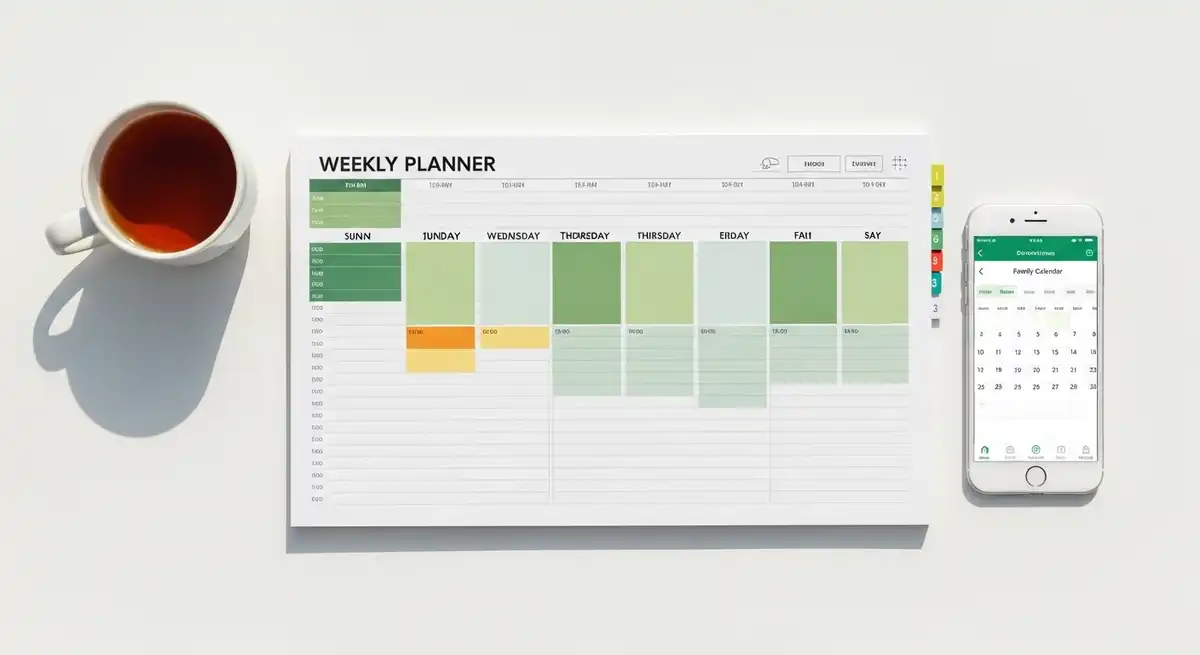
Time blocking assigns a purpose to parts of the day rather than reacting to tasks as they appear. This reduces decision fatigue by limiting constant choices. Wellness educators often describe time blocking as a boundary-setting tool.
Blocks can remain flexible and broad, such as work focus or family time. The aim is clarity, not strict control. When time has intention, transitions feel less draining.
Time blocking also separates roles more clearly. Work tasks stay within work blocks, reducing spillover into personal time. Over time, this structure supports better rest and presence.
Reducing Context Switching Through Task Batching
Task batching groups similar activities together to reduce mental shifts. Frequent context switching increases cognitive load and reduces efficiency. Batching allows focus to stay on one type of task longer.
Examples include handling administrative work at once or preparing meals in a single session. This reduces repeated setup and cleanup. Many families find batching helpful for household management.
Batching also provides clear completion points. Finishing a category of tasks reduces lingering reminders. This supports calmer evenings and improved rest.
Establishing Communication Boundaries
Constant messages and emails can fragment attention throughout the day. Without boundaries, work communication often spills into personal time. Predictable communication windows help contain interruptions.
Designating times to check messages supports deeper focus. It also improves presence during family time. Clear boundaries set expectations for others.
Consistency matters more than strict enforcement. When boundaries are communicated calmly and followed regularly, they become routine. This predictability reduces tension around availability.
Creating a Family Command Center
A family command center centralizes schedules and reminders. It may be digital, physical, or both. External systems reduce reliance on memory.
Shared calendars allow caregivers to access the same information. Visual cues help clarify responsibilities. This reduces last-minute surprises.
Physical displays reinforce visibility. When schedules are easy to see, responsibility becomes shared. This approach lowers individual mental load.
Defining a Minimum Viable Routine
A Minimum Viable Routine includes only essential daily actions. Examples include basic meals, sleep, and a short reset. This concept is useful during high-demand periods.
Defining a baseline prevents all-or-nothing thinking. When energy is limited, focusing on essentials reduces guilt. This supports consistency.
Minimum routines remain flexible. They provide structure without rigidity. This foundation allows gradual expansion later.
Using the Two-Day Rule for Habit Consistency
The two-day rule encourages resuming habits within two days of disruption. Interruptions are common in family life. This rule prevents temporary breaks from becoming abandonment.
This approach reduces self-judgment after missed days. Habits continue with minimal disruption. The focus stays on continuity.
Over time, habits become more resilient. Flexibility supports sustainability. This matters in unpredictable schedules.
Managing Energy Through Recovery Practices
Energy management balances effort with rest. Human energy fluctuates naturally. Continuous output is unrealistic.
Short recovery periods may include quiet time or gentle movement. These practices support nervous system balance. Duration matters less than consistency.
Recovery supports steadier energy but does not replace medical care. Ongoing fatigue should be discussed with a healthcare provider.
Planning Meals With Simplicity
Meal planning reduces daily decisions. Nutrition educators often highlight planning as practical support. A simple plan prevents last-minute stress.
Flexible plans work best. Repeating ingredients saves time. Simplicity supports nourishment.
Meal planning supports calm routines, not rigid rules. Adjustments are expected. The aim is reduced pressure.

Streamlining Grocery and Kitchen Routines
Grocery pickup or delivery saves time and energy. Many families use this approach during busy seasons. It supports planned meals.
Batch preparation of basics simplifies cooking later. This reduces weekday effort. Weekend preparation often works well.
Efficient kitchens support calmer evenings. Fewer steps reduce fatigue. This leaves space for rest.
Managing Household Chores Without Overload
Chores add to mental load when unmanaged. Short daily resets prevent buildup. This maintains basic order.
Zone routines divide tasks across days. Each area gets brief attention. This avoids long sessions.
Shared chores distribute responsibility. Clear expectations help. This reduces individual burden.
Delegating and Outsourcing Thoughtfully
Delegation means transferring responsibility, not just tasks. Partial delegation leaves mental load unchanged. Clear ownership matters.
Outsourcing support can be practical when possible. This reflects prioritization, not failure. Many families use support selectively.
Delegation evolves with life stages. Flexibility supports balance. Reassessment helps.
Setting Workplace Boundaries
Workplace boundaries protect personal time. Clear availability supports understanding. Research links boundaries with lower burnout.
Flexible arrangements support integration. Outcome-focused discussions help. Both sides benefit.
Boundaries require communication. They change over time. Consistency builds trust.
Understanding Stress as an Information Signal
Stress signals demand exceeding resources. This response is normal. It provides information.
Short-term stress can support focus. Chronic stress drains energy. Patterns matter.
Lifestyle strategies balance stress and recovery. They do not remove stress. Professional support may be needed.
Incorporating Mindfulness Safely
Mindfulness involves noticing experiences without judgment. It is commonly used as a supportive practice. Many integrate it briefly.
Examples include pausing during transitions. These moments build awareness. Consistency helps.
Mindfulness does not replace care. Distress requires professional help. It remains optional.
Parenting and Professional Identity Integration
Working motherhood involves multiple identities. Integration supports coherence. This reduces conflict.
Children learn from realistic role models. Seeing balance matters. Transparency helps.
Integration changes over time. Flexibility supports needs. Pressure reduces.
Frequently Asked Questions
How do working moms manage everything without help Working mothers rarely manage everything alone sustainably. Most rely on shared responsibility, simplified routines, and external systems. Lifestyle guidance emphasizes collaboration and structure rather than endurance.
What is the best weekly schedule for a working mom There is no universal schedule. Effective weeks align work with energy and include recovery. Flexibility supports change.
How can I stop feeling overwhelmed by my house and job Overwhelm often reflects unprioritized demands. External systems reduce strain. Essentials matter.
How do you stay organized as a full-time working mom Organization relies on systems. Shared calendars and planning reduce load. Simplicity supports consistency.
What are the most effective time management tips for moms Energy-aware scheduling and batching help. Boundaries reduce fatigue. Small changes matter.
How do I balance a career and motherhood without burnout Balance requires adjustment. Delegation and recovery support capacity. Burnout prevention focuses on sustainability.
Is it possible for a working mom to have a clean house A functional home is realistic. Short resets help. Standards shift.
How do I stop feeling guilty about working and missing my kids Guilt often comes from comparison. Presence matters more than hours. Connection supports wellbeing.
What are the best apps for managing family calendars and chores Shared calendars and simple trackers work best. Consistency matters more than features.
How do I get my partner to help with the mental load Clear role ownership reduces mental load. Shared planning matters. Communication supports balance.
Editorial Conclusion
Planning a stress-free week as a working mom relies on structure, realism, and self-compassion. Sustainable routines support steadier days without promising ease or perfection. With intention and flexibility, work, care, and personal wellbeing can coexist more calmly.
Medical Disclaimer
This content is for informational purposes only and does not constitute medical advice. It is not intended to diagnose, treat, cure, or prevent any condition. Consult a qualified healthcare provider before making changes to health, exercise, or stress management routines.
For wider background on this, see the American Psychological Association on healthy workplaces.




















