

Planning a week often feels overwhelming for working adults, especially parents balancing professional responsibilities, household management, and personal wellbeing. Without a clear structure, days tend to become reactive, emotionally tiring, and fragmented across competing demands. A calm, realistic planning method offers stability by helping people organize responsibilities while protecting energy, attention, and personal time.
Modern life brings constant digital input, shifting expectations, and limited recovery space between tasks. Many people describe feeling busy without feeling effective, which slowly erodes motivation and confidence. The 3-Step Method to Plan Your Perfect Week provides a grounded way to bring order to responsibilities while supporting emotional steadiness and realistic pacing.
This method is widely used in lifestyle and productivity education as a supportive framework rather than a performance system. It focuses on clarity, prioritization, and intentional scheduling, not pressure or constant output. When practiced consistently, it helps create calmer, more predictable weeks without promising control over every outcome.
Step method plan perfect: Understanding the Core Lifestyle Concept Behind Weekly Planning
Weekly planning is often misunderstood as a strict time management exercise, yet wellness educators describe it as a lifestyle organization practice. It creates a predictable rhythm that reduces daily decision fatigue and mental clutter. By planning once and referring back throughout the week, many people experience steadier focus and reduced emotional strain.
This approach does not aim to maximize productivity at the expense of wellbeing. Instead, it aligns responsibilities with realistic capacity, available energy, and personal values. When plans reflect real life rather than ideal expectations, they become supportive structures rather than another source of stress.
The 3-Step Method to Plan Your Perfect Week fits within this balanced perspective. It acknowledges human limits, changing moods, and competing priorities. This makes it especially relevant for parents, caregivers, and professionals managing complex daily routines.
Step One: Brain Dump and Reflective Awareness
The first step involves transferring every task, idea, and obligation from memory onto a single written list. This practice is commonly used to reduce mental overload and constant background worry. Writing everything down helps people feel less mentally crowded, allowing attention to settle and decisions to feel clearer.
A complete brain dump includes work tasks, household responsibilities, appointments, reminders, and personal intentions. Nothing is filtered or prioritized at this stage, which allows the mind to release its tracking role. Many people find this step emotionally grounding because vague pressure turns into visible, manageable information.
Reflection follows the brain dump and adds depth to planning. Reviewing the previous week helps identify patterns in energy, stress, and satisfaction. This awareness supports more realistic planning by acknowledging what felt manageable and what felt excessive.
Reviewing the Previous Week with Neutral Perspective
Looking back at the previous week is not about judging performance. It is a neutral review of what happened, how time was spent, and how different commitments felt in practice. This perspective encourages learning rather than self-criticism, which supports emotional balance.
Common reflection points include tasks that took longer than expected or commitments that felt draining. These observations guide better boundaries in future planning. Over time, this habit reduces repeated overload and helps planning feel kinder and more accurate.
For parents and working adults, reflection also highlights invisible labor such as coordination, caregiving, and emotional support. Recognizing these efforts ensures they are counted in future schedules. This acknowledgment makes planning feel respectful of real life.
Processing Loose Ends and Everyday Clutter
Loose ends often consume more mental energy than large projects. Unanswered messages, open browser tabs, and unfinished notes quietly pull attention throughout the day. Processing these items during weekly planning clears mental space before the week begins.
This step involves deciding whether each item requires action, scheduling, delegation, or release. Not every task needs immediate completion, but every task benefits from a clear decision. This clarity reduces background stress and improves focus during planned work.
Clearing digital and physical clutter also supports emotional regulation. Organized environments are commonly associated with calmer states of mind. This makes weekly planning feel like preparation rather than another obligation.
Step Two: Time Estimation and Priority Alignment
The second step focuses on choosing priorities and assigning realistic time expectations. Many people underestimate task duration, leading to crowded schedules and frustration. Estimating time encourages honesty about capacity and supports more achievable plans.
The 3-Step Method to Plan Your Perfect Week commonly uses limited priorities. Selecting a small number of meaningful weekly outcomes narrows focus without removing flexibility. This supports progress on what matters most while reducing pressure to do everything.
Time estimation also protects rest, meals, and family time. When tasks have realistic durations, work is less likely to spill into personal hours. This boundary supports healthier routines and long-term consistency.
Using the Rule of Three for Weekly Focus
The Rule of Three is a widely used prioritization practice in lifestyle planning. It involves choosing three primary outcomes that matter most for the week. This structure simplifies decisions and reduces constant task switching.
These priorities focus on outcomes rather than activities. Completing a project phase or preparing for an appointment reflects progress more clearly than listing multiple small tasks. This framing supports a sense of completion and reduces the feeling of endless work.
For parents and caregivers, priorities often include non-work responsibilities. Including family and personal outcomes ensures planning reflects real priorities. This balance helps planning feel supportive rather than restrictive.
Identifying Fixed Commitments and Available Time
Understanding available time begins with identifying fixed commitments. These include work hours, school schedules, caregiving duties, sleep, and essential routines. Mapping these first creates a realistic picture of remaining time.
Many people discover their free time is more limited than assumed. This awareness encourages thoughtful choices rather than overcommitment. It also highlights the importance of rest and transition periods.
This step prevents planning based on unrealistic assumptions. By acknowledging fixed commitments, the remaining schedule can be shaped with intention. This approach supports sustainability and reduces burnout risk.
Step Three: Time Blocking as a Lifestyle Structure
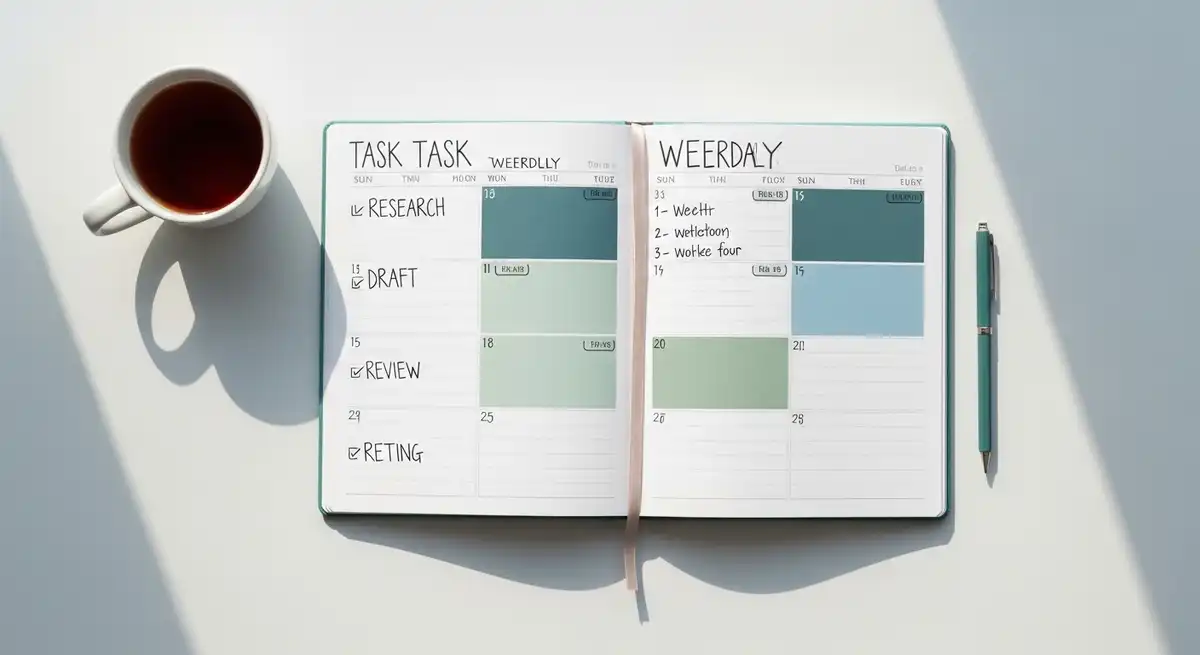
Time blocking assigns tasks to specific periods in a calendar. Unlike lists, calendars show how tasks fit into real days and hours. This visibility helps prevent overload and supports intentional scheduling.
In wellness education, time blocking is viewed as a commitment tool, not a control mechanism. It provides structure while allowing adjustments when circumstances change. This flexibility is essential for people managing unpredictable demands.
The 3-Step Method to Plan Your Perfect Week uses time blocking to connect priorities with action. Each task has a place, reducing daily decision fatigue and supporting steadier routines.
Moving Tasks from Lists into the Calendar
Transferring tasks from lists into a calendar requires choice. Not every task fits into a single week, and recognizing this supports healthier expectations. Scheduling forces realistic prioritization.
When tasks are scheduled, they become agreements rather than vague intentions. This increases follow-through and clarifies when rescheduling is necessary. Adjustments become neutral decisions rather than failures.
This practice also improves communication. Visible schedules make availability clearer, which supports boundary-setting in work and family contexts.
Designing an Ideal Week Template
An ideal week template reflects how time would be spent under supportive conditions. It includes recurring blocks for focused work, meetings, rest, family time, and personal care. This template reduces weekly decision fatigue.
The template is flexible, not rigid. It acts as a default structure rather than a strict rule. When disruptions occur, it provides a stable point to return to.
For working parents, ideal templates often include protected family routines. Including these reinforces their importance and prevents work from expanding into personal time.
Day Theming to Reduce Context Switching
Day theming assigns general purposes to specific days. Some days may focus on meetings, others on focused work or administrative tasks. This reduces frequent mental switching.
Reducing context switching is commonly linked with lower mental fatigue. Grouping similar tasks supports smoother transitions and steadier concentration. This can be especially helpful when managing multiple roles.
Day theming remains adaptable. It provides gentle guidance rather than rigid structure. Over time, it simplifies planning and supports calmer workdays.
Energy Mapping for Everyday Sustainability
Energy mapping aligns tasks with natural energy patterns. Most people experience predictable fluctuations in focus and stamina. Recognizing these patterns helps schedule tasks more effectively.
This practice supports wellbeing by reducing unnecessary strain. High-focus tasks placed in low-energy periods often lead to frustration. Aligning tasks with energy supports steadier motivation.
Energy mapping relies on observation rather than forcing change. Over time, this awareness improves planning accuracy and sustainability.
Differentiating High-Energy and Low-Energy Tasks
Tasks vary in cognitive and emotional demand. Creative planning and problem-solving usually require higher energy, while administrative tasks need less focus. Categorizing tasks helps align them with suitable times.
This distinction prevents peak energy from being spent on low-impact work. Many people find this reduces end-of-day exhaustion. It supports better outcomes without increasing work hours.
For parents, low-energy tasks often fit better during divided-attention periods. This flexibility supports productivity while accommodating caregiving needs.
Understanding Personal Chronotypes
Chronotype refers to natural preferences for alertness at certain times. Some people feel most focused in the morning, others later in the day. Understanding this supports smarter scheduling.
Aligning demanding tasks with peak energy reduces reliance on willpower. It supports consistency rather than intensity. This awareness improves follow-through.
Chronotype awareness is especially helpful when balancing work and family schedules. Small adjustments can improve energy use even when schedules are fixed.
Handling the Unplanned with Prepared Flexibility
No plan accounts for every interruption. Unexpected tasks and changes are part of everyday life. Planning with flexibility allows adjustment without abandoning structure.
The 3-Step Method to Plan Your Perfect Week includes buffer time. Leaving open space absorbs unplanned tasks. This reduces stress and preserves balance.
Prepared flexibility supports emotional steadiness. Plans become adaptable guides rather than rigid demands.
Using Buffer Time as a Supportive Tool
Buffer time refers to intentionally unscheduled periods. These absorb delays or provide recovery between commitments. Many educators recommend leaving some space unassigned.
This supports realistic pacing. Without buffers, small delays cascade into stress. With buffers, schedules adapt more calmly.
For parents, buffer time often accommodates caregiving needs. Including it acknowledges reality and supports sustainability.
Capturing Ideas Without Disruption
Ideas often arise during focused work or personal time. Acting immediately can break concentration. A quick capture system allows recording ideas without disruption.
This may involve a notebook or digital note. Ideas are reviewed during planning. This prevents mental clutter.
Capturing ideas reassures the mind that nothing is lost. Focus remains intact.
Establishing a Weekly Review Ritual
Consistency strengthens planning. A weekly review provides a regular reset. It supports continuity even when weeks feel unpredictable.
The review includes checking completed tasks, reviewing unfinished items, and preparing the calendar. It is scheduled at the same time each week.
For many, this ritual becomes stabilizing. It provides closure and clarity.
Choosing a Sustainable Review Time
The best review time varies by person and household. Consistency matters more than timing. Choose a time with minimal interruption.
Treating the review as a commitment reinforces its value. Over time, it becomes easier to maintain.
For parents, aligning review time with childcare availability improves consistency.
The Role of Weekly Planning in Mindful Living
Mindful living involves awareness of actions and limits. Weekly planning supports this by making choices visible.
The 3-Step Method to Plan Your Perfect Week fits this approach. It supports intentional engagement without constant optimization.
Planning does not remove stress, but it reduces unnecessary strain. Clear expectations support calmer responses.

Parenting and Working-Life Relevance
Parents and caregivers manage overlapping responsibilities. Weekly planning helps coordinate work, school, and home tasks.
Including family needs prevents personal time from disappearing. This balance supports wellbeing.
For working mothers, clear schedules support boundaries. Visibility improves communication and reduces conflict.
Frequently Asked Questions
How do I plan my perfect week effectively
Planning a week effectively involves listing commitments, choosing priorities, and assigning tasks to realistic time slots. This approach reduces mental overload and improves clarity. Reviewing plans weekly supports consistency without requiring perfection.
What is the 3-Step Method to Plan Your Perfect Week
The 3-Step Method to Plan Your Perfect Week is a structured planning approach focusing on clarity, prioritization, and time blocking. It is commonly used in lifestyle organization education. The method supports calmer routines by aligning tasks with available time and energy.
What should be included in a weekly review
A weekly review typically includes checking completed tasks, reviewing unfinished items, and preparing the upcoming schedule. It also involves brief reflection on energy and workload. This supports learning and adjustment without judgment.
How does weekly planning support emotional wellbeing
Weekly planning supports emotional wellbeing by reducing uncertainty and decision pressure. Clear plans help people feel grounded during busy periods. Predictability often supports steadier moods.
Is weekly planning suitable for parents
Weekly planning is widely used by parents to coordinate work, school, and household responsibilities. It helps visualize commitments and manage time realistically. Including family needs reduces last-minute stress.
Can weekly planning feel restrictive
Weekly planning provides structure, not restriction. Flexible plans allow adjustments. Many people find planning increases freedom by reducing constant decision-making.
How long should weekly planning take
Weekly planning typically takes thirty to sixty minutes. Simplicity supports consistency. The goal is clarity, not control.
Do I need digital tools for weekly planning
Weekly planning works with digital or paper systems. Consistency matters more than tools. Choose what fits your lifestyle.
What if plans change during the week
Changes are expected. Weekly planning allows adjustment without abandoning structure. Rescheduling is normal.
Is weekly planning a productivity system or a wellness practice
Weekly planning functions as both. It organizes tasks while supporting realistic expectations. This balance supports everyday wellbeing.
Conclusion
The 3-Step Method to Plan Your Perfect Week offers a calm, realistic way to organize modern life. By focusing on clarity, realistic priorities, and intentional scheduling, it supports steadier routines without unrealistic promises. Used consistently, it helps people manage responsibilities with balance, awareness, and emotional steadiness.
Medical Disclaimer
This content is for informational purposes only and does not constitute medical or mental health advice. It is not intended to diagnose, treat, cure, or prevent any condition. Always consult a qualified healthcare or mental health professional regarding personal health concerns.
For wider background on this, see the American Psychological Association on mindfulness.