
Modern life places constant demands on attention, often through screens that blur boundaries between work, rest, and personal time. Many people notice mental tiredness, shallow focus, or restlessness without clearly identifying the cause. Productivity without screens is commonly discussed as a practical lifestyle adjustment that supports calmer routines, clearer thinking, and more intentional use of time without rejecting technology entirely.
Productivity without screens refers to using paper-based tools and physical routines to plan, think, and work with fewer digital interruptions. This approach is generally framed as supportive rather than restrictive, encouraging mindful structure instead of constant stimulation. Wellness educators often describe it as a way to align daily tasks with natural attention rhythms, especially for working adults balancing multiple responsibilities.
This editorial guide explains established analog productivity practices using clear, non-clinical language. Each method is presented as a general lifestyle support tool, not a treatment or guarantee of outcomes. The focus remains on everyday use, safety, and realistic expectations within modern work and family life.
Productivity without screens: Understanding Productivity Without Screens in Daily Life
Productivity without screens emphasizes planning and execution through physical materials such as notebooks, paper planners, index cards, and mechanical timers. These tools are often valued because they function without notifications, alerts, or visual clutter competing for attention. In daily routines, they provide a stable reference point that supports focus during work sessions, household planning, and study time.
This approach does not require eliminating digital tools entirely. Many people prefer a blended system where screens handle communication and collaboration, while paper supports thinking and prioritization. Lifestyle guidance often suggests that separating planning from digital environments can make tasks feel clearer and less mentally taxing.
Productivity without screens is commonly associated with reduced digital fatigue, a term used to describe mental tiredness linked to prolonged screen exposure. By shifting selected tasks offline, individuals often report feeling less rushed and more aware of how time is spent. These experiences vary widely and depend on consistency, environment, and workload.
Handwriting and Cognitive Engagement
Handwriting is frequently discussed in productivity without screens because it involves both mental processing and physical movement. Writing by hand engages motor coordination along with language and memory systems, which many educators associate with deeper information handling. This often leads people to summarize ideas instead of copying them word for word.
Research in learning science has shown that handwriting activates broader areas of the brain than typing, though outcomes differ by task and individual. In daily productivity, this often results in notes that are shorter, clearer, and easier to review later. Many people use handwriting for meeting notes, planning lists, or personal reflection.
The slower pace of handwriting can feel stabilizing during busy days. Writing tasks on paper makes priorities visible and limited, rather than endless. This physical presence often helps people stay oriented to what they are doing without switching between apps or tabs.
Mechanical Resistance and Focus
Mechanical resistance refers to the physical effort involved in writing, turning pages, or winding a timer. Productivity without screens often relies on this resistance to naturally slow actions and reduce impulsive task switching. Physical tools do not invite constant interaction in the same way digital interfaces do.
This resistance introduces small pauses between actions, which can support more thoughtful choices. Each step requires intention, making it easier to stay with one task. In everyday settings, this often supports sequential work instead of fragmented multitasking.
Many people find mechanical resistance helpful during mentally demanding tasks. The slower rhythm can make complex work feel more manageable and contained. Over time, this approach is commonly linked with steadier attention and fewer abrupt interruptions.
The Ivy Lee Method in Modern Routines
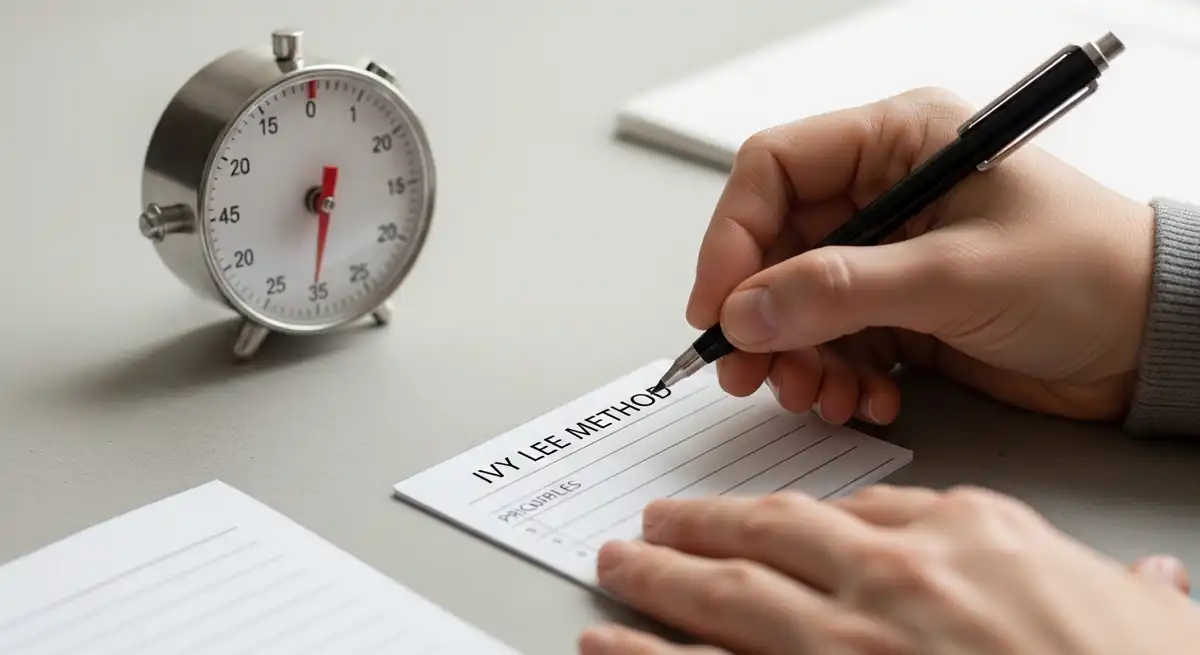
The Ivy Lee Method is a prioritization practice that involves writing down six tasks for the following day and ranking them by importance. Productivity without screens often includes this method because it limits choices and reduces decision fatigue. The simplicity of the list is central to how it is used.
In daily routines, the method supports starting work without lengthy planning. The written list provides direction, reducing the mental effort required to decide what to tackle next. Many people find this helpful when balancing professional duties with home responsibilities.
The Ivy Lee Method is usually applied flexibly rather than rigidly. Tasks that remain unfinished are intentionally carried forward, highlighting realistic capacity over time. This process often encourages more balanced expectations around productivity.
Limiting Cognitive Load Through Simplicity
Cognitive load describes how much information the brain processes at once. Productivity without screens aims to reduce this load by simplifying inputs and limiting competing signals. Paper tools present information in a fixed format, which many people find easier to absorb.
Lowering cognitive load can support clearer thinking during planning and execution. Instead of managing multiple apps or reminders, information is gathered in one visible place. This approach is commonly used by people who feel overwhelmed by constant digital prompts.
In everyday routines, reduced cognitive load may mean fewer forgotten tasks and less mental fatigue. While not a solution for every challenge, this simplification is often viewed as a supportive adjustment that makes routines feel steadier.
The Tickler File as a Physical Reminder System
A tickler file is a physical system designed to manage time-sensitive items using dated folders. Productivity without screens includes this method as a way to move reminders out of the mind and onto paper. Items resurface when action is needed.
In practice, the tickler file supports trust in the system rather than memory alone. Bills, forms, or reminders are placed in folders that match their action dates. Each day, only relevant materials are reviewed, which can reduce background mental stress.
This system is often used by people managing varied responsibilities across work and home. A consistent daily check replaces repeated digital alerts. Its usefulness depends on regular maintenance and clear organization.
Timeblocking on Paper
Timeblocking involves assigning tasks to specific time periods. When done on paper, it aligns well with productivity without screens by combining planning and time awareness without digital calendars. Writing blocks by hand can make commitments feel more deliberate.
In daily routines, timeblocking helps tasks feel contained rather than open-ended. Many people use it for focused work, caregiving coordination, or personal routines. Seeing time mapped visually can reduce overcommitment.
Paper timeblocking also supports reflection. Reviewing blocks at the end of the day can reveal energy patterns and realistic limits. Over time, this awareness often helps people adjust schedules to better fit real-life demands.
The Physical Pomodoro Technique
The Pomodoro Technique divides work into short intervals followed by brief breaks. Using a mechanical timer supports productivity without screens by creating a clear physical boundary around work time. The act of setting the timer reinforces intention.
In everyday use, the ticking timer marks a period of focus without relying on screens. This can reduce the urge to check messages or switch tasks. Breaks are clearly defined, supporting balance between effort and rest.
Many people adapt the physical Pomodoro to suit their needs. Interval length and break duration can vary. As with other analog tools, consistency and environment strongly influence how helpful it feels.
Bullet Journaling as a Reflective System
Bullet journaling is an analog method that combines planning, tracking, and reflection in one notebook. Productivity without screens often includes this system because it adapts easily to changing needs. Short entries and symbols keep information manageable.
In everyday routines, bullet journaling supports awareness of how time and energy are used. Regular reviews encourage thoughtful prioritization rather than reactive task management. Many people appreciate the freedom to design pages as needed.
This system is generally used as a supportive structure rather than a strict rule set. Missed days or unused pages are acceptable. This flexibility often makes bullet journaling sustainable over long periods.
Morning Pages for Mental Organization
Morning pages involve writing freely for several pages at the start of the day. Productivity without screens includes this practice as a way to externalize thoughts before tasks begin. The writing is informal and not meant for review.
In daily life, morning pages are commonly used to reduce mental clutter. Writing down concerns, ideas, or reminders can make the day feel less crowded. This often supports calmer transitions into work.
Morning pages are considered a general reflective habit, not a therapeutic exercise. Some people adjust length or timing based on schedule. Consistency and a non-judgmental approach matter more than volume.
Building a Physical Second Brain
A physical second brain refers to storing information externally using notebooks, folders, or cards. Productivity without screens highlights this concept to reduce reliance on memory alone. Information is organized for later retrieval.
In practice, this may involve keeping notes on ideas, projects, or references. Rearranging cards or pages allows connections to emerge naturally. Writers and researchers often find this tactile process helpful for complex thinking.
The physical second brain is often used alongside digital storage. Paper supports synthesis and clarity, while digital tools handle archiving and sharing. This balance allows both systems to complement each other.
Zettelkasten and Knowledge Linking
The Zettelkasten method uses individual notes connected through references to form a network of ideas. Productivity without screens includes paper-based versions of this system for flexibility and depth. Each note contains one clear idea written in personal language.
In everyday use, notes are linked through identifiers rather than rigid categories. This encourages associative thinking and gradual insight. Over time, reviewing notes can reveal patterns that support learning or writing.
This method is commonly used for research and creative work. It supports slow knowledge building rather than quick output. Clear writing and regular review are central to its usefulness.
Visual Problem Solving on Paper
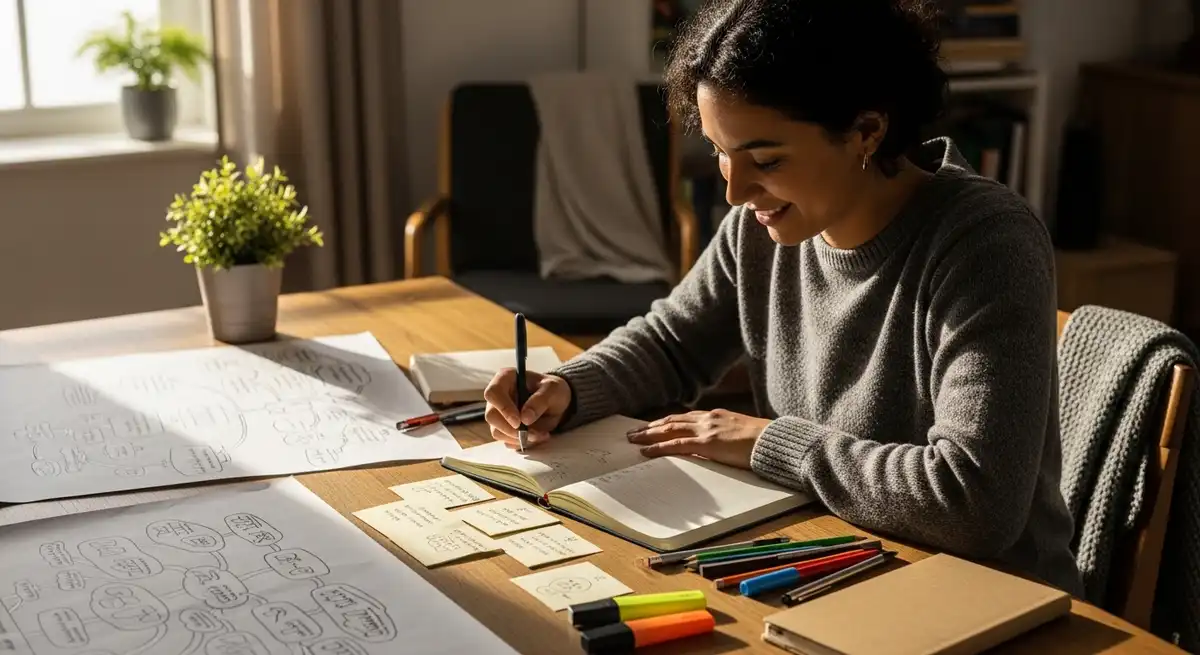
Visual problem solving uses diagrams, maps, or charts to explore complex topics. Productivity without screens values paper for this because it allows unrestricted layout and scale. Drawing supports spatial reasoning and pattern recognition.
In daily routines, mind maps or workflow charts can clarify multi-step projects. Seeing relationships visually often reduces confusion. Large sheets or boards are commonly used to allow ideas to spread freely.
Visual tools are often updated as understanding changes. This keeps plans aligned with reality. Paper makes revisions simple without technical barriers.
Managing Digital Fatigue Through Offline Planning
Digital fatigue refers to mental strain linked to constant screen exposure. Productivity without screens addresses this by moving planning and reflection offline. This reduces stimulation during cognitively demanding moments.
In everyday routines, offline planning often happens at the start or end of the day. Writing plans on paper creates a clear boundary between digital work and personal time. Many people find this transition calming.
Reducing digital fatigue focuses on balance rather than avoidance. Screens remain useful tools, but their role becomes more intentional. This shift is often associated with steadier energy and fewer distractions.
Relevance for Working Parents and Caregivers
Working parents often manage overlapping responsibilities that require frequent context switching. Productivity without screens can support clearer organization by externalizing plans. Paper systems provide visible reference points for shared tasks.
In family routines, written schedules or lists can reduce misunderstandings. Responsibilities are documented rather than remembered under pressure. This clarity can support calmer coordination at home.
These methods are typically used as practical supports, not ideals. Flexibility remains essential in caregiving contexts. Analog tools adjust easily as needs change.
Consistency and Realistic Expectations
Productivity without screens works best when used consistently but without rigidity. No single method guarantees better focus or output. Lifestyle guidance emphasizes trying tools gradually to see what fits.
Initial changes may feel unfamiliar or slower. Over time, routines often become more intuitive. Progress usually depends on workload, environment, and personal habits.
These practices are best viewed as supports rather than solutions. They work alongside rest, nutrition, and realistic scheduling. Balance remains central to sustainable productivity.
Frequently Asked Questions
How can productivity without screens fit into a digital job
Productivity without screens can complement digital work by moving planning, prioritization, and reflection onto paper. Many people use analog tools to think clearly, then complete tasks on computers. This separation often supports focus during work sessions without reducing the usefulness of required digital tools.
Is productivity without screens suitable for beginners
Productivity without screens is generally considered beginner-friendly because tools are simple and affordable. Starting with one habit, such as a paper task list, is common. Gradual adoption allows routines to adjust naturally without overwhelming changes.
Does handwriting improve focus in daily tasks
Handwriting is commonly linked with improved focus because it slows information capture. Writing tasks by hand can make priorities clearer and more tangible. These effects vary by person and depend on environment and consistency.
Can analog productivity replace digital tools completely
Analog productivity is not usually intended to replace digital tools entirely. Many people prefer a hybrid approach that combines paper planning with digital communication. This balance supports clarity while remaining practical in modern work settings.
How much time does analog planning usually take
Analog planning often takes a few minutes at the start or end of the day. Writing tasks or schedules by hand can be brief and focused. Over time, this investment is often viewed as supportive rather than time-consuming.
Is productivity without screens helpful for stress awareness
Productivity without screens is often used as a lifestyle support for stress awareness. Reducing digital noise can make it easier to notice mental and physical cues. This awareness supports intentional pacing but does not replace professional care.
Are these methods suitable for students
Students commonly use analog methods for note-taking, revision, and planning. Writing by hand can support comprehension and memory. Effectiveness varies and depends on study style and academic demands.
Can productivity without screens improve work life balance
Productivity without screens may support work life balance by creating clearer boundaries around tasks. Offline planning can mark transitions between work and personal time. These practices are considered supportive rather than transformative.
Do analog systems require special materials
Most analog systems require basic items such as notebooks, pens, or folders. Mechanical timers and index cards are optional. Simplicity and accessibility are often cited as advantages.
How long does it take to notice changes
Changes linked to productivity without screens are usually gradual. Some people notice differences in focus within weeks, while others take longer. Outcomes depend on consistency, workload, and personal preference.
Conclusion
Productivity without screens offers a grounded way to organize work and daily life using simple physical tools. These practices are commonly used to support focus, reduce digital fatigue, and create calmer routines without making unrealistic promises. When applied thoughtfully, analog productivity methods can coexist with modern technology and support sustainable balance.
Medical Disclaimer
This content is for informational purposes only and does not constitute medical advice. It does not diagnose, treat, cure, or prevent any condition. Always consult a qualified healthcare provider before starting new lifestyle, productivity, or wellness practices, especially if you have existing health concerns.
For wider background on this, see the World Health Organization classifies burn-out as an occupational phenomenon.