
The value of 16 Morning Affirmations for Motivation and Positivity is repetition in ordinary moments, not intensity in rare ones. Morning routines often shape how the rest of the day unfolds, especially when mental clarity and emotional balance are involved. Many people begin their day with scattered thoughts, digital distractions, or lingering stress from previous experiences. Adding structured affirmations to your morning can create a steady mental starting point and support a more intentional and calm daily rhythm.
Morning affirmations are simple statements repeated with awareness to guide thinking patterns and emotional responses. They do not change external situations, but they influence how those situations are understood and handled. With regular practice, this habit supports clearer thinking, steadier emotions, and a more grounded approach to everyday responsibilities.
Understanding the Role of Morning Affirmations in Daily Life
Morning affirmations are short, intentional phrases used to guide your mindset at the beginning of the day. Many people include them as part of a self-care routine to create a sense of direction before daily demands begin. This practice is commonly associated with improved focus and a more stable emotional baseline.
Internal dialogue plays a strong role in how situations are interpreted, and affirmations gently reshape that dialogue over time. When repeated consistently, they encourage more balanced thinking patterns and reduce automatic negative reactions. This shift helps individuals respond thoughtfully rather than react impulsively in everyday situations.
The Science Behind Affirmations and Mental Patterns
Research in psychology shows that repeated thoughts can influence how the brain forms connections, a process called neuroplasticity. When people practice structured positive self-talk, it may support the development of new mental habits. Some studies suggest that self-affirmation practices can reduce stress responses in challenging situations.
Self-affirmation theory explains that people maintain a sense of identity by focusing on personal values and strengths. When this sense is reinforced, responses to challenges often become less defensive and more constructive. This approach is widely used in wellness education to support balanced thinking and emotional awareness.
16 Morning Affirmations for Motivation and Positivity
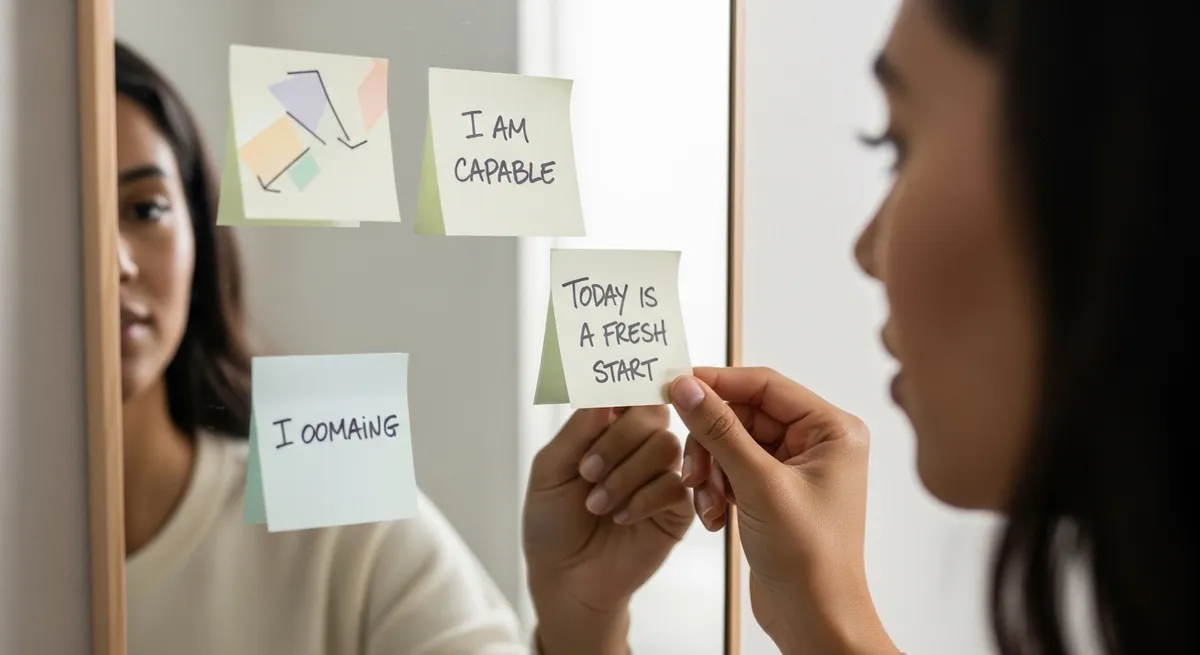
1. Today is a fresh start
This affirmation reflects the idea that each new day offers a chance to begin again without carrying unnecessary emotional weight. It helps shift attention away from past mistakes or unresolved concerns. Many people use it to create a mental reset, allowing a clearer and more grounded start.
With regular repetition, this statement can support letting go of unhelpful thought patterns linked to previous experiences. It encourages a mindset that values progress rather than perfection. In daily life, this perspective can reduce hesitation and support steady forward movement without excessive self-criticism.
2. I am in control of my mindset
This statement highlights awareness of your thoughts and the ability to guide them intentionally. It reminds you that while external events may vary, your internal response can be shaped with practice. This idea is commonly used in mindfulness-based approaches to support emotional balance.
When practiced consistently, this affirmation supports thoughtful reactions instead of impulsive ones. It encourages pausing before responding, especially during stressful moments. Over time, this habit may contribute to a calmer and more stable approach to everyday challenges.
3. I believe in myself and my abilities
This affirmation focuses on building trust in your own skills and strengths through repetition. Many people experience self-doubt due to past setbacks or comparison with others. This statement gently reinforces a more supportive internal perspective.
In daily routines, this affirmation can encourage taking initiative and moving forward with less hesitation. It supports a steady sense of confidence without unrealistic expectations. Over time, this can contribute to more consistent effort and balanced decision-making in personal and professional settings.
4. Small steps lead to big changes
This statement emphasizes gradual progress rather than immediate results. It helps reduce pressure by focusing on manageable actions instead of overwhelming goals. Many people find this approach easier to maintain over long periods.
By reinforcing the value of small efforts, this affirmation supports consistency in daily habits. It encourages focusing on what can be done today rather than worrying about long-term outcomes. Over time, these small steps can build meaningful and lasting improvements.
5. I am a magnet for positivity
This affirmation encourages attention toward supportive experiences and constructive perspectives. It does not change external events but helps shape how they are noticed and interpreted. Many people use this statement to maintain a balanced outlook.
Regular practice can help shift focus toward positive aspects of daily life that might otherwise be overlooked. This change in attention can support emotional stability and improve interactions with others. Over time, it may contribute to a more optimistic yet realistic mindset.
6. I am the architect of my time
This statement highlights personal responsibility in managing daily priorities and schedules. It reminds you that how time is used directly influences outcomes. This idea is often included in productivity and time awareness practices.
In everyday life, this affirmation can support better planning and reduced distractions. It encourages focusing on meaningful tasks instead of reacting to every demand. Over time, this approach may create a stronger sense of direction and control.
7. Today I choose to be confident
This affirmation presents confidence as a choice that can be practiced through behavior. It encourages acting with self-assurance even when uncertainty exists. Many people use it to step outside familiar comfort zones.
With consistent use, this statement can support gradual confidence-building through action. It reinforces that confidence develops over time rather than appearing instantly. This approach can lead to more balanced and steady responses in different situations.
8. I am resilient in the face of challenges
This affirmation focuses on adapting to difficulties without feeling overwhelmed. It encourages viewing challenges as part of growth instead of obstacles. This perspective is commonly used in resilience-building practices.
In daily situations, this statement can support maintaining perspective during setbacks. It encourages continuing forward rather than stopping due to temporary difficulties. Over time, this approach may strengthen emotional stability and adaptability.
9. I choose peace over worry
This statement encourages shifting attention away from constant worry toward a calmer state of mind. It supports focusing on what is present rather than uncertain future outcomes. Many people include this affirmation in stress awareness routines.
With regular repetition, this affirmation can reduce overthinking and mental clutter. It encourages a more grounded approach to situations. This can support clearer thinking and more thoughtful decision-making throughout the day.
10. I am becoming the best version of myself
This affirmation focuses on gradual improvement rather than fixed outcomes. It supports a mindset that values learning and steady progress. Many people find this perspective helpful when dealing with slow or uneven results.
In daily life, this statement encourages patience and consistency. It reduces pressure to achieve perfection and supports realistic growth. Over time, this approach can create a more sustainable sense of direction and purpose.
11. My potential is unlimited
This affirmation encourages expanding your sense of what is possible. It challenges limiting beliefs formed through past experiences or external influences. Many people use this statement to support creative thinking.
When practiced consistently, it can help reduce self-imposed limitations. It encourages exploring new ideas and opportunities without immediate judgment. This perspective may support motivation and a broader sense of capability.
12. I am grateful for this day
This statement focuses on appreciation for the present moment and available experiences. Gratitude practices are widely associated with improved emotional awareness. Many people use this affirmation to begin the day with a balanced mindset.
By reinforcing appreciation, this affirmation shifts attention from what is missing to what is present. It supports a more stable emotional state. Over time, this practice may contribute to a greater sense of contentment.
13. Action is the antidote to anxiety
This affirmation highlights the value of taking small steps instead of staying stuck in thought loops. It encourages engaging with tasks rather than delaying them. Many people find this approach useful during uncertain situations.
In daily routines, this statement supports breaking tasks into manageable steps. It helps reduce hesitation and promotes steady movement. Over time, this approach can support a more active and practical mindset.
14. I deserve and welcome success
This affirmation addresses feelings of unworthiness that may limit progress. It encourages accepting positive outcomes as valid and achievable. Many people use this statement to shift their relationship with success.
With regular repetition, this affirmation can support more confident choices. It helps reduce hesitation when opportunities arise. This perspective may contribute to a more balanced and constructive approach to achievement.
15. I am in charge of my own happiness
This statement emphasizes personal responsibility for emotional wellbeing. It encourages focusing on internal choices rather than relying only on external situations. This idea is commonly used in self-awareness practices.
In daily life, this affirmation supports emotional independence and stability. It helps maintain balance even when circumstances change. Over time, this perspective may contribute to a more consistent sense of wellbeing.
16. Today is going to be an awesome day
This affirmation sets a positive expectation at the start of the day. It encourages approaching daily activities with an open and constructive mindset. Many people use it to influence their overall outlook.
With regular use, this statement may support noticing positive experiences more easily. It encourages a proactive approach to daily tasks. This can contribute to improved motivation and engagement throughout the day.
Building a Sustainable Morning Affirmation Routine
Creating a consistent routine helps reinforce the benefits of affirmations over time. Many people choose to repeat them within the first few minutes after waking, when the mind is relatively calm. This timing allows the statements to settle without distractions from daily responsibilities.
Pairing affirmations with existing habits such as brushing teeth or preparing tea can improve consistency. Visual reminders like notes or journals are often used to support this habit. These simple methods make it easier to continue the practice even during busy schedules.
Integrating Affirmations into Everyday Life
Affirmations are more effective when combined with small, practical actions that reflect the statements being used. For example, focusing on time management affirmations alongside planning tasks can reinforce consistency. This connection helps align intention with behavior.
In everyday routines, affirmations are used as a supportive tool rather than a standalone solution. They often complement practices such as journaling or mindful breathing. This combined approach supports a more balanced and realistic use of affirmations in daily life.
Mindfulness and Emotional Awareness in Affirmation Practice
Mindfulness involves observing thoughts and experiences without immediate judgment. When used with affirmations, it helps individuals become more aware of their internal dialogue. This awareness allows affirmations to be applied more intentionally.
In practice, mindfulness helps identify unhelpful thought patterns as they arise. Affirmations can then guide attention toward more balanced thinking. This approach is commonly associated with improved emotional awareness and steadier responses in daily situations.

Relevance for Working Individuals and Parents
Morning affirmations can be useful for individuals managing work responsibilities and family commitments. They provide a short moment of mental organization before the day begins. This can support clearer priorities and a calmer approach to tasks.
For working professionals and parents, time is often limited for extended self-care routines. Affirmations offer a simple option that fits into existing habits. This makes them practical without requiring significant time or resources.
Frequently Asked Questions
Do morning affirmations actually work
Morning affirmations are commonly used as a supportive mindset practice rather than a guaranteed solution. Research suggests they may influence thought patterns and stress responses in some situations. Their effectiveness often depends on consistency and how they are combined with daily actions.
What is the best time to say affirmations
Morning is often considered a suitable time because the mind is less distracted and more receptive. Many people repeat affirmations shortly after waking as part of a routine. However, they can also be practiced at other times depending on personal preference.
How many times should affirmations be repeated
Affirmations are usually repeated several times to build familiarity and focus. Many people practice them for a few minutes rather than counting repetitions. Consistency and attention are generally more important than the exact number.
Can affirmations help with stress
Affirmations are often used to support everyday stress awareness by encouraging balanced thinking. They may help shift attention away from negative thought patterns. However, they are not a replacement for professional support in more serious situations.
How do I start a morning affirmation routine
Starting a routine usually involves choosing a few simple affirmations that feel relevant. Many people repeat them daily at a fixed time and pair them with an existing habit. Keeping the routine short and consistent helps maintain it.
Why do affirmations feel uncomfortable at first
Affirmations can feel unfamiliar because they differ from existing thought patterns. This may create a sense of resistance initially. Starting with neutral and realistic statements can make the practice easier to adopt over time.
How long does it take to notice changes
Changes from affirmation practice are usually gradual and vary between individuals. Some people notice shifts in awareness within days, while others take longer. Consistent practice over several weeks is commonly associated with noticeable changes.
What are the most effective affirmations
Effective affirmations are those that feel believable and relevant to personal situations. Simple and realistic statements are easier to use consistently. Personalizing affirmations based on goals or challenges can improve their usefulness.
Is there scientific support for affirmations
Some psychological research suggests affirmations may influence stress responses and thinking patterns. While evidence continues to develop, they are often included in wellness practices. They are best seen as a supportive tool rather than a standalone solution.
How can affirmations be combined with other practices
Affirmations are often combined with journaling, mindfulness, or daily planning. This helps reinforce their meaning and application. Using multiple approaches can support a more balanced and practical routine.
Conclusion
Morning affirmations for motivation and positivity are widely used as a simple way to support mindset and emotional awareness. When practiced consistently and combined with daily actions, they can contribute to clearer thinking and balanced responses. This approach fits easily into everyday routines and supports steady personal development over time.
Medical Disclaimer
This content is for informational purposes only and does not constitute medical advice. Consult a qualified healthcare provider before starting any new health practice, especially if you have existing medical conditions or concerns.
Image Generation Prompts
For wider background on this, see the Greater Good Science Center at UC Berkeley.