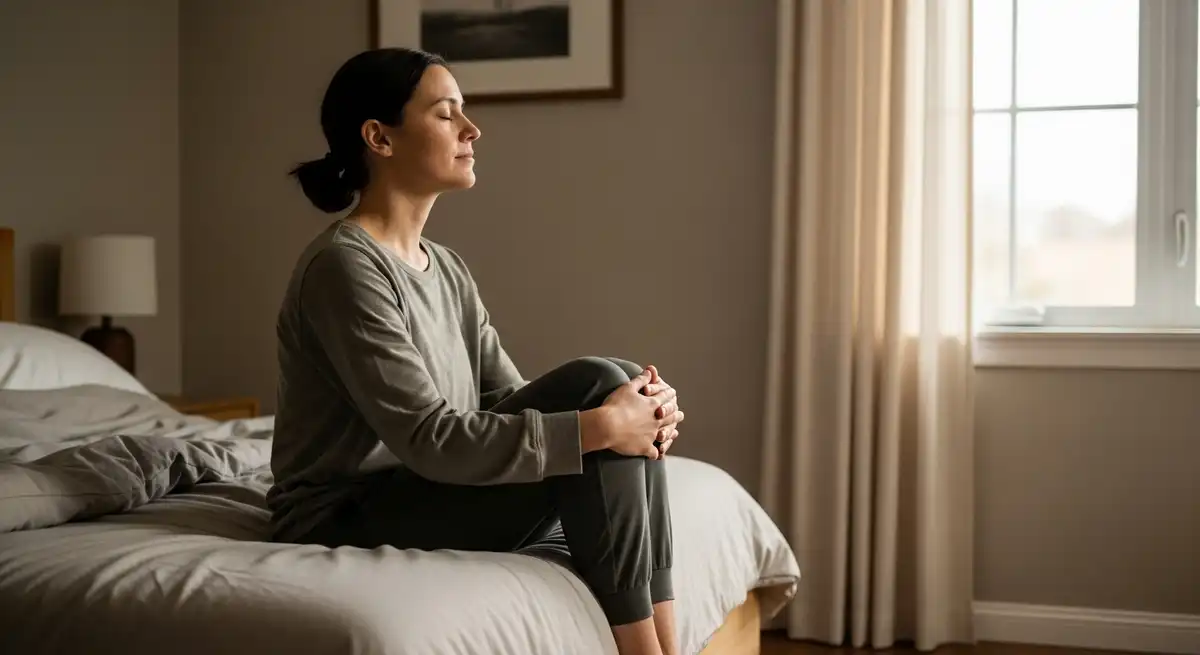
Meditation for stress management during busy days is discussed here as a practical lifestyle support approach, not as therapy or treatment. The information focuses on brief, realistic practices that fit daily routines shaped by work, caregiving, and digital demands. The intent is to explain how mindfulness-based habits are commonly used to support awareness, balance, and steadier attention in everyday life.
Daily stress often builds through constant switching between responsibilities rather than dramatic events. Emails, family needs, deadlines, and screen exposure can keep the nervous system in a low but continuous state of pressure. Over time, this can affect patience, sleep quality, and emotional steadiness, which is why short, realistic wellness practices are often explored.
Meditation for stress management during busy days refers to brief moments of intentional attention that help people notice internal cues and reset gently. These practices are usually short, flexible, and adaptable to desks, kitchens, or commutes. They are presented as supportive lifestyle tools rather than solutions that remove stress entirely.
What is meditation for stress management during busy days?
Meditation for stress management during busy days involves short, intentional mindfulness or breathing practices used within daily routines. These practices usually last five to thirteen minutes and focus on awareness rather than relaxation alone. They are commonly used between tasks to support calmer attention, emotional steadiness, and practical stress awareness during full schedules.
Meditation for Stress Management During Busy Days Explained
Amygdala hijack and daily stress responses
Meditation for stress management during busy days is often explained through the concept of amygdala hijack, which refers to the brain’s rapid threat response. Under pressure, this response can override thoughtful decision-making and increase reactivity. Brief mindfulness practices are commonly associated with noticing this shift earlier and responding more deliberately.
From a lifestyle education perspective, awareness is the key skill being developed. Meditation does not stop stress from appearing, but it helps people recognize when reactions are intensifying. Over time, many find this awareness supports steadier responses during demanding moments.
Neuroplasticity and relaxed alertness
Meditation for stress management during busy days is also discussed in relation to neuroplasticity, the brain’s ability to adapt through repeated experience. Research-based discussions often describe how consistent attention practices are associated with changes in areas linked to focus and self-awareness. These changes support what is often called relaxed alertness.
Relaxed alertness describes a state of calm attention without mental dullness. It is not about zoning out, but about staying present with less tension. Short, regular practices are commonly emphasized because they are easier to maintain within busy routines.
Cortisol regulation with short sessions
Meditation for stress management during busy days is frequently linked to cortisol, a hormone involved in stress responses. Educational sources often note that breathing and attention patterns influence how cortisol fluctuates. Even short practices are discussed as supportive of more balanced stress responses over time.
These explanations are shared to build understanding, not to promise specific outcomes. Individual experiences vary, and lifestyle factors such as sleep and workload also matter. Meditation is positioned as one supportive element within broader stress awareness.
Parasympathetic Nervous System Activation Techniques
1. Box breathing for office anxiety
Box breathing is a structured breathing pattern with equal phases of inhaling, holding, exhaling, and pausing. It is commonly referenced in workplace wellness discussions because it can be practiced quietly while seated. The steady rhythm is associated with supporting emotional steadiness during pressure.
In everyday settings, people often use box breathing before meetings or after stressful interactions. It does not require special posture or privacy. This makes it a practical option for shared or professional environments.
2. 4-7-8 breathing for rapid calming
4-7-8 breathing focuses on a longer exhale, which is commonly associated with calming signals in the body. The pattern involves inhaling for four counts, holding for seven, and exhaling for eight. It is often described as useful during moments of heightened tension.
This technique is usually practiced slowly and without force. Some people use it during breaks or in the evening rather than during active work. Adjustments are commonly suggested based on comfort.
Diaphragmatic breathing fundamentals
Diaphragmatic breathing encourages breathing into the abdomen instead of shallow chest breathing. This pattern is often associated with a calmer physical state. It can be practiced quietly during routine activities such as reading or typing.
Many people use diaphragmatic breathing as a background habit rather than a formal session. Over time, awareness of breath may increase naturally during stressful moments. This gradual shift aligns with realistic lifestyle support goals.

Sensory Awareness and Grounding Methods
5-4-3-2-1 grounding technique for overwhelm
The 5-4-3-2-1 grounding technique uses the senses to bring attention to the present moment. It involves noticing five things seen, four touched, three heard, two smelled, and one tasted. This structure helps redirect attention from racing thoughts.
In daily life, the technique is often used during moments of mental overload. It can be practiced quietly without drawing attention. Wellness educators describe it as an awareness tool rather than a way to stop thoughts.
Visual anchor meditation at work
Visual anchor meditation involves focusing gently on a neutral object such as a mug or notebook. Attention returns to the object whenever the mind wanders. This method is often chosen for open or shared spaces.
People who feel uncomfortable closing their eyes at work often prefer this approach. It blends naturally into routine behavior. Over time, it may support steadier attention during tasks.
Mindful listening in meetings
Mindful listening is described as giving full attention to a speaker without mentally rehearsing responses. It is often discussed as a form of applied meditation during conversations. This approach supports presence and reduces internal tension.
In meetings, mindful listening involves noticing tone, pacing, and content. It does not change outward behavior. Many find conversations feel less draining when mental multitasking decreases.
Physical Tension Release for Desk Workers
Seated body scan meditation
A seated body scan involves moving attention through the body while remaining seated. Common focus areas include the jaw, shoulders, and lower back. The goal is noticing sensations rather than forcing relaxation.
These scans are often practiced for a few minutes between tasks. They help people notice tension earlier in the day. This awareness may support more comfortable posture and pacing.
Progressive muscle relaxation at work
Progressive muscle relaxation involves gently tensing and releasing muscle groups. This contrast helps people recognize physical tension patterns. It is commonly adapted into short sequences for desks or chairs.
Hands, shoulders, and facial muscles are typical focus areas. The practice is framed as optional and adjustable. It supports physical awareness rather than correction.
Strategic Timing and Habit Integration
Morning intentions and task transitions
Meditation for stress management during busy days is often timed around transitions. Morning practices are associated with setting mental tone before responsibilities begin. Even brief awareness can support intentional pacing.
Task transitions are another common moment for short practices. Pausing briefly between tasks helps mark closure and reset attention. This reduces the feeling of constant mental carryover.
Afternoon slump and energy regulation
The afternoon period is often linked with reduced energy and patience. Lifestyle guidance suggests brief restorative pauses rather than pushing harder. Short breathing or awareness practices are often used during this time.
These pauses are framed as supportive, not productivity tools. They help people notice fatigue and respond more gently. This supports sustainable routines.
Closing paragraph Meditation for stress management during busy days is presented as a flexible lifestyle support rather than a solution to stress. Short, consistent practices help people notice internal cues and respond with steadier attention. When approached realistically, these habits support daily balance without replacing professional care or creating pressure for constant calm.
Frequently Asked Questions

Does five minutes of meditation help with daily stress?
Five minutes of meditation is commonly used as a brief awareness practice rather than a solution for stress. Many people find it helps them pause and notice tension during busy days. Its value is linked to consistency and awareness, not guaranteed outcomes.
How can meditation be practiced discreetly at work?
Meditation can be practiced discreetly through breathing, visual focus, or mindful listening while seated. These approaches do not require closing eyes or changing posture. They are commonly used in shared environments because they blend into routine behavior.
What is the purpose of the 5-4-3-2-1 grounding technique?
The 5-4-3-2-1 grounding technique brings attention to present sensory information. It is often used when thoughts feel overwhelming. The method supports awareness without trying to control or remove thoughts.
How often is meditation typically practiced in busy schedules?
Meditation in busy schedules is usually practiced briefly and regularly. Many lifestyle guides suggest daily or near-daily sessions of five to ten minutes. Flexibility is emphasized to support sustainability.
Can meditation support focus during work tasks?
Meditation is often associated with improved awareness of attention rather than productivity. Some people notice steadier focus after brief practices. Results vary and depend on overall routines and stress levels.
Is box breathing different from other breathing techniques?
Box breathing uses equal-length breathing phases, creating a steady rhythm. Other techniques may emphasize longer exhalation or slower pacing. Each method is typically chosen based on comfort and context.
How can meditation be started without adding pressure?
Meditation is often introduced by pairing it with existing routines. Short, informal practices reduce pressure to perform. This approach supports gradual habit formation.
Does meditation remove stress from daily life?
Meditation does not remove stressors from life. It supports awareness of stress responses as they occur. This distinction is emphasized in responsible wellness education.
Is meditation safe for everyone?
Meditation is generally considered a low-risk lifestyle practice when approached gently. Individuals with ongoing mental health concerns are encouraged to seek professional guidance. Practices should always be adjusted to personal comfort.
Can mindfulness be practiced during family activities?
Mindfulness can be practiced informally during family routines such as listening or shared tasks. These moments support presence without adding time demands. They are commonly used as gentle awareness practices.
Medical Disclaimer
This content is for informational purposes only and does not constitute medical advice. It is not intended to diagnose, treat, cure, or prevent any condition. Always consult a qualified healthcare provider before starting new wellness practices, especially if you have existing health concerns.
For wider background on this, see the National Heart, Lung, and Blood Institute on sleep.