Workplace stress often builds quietly through long hours, constant screen exposure, and repeated mental demands rather than obvious crises. Many people first notice it as physical stiffness, mental fatigue, or reduced patience during routine tasks. Wellness educators usually describe simple stress relief tools for the office as practical lifestyle supports that fit into normal workdays without framing stress as illness or something to fix urgently.
Office routines today frequently overlap with family responsibilities, especially for working parents and caregivers. This overlap can make stress feel constant rather than occasional. Lifestyle guidance increasingly focuses on small environmental and behavioral adjustments that support steadiness, clarity, and comfort during working hours instead of dramatic changes or motivational pressure.
This guide explains commonly used stress relief tools for office settings using a calm, educational approach. Each section outlines what the tool is, why many people find it helpful in daily work life, and how it is generally used in safe, everyday ways. The goal is realistic understanding, not promises or performance claims.
Stress relief tools office: Understanding Workplace Stress in Everyday Terms
Workplace stress is commonly understood as the body and mind responding to ongoing demands that feel difficult to manage in the moment. In office settings, this response often comes from deadlines, long sitting periods, digital overload, or emotional labor rather than sudden pressure. Lifestyle educators emphasize that stress itself is a normal response, becoming problematic only when recovery is limited.
From a productivity perspective, stress influences attention, memory, and decision quality. When the nervous system stays activated for long stretches, many people notice mental fog and reduced flexibility. Office stress relief tools are therefore framed as recovery supports that create small pauses during the day, not as methods to remove responsibility or pressure entirely.
Early awareness matters. Subtle signs such as shallow breathing, frequent distraction, or muscle tension often appear before exhaustion. Recognizing these signs early allows people to use gentle lifestyle supports sooner, helping stress feel more manageable over time.
Ergonomic Foundations as Supportive Stress Tools
Ergonomic adjustments are often described as the base layer of office comfort and focus. They address physical strain that quietly contributes to mental fatigue. Wellness professionals frequently note that ongoing discomfort competes with concentration, making stress feel heavier during desk-based work.
Supportive seating is one of the most common ergonomic considerations. Chairs that encourage natural spinal alignment reduce the muscular effort needed to sit upright for long periods. When physical strain decreases, many people report steadier focus and less end-of-day fatigue.
Height-adjustable desks are introduced as tools for gentle movement rather than constant standing. Alternating between sitting and standing changes muscle use and supports circulation. Lifestyle guidance usually recommends short standing intervals spaced throughout the day to keep the approach comfortable and sustainable.
Peripheral setup also matters. Monitor height, keyboard position, and mouse placement influence neck and wrist comfort. These adjustments are best viewed as cumulative supports that reduce background strain rather than quick fixes.
Environmental Supports and the Role of Office Plants
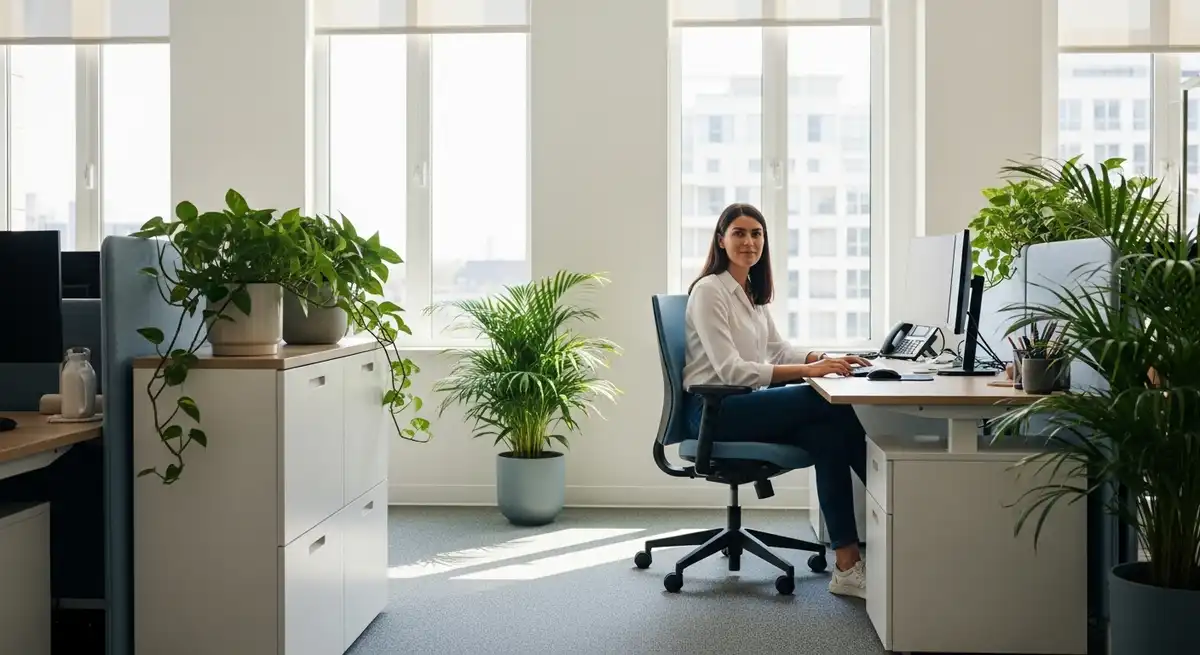
Workspace environment shapes how people feel throughout the workday. Office plants are commonly discussed as simple additions that soften visual surroundings. Environmental psychology research often links greenery with lower perceived stress and improved mood in work settings.
Plants introduce natural shapes and colors into spaces dominated by screens and straight lines. Many people find that brief visual contact with greenery provides mental rest during moments away from tasks. This effect is usually explained as reduced attention fatigue rather than emotional change.
Plants may also improve how people perceive air quality and comfort. While they do not replace ventilation, they contribute to a sense of care within the workspace. As a lifestyle support, plants work passively and continuously.
For busy professionals and working parents, plants offer stress support without requiring extra time or effort. Their value lies in presence rather than practice, making them easy to maintain alongside full schedules.
Soundscapes and Background Noise Management
Sound plays a large role in focus and mental load. Open offices and shared environments often introduce unpredictable noise that interrupts attention. White noise and sound masking tools are commonly used to create steadier auditory backgrounds.
White noise blends sudden sounds into a consistent auditory field. Many people find this reduces startle responses and repetitive distraction. In lifestyle contexts, sound masking is framed as supporting concentration rather than relaxation.
Professional sound machines are designed to produce even, unobtrusive noise. Some adjust automatically to ambient levels, helping maintain consistency throughout the day. These tools are positioned as environmental supports rather than mental techniques.
For those working from home with family nearby, soundscapes can also create psychological boundaries between work and personal life. This separation supports focus without physical isolation.
Mindfulness as a Workplace Awareness Practice
Mindfulness in office settings is usually described as brief moments of present-moment awareness rather than formal meditation. It focuses on noticing experiences without judgment. Workplace mindfulness emphasizes attention, not emotional change.
A common desk-based practice involves observing what is seen, heard, and felt physically for a short period. People often use this during task transitions or after long screen time. Wellness educators describe it as a gentle way to reset attention.
Body scan awareness is another approach adapted for seated work. It involves noticing physical sensations in sequence, often revealing tension patterns. This awareness supports comfort without requiring posture correction or effort.
Gratitude reflection sometimes appears as a cognitive mindfulness tool. In offices, it usually involves briefly acknowledging stable or supportive aspects of the workday. This practice is framed as perspective awareness rather than emotional management.
Breathing Techniques Used in Professional Settings
Breathing techniques are widely presented as accessible tools that influence physical arousal. In office environments, they are adapted for discretion and simplicity. These practices emphasize pacing rather than deep or dramatic breathing.
Box breathing uses equal counts for inhaling, holding, exhaling, and pausing. Many professionals use it during high-demand moments to maintain steadiness. It is typically practiced for short periods without drawing attention.
Diaphragmatic breathing focuses on abdominal movement instead of chest lifting. Wellness guidance notes that this pattern supports efficient breathing. At work, it is practiced subtly while seated.
Alternating nostril breathing is sometimes introduced as a traditional practice adapted for modern use. In offices, it is usually practiced privately due to visible hand movements. Cultural context is emphasized in educational settings.
Micro-Breaks as Everyday Recovery Moments
Micro-breaks are short pauses built into work routines to interrupt mental or physical strain. They usually last from seconds to a few minutes. Occupational health guidance emphasizes regularity over length.
Physical micro-breaks may involve standing, stretching, or changing posture. These movements support circulation and reduce muscle fatigue. Over time, they contribute to sustained comfort.
Cognitive micro-breaks involve shifting attention away from tasks briefly. Looking away from screens or focusing on neutral sensory input allows mental recovery. This supports longer periods of focus later.
For working parents, micro-breaks offer flexibility. They adapt easily to unpredictable schedules without disrupting workflow.
Weighted and Sensory Comfort Tools
Weighted lap pads are discussed within sensory regulation as sources of gentle pressure. Office versions are lighter and designed for seated use. They are framed as grounding supports rather than relaxation tools.
Deep pressure input is associated with increased body awareness. Many people report feeling more settled during focused work. This effect is described as subjective and varies by individual.
Weighted lap pads are commonly used during typing or virtual meetings. Their discreet design suits professional settings. Temperature neutrality makes them comfortable for longer use.
Other sensory tools include smooth stones or textured objects kept on desks. These provide tactile input without noise or disruption, supporting attention.
Digital Tools Supporting Mental Organization
Digital organization tools are often framed as indirect stress supports. By reducing mental clutter, they help people manage tasks with clarity. Wellness guidance focuses on structure, not pressure.
Focus apps limit notifications to protect attention. They are typically used in short sessions rather than all day. The goal is continuity, not constant restriction.
Mood and worry tracking apps support awareness rather than intervention. They help users notice patterns related to workload or environment. Editorial wellness contexts present them as reflective tools.
Calendars and task lists reduce reliance on memory. Predictable structure often lowers perceived overwhelm during busy periods.
Discreet Fidget Tools in Professional Contexts
Fidget tools are increasingly recognized as attention aids. In professional settings, discreet design matters. These tools provide repetitive motion that supports focus.
Spinner rings blend into professional attire and remain silent. Many people use them during listening-heavy tasks. Their use is subtle.
Executive fidget cubes feature muted textures and minimal sound. They are often used during long meetings. The purpose is sensory engagement.
Clickless pens and sliders also provide tactile input without drawing attention. They suit shared workspaces.
Rapid Grounding Practices for High-Demand Moments
Grounding practices reconnect attention with immediate surroundings. In offices, they are adapted for subtlety. These practices emphasize sensory awareness.
The five-four-three-two-one method involves noticing sensory input in sequence. It is framed as attention redirection rather than emotional control. People often use it before presentations.
Simple actions such as sipping water slowly or adjusting posture also serve grounding purposes. These behaviors reconnect physical awareness with the present.
Autogenic statements involving warmth or heaviness are sometimes taught. In offices, they are practiced mentally to maintain discretion.
Mindfulness and Lifestyle Balance for Working Parents
Working parents often manage layered responsibilities across work and home. Lifestyle guidance emphasizes flexibility over rigid routines. Office stress tools work best when easily adaptable.
Brief practices that require minimal setup are often preferred. Breathing or micro-breaks fit between tasks. Flexibility supports consistency.
Environmental supports like plants or soundscapes provide ongoing benefit without effort. This suits busy schedules.
Editorial wellness frameworks emphasize practicality and self-compassion. Stress tools are framed as supports, not expectations.
Expanded FAQs
How can stress be managed while sitting at a desk?
Stress while sitting is often managed through posture changes, brief movement, and paced breathing. These approaches support comfort and attention during long work periods. Many people use them gradually throughout the day as part of normal task shifts.
Do office plants have real benefits?
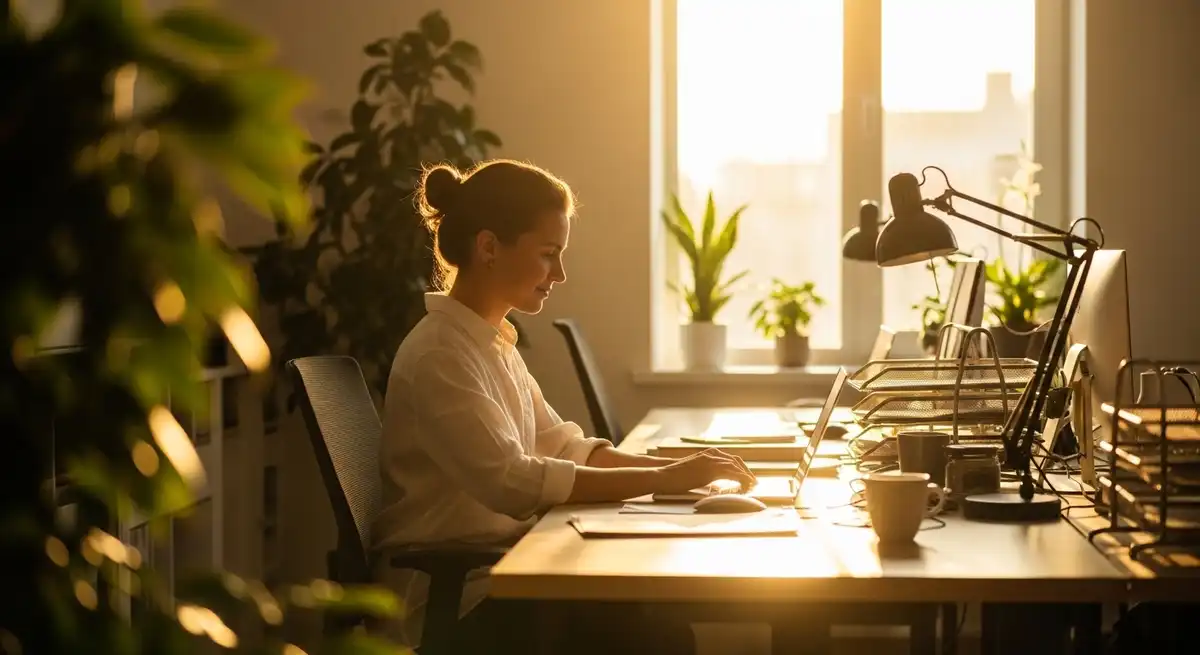
Office plants are commonly linked to improved mood and workspace satisfaction. Research suggests they support visual comfort and reduce attention fatigue. Their benefit comes from consistent presence rather than active use.
How frequently are breaks generally recommended?
Guidance often suggests short breaks every twenty to thirty minutes during computer work. These pauses support muscle recovery and visual rest. Regularity matters more than duration.
Are weighted lap pads appropriate for offices?
Office-designed weighted lap pads are lighter and discreet. They provide gentle pressure that many people find grounding while seated. Use is typically based on personal comfort.
Can breathing exercises be used discreetly at work?
Breathing exercises such as slow paced breathing can be practiced quietly at a desk. They are often used during meetings or demanding tasks. These practices focus on rhythm.
Do digital tools actually reduce stress?
Digital tools reduce stress indirectly by organizing tasks and limiting interruptions. They support mental clarity rather than emotional change. Effectiveness depends on intentional use.
Are fidget tools distracting in professional settings?
Discreet fidget tools are designed to avoid distraction. Many professionals use silent options to support attention. Preferences vary.
When should professional support be considered?
Lifestyle stress tools support daily management but do not replace professional care. If stress consistently affects sleep, health, or functioning, professional guidance is appropriate.
Editorial Conclusion
Simple stress relief tools for the office work best when viewed as everyday supports rather than solutions. They address comfort, attention, and environment in small ways that fit real routines. Used consistently and without pressure, they support steady engagement with work and personal responsibilities.
Medical Disclaimer
This content is for informational purposes only and does not constitute medical advice. It does not diagnose, treat, cure, or prevent any condition. Consult a qualified healthcare provider before starting any new wellness practice, especially if you have existing medical concerns.
For wider background on this, see the American Psychological Association on healthy workplaces.