Life challenges often arrive without warning and can disrupt emotional balance, daily routines, and confidence at the same time. Many people experience difficulty maintaining steadiness during financial pressure, caregiving demands, health uncertainty, or work-related stress. Wellness education increasingly explains positivity as a practical life skill, not a constant emotional state, and one that supports clarity and stability during demanding phases.
Staying positive during life challenges is often misunderstood as ignoring problems or forcing optimism. In everyday wellness contexts, positivity refers to maintaining balanced thinking, emotional awareness, and supportive habits while fully acknowledging reality. This perspective removes pressure to feel cheerful and instead emphasizes realistic coping, steady routines, and thoughtful responses that protect long-term wellbeing.
Modern lifestyle guidance and resilience research consistently show that positivity can be learned through awareness, habit formation, and emotional responsibility. By understanding how thoughts, physical health, and daily structure interact, people can create a steadier internal environment. This steadiness supports better communication, clearer decisions, and sustainable wellbeing without making exaggerated promises or emotional demands.
How to Stay Positive During Life Challenges: Understanding Positivity as a Learnable Life Skill
Positivity in wellness education is commonly described as a flexible mindset rather than a permanent mood. It involves recognizing difficulties honestly while choosing responses that support balance and self-respect. This framing helps people avoid self-criticism during hard periods and encourages skill-building instead of emotional performance.
Research in positive psychology shows that repeated patterns of interpretation influence emotional reactions over time. These patterns often develop early through experience, family dynamics, and social conditioning. Because they are learned, they can be adjusted gradually through awareness and consistent practice.
Viewing positivity as a learnable skill reduces shame around negative emotions. Instead of seeing stress or sadness as failure, people learn to treat emotions as information. This approach supports emotional regulation and encourages realistic progress rather than perfection.
The Role of Explanatory Style in Emotional Resilience
Explanatory style refers to how people usually explain events to themselves, especially setbacks. Wellness educators often describe three dimensions: whether challenges feel permanent or temporary, whether they affect everything or only one area, and whether blame is internal or situational. These interpretations strongly influence emotional responses.
A pessimistic explanatory style tends to frame problems as long-lasting, widespread, and personal. Over time, this can reduce motivation and increase emotional fatigue. A more optimistic style views setbacks as temporary, specific, and influenced by circumstances rather than personal failure.
Shifting explanatory style does not involve avoiding responsibility. It encourages balanced interpretation that leaves space for learning and adjustment. This approach is widely used in educational resilience programs and is considered a supportive lifestyle tool, not a therapeutic intervention.
Cognitive Awareness and Thought Patterns
Thought patterns often operate automatically, especially during stress. Many people do not notice how often they engage in unhelpful interpretations such as catastrophizing or overgeneralizing. Awareness of these patterns is a foundational step in maintaining steadiness during challenges.
Cognitive awareness involves noticing thoughts without immediately accepting them as facts. This creates a pause between experience and reaction, allowing room for reflection. Over time, this pause supports calmer responses and reduces emotional escalation.
In daily life, cognitive awareness is often practiced through journaling, reflective pauses, or simple mental check-ins. These practices are widely used in wellness settings because they are accessible and adaptable to different lifestyles.
The ABCDE Framework as a Lifestyle Tool
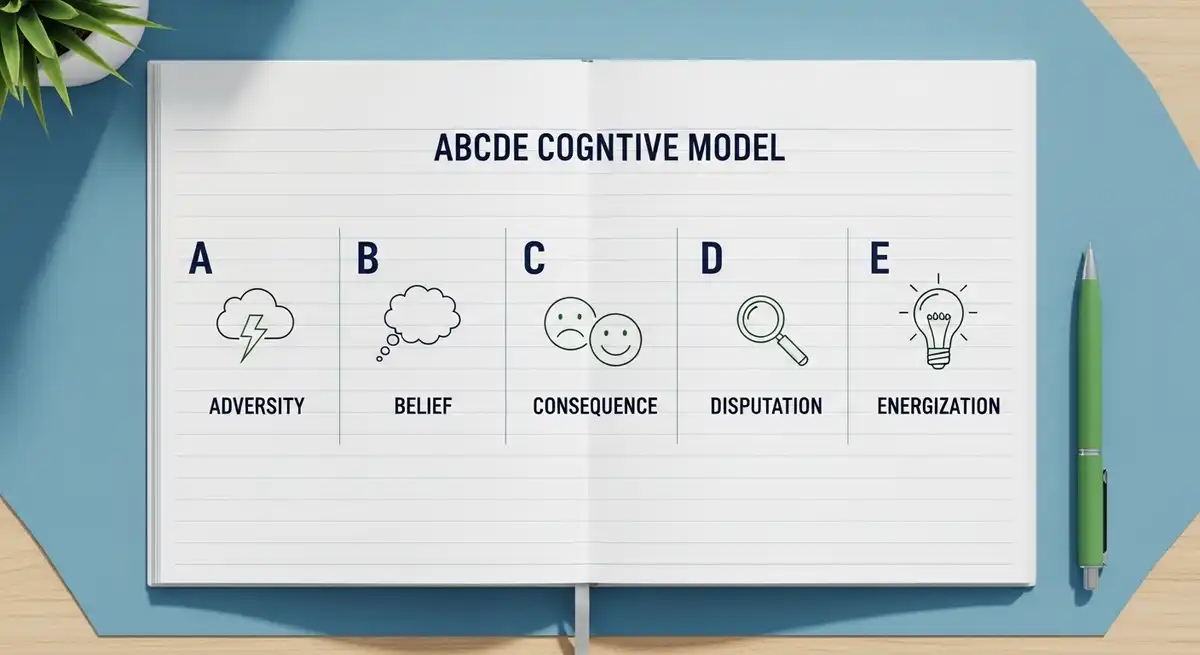
The ABCDE framework is frequently referenced in educational discussions of resilience and optimism. It stands for Adversity, Belief, Consequence, Disputation, and Energization. In non-clinical contexts, it offers a structured way to examine reactions to everyday stressors.
Adversity involves identifying the specific situation causing strain rather than viewing it as overwhelming. Belief refers to the automatic interpretation that follows. Consequence focuses on the emotional or behavioral outcome of that belief.
Disputation encourages checking whether the belief is fully accurate or whether other explanations exist. Energization describes the shift in perspective that often follows balanced thinking. Used gently, this framework supports clarity without promising emotional change.
Behavioral Activation in Daily Life
Behavioral activation is often described as acting first rather than waiting to feel motivated. During challenging periods, low energy can lead to withdrawal from routine activities. This withdrawal can unintentionally reinforce low mood and disengagement.
In everyday wellness guidance, behavioral activation focuses on maintaining basic routines and meaningful actions. These may include light movement, household tasks, social contact, or creative work. The emphasis is on consistency, not intensity.
Small actions can restore a sense of agency and continuity. Over time, this supports emotional steadiness and helps people feel more grounded during uncertainty. This approach is widely considered a practical lifestyle support strategy.
Physical Foundations That Influence Emotional Balance
Physical wellbeing and emotional balance are closely linked. Sleep, hydration, nutrition, and movement influence energy, focus, and stress tolerance. During life challenges, these basics are often disrupted, which can intensify emotional strain.
Limited sleep is commonly associated with irritability and reduced emotional regulation. Maintaining regular sleep timing, even when duration varies, supports cognitive clarity and patience. Lifestyle guidance emphasizes rhythm over perfection.
Balanced meals and hydration support steady energy and concentration. Simple practices such as regular eating and drinking water are commonly recommended in wellness education. These habits support the physical conditions that make emotional balance easier to maintain.
Stress Awareness and Cortisol Regulation
Stress awareness involves noticing early signs of tension such as shallow breathing, tight muscles, or racing thoughts. Many people recognize stress only after it has escalated. Awareness allows for earlier, gentler responses.
Lifestyle practices such as slow breathing, brief pauses, or calming music are commonly associated with reduced physiological arousal. These practices are widely used because they are simple and adaptable to home and work environments.
Regular stress awareness helps prevent prolonged activation of stress responses. Over time, people often report feeling more capable of responding thoughtfully rather than reactively during demanding situations.
Mindfulness as a Supportive Daily Practice
Mindfulness is generally described as paying attention to present experience with openness and without judgment. In wellness education, it is presented as an awareness practice rather than a belief system or treatment. It can be practiced formally or informally.
Common mindfulness practices include noticing breathing, body sensations, or sensory details during daily activities. These practices help anchor attention and reduce habitual rumination about past events or future worries.
Mindfulness supports positivity by encouraging acceptance of current experience while reducing mental overload. This balanced awareness often supports clearer priorities and calmer thinking during challenges.

The Stoic Principle of Control and Acceptance
Stoic philosophy has influenced modern resilience education, especially the idea of separating what can be controlled from what cannot. This principle encourages focusing effort on personal choices, attitudes, and actions.
In everyday situations, this approach helps reduce frustration and rumination. When energy is directed toward controllable elements, people often experience greater clarity and less emotional exhaustion. This aligns with many modern stress management frameworks.
Acceptance in this context does not mean approval or passivity. It means acknowledging reality before choosing a constructive response. This balance supports steadiness during prolonged uncertainty.
Preparing for Challenges Without Catastrophizing
Some resilience traditions encourage gentle mental preparation for possible difficulties. This involves acknowledging that setbacks can occur while also recognizing available coping resources. Used responsibly, this reduces shock and emotional overwhelm.
In daily life, preparation may include planning routines, identifying support networks, or considering practical responses to common stressors. The focus remains on readiness, not fear.
Balanced preparation supports positivity by reinforcing confidence in adaptability. It avoids unrealistic optimism while maintaining emotional steadiness and perspective.
Gratitude as an Attention Practice
Gratitude practices are often misunderstood as ignoring hardship. In wellness education, gratitude is framed as an attention practice that broadens awareness rather than replaces negative emotions. It involves noticing supportive elements alongside difficulty.
Common gratitude practices include noting small moments of ease, kindness, or stability. These practices are widely used because they are brief and adaptable to different cultures and routines.
Over time, gratitude practices may support emotional balance by reducing narrow focus during stress. They do not remove challenges but help maintain perspective.
Social Connection and Emotional Support
Social connection is widely recognized as a key part of wellbeing. During life challenges, isolation often increases through circumstance or withdrawal. Maintaining connection supports emotional steadiness.
Connection does not require constant interaction. Brief conversations, messages, or shared activities can provide grounding and perspective. These interactions often reinforce belonging.
Healthy social support supports positivity by normalizing difficulty and sharing understanding. It is considered a protective lifestyle factor rather than a solution to emotional distress.
Positivity for Parents and Working Mothers
Parents and working mothers often manage layered responsibilities involving time pressure and emotional labor. Positivity in this context emphasizes realistic expectations and self-respect rather than constant availability.
Simple routines, shared moments, and brief personal pauses support emotional balance. Wellness education highlights modeling calm responses to stress instead of hiding emotions.
By treating positivity as steadiness rather than cheerfulness, parents support their own wellbeing and their children’s emotional learning. This aligns with modern family wellbeing guidance.
Integrating Positivity Into Busy Routines
Positivity practices are most sustainable when they fit into existing routines. Short pauses, mindful transitions, and consistent habits are easier to maintain than complex schedules.
Examples include breathing during commutes, reflective moments before sleep, or brief gratitude notes. These practices support emotional regulation without major lifestyle changes.
Consistency matters more than intensity. Small, repeated practices support gradual steadiness during ongoing challenges.
Understanding Post-Traumatic Growth Carefully
Post-traumatic growth describes positive psychological changes that sometimes follow adversity. In educational contexts, it is presented as a possibility, not an expectation. Not all challenges lead to growth.
Commonly discussed areas include changed priorities, deeper relationships, and increased appreciation for life. These changes often emerge slowly and unevenly.
Discussing post-traumatic growth carefully helps maintain hope without minimizing pain. This balanced framing supports trust and emotional responsibility.
Service, Contribution, and Meaning
Acts of service and contribution are often linked with a sense of meaning. In everyday life, this may include helping family, supporting colleagues, or community involvement.
Service shifts attention outward and reinforces purpose. It is commonly included in wellbeing education as a supportive practice, not an obligation.
Engaging in contribution supports positivity by reinforcing connection and shared humanity. It complements personal boundaries and self-care.
Frequently Asked Questions
How can someone stay positive when many problems occur at once?
Staying positive during multiple challenges involves focusing on manageable actions while maintaining basic routines. Wellness guidance emphasizes acknowledging emotional responses without judgment. This balanced approach supports steadiness without forcing optimism or ignoring difficulty.
Can positivity be learned later in life?
Positivity is considered learnable at any age because thought patterns and habits remain adaptable. Educational programs show that awareness and consistent practice support gradual change. Past experiences do not prevent developing a more balanced outlook.
What daily habits commonly support positivity?
Common habits include regular sleep timing, consistent meals, brief mindfulness pauses, and social connection. These habits support physical and emotional stability. They are widely recommended because they fit into diverse lifestyles.
Is positivity the same as avoiding negative emotions?
Positivity does not involve avoiding or suppressing negative emotions. Wellness education encourages acknowledging emotions while choosing constructive responses. This approach supports emotional intelligence and balance.
How does social support influence positivity?
Social support provides perspective, validation, and belonging. Regular connection is commonly associated with improved emotional steadiness. It supports positivity by reducing isolation during challenges.
Can mindfulness be practiced without meditation experience?
Mindfulness can be practiced informally through awareness of breathing, movement, or daily activities. No prior experience is required. These practices are widely used because they are simple and flexible.
How long does it take to feel more emotionally steady?
Emotional steadiness develops gradually and varies by person. Many people notice subtle changes with consistent practice over weeks. Wellness guidance emphasizes patience and regularity.
Is positivity appropriate during serious hardship?
Positivity during hardship focuses on steadiness and clarity rather than cheerfulness. Acknowledging difficulty while maintaining supportive routines is considered appropriate. This approach respects emotional reality.
Can parents model positivity without hiding stress?
Parents can model positivity by expressing emotions calmly and demonstrating coping strategies. This supports children’s emotional learning. It does not require hiding stress.
When should professional support be considered?
Professional support is generally recommended when emotional distress interferes with daily functioning. Wellness practices complement but do not replace professional care. Seeking support is considered responsible.
Conclusion
Staying positive during life challenges involves maintaining clarity, emotional steadiness, and supportive habits rather than constant optimism. By focusing on learnable skills and realistic routines, people build a stable foundation for uncertainty. This balanced approach supports wellbeing with patience, responsibility, and respect for personal limits.
Medical Disclaimer
This content is for informational purposes only and does not constitute medical or mental health advice. It does not diagnose, treat, cure, or prevent any condition. Consult a qualified healthcare or mental health professional for personalized guidance, especially if symptoms persist or worsen.
For wider background on this, see the National Heart, Lung, and Blood Institute on sleep.